In the realm of business and professional relationships, confidentiality plays a crucial role in safeguarding sensitive information. The Connecticut Non-disclosure Agreement (NDA) form serves as a vital tool for individuals and organizations seeking to protect proprietary data, trade secrets, and other confidential materials from unauthorized disclosure. This legally binding document outlines the obligations of the parties involved, ensuring that any shared information remains secure and is used solely for its intended purpose. Key aspects of the NDA include the definition of what constitutes confidential information, the duration of the confidentiality obligation, and the consequences of breach. By establishing clear terms, this agreement not only fosters trust between parties but also mitigates the risk of legal disputes arising from potential information leaks. Whether you are a startup looking to secure your innovative ideas or an established company aiming to protect your client lists, understanding the nuances of the Connecticut NDA form is essential for maintaining a competitive edge while navigating the complexities of business interactions.
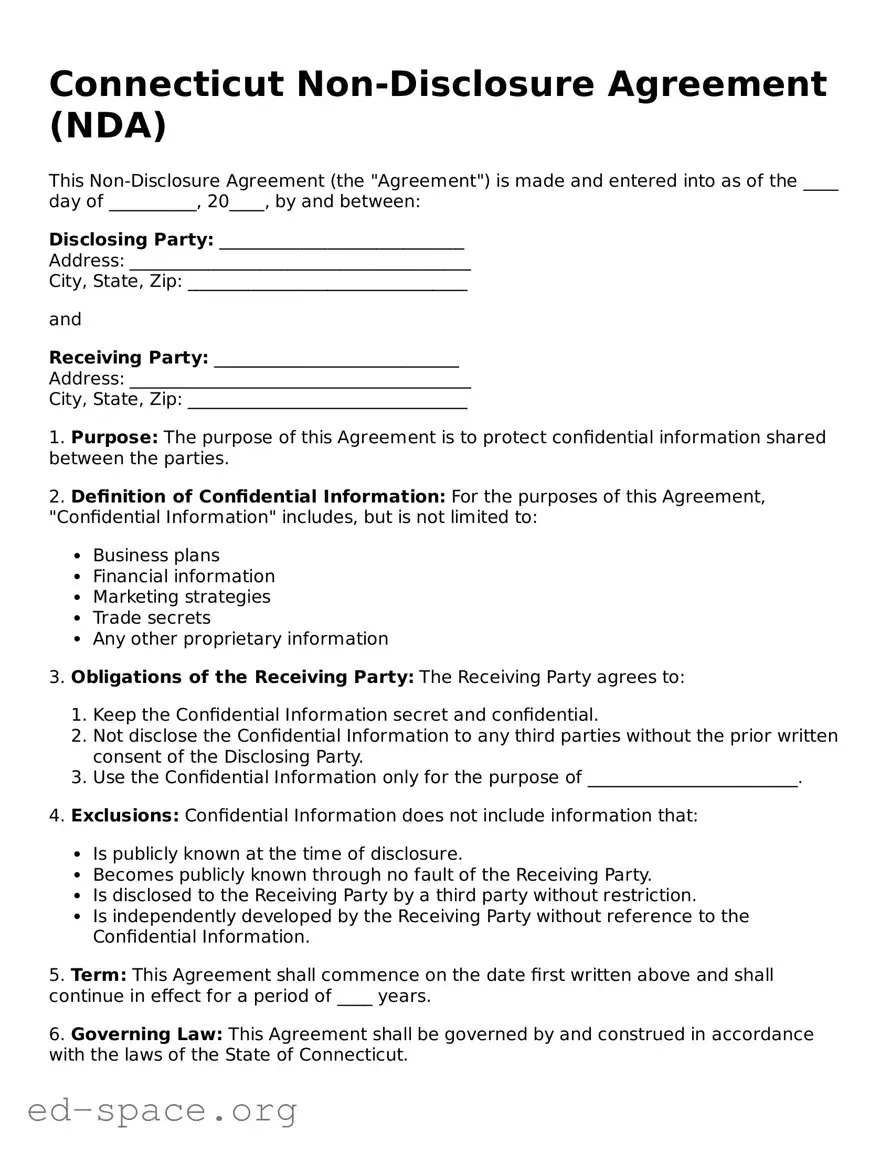
Connecticut Non-Disclosure Agreement (NDA)
This Non-Disclosure Agreement (the "Agreement") is made and entered into as of the ____ day of __________, 20____, by and between:
Disclosing Party: ____________________________
Address: _______________________________________
City, State, Zip: ________________________________
and
Receiving Party: ____________________________
Address: _______________________________________
City, State, Zip: ________________________________
1. Purpose: The purpose of this Agreement is to protect confidential information shared between the parties.
2. Definition of Confidential Information: For the purposes of this Agreement, "Confidential Information" includes, but is not limited to:
3. Obligations of the Receiving Party: The Receiving Party agrees to:
4. Exclusions: Confidential Information does not include information that:
5. Term: This Agreement shall commence on the date first written above and shall continue in effect for a period of ____ years.
6. Governing Law: This Agreement shall be governed by and construed in accordance with the laws of the State of Connecticut.
7. Entire Agreement: This Agreement constitutes the entire understanding between the parties and supersedes all prior discussions or agreements.
IN WITNESS WHEREOF, the parties have executed this Non-Disclosure Agreement as of the date first above written.
Disclosing Party: ____________________________
Signature: ____________________________
Date: ____________________________
Receiving Party: ____________________________
Signature: ____________________________
Date: ____________________________
| Fact Name | Description |
|---|---|
| Definition | A Non-disclosure Agreement (NDA) is a legal contract that establishes a confidential relationship between parties. |
| Purpose | NDAs are used to protect sensitive information from being disclosed to unauthorized individuals or entities. |
| Governing Law | The laws of Connecticut govern NDAs executed within the state. |
| Parties Involved | Typically, an NDA involves at least two parties: the disclosing party and the receiving party. |
| Duration of Confidentiality | The duration for which the information must remain confidential is usually specified in the agreement. |
| Permitted Disclosures | NDAs often outline circumstances under which disclosure is allowed, such as legal requirements or consent from the disclosing party. |
| Consequences of Breach | Violating an NDA can lead to legal action, including monetary damages or injunctive relief. |
| Exclusions | Common exclusions from confidentiality include information that is publicly available or independently developed by the receiving party. |
| Enforceability | For an NDA to be enforceable in Connecticut, it must be reasonable in scope and duration. |
| Common Uses | Businesses frequently use NDAs when discussing trade secrets, proprietary information, or during negotiations. |
After obtaining the Connecticut Non-disclosure Agreement form, you are ready to begin the process of filling it out. This form is essential for protecting sensitive information, and completing it accurately is crucial for ensuring that both parties understand their obligations. Follow the steps below to fill out the form correctly.
Once the form is completed and signed, ensure that each party retains a copy for their records. This will help in maintaining clarity and accountability regarding the confidential information shared.
What is a Non-disclosure Agreement (NDA) in Connecticut?
A Non-disclosure Agreement (NDA) is a legally binding contract that protects confidential information shared between parties. In Connecticut, an NDA ensures that sensitive data, trade secrets, or proprietary information remains confidential and is not disclosed to unauthorized individuals or entities.
Why should I use an NDA?
An NDA is essential for protecting your business interests. If you are sharing sensitive information with potential partners, employees, or contractors, an NDA helps prevent them from disclosing that information to competitors or the public. This protection can be crucial for maintaining a competitive edge and safeguarding intellectual property.
What should be included in a Connecticut NDA?
A well-drafted NDA should include the following elements: a clear definition of what constitutes confidential information, the obligations of the receiving party, the duration of confidentiality, and any exclusions from confidentiality. It may also specify the consequences of breach and the governing law, which in this case would be Connecticut law.
How long does the confidentiality obligation last?
The duration of the confidentiality obligation can vary. Typically, NDAs specify a time frame, which can range from a few years to indefinitely. However, the duration should be reasonable and reflect the nature of the information being protected. It's important to negotiate this term based on the specific circumstances of the agreement.
Can an NDA be enforced in Connecticut?
Yes, NDAs can be enforced in Connecticut as long as they are reasonable and not overly broad. Courts will generally uphold NDAs that protect legitimate business interests and do not impose undue restrictions on an individual's ability to work or conduct business.
What happens if someone breaches the NDA?
If a party breaches the NDA, the non-breaching party may seek legal remedies. This can include monetary damages, injunctive relief, or specific performance. The NDA should outline the consequences of a breach to provide clarity on potential repercussions.
Do I need a lawyer to draft an NDA?
While it is possible to draft an NDA without legal assistance, consulting a lawyer is advisable. A legal expert can ensure that the agreement complies with Connecticut law and adequately protects your interests. They can also help tailor the NDA to fit your specific situation and needs.
Can an NDA be modified after it is signed?
Yes, an NDA can be modified, but any changes must be made in writing and signed by all parties involved. Verbal modifications may not be enforceable. To avoid confusion or disputes, it's best to document any amendments clearly and ensure that all parties agree to the new terms.
Failing to clearly identify the parties involved. It is essential to specify who is disclosing the information and who is receiving it. Omitting this information can lead to confusion and potential legal issues.
Not defining the confidential information properly. A vague description can leave room for interpretation, which might undermine the agreement's effectiveness.
Ignoring the duration of the confidentiality obligation. Clearly stating how long the information must remain confidential is crucial. Without this, the agreement may lack enforceability.
Overlooking the exclusions from confidentiality. Certain information may not be subject to confidentiality, such as publicly available data. Failing to mention these exclusions can create misunderstandings.
Not including the purpose of disclosure. Clearly outlining why the information is being shared helps to establish the context and limits of the agreement.
Neglecting to specify the consequences of a breach. It is important to outline what happens if the agreement is violated. This can deter potential breaches and clarify expectations.
Forgetting to include a governing law clause. Identifying which state’s laws will govern the agreement can prevent complications in the event of a dispute.
Not having both parties sign the agreement. An unsigned document lacks validity. Ensuring that all parties acknowledge and accept the terms is vital for enforceability.
A Connecticut Non-disclosure Agreement (NDA) is an essential document for protecting sensitive information. When drafting or executing an NDA, you may also need several other forms and documents to ensure comprehensive legal protection. Here’s a list of related documents often used alongside an NDA.
These documents play a crucial role in safeguarding sensitive information and ensuring that all parties understand their obligations. Having the right forms in place can prevent misunderstandings and protect your interests effectively.
A Non-disclosure Agreement (NDA) is a legal document that helps protect sensitive information. Several other documents serve similar purposes in safeguarding information or outlining confidentiality. Here are nine documents that share similarities with an NDA:
When filling out the Connecticut Non-disclosure Agreement form, it is important to follow certain guidelines to ensure accuracy and compliance. Here are eight things to do and avoid:
By following these guidelines, you can ensure that the Non-disclosure Agreement is filled out correctly and effectively protects the confidential information involved.
Understanding Non-disclosure Agreements (NDAs) is crucial for anyone considering entering into one in Connecticut. Here are ten common misconceptions about these agreements:
Understanding these misconceptions can help you navigate NDAs more effectively and ensure your interests are protected.
When dealing with sensitive information in Connecticut, a Non-disclosure Agreement (NDA) is a crucial tool. Here are some key takeaways to consider when filling out and using this form:
Using an NDA effectively protects your interests and fosters trust in business relationships. Always consider consulting with a legal professional if you have specific questions or concerns about your NDA.