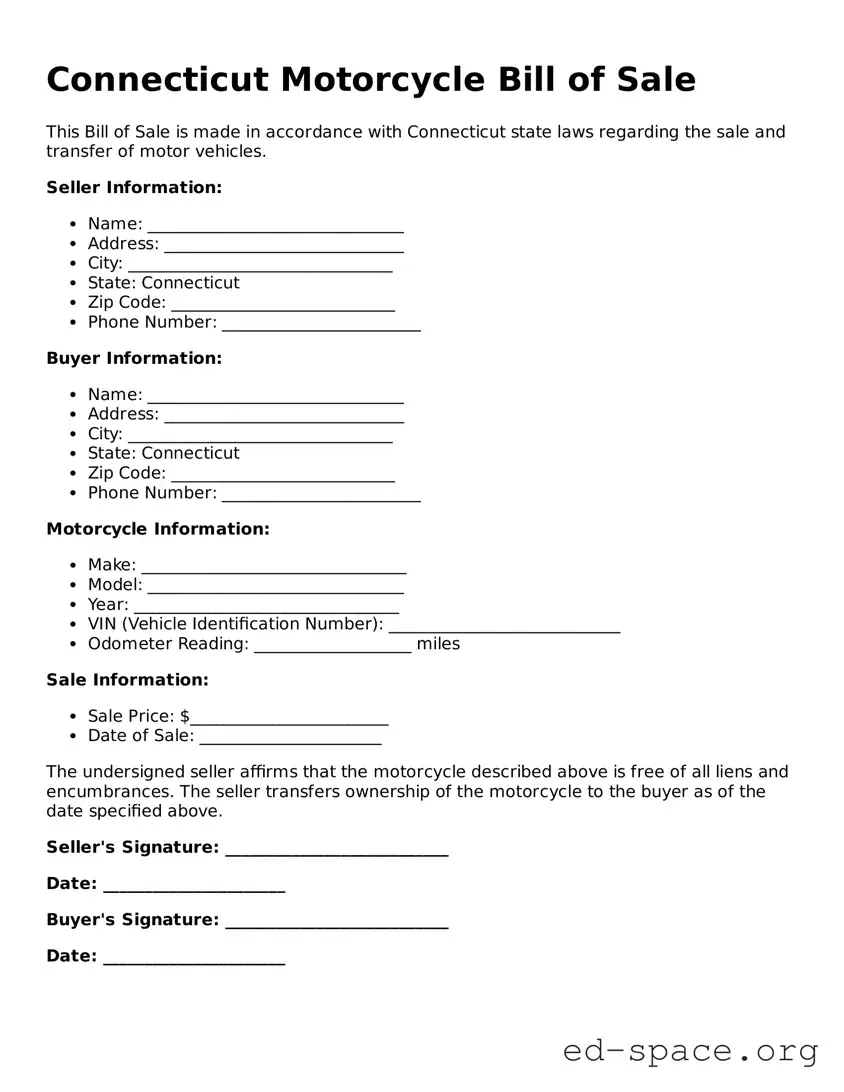
When buying or selling a motorcycle in Connecticut, a Motorcycle Bill of Sale form is an essential document that protects both parties involved in the transaction. This form serves as a written record of the sale, detailing important information such as the motorcycle's make, model, year, and Vehicle Identification Number (VIN). Additionally, it includes the names and addresses of both the seller and the buyer, ensuring that there is clarity regarding ownership transfer. The document also outlines the sale price and any conditions of the sale, such as whether the motorcycle is sold as-is or with warranties. By completing this form, both parties can avoid potential disputes in the future, as it acts as proof of the transaction. Understanding the significance of this form can streamline the buying and selling process, making it smoother and more secure for everyone involved.
Connecticut Motorcycle Bill of Sale
This Bill of Sale is made in accordance with Connecticut state laws regarding the sale and transfer of motor vehicles.
Seller Information:
Buyer Information:
Motorcycle Information:
Sale Information:
The undersigned seller affirms that the motorcycle described above is free of all liens and encumbrances. The seller transfers ownership of the motorcycle to the buyer as of the date specified above.
Seller's Signature: ___________________________
Date: ______________________
Buyer's Signature: ___________________________
Date: ______________________
| Fact Name | Description |
|---|---|
| Purpose | The Connecticut Motorcycle Bill of Sale form serves as a legal document that records the sale and transfer of ownership of a motorcycle. |
| Governing Law | This form is governed by Connecticut General Statutes, particularly Section 14-185, which outlines the requirements for vehicle sales. |
| Information Required | The form typically requires details such as the buyer's and seller's names, addresses, motorcycle identification number (VIN), and sale price. |
| Notarization | While notarization is not mandatory, having the Bill of Sale notarized can add an extra layer of authenticity and protection for both parties. |
| Tax Implications | The sale of a motorcycle may be subject to sales tax, and the buyer is responsible for paying this tax when registering the vehicle. |
| Record Keeping | Both the buyer and seller should keep a copy of the Bill of Sale for their records, as it may be needed for future reference or legal purposes. |
| Transfer of Title | Completing the Bill of Sale is an important step in the process of transferring the title of the motorcycle from the seller to the buyer. |
After obtaining the Connecticut Motorcycle Bill of Sale form, you will need to complete it with specific details about the motorcycle transaction. This document will serve as a record of the sale and can be important for both the buyer and seller for various reasons, including registration and proof of ownership.
Once the form is filled out and signed, keep copies for your records. The buyer may need this document for registration and title transfer, so ensure they receive the original. It's a good practice to store the document in a safe place.
What is a Connecticut Motorcycle Bill of Sale form?
A Connecticut Motorcycle Bill of Sale is a legal document that records the sale of a motorcycle between a buyer and a seller. This form serves as proof of the transaction and includes important details such as the motorcycle's make, model, year, Vehicle Identification Number (VIN), and the sale price. It protects both parties by documenting the transfer of ownership and can be useful for registration purposes with the Department of Motor Vehicles (DMV).
Do I need a Bill of Sale to register my motorcycle in Connecticut?
Yes, a Bill of Sale is typically required when registering a motorcycle in Connecticut. The DMV uses this document to verify the sale and ensure that the buyer is the new legal owner. It helps to prevent disputes over ownership and provides a clear record of the transaction. While the Bill of Sale is important, additional documents such as the previous title and proof of insurance may also be necessary for registration.
Can I create my own Motorcycle Bill of Sale in Connecticut?
Yes, you can create your own Motorcycle Bill of Sale in Connecticut. However, it is essential to include all necessary information to ensure the document is valid. This includes the names and addresses of both the buyer and seller, the motorcycle's details (make, model, year, VIN), the sale price, and the date of sale. Both parties should sign the document to make it legally binding. Alternatively, you can use a template or obtain a form from the DMV to simplify the process.
What should I do after completing the Bill of Sale?
After completing the Bill of Sale, both the buyer and seller should keep a copy for their records. The seller should provide the buyer with the original document, as it will be needed for registration. The buyer should then take the Bill of Sale, along with any other required documents, to the DMV to register the motorcycle in their name. It is also advisable for the seller to notify the DMV of the sale to update their records and protect themselves from any future liability related to the motorcycle.
Incomplete Information: Failing to provide all required details, such as the names, addresses, and signatures of both the buyer and seller, can lead to issues later. Ensure every section is filled out accurately.
Incorrect Vehicle Identification Number (VIN): The VIN must be accurate and match the motorcycle’s title. An incorrect VIN can complicate the registration process.
Omitting Sale Price: Leaving out the sale price can create confusion and may lead to disputes. Always include the agreed-upon amount clearly.
Not Dating the Document: Failing to date the bill of sale can cause problems when proving ownership transfer. Always include the date of the transaction.
Neglecting to Include Condition of the Motorcycle: Describing the condition of the motorcycle is crucial. This can protect both parties in case of future disputes.
Not Keeping Copies: Both the buyer and seller should retain copies of the bill of sale. This documentation is vital for future reference and potential legal matters.
Ignoring State Requirements: Each state has specific requirements for a bill of sale. Failing to adhere to Connecticut’s regulations can result in delays or complications during registration.
When purchasing or selling a motorcycle in Connecticut, several important documents may accompany the Motorcycle Bill of Sale. These documents help ensure that the transaction is smooth and legally binding. Below is a list of forms that are often used in conjunction with the Motorcycle Bill of Sale.
Each of these documents plays a vital role in the process of buying or selling a motorcycle. Ensuring that all necessary paperwork is completed accurately can help prevent future disputes and provide peace of mind for both parties involved in the transaction.
The Motorcycle Bill of Sale form is an important document for anyone buying or selling a motorcycle. However, it shares similarities with several other documents that serve similar purposes in various transactions. Here’s a list of eight documents that are akin to the Motorcycle Bill of Sale:
Each of these documents plays a crucial role in facilitating clear and legal transactions, ensuring that both parties are protected and informed throughout the process.
When filling out the Connecticut Motorcycle Bill of Sale form, it is crucial to be meticulous. Here are ten essential dos and don'ts to guide you through the process:
Understanding the Connecticut Motorcycle Bill of Sale form can be challenging. Here are six common misconceptions about this document:
Many people believe that a Bill of Sale is optional. In Connecticut, a Bill of Sale is important for proving ownership and documenting the sale of a motorcycle.
Some assume that notarization is required. However, in Connecticut, notarization is not necessary for the Bill of Sale to be valid.
It is a common belief that only the seller's signature is required. In reality, both the buyer and seller should sign the document to ensure it is legally binding.
Some individuals think that the Bill of Sale acts as a title for the motorcycle. In fact, it is a separate document and does not replace the need for a title.
Many believe that any written agreement can serve as a Bill of Sale. However, using the specific Connecticut Motorcycle Bill of Sale form is recommended to meet state requirements.
Some think that it is sufficient to simply state the sale. In reality, the Bill of Sale should include important details like the motorcycle's make, model, and VIN.
When filling out and using the Connecticut Motorcycle Bill of Sale form, it is essential to consider the following key takeaways:
By following these guidelines, individuals can ensure a smooth transaction when buying or selling a motorcycle in Connecticut.