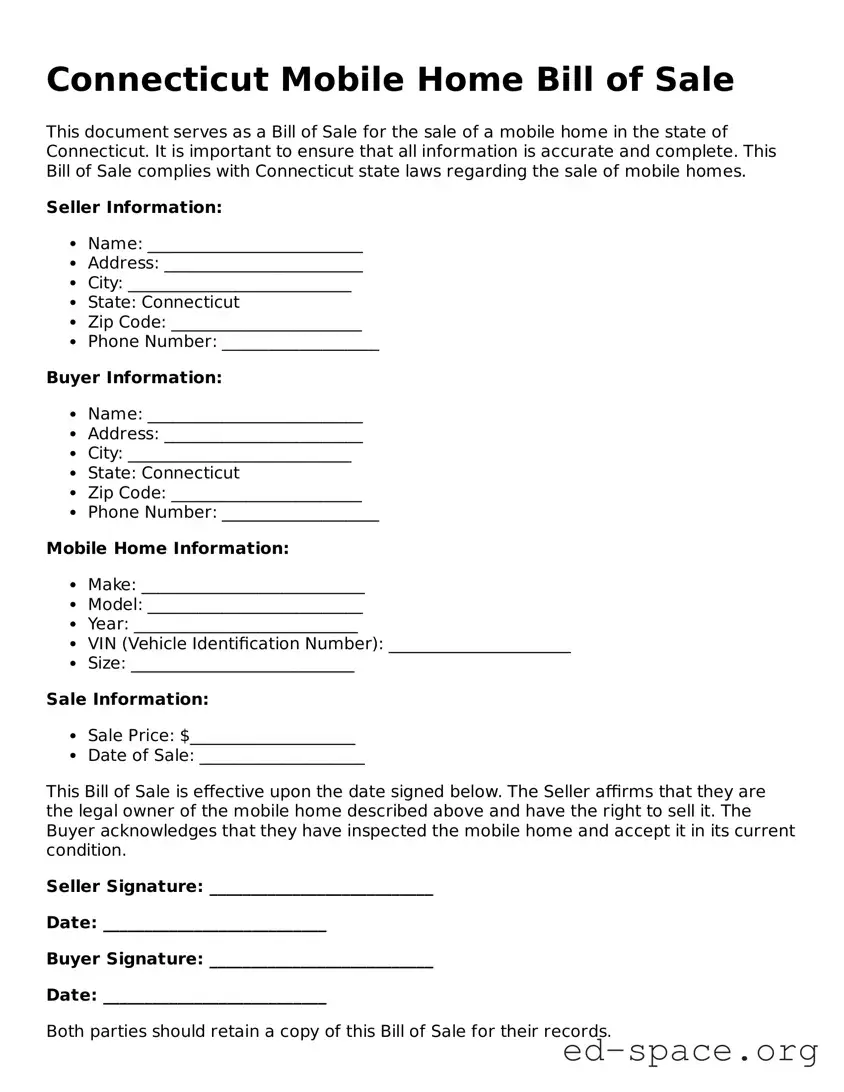
When it comes to buying or selling a mobile home in Connecticut, having the right documentation is crucial. The Mobile Home Bill of Sale form serves as a key legal document that outlines the terms of the sale between the buyer and the seller. This form typically includes important details such as the names and addresses of both parties, a description of the mobile home, including its make, model, and identification number, and the sale price. Additionally, it may contain information about any warranties or guarantees provided by the seller. Completing this form not only ensures a smooth transaction but also protects the interests of both parties involved. Understanding the components of the Mobile Home Bill of Sale can help streamline the process and prevent future disputes. Whether you’re a first-time buyer or an experienced seller, being familiar with this form is essential for a successful sale.
Connecticut Mobile Home Bill of Sale
This document serves as a Bill of Sale for the sale of a mobile home in the state of Connecticut. It is important to ensure that all information is accurate and complete. This Bill of Sale complies with Connecticut state laws regarding the sale of mobile homes.
Seller Information:
Buyer Information:
Mobile Home Information:
Sale Information:
This Bill of Sale is effective upon the date signed below. The Seller affirms that they are the legal owner of the mobile home described above and have the right to sell it. The Buyer acknowledges that they have inspected the mobile home and accept it in its current condition.
Seller Signature: ___________________________
Date: ___________________________
Buyer Signature: ___________________________
Date: ___________________________
Both parties should retain a copy of this Bill of Sale for their records.
| Fact Name | Description |
|---|---|
| Purpose | The Connecticut Mobile Home Bill of Sale form is used to document the sale of a mobile home from one party to another. |
| Governing Law | The sale of mobile homes in Connecticut is governed by state laws, specifically Connecticut General Statutes § 14-67a. |
| Required Information | The form typically requires details such as the names and addresses of the buyer and seller, the mobile home’s identification number, and the sale price. |
| Signature Requirement | Both the buyer and seller must sign the form to validate the transaction and transfer ownership. |
| Record Keeping | It is advisable for both parties to keep a copy of the completed Bill of Sale for their records and future reference. |
After obtaining the Connecticut Mobile Home Bill of Sale form, you will need to complete it accurately to ensure a smooth transaction. Following the steps below will help you fill out the form correctly.
Once the form is completed, both parties should retain a copy for their records. This documentation is essential for future reference and may be needed for registration or transfer of ownership.
What is a Mobile Home Bill of Sale in Connecticut?
A Mobile Home Bill of Sale is a legal document that serves as proof of the transfer of ownership of a mobile home from one party to another in Connecticut. It outlines the details of the transaction, including the buyer, seller, and specifics about the mobile home itself, such as its make, model, and identification numbers.
Why is a Mobile Home Bill of Sale important?
This document is crucial for both buyers and sellers. For buyers, it provides proof of ownership, which is necessary for registration and insurance purposes. For sellers, it protects against future claims regarding ownership. It also helps to establish the terms of the sale, ensuring both parties are clear on the agreement.
What information is typically included in the Mobile Home Bill of Sale?
The form usually includes the names and addresses of both the buyer and seller, a description of the mobile home (including its make, model, year, and Vehicle Identification Number or VIN), the sale price, and the date of the transaction. It may also include any warranties or conditions related to the sale.
Is a Mobile Home Bill of Sale required in Connecticut?
While it is not legally required to have a Bill of Sale for a mobile home transaction in Connecticut, it is highly recommended. Having this document protects both parties and provides a clear record of the sale. Additionally, it may be required by the Department of Motor Vehicles (DMV) when registering the mobile home.
Do I need to have the Bill of Sale notarized?
Notarization is not required for a Mobile Home Bill of Sale in Connecticut. However, having the document notarized can add an extra layer of authenticity and protection, especially if there are disputes in the future regarding the transaction.
What should I do if I lose my Mobile Home Bill of Sale?
If you lose your Bill of Sale, you should attempt to obtain a duplicate from the seller, if possible. If the seller is unavailable, you may need to provide other documentation to the DMV to prove ownership, such as previous registration documents or proof of payment.
Can I create my own Mobile Home Bill of Sale?
Yes, you can create your own Mobile Home Bill of Sale as long as it includes all necessary information and is clear and concise. However, using a template or form that meets Connecticut's requirements can help ensure that you do not miss any important details.
What happens if there are problems after the sale?
If issues arise after the sale, such as disputes over the condition of the mobile home or unpaid liens, the Bill of Sale serves as a reference point for resolving those issues. It is advisable to keep a copy of the document and any related communications to help clarify the terms of the sale.
Is there a fee associated with the Mobile Home Bill of Sale?
There is no fee specifically associated with creating a Mobile Home Bill of Sale. However, there may be fees related to registering the mobile home with the DMV or other associated costs during the transfer of ownership process.
Where can I obtain a Mobile Home Bill of Sale form?
You can obtain a Mobile Home Bill of Sale form from various sources, including online legal document services, local legal offices, or the DMV. It is important to ensure that the form you use complies with Connecticut laws and includes all necessary information for your transaction.
Incomplete Information: Failing to provide all required details, such as the names of the buyer and seller, can lead to complications. Ensure that all fields are filled out accurately.
Incorrect Vehicle Identification Number (VIN): The VIN must match the mobile home being sold. Double-check this number to avoid any discrepancies.
Missing Signatures: Both parties must sign the form. Omitting signatures can invalidate the sale, so it is important to confirm that all necessary signatures are present.
Not Including the Sale Price: Clearly stating the sale price is essential. Leaving this blank can create confusion and disputes later on.
Failure to Date the Document: The date of the transaction is crucial for record-keeping. Without a date, it may be difficult to establish when the sale occurred.
Neglecting to Keep Copies: After completing the form, both parties should retain copies. This helps in case any issues arise in the future regarding the sale.
When transferring ownership of a mobile home in Connecticut, the Mobile Home Bill of Sale form is a crucial document. However, it is often accompanied by several other forms and documents that help ensure a smooth transaction. Below are some commonly used documents that you may encounter in this process.
Having these documents ready can streamline the process of buying or selling a mobile home. Ensuring that everything is in order helps protect both the buyer and seller, making for a smoother transition of ownership.
The Mobile Home Bill of Sale form is an important document for transferring ownership of a mobile home. It shares similarities with several other documents used in transactions involving personal property. Here are seven documents that are similar to the Mobile Home Bill of Sale:
When filling out the Connecticut Mobile Home Bill of Sale form, it's important to follow certain guidelines. Here’s a list of things you should and shouldn't do:
Following these guidelines will help ensure a smooth transaction. Take your time and review everything carefully before submitting the form.
The Connecticut Mobile Home Bill of Sale form is often misunderstood. Here are nine common misconceptions about this important document:
Understanding these misconceptions can help ensure that individuals are properly informed when dealing with mobile home transactions in Connecticut.
When completing the Connecticut Mobile Home Bill of Sale form, it is essential to ensure accuracy and compliance with state regulations. Here are key takeaways to consider:
By following these guidelines, you can ensure a smooth and legally compliant transaction when using the Connecticut Mobile Home Bill of Sale form.