In Connecticut, a Living Will is an important document that allows individuals to express their wishes regarding medical treatment in the event they become unable to communicate those wishes themselves. This form primarily addresses end-of-life decisions, outlining the types of medical care one would or would not want, particularly in situations where they are terminally ill or in a persistent vegetative state. By completing a Living Will, individuals can ensure that their preferences are respected, relieving family members and healthcare providers from the burden of making difficult choices during emotionally charged times. The form typically includes details about life-sustaining treatments, such as resuscitation efforts, mechanical ventilation, and artificial nutrition. It's essential for Connecticut residents to understand how to properly complete this form, as well as the implications of their choices, to ensure their healthcare decisions align with their values and beliefs.
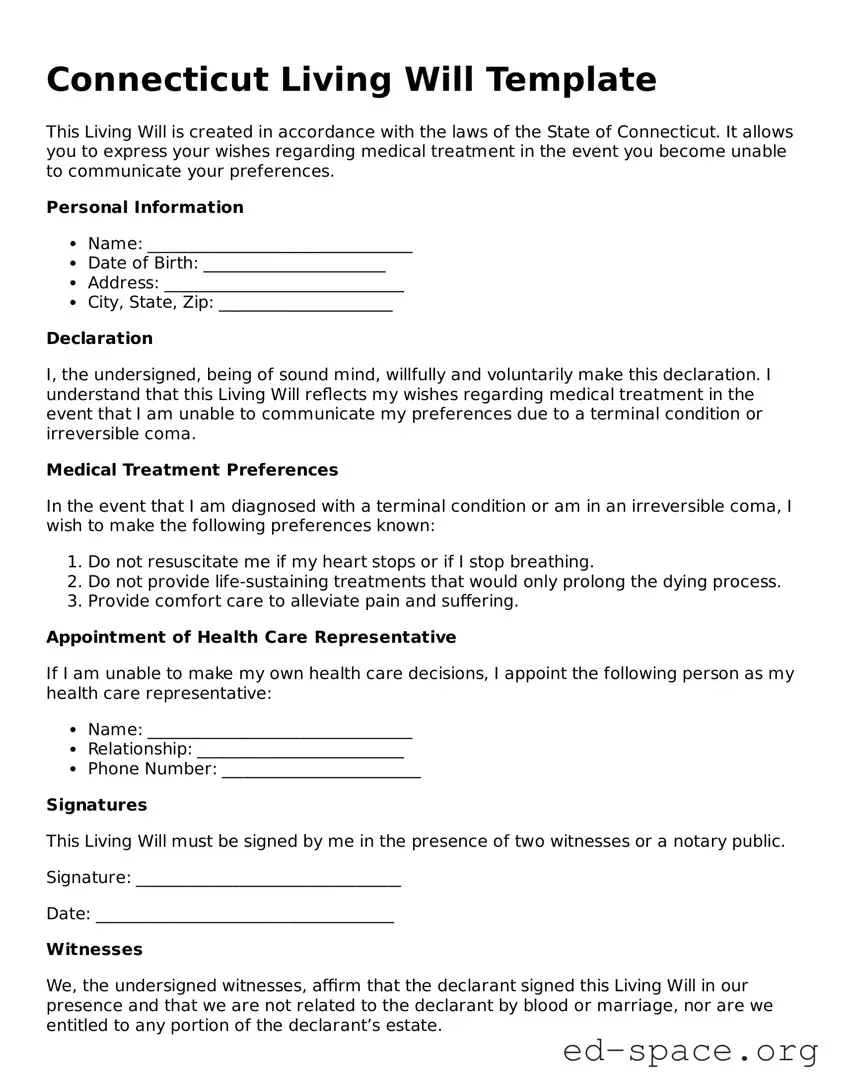
Connecticut Living Will Template
This Living Will is created in accordance with the laws of the State of Connecticut. It allows you to express your wishes regarding medical treatment in the event you become unable to communicate your preferences.
Personal Information
Declaration
I, the undersigned, being of sound mind, willfully and voluntarily make this declaration. I understand that this Living Will reflects my wishes regarding medical treatment in the event that I am unable to communicate my preferences due to a terminal condition or irreversible coma.
Medical Treatment Preferences
In the event that I am diagnosed with a terminal condition or am in an irreversible coma, I wish to make the following preferences known:
Appointment of Health Care Representative
If I am unable to make my own health care decisions, I appoint the following person as my health care representative:
Signatures
This Living Will must be signed by me in the presence of two witnesses or a notary public.
Signature: ________________________________
Date: ____________________________________
Witnesses
We, the undersigned witnesses, affirm that the declarant signed this Living Will in our presence and that we are not related to the declarant by blood or marriage, nor are we entitled to any portion of the declarant’s estate.
| Fact Name | Description |
|---|---|
| Definition | A Connecticut Living Will is a legal document that outlines an individual's wishes regarding medical treatment in the event they become unable to communicate those wishes. |
| Governing Law | The Connecticut Living Will is governed by Connecticut General Statutes, Section 19a-570 through 19a-580. |
| Requirements | The form must be signed by the individual and witnessed by at least one person who is not a relative or involved in the individual's healthcare. |
| Revocation | Individuals can revoke their Living Will at any time, and it must be done in writing or verbally in front of witnesses. |
| Healthcare Proxy | A Living Will can be used alongside a Healthcare Proxy, which designates someone to make healthcare decisions on behalf of the individual. |
Completing the Connecticut Living Will form is an important step in expressing your healthcare preferences. After filling out the form, you will need to ensure that it is signed and witnessed according to state requirements to make it legally valid.
What is a Living Will in Connecticut?
A Living Will is a legal document that allows individuals to express their wishes regarding medical treatment in the event they become unable to communicate their preferences due to illness or incapacity. In Connecticut, this document specifically outlines the types of medical interventions an individual does or does not want at the end of life, particularly concerning life-sustaining treatments.
Who can create a Living Will in Connecticut?
Any adult who is at least 18 years old and is of sound mind can create a Living Will in Connecticut. It is essential that the individual understands the implications of the document and can articulate their wishes regarding medical care.
What should be included in a Living Will?
A Living Will should include clear and specific instructions about the types of medical treatments the individual wishes to receive or refuse. Common topics addressed include resuscitation efforts, mechanical ventilation, tube feeding, and pain management. It is crucial to be as detailed as possible to ensure that healthcare providers understand the individual’s preferences.
How does a Living Will differ from a Health Care Proxy?
A Living Will and a Health Care Proxy serve different purposes. A Living Will outlines an individual's wishes regarding medical treatment, while a Health Care Proxy designates a specific person to make medical decisions on behalf of the individual if they are unable to do so. It is possible to have both documents in place, providing a comprehensive approach to healthcare decisions.
Is a Living Will legally binding in Connecticut?
Yes, a Living Will is legally binding in Connecticut as long as it meets the state’s requirements. The document must be signed by the individual and witnessed by two people who are not related to the individual or beneficiaries of their estate. Proper execution ensures that healthcare providers must honor the wishes expressed in the Living Will.
Can a Living Will be revoked or changed?
Yes, an individual can revoke or change their Living Will at any time, as long as they are of sound mind. To revoke the document, the individual should notify their healthcare provider and any designated agents of the change. It is advisable to create a new Living Will if significant changes to preferences occur, ensuring that the most current wishes are documented.
Where should a Living Will be kept?
A Living Will should be stored in a safe but accessible place. It is advisable to provide copies to key individuals, such as family members, healthcare providers, and anyone designated as a Health Care Proxy. Additionally, individuals may want to keep a copy in their medical records to ensure it is readily available in case of an emergency.
Not understanding the purpose of the Living Will: Many individuals fill out the form without fully grasping its intent. A Living Will outlines your preferences for medical treatment in situations where you cannot communicate your wishes. Ensure you understand this before proceeding.
Failing to discuss wishes with family: It is crucial to have conversations with loved ones about your healthcare preferences. Neglecting to do so can lead to confusion and disputes during critical moments.
Inaccurate or incomplete information: Providing incorrect personal details or leaving sections blank can render the document ineffective. Double-check all information to ensure accuracy.
Not specifying treatment preferences: Some people fail to clearly outline their preferences regarding life-sustaining treatments. Vague statements can lead to misunderstandings and may not reflect your true wishes.
Neglecting to update the document: As circumstances change, so might your preferences. Failing to revise your Living Will can result in outdated directives that do not align with your current wishes.
Not signing and dating the form: A Living Will is not valid without your signature and the date. Ensure you complete this critical step to avoid legal challenges.
Ignoring state-specific requirements: Each state has its own regulations regarding Living Wills. Failing to comply with Connecticut's specific requirements can invalidate your document.
A Connecticut Living Will is a crucial document that allows individuals to express their wishes regarding medical treatment in the event they become unable to communicate those preferences. However, it is often used in conjunction with other important forms and documents that further clarify an individual's healthcare decisions. Below is a list of commonly associated documents.
Understanding these documents and how they complement a Connecticut Living Will can empower individuals to make informed decisions about their healthcare. It is essential to have these discussions with loved ones and healthcare providers to ensure that your wishes are clearly understood and respected.
A Living Will is an important document that outlines a person's wishes regarding medical treatment in the event they become unable to communicate their preferences. Several other documents serve similar purposes, providing guidance on health care decisions. Here are six documents that share similarities with a Living Will:
When it comes to filling out the Connecticut Living Will form, there are several important considerations to keep in mind. This document serves as a vital tool for expressing your wishes regarding medical treatment in the event that you cannot communicate those wishes yourself. Below is a list of things you should and shouldn't do while completing this form.
By following these guidelines, you can ensure that your Living Will accurately reflects your desires and is respected when it matters most. Taking the time to thoughtfully complete this form can provide peace of mind for you and your loved ones.
Many people have misunderstandings about the Connecticut Living Will form. Here are four common misconceptions:
When considering the Connecticut Living Will form, it is essential to understand its purpose and implications. This document allows individuals to express their wishes regarding medical treatment in the event that they become unable to communicate those wishes themselves.