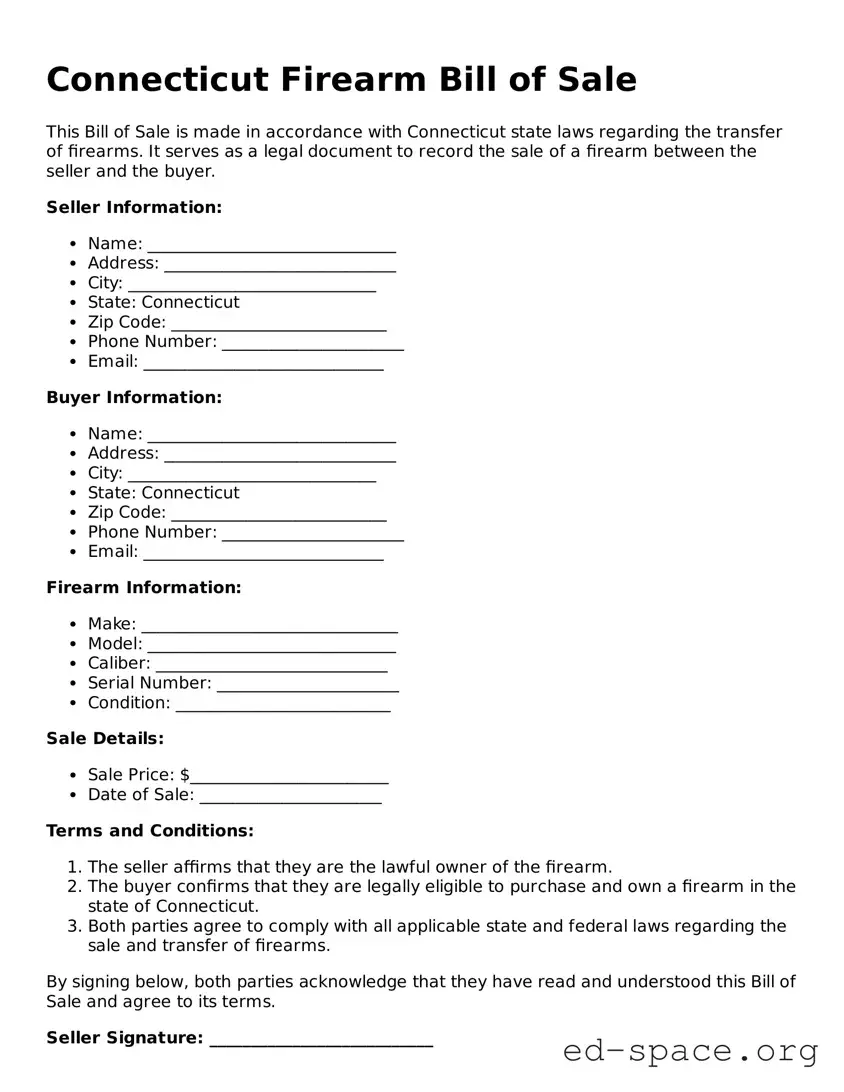
In Connecticut, the process of buying or selling a firearm involves specific legal requirements that ensure the transaction is conducted safely and responsibly. One essential document in this process is the Firearm Bill of Sale form. This form serves as a written record of the transfer of ownership between the seller and the buyer, capturing vital details such as the make, model, and serial number of the firearm, as well as the names and addresses of both parties involved. By completing this form, individuals can protect themselves legally and provide proof of the transaction, which can be crucial for future reference. Additionally, the form typically includes a statement confirming that both parties are in compliance with state and federal laws regarding firearm ownership. Understanding the importance of this document can help ensure that all legal obligations are met, promoting responsible firearm ownership in the state.
Connecticut Firearm Bill of Sale
This Bill of Sale is made in accordance with Connecticut state laws regarding the transfer of firearms. It serves as a legal document to record the sale of a firearm between the seller and the buyer.
Seller Information:
Buyer Information:
Firearm Information:
Sale Details:
Terms and Conditions:
By signing below, both parties acknowledge that they have read and understood this Bill of Sale and agree to its terms.
Seller Signature: ___________________________
Date: ______________________
Buyer Signature: ___________________________
Date: ______________________
| Fact Name | Details |
|---|---|
| Purpose | The Connecticut Firearm Bill of Sale form is used to document the sale or transfer of a firearm between private parties. |
| Governing Law | This form is governed by Connecticut General Statutes § 29-33 and § 29-36. |
| Parties Involved | The form must include information about both the seller and the buyer. |
| Identification Requirements | Both parties are required to provide valid identification, such as a driver's license or state ID. |
| Firearm Description | A detailed description of the firearm, including make, model, and serial number, must be included. |
| Transaction Date | The date of the transaction must be clearly stated on the form. |
| Signatures | Both the seller and buyer must sign the form to validate the transaction. |
| Record Keeping | It is recommended that both parties keep a copy of the signed form for their records. |
After obtaining the Connecticut Firearm Bill of Sale form, you are ready to fill it out. This document serves as a record of the transaction between the buyer and seller. Ensure that all required fields are completed accurately to avoid any issues.
Once the form is completed, keep a copy for your records. Ensure both parties retain their respective copies for future reference.
What is a Connecticut Firearm Bill of Sale form?
A Connecticut Firearm Bill of Sale form is a legal document used to record the sale or transfer of a firearm between two parties. This form serves as proof of the transaction and includes important details such as the names of the buyer and seller, the description of the firearm, and the date of the sale. It helps ensure that the transfer complies with state regulations and protects both parties involved in the transaction.
Is a Bill of Sale required for firearm transfers in Connecticut?
While a Bill of Sale is not strictly required by law for firearm transfers in Connecticut, it is highly recommended. Having a Bill of Sale provides a written record of the transaction, which can be useful in case of disputes or legal issues in the future. It also demonstrates that the buyer has taken ownership of the firearm and that the seller has relinquished ownership.
What information should be included in the Bill of Sale?
The Bill of Sale should include several key pieces of information. This includes the names and addresses of both the buyer and seller, the date of the transaction, a detailed description of the firearm (including make, model, caliber, and serial number), and the purchase price. Both parties should sign and date the document to validate the transaction. Additional information, such as whether the buyer has a valid permit, can also be beneficial.
Do I need to have the Bill of Sale notarized?
Notarization is not a requirement for a Bill of Sale in Connecticut; however, having it notarized can add an extra layer of legitimacy to the document. A notary public can verify the identities of the parties involved and witness their signatures, which may be helpful if questions about the transaction arise later.
Can I use a Bill of Sale for private sales of firearms?
Yes, a Bill of Sale can and should be used for private sales of firearms in Connecticut. Whether you are buying or selling a firearm privately, documenting the transaction with a Bill of Sale helps protect both parties. It ensures that the transfer is recorded and that both the buyer and seller have a clear understanding of the terms of the sale.
What happens if I lose my Bill of Sale?
If you lose your Bill of Sale, it may pose challenges, especially if questions about ownership arise. While it is not a legal requirement to have a Bill of Sale, having a copy can be very helpful. If you lose it, consider contacting the other party involved in the transaction to see if they can provide a duplicate or if you can recreate the document with the same details. Keeping a digital copy in addition to a physical one can help prevent future loss.
Where can I obtain a Connecticut Firearm Bill of Sale form?
Connecticut Firearm Bill of Sale forms can be found online through various legal websites or firearm organizations. Additionally, some local gun shops may provide templates or forms for their customers. It is important to ensure that any form used complies with Connecticut state laws and includes all necessary information for a valid transaction.
Incomplete Information: One common mistake is failing to fill out all required fields. Buyers and sellers must provide accurate details, including names, addresses, and firearm specifics. Omitting any information can lead to complications in the transaction.
Incorrect Firearm Details: Listing the wrong make, model, or serial number of the firearm can cause significant issues. It is crucial to double-check these details to ensure they match the actual firearm being sold.
Not Notarizing the Document: Some individuals overlook the importance of notarization. In Connecticut, notarizing the bill of sale can provide an additional layer of authenticity and may be required for certain transactions.
Failure to Retain Copies: After completing the form, both parties should keep a copy of the bill of sale. Not retaining this document can lead to disputes or confusion about the transaction in the future.
Ignoring Local Laws: Buyers and sellers sometimes neglect to review local laws regarding firearm sales. Understanding state and local regulations is essential to ensure compliance and avoid legal issues.
When buying or selling a firearm in Connecticut, it's essential to have the right documentation in place. Along with the Firearm Bill of Sale form, several other forms and documents can help ensure that the transaction is legal and smooth. Here’s a list of commonly used documents that complement the Firearm Bill of Sale.
Having these documents in order can help facilitate a smooth and legal firearm transaction in Connecticut. It's always a good idea to be thorough and ensure that all necessary paperwork is completed to protect both parties involved.
The Firearm Bill of Sale form serves as a crucial document in the transfer of firearm ownership. It is similar to several other legal documents that facilitate the transfer of ownership or rights. Here are nine documents that share similarities with the Firearm Bill of Sale:
Each of these documents plays a vital role in establishing clear and legal ownership transfers, much like the Firearm Bill of Sale. They help protect the interests of both buyers and sellers, ensuring that all parties are informed and accountable.
When filling out the Connecticut Firearm Bill of Sale form, it's important to be careful and precise. Here are some dos and don'ts to keep in mind:
Following these guidelines can help ensure a smooth transaction when buying or selling a firearm in Connecticut.
The Connecticut Firearm Bill of Sale form is often surrounded by misunderstandings. Here are six common misconceptions and clarifications about this important document:
Understanding these misconceptions can help ensure that firearm transactions in Connecticut are conducted legally and smoothly. Always consult the latest regulations or seek professional advice if unsure about the process.
When filling out and using the Connecticut Firearm Bill of Sale form, it is essential to understand several key points to ensure a smooth transaction. Here are some important takeaways:
By keeping these points in mind, individuals can navigate the process of transferring firearm ownership more effectively and responsibly.