Creating a well-structured employee handbook is an essential step for any business operating in Connecticut. This document serves as a vital resource for both employers and employees, outlining workplace policies, procedures, and expectations. It typically includes crucial topics such as company culture, employee rights, anti-discrimination policies, and workplace safety guidelines. Additionally, the handbook often details benefits, attendance policies, and the process for addressing grievances, ensuring that employees are informed of their rights and responsibilities. By utilizing the Connecticut Employee Handbook form, employers can streamline the process of developing a comprehensive handbook that meets state requirements while fostering a positive work environment. Understanding the components of this form can help businesses tailor their handbooks to reflect their unique values and operational needs, ultimately promoting clarity and consistency within the workplace.
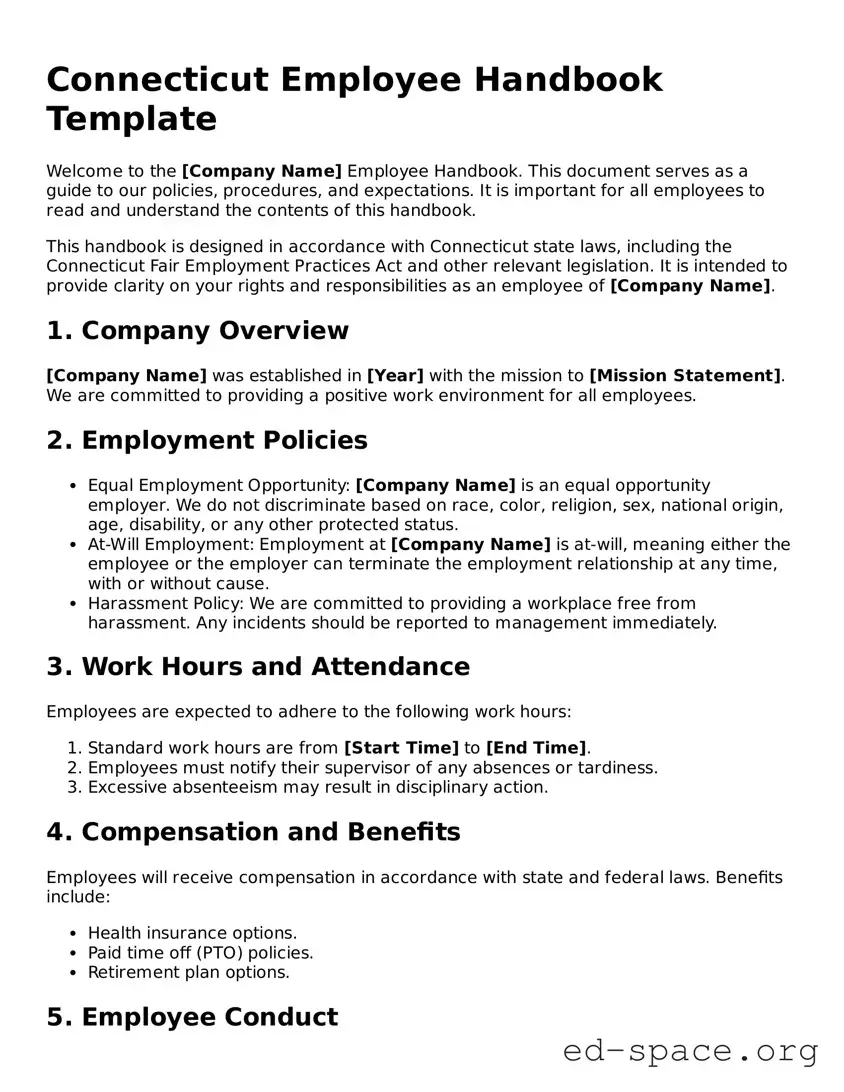
Connecticut Employee Handbook Template
Welcome to the [Company Name] Employee Handbook. This document serves as a guide to our policies, procedures, and expectations. It is important for all employees to read and understand the contents of this handbook.
This handbook is designed in accordance with Connecticut state laws, including the Connecticut Fair Employment Practices Act and other relevant legislation. It is intended to provide clarity on your rights and responsibilities as an employee of [Company Name].
1. Company Overview
[Company Name] was established in [Year] with the mission to [Mission Statement]. We are committed to providing a positive work environment for all employees.
2. Employment Policies
3. Work Hours and Attendance
Employees are expected to adhere to the following work hours:
4. Compensation and Benefits
Employees will receive compensation in accordance with state and federal laws. Benefits include:
5. Employee Conduct
All employees are expected to maintain a professional demeanor. This includes:
6. Safety and Health
[Company Name] prioritizes the safety and health of its employees. Employees are required to:
7. Acknowledgment of Receipt
By signing below, you acknowledge that you have received and read the [Company Name] Employee Handbook.
Employee Name: [Employee Name]
Employee Signature: ______________________
Date: [Date]
For any questions regarding the policies outlined in this handbook, please contact your supervisor or the HR department.
| Fact Name | Description |
|---|---|
| Purpose | The Connecticut Employee Handbook serves as a guide for employees, outlining company policies, expectations, and benefits. |
| Governing Laws | Connecticut General Statutes, Title 31, Labor |
| Mandatory Policies | Employers are required to include specific policies such as anti-discrimination and harassment policies in the handbook. |
| Employee Acknowledgment | Employees often need to sign an acknowledgment form to confirm they have received and understood the handbook. |
| Updates | Handbooks should be reviewed and updated regularly to reflect changes in laws and company policies. |
| Accessibility | The handbook should be easily accessible to all employees, whether in print or digital format. |
| Legal Protection | A well-crafted employee handbook can provide legal protection for employers by clearly outlining policies and procedures. |
Filling out the Connecticut Employee Handbook form is a straightforward process. Once you have gathered the necessary information, you can proceed with the following steps to ensure that the form is completed accurately.
What is a Connecticut Employee Handbook?
A Connecticut Employee Handbook is a document that outlines the policies, procedures, and expectations of an employer regarding employee conduct and workplace standards. It serves as a guide for employees to understand their rights and responsibilities within the organization.
Why is it important to have an Employee Handbook?
An Employee Handbook is crucial for establishing clear communication between employers and employees. It helps to prevent misunderstandings by providing consistent information about workplace policies, including attendance, dress code, and disciplinary procedures. Additionally, having a handbook can protect the employer legally by demonstrating that employees have been informed of company policies.
What should be included in the Connecticut Employee Handbook?
Essential elements of a Connecticut Employee Handbook typically include an introduction to the company, employment policies, anti-discrimination and harassment policies, code of conduct, attendance and punctuality expectations, benefits information, and procedures for addressing grievances. It may also cover leave policies, safety protocols, and termination procedures.
Is it necessary to update the Employee Handbook regularly?
Yes, it is vital to update the Employee Handbook regularly. Changes in state and federal laws, shifts in company policy, and feedback from employees can all necessitate updates. Regular reviews ensure that the handbook remains relevant and compliant with current legal standards.
How can employees access the Employee Handbook?
Employers should provide easy access to the Employee Handbook for all employees. This can be done by distributing physical copies, making it available on the company intranet, or sending it via email. Employees should be encouraged to read the handbook thoroughly and refer back to it as needed.
What should an employee do if they have questions about the Employee Handbook?
If an employee has questions about the Employee Handbook, they should reach out to their supervisor or the Human Resources department. It’s important to address any uncertainties to ensure a clear understanding of the policies and expectations outlined in the handbook.
Can an Employee Handbook be legally binding?
While an Employee Handbook is not a contract, it can have legal implications. If the handbook outlines specific policies and procedures, it may be considered binding in certain situations. Employees should be aware that failing to adhere to the handbook can result in disciplinary action, including termination. Therefore, it’s essential for both employers and employees to take the contents seriously.
Incomplete Information: One of the most common mistakes is failing to fill out all required fields. Each section of the form is designed to gather essential information. Leaving sections blank can delay processing and create confusion.
Inaccurate Personal Details: Providing incorrect personal information, such as your name, address, or Social Security number, can lead to significant issues. Always double-check these details before submitting the form.
Neglecting to Read Instructions: Skimming through the instructions can result in misunderstandings. Each form typically includes specific guidelines that clarify how to complete it correctly. Taking the time to read these instructions can save you from errors.
Ignoring Deadlines: Submitting the form late can have consequences. Employers often set deadlines for paperwork to ensure compliance with company policies. Be aware of these timelines to avoid any complications.
Failing to Update Information: After initial submission, some individuals forget to update their information when circumstances change. Whether it's a new address or a change in marital status, keeping your information current is crucial.
Not Asking for Help: Many people hesitate to seek assistance when they encounter difficulties. If you are unsure about any part of the form, asking a supervisor or HR representative for clarification can prevent mistakes.
When creating an employee handbook in Connecticut, there are several other forms and documents that can complement it. These documents help clarify policies, procedures, and expectations within the workplace. Here’s a list of commonly used forms that may be beneficial:
Utilizing these forms alongside the employee handbook can create a comprehensive framework for managing workplace policies and relationships. Each document plays a crucial role in fostering clear communication and ensuring compliance with legal requirements.
Policy Manual: Like an Employee Handbook, a policy manual outlines the rules and procedures of a workplace. It provides employees with clear expectations regarding their conduct and the company's operational guidelines.
Onboarding Guide: An onboarding guide serves a similar purpose by introducing new hires to the company culture, values, and expectations. It often includes essential information about benefits, training, and resources available to employees.
Code of Conduct: A code of conduct details the ethical standards and behaviors expected from employees. Similar to an Employee Handbook, it sets the tone for workplace behavior and helps maintain a positive work environment.
Safety Manual: A safety manual provides guidelines for maintaining a safe workplace. Like the Employee Handbook, it is crucial for ensuring that employees understand their responsibilities and the protocols they must follow to protect themselves and their coworkers.
When filling out the Connecticut Employee Handbook form, it's important to follow certain guidelines to ensure accuracy and compliance. Here are some things you should and shouldn't do:
When it comes to the Connecticut Employee Handbook, many people have misconceptions that can lead to confusion. Let's clear up some of these misunderstandings.
While it's true that Connecticut law does not mandate every employer to have an employee handbook, having one can significantly benefit both employers and employees. It sets clear expectations and can help protect the company legally.
Every workplace is unique. A handbook should reflect the specific policies, culture, and values of the organization. Generic handbooks may not address the unique needs of your business or comply with state-specific laws.
Policies and laws change. Regularly reviewing and updating the handbook is essential to ensure compliance with current laws and to reflect any changes in company policy or procedures.
It's crucial for employees to understand the contents of the handbook. It serves as a guide for workplace behavior and policies. Encouraging employees to read and refer to the handbook can foster a better understanding of their rights and responsibilities.
When it comes to filling out and using the Connecticut Employee Handbook form, several important points come into play. Understanding these can help ensure that both employers and employees benefit from clear communication and established policies.
By keeping these key takeaways in mind, both employers and employees can navigate the Connecticut Employee Handbook form effectively, fostering a positive workplace environment.