In the realm of estate planning, the Connecticut Durable Power of Attorney form plays a crucial role in ensuring that your financial affairs are managed according to your wishes, even if you become unable to make decisions for yourself. This legal document grants a trusted individual, known as your agent, the authority to act on your behalf in financial matters, ranging from managing bank accounts to handling real estate transactions. One of the key features of this form is its durability; it remains effective even if you become incapacitated, providing peace of mind for you and your loved ones. Additionally, the form allows you to specify the powers you wish to grant, giving you the flexibility to tailor it to your unique needs. It’s important to understand that the Durable Power of Attorney can be revoked at any time, as long as you are still competent to make decisions. By carefully considering who you appoint and what powers you grant, you can ensure that your financial interests are protected, regardless of what the future may hold.
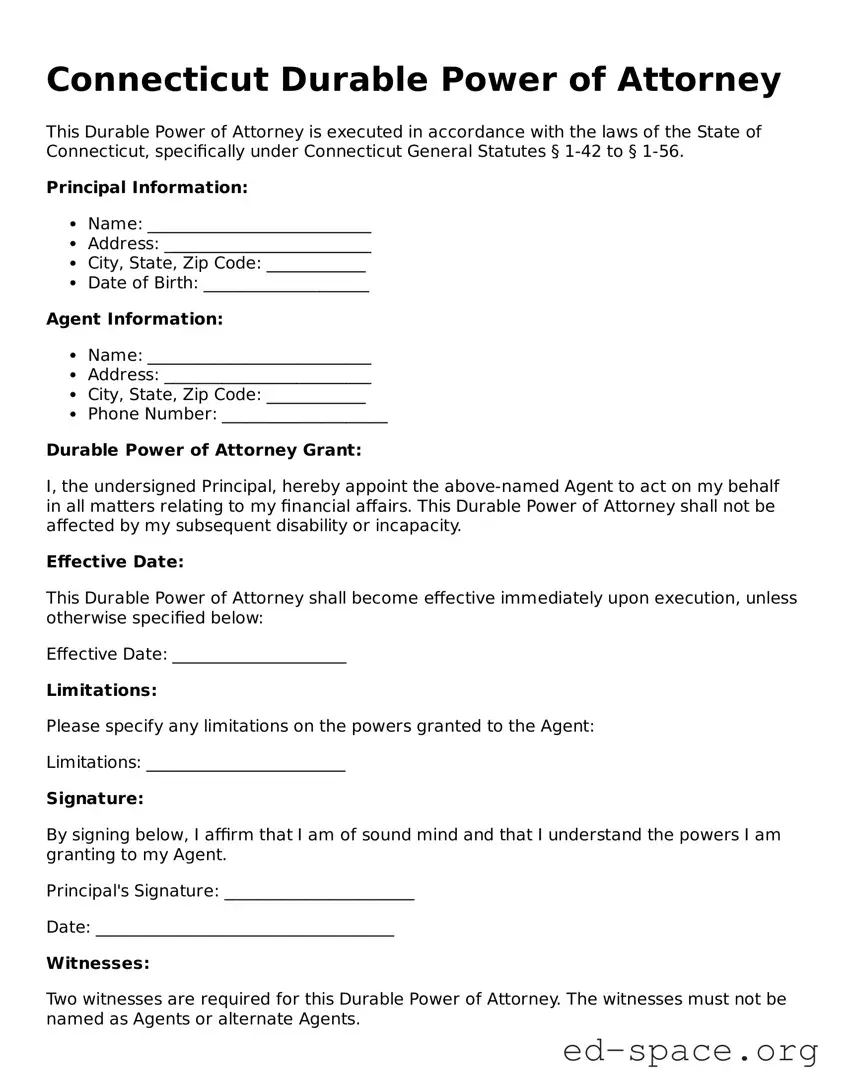
Connecticut Durable Power of Attorney
This Durable Power of Attorney is executed in accordance with the laws of the State of Connecticut, specifically under Connecticut General Statutes § 1-42 to § 1-56.
Principal Information:
Agent Information:
Durable Power of Attorney Grant:
I, the undersigned Principal, hereby appoint the above-named Agent to act on my behalf in all matters relating to my financial affairs. This Durable Power of Attorney shall not be affected by my subsequent disability or incapacity.
Effective Date:
This Durable Power of Attorney shall become effective immediately upon execution, unless otherwise specified below:
Effective Date: _____________________
Limitations:
Please specify any limitations on the powers granted to the Agent:
Limitations: ________________________
Signature:
By signing below, I affirm that I am of sound mind and that I understand the powers I am granting to my Agent.
Principal's Signature: _______________________
Date: ____________________________________
Witnesses:
Two witnesses are required for this Durable Power of Attorney. The witnesses must not be named as Agents or alternate Agents.
Notarization:
This document should be notarized to ensure its validity.
State of Connecticut, County of _______________
Subscribed and sworn before me this ____ day of ____________, 20__.
Notary Public Signature: _____________________
My Commission Expires: ______________________
| Fact Name | Description |
|---|---|
| Definition | A Connecticut Durable Power of Attorney allows an individual to appoint someone else to manage their financial affairs, even if they become incapacitated. |
| Governing Law | This form is governed by the Connecticut General Statutes, specifically Section 1-42 and Section 1-43. |
| Durability | The "durable" aspect means that the authority granted continues even if the principal becomes mentally incapacitated. |
| Revocation | The principal can revoke the Durable Power of Attorney at any time, as long as they are still mentally competent to do so. |
Filling out the Connecticut Durable Power of Attorney form is an important step in ensuring that your financial and legal matters are managed according to your wishes. Once you have completed the form, it will need to be signed and witnessed to be valid. Below are the steps to guide you through the process of filling out the form.
What is a Durable Power of Attorney in Connecticut?
A Durable Power of Attorney (DPOA) in Connecticut is a legal document that allows you to appoint someone you trust to make decisions on your behalf if you become unable to do so yourself. This could be due to illness, injury, or any other reason that affects your ability to manage your affairs. The "durable" aspect means that the authority granted to your agent continues even if you become incapacitated. This document can cover a wide range of financial and legal matters, ensuring that your interests are protected when you cannot advocate for yourself.
How do I create a Durable Power of Attorney in Connecticut?
Creating a Durable Power of Attorney in Connecticut involves several steps. First, you need to choose a trusted individual to act as your agent. This person should be someone who understands your values and wishes. Next, you will need to complete the DPOA form, which can be obtained from legal resources or online. It's essential to clearly specify the powers you want to grant your agent, whether they are broad or limited. After filling out the form, you must sign it in the presence of a notary public. This step is crucial, as notarization helps ensure that the document is legally valid and recognized by institutions.
Can I revoke a Durable Power of Attorney in Connecticut?
Yes, you can revoke a Durable Power of Attorney in Connecticut at any time, as long as you are mentally competent. To revoke it, you should create a written document stating your intention to revoke the DPOA. It’s a good practice to notify your agent and any relevant institutions, such as banks or healthcare providers, that the DPOA is no longer in effect. Additionally, destroying the original document can help prevent any confusion. Always keep a record of the revocation for your personal files.
What happens if I do not have a Durable Power of Attorney?
If you do not have a Durable Power of Attorney and become incapacitated, the court may need to appoint a guardian or conservator to manage your affairs. This process can be lengthy, costly, and may not align with your wishes. Without a DPOA, your loved ones may face challenges in accessing your financial accounts or making healthcare decisions on your behalf. Therefore, having a Durable Power of Attorney in place can provide peace of mind and ensure that your preferences are honored even when you are unable to communicate them.
Failing to specify the powers granted. It’s crucial to clearly outline what powers the agent will have. General terms can lead to confusion and potential misuse.
Not naming a successor agent. If the primary agent is unable to act, having a backup is essential to ensure decisions can still be made.
Overlooking the requirement for signatures. Both the principal and the agent must sign the form. Without proper signatures, the document may not be valid.
Ignoring witness and notary requirements. Connecticut law requires that the Durable Power of Attorney be witnessed and notarized to be legally binding.
Using outdated forms. Laws change, and using an old version of the form may lead to complications. Always ensure you have the most current version.
Neglecting to discuss the document with the agent. It’s vital that the appointed agent understands their responsibilities and is willing to accept the role.
Not reviewing the document periodically. Life circumstances change, and so should your Durable Power of Attorney. Regular reviews ensure it remains relevant and effective.
When establishing a Durable Power of Attorney in Connecticut, individuals often consider additional documents to ensure comprehensive management of their financial and healthcare decisions. Each of these documents serves a unique purpose and can complement the Durable Power of Attorney effectively.
Incorporating these documents into estate planning can provide peace of mind and clarity for both the individual and their loved ones. Each serves a distinct function that enhances the overall effectiveness of managing one's affairs, especially in times of uncertainty.
When filling out the Connecticut Durable Power of Attorney form, it is important to approach the process carefully. Here are some key points to consider:
By following these guidelines, you can ensure that your Durable Power of Attorney form is completed accurately and effectively. This document is an important part of planning for your future and should reflect your wishes clearly.
Understanding the Connecticut Durable Power of Attorney form is essential for anyone considering this important legal document. However, several misconceptions exist that can lead to confusion. Here are nine common misunderstandings:
Many people believe a Durable Power of Attorney only activates when they can no longer make decisions. In reality, you can choose for it to take effect immediately or upon incapacitation.
While both documents grant authority to another person, a Durable Power of Attorney remains effective even if you become incapacitated, whereas a regular Power of Attorney does not.
Agents have specific powers outlined in the document. They cannot act outside the authority granted to them, so it’s important to clearly specify what powers you wish to confer.
You can revoke or change your Durable Power of Attorney at any time, as long as you are mentally competent. Always ensure that your wishes are up to date.
While many associate this document with aging, anyone can benefit from having a Durable Power of Attorney, especially those with significant health concerns or complex financial situations.
Although spouses often have rights to make decisions, a Durable Power of Attorney specifically designates an agent. Without this document, authority may not be clear in legal situations.
In Connecticut, a Durable Power of Attorney must be signed in the presence of a notary public to be valid. This step ensures that the document meets legal requirements.
A Durable Power of Attorney remains in effect until you revoke it or pass away. It does not have an expiration date unless specified within the document itself.
While you trust your agent to act responsibly, it’s crucial to choose someone who understands your values and wishes. Misunderstandings can arise, so clear communication is vital.
Being informed about these misconceptions can help individuals make better decisions regarding their Durable Power of Attorney in Connecticut. Always consult with a qualified professional for personalized advice tailored to your situation.
Filling out and using the Connecticut Durable Power of Attorney form can be an important step in planning for future needs. Here are some key takeaways to consider: