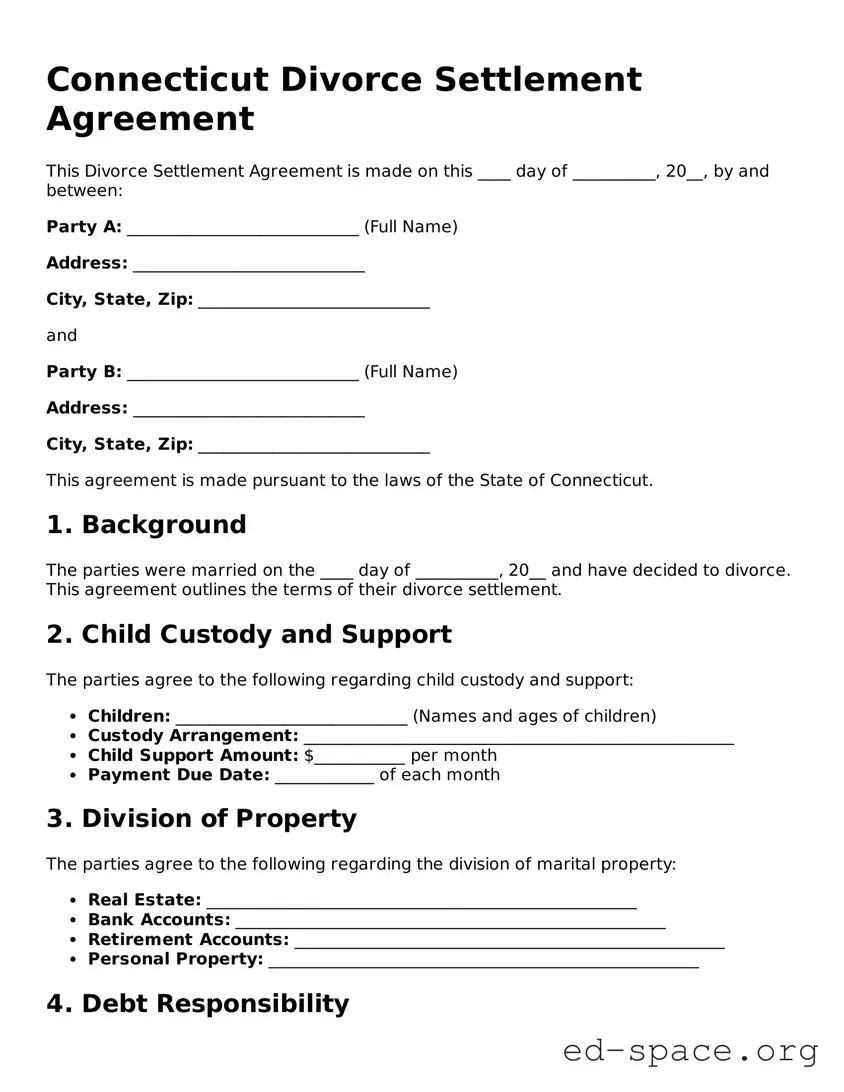
When navigating the complexities of divorce in Connecticut, understanding the Divorce Settlement Agreement form is crucial. This document serves as a comprehensive outline of the terms agreed upon by both parties, addressing key issues such as property division, alimony, child custody, and child support. It reflects the negotiations between spouses, ensuring that both parties have a clear understanding of their rights and responsibilities moving forward. Properly completing this form can facilitate a smoother divorce process, minimizing potential conflicts and misunderstandings. Additionally, the agreement must be fair and equitable, taking into account the unique circumstances of each couple. By carefully considering all aspects included in the form, individuals can set the stage for a more amicable separation and lay the groundwork for their future post-divorce lives.
Connecticut Divorce Settlement Agreement
This Divorce Settlement Agreement is made on this ____ day of __________, 20__, by and between:
Party A: ____________________________ (Full Name)
Address: ____________________________
City, State, Zip: ____________________________
and
Party B: ____________________________ (Full Name)
Address: ____________________________
City, State, Zip: ____________________________
This agreement is made pursuant to the laws of the State of Connecticut.
1. Background
The parties were married on the ____ day of __________, 20__ and have decided to divorce. This agreement outlines the terms of their divorce settlement.
2. Child Custody and Support
The parties agree to the following regarding child custody and support:
3. Division of Property
The parties agree to the following regarding the division of marital property:
4. Debt Responsibility
The parties agree to the following regarding the responsibility for debts:
5. Spousal Support
The parties agree to the following regarding spousal support:
6. Miscellaneous Provisions
This agreement may be modified only in writing and signed by both parties. Each party acknowledges that they have had the opportunity to seek independent legal advice before signing this agreement.
7. Signatures
By signing below, both parties agree to the terms of this Divorce Settlement Agreement.
Party A Signature: ____________________________ Date: ____________
Party B Signature: ____________________________ Date: ____________
This agreement is binding upon the parties and their heirs, successors, and assigns.
| Fact Name | Description |
|---|---|
| Governing Law | The Connecticut Divorce Settlement Agreement form is governed by Connecticut General Statutes, specifically Title 46b, which addresses family law and divorce proceedings. |
| Purpose | This form is used to outline the terms of a divorce settlement, including division of property, child custody, and support obligations. |
| Mandatory Use | In contested divorce cases, the use of this form is typically required by the court to ensure that all parties have agreed to the settlement terms. |
| Filing Process | Once completed, the agreement must be filed with the court as part of the divorce proceedings, allowing for judicial approval. |
| Modification | Parties may modify the terms of the agreement post-divorce, but such changes must be documented and approved by the court to be enforceable. |
After obtaining the Connecticut Divorce Settlement Agreement form, you will need to complete it accurately to ensure that all terms of your divorce are clearly outlined. This form is essential for finalizing your divorce and will be submitted to the court for approval.
Once you have filled out the form, you will need to file it with the appropriate court. Ensure you keep copies for your records and follow any additional local court procedures that may apply.
What is a Divorce Settlement Agreement in Connecticut?
A Divorce Settlement Agreement is a legal document that outlines the terms agreed upon by both spouses during a divorce. It covers important aspects such as property division, child custody, child support, and alimony. This agreement helps ensure that both parties understand their rights and responsibilities after the divorce is finalized.
How do I create a Divorce Settlement Agreement?
Creating a Divorce Settlement Agreement involves discussing and negotiating the terms with your spouse. It’s important to be clear about your needs and concerns. You may want to draft the agreement together or seek the assistance of a mediator or attorney to help facilitate the process. Once both parties agree on the terms, the document should be signed and dated.
Is a Divorce Settlement Agreement legally binding?
Yes, once signed by both parties and approved by the court, a Divorce Settlement Agreement becomes legally binding. This means that both spouses are required to adhere to the terms outlined in the agreement. If either party fails to comply, the other party can seek enforcement through the court.
What happens if we cannot agree on the terms?
If you and your spouse cannot reach an agreement, you may need to consider mediation or collaborative divorce. These processes involve a neutral third party who can help facilitate discussions and negotiations. If all else fails, the matter may need to be resolved in court, where a judge will make decisions regarding the divorce terms.
Can we modify the Divorce Settlement Agreement later?
Yes, it is possible to modify the Divorce Settlement Agreement after it has been finalized. However, both parties must agree to the changes, and the modifications must be documented and filed with the court. Common reasons for modifications include changes in income, relocation, or changes in the needs of children.
Do I need a lawyer to draft the Divorce Settlement Agreement?
While it’s not required to have a lawyer, it is highly recommended. An attorney can help ensure that your rights are protected and that the agreement complies with Connecticut law. They can also provide valuable advice on the implications of the terms you are considering.
Where do I file the Divorce Settlement Agreement?
The Divorce Settlement Agreement should be filed with the court where your divorce case is being processed. This is typically the family court in the county where either spouse resides. Make sure to keep a copy for your records, and check with the court for any specific filing requirements.
How long does it take for the court to approve the Divorce Settlement Agreement?
The time it takes for the court to approve a Divorce Settlement Agreement can vary. Generally, once filed, the court will review the document and may schedule a hearing. If everything is in order and both parties are present, approval can happen quickly. However, it’s wise to allow several weeks for the process to be completed.
Incomplete Information: Many individuals leave sections of the form blank. Each part must be filled out to ensure the agreement is valid. Omitting details can lead to delays or complications.
Failure to Disclose Assets: Some people do not fully disclose all assets and debts. This can result in an unfair settlement. It is crucial to provide a complete picture of financial circumstances.
Not Considering Tax Implications: Individuals often overlook how the settlement may affect their taxes. Understanding these implications is essential for making informed decisions regarding property division and alimony.
Ignoring State Requirements: Each state has specific requirements for divorce agreements. Failing to adhere to Connecticut's rules can invalidate the agreement. It is important to review the state guidelines before submission.
When navigating a divorce in Connecticut, several forms and documents may accompany the Divorce Settlement Agreement. Each of these documents serves a specific purpose in the divorce process and helps ensure that all legal requirements are met.
These documents are essential for a smooth divorce process in Connecticut. Understanding each form's role can help individuals better prepare for their legal journey.
The Divorce Settlement Agreement form shares similarities with several other legal documents. Each of these documents serves specific purposes in family law and related areas. Below is a list of nine documents that are comparable to the Divorce Settlement Agreement:
When filling out the Connecticut Divorce Settlement Agreement form, it’s important to approach the process carefully. Here’s a list of things you should and shouldn’t do to ensure a smooth experience.
When it comes to the Connecticut Divorce Settlement Agreement form, many people hold misconceptions that can lead to confusion or mistakes. Understanding the truth behind these beliefs can make the process smoother. Here are seven common misconceptions:
By clearing up these misconceptions, individuals can approach the divorce process with a better understanding of what to expect. This knowledge can help make the transition smoother for everyone involved.
When navigating the Connecticut Divorce Settlement Agreement form, it is essential to understand the key components that will guide you through the process. Here are some important takeaways:
Understanding these elements will help ensure that the process is smooth and that all parties are on the same page regarding the terms of the divorce.