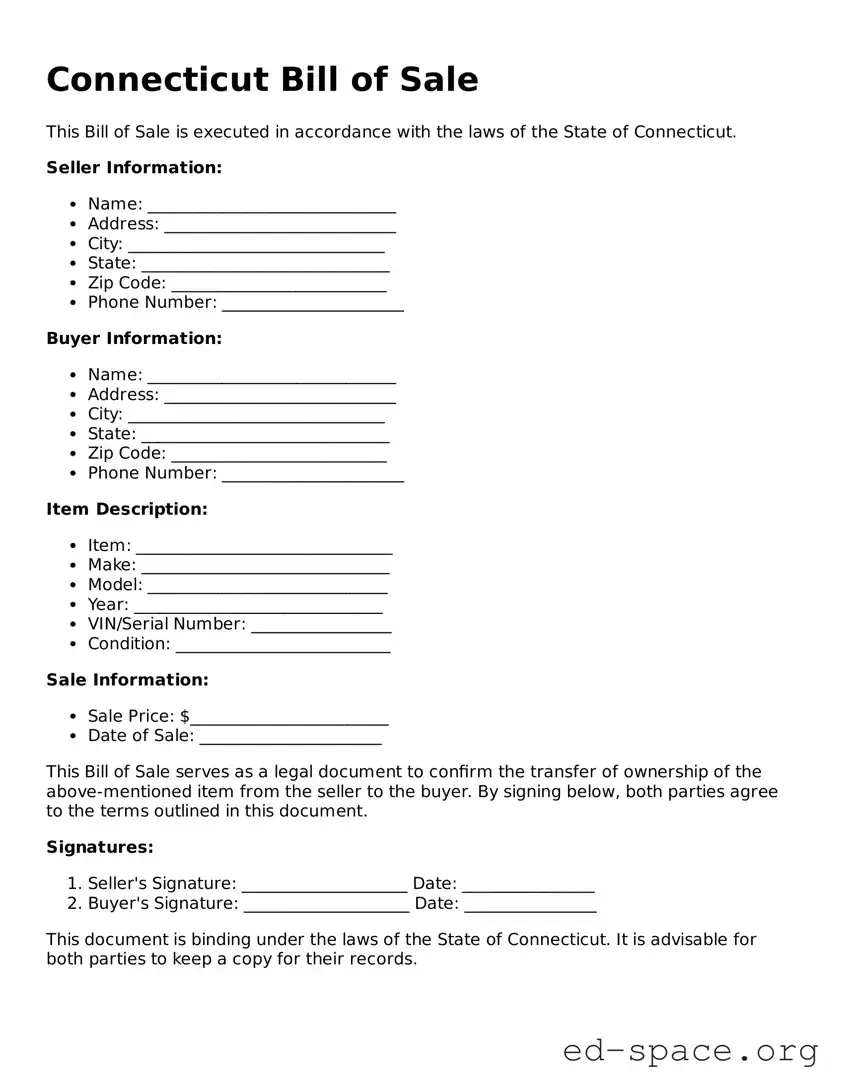
When it comes to buying or selling personal property in Connecticut, a Bill of Sale serves as a crucial document that protects both parties involved in the transaction. This form not only provides a written record of the sale but also outlines essential details such as the names and addresses of the buyer and seller, a description of the item being sold, and the agreed-upon purchase price. Additionally, it may include important information about the condition of the item and any warranties or guarantees provided by the seller. By formalizing the transaction in writing, the Bill of Sale helps to prevent misunderstandings and offers legal protection should any disputes arise in the future. Whether you are dealing with a vehicle, furniture, or other personal property, understanding the key components of this form can empower you to navigate the buying and selling process with confidence.
Connecticut Bill of Sale
This Bill of Sale is executed in accordance with the laws of the State of Connecticut.
Seller Information:
Buyer Information:
Item Description:
Sale Information:
This Bill of Sale serves as a legal document to confirm the transfer of ownership of the above-mentioned item from the seller to the buyer. By signing below, both parties agree to the terms outlined in this document.
Signatures:
This document is binding under the laws of the State of Connecticut. It is advisable for both parties to keep a copy for their records.
| Fact Name | Details |
|---|---|
| Purpose | The Connecticut Bill of Sale form is used to document the sale of personal property between a buyer and a seller. |
| Governing Law | This form is governed by the Connecticut General Statutes, specifically Title 42, Chapter 735. |
| Property Types | The form can be used for various types of personal property, including vehicles, boats, and equipment. |
| Notarization | Notarization is not required for the Bill of Sale in Connecticut, but it can add an extra layer of security. |
| Information Required | Buyers and sellers must provide their names, addresses, and signatures, along with a description of the item being sold. |
| Sales Tax | Sales tax may be applicable depending on the type of property sold; buyers should check with local regulations. |
| Transfer of Ownership | The Bill of Sale serves as proof of ownership transfer from the seller to the buyer. |
| Record Keeping | Both parties should keep a copy of the Bill of Sale for their records in case of future disputes. |
After obtaining the Connecticut Bill of Sale form, you'll be ready to provide essential details about the transaction. Completing this form accurately is important for both the buyer and the seller, as it serves as a record of the sale. Follow the steps below to ensure that you fill out the form correctly.
What is a Connecticut Bill of Sale?
A Connecticut Bill of Sale is a legal document that serves as proof of a transaction between a buyer and a seller. It outlines the details of the sale, including the item being sold, the sale price, and the identities of both parties. This document is particularly important for transferring ownership of personal property, such as vehicles, boats, or other valuable items.
Is a Bill of Sale required in Connecticut?
While a Bill of Sale is not legally required for every transaction in Connecticut, it is highly recommended. Having a Bill of Sale can protect both the buyer and the seller by providing a clear record of the transaction. It can also be essential for registering a vehicle or proving ownership in case of disputes.
What information should be included in a Connecticut Bill of Sale?
A comprehensive Bill of Sale should include the following details: the full names and addresses of both the buyer and seller, a description of the item being sold (including any identification numbers, such as VIN for vehicles), the sale price, the date of the transaction, and the signatures of both parties. Including these elements ensures clarity and legal validity.
Can I create my own Bill of Sale?
Yes, you can create your own Bill of Sale in Connecticut. There are no specific forms mandated by the state, but it is crucial to ensure that all necessary information is included. Many online resources provide templates that can help you draft a Bill of Sale that meets your needs.
Do I need to have the Bill of Sale notarized?
In Connecticut, notarization is not required for a Bill of Sale to be valid. However, having the document notarized can add an extra layer of authenticity and may be beneficial in the event of a dispute. It can also be required by certain institutions, such as banks or the Department of Motor Vehicles.
What should I do with the Bill of Sale after the transaction?
After the transaction is complete, both the buyer and seller should keep a copy of the Bill of Sale for their records. This document can serve as proof of ownership and may be needed for future transactions, such as registration or insurance purposes. It is advisable to store it in a safe place.
Can a Bill of Sale be used for gifts?
Yes, a Bill of Sale can be used for gifts, although it may not be necessary. If you are giving a valuable item as a gift, creating a Bill of Sale can still provide a record of the transfer of ownership. This can be helpful for tax purposes or in case the recipient needs to prove ownership later on.
What if the item sold has a lien against it?
If the item being sold has a lien, it is crucial to address this before completing the sale. The seller should disclose any liens to the buyer. The Bill of Sale should indicate whether the item is sold free of liens or if the buyer is assuming responsibility for the lien. Failing to disclose this information can lead to legal complications.
Not including all required information: When filling out the Connecticut Bill of Sale, it's crucial to provide complete details. This includes the names of both the buyer and seller, the date of the transaction, and a description of the item being sold. Missing any of this information can lead to issues down the line.
Incorrect item description: A vague or inaccurate description of the item can create confusion. Be specific about the make, model, year, and condition of the item. This clarity helps prevent disputes later.
Failing to sign the document: Both parties must sign the Bill of Sale. Without signatures, the document may not be considered valid. Ensure that both the buyer and seller sign and date the form.
Not having witnesses or notarization: Although not always required, having a witness or notarizing the Bill of Sale adds an extra layer of protection. It can help verify the authenticity of the transaction.
Ignoring state-specific requirements: Each state has its own rules regarding Bills of Sale. In Connecticut, be aware of any specific requirements that may apply to your situation, such as additional forms for certain types of property.
Not keeping a copy: After completing the Bill of Sale, both parties should retain a copy for their records. This documentation can be vital if any questions arise about the transaction in the future.
The Connecticut Bill of Sale form is an important document used to record the transfer of ownership of personal property. However, several other forms and documents are often utilized in conjunction with it to ensure a smooth transaction. Below is a list of related documents that may be relevant in various situations.
Utilizing these documents alongside the Connecticut Bill of Sale form can help facilitate a clear and legally sound transfer of ownership. Each document serves a specific purpose and contributes to a more secure and transparent transaction process.
When filling out the Connecticut Bill of Sale form, it’s important to follow certain guidelines to ensure that the document is valid and serves its intended purpose. Here’s a list of things you should and shouldn’t do:
When dealing with the Connecticut Bill of Sale form, several misconceptions can arise. Understanding these can help individuals navigate the process more effectively.
Many believe that a Bill of Sale is required only when buying or selling a vehicle. In reality, this form can be used for various transactions, including the sale of personal property, boats, and even certain types of equipment.
While notarization is not always required for a Bill of Sale in Connecticut, having it notarized can provide additional legal protection. It serves as proof that both parties agreed to the transaction and can help prevent disputes later on.
Some people mistakenly think that a Bill of Sale automatically transfers ownership of an item. However, while it documents the sale, additional steps may be needed to transfer titles, especially for vehicles and real estate.
Verbal agreements can lead to misunderstandings and disputes. Having a written Bill of Sale provides clear evidence of the terms of the sale, making it a safer option for both parties involved.
Many assume that the Bill of Sale only benefits the seller. In truth, it protects both parties. The buyer gains proof of purchase, while the seller has documentation that the item was sold, reducing liability for future claims.
The Connecticut Bill of Sale form is an important document for the transfer of ownership of personal property. Here are some key takeaways to consider when filling out and using this form: