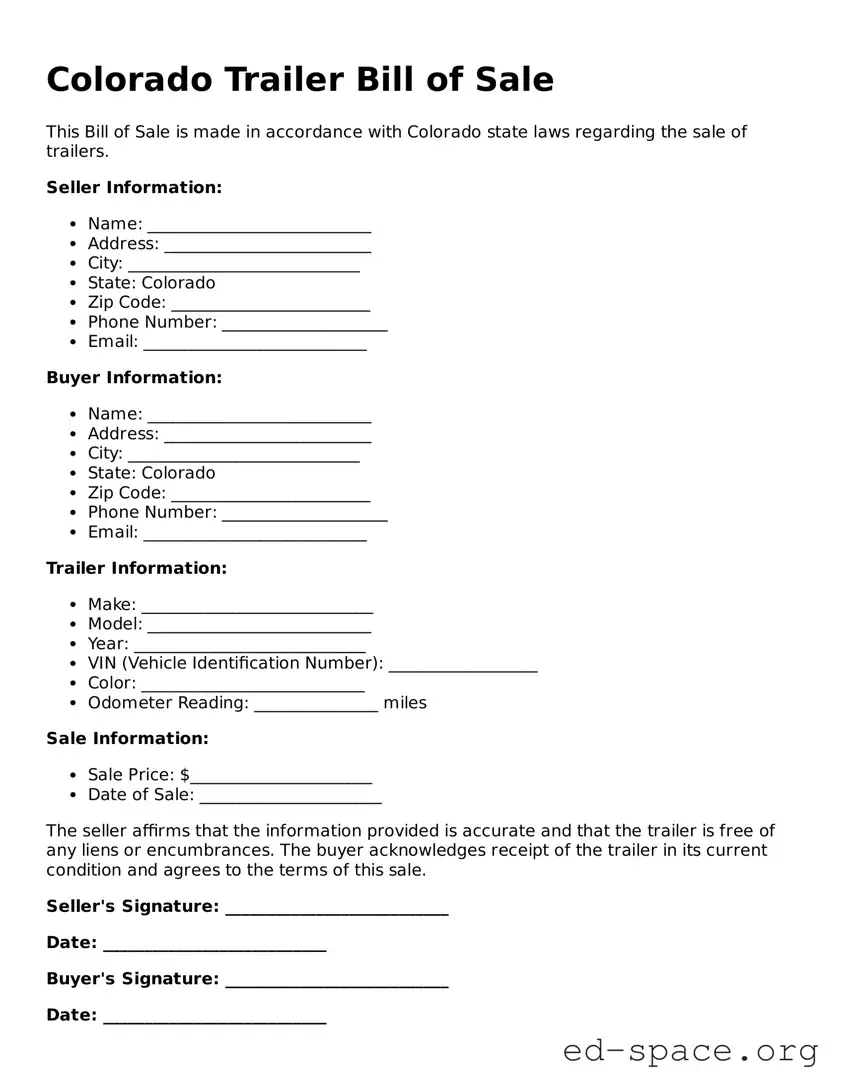
When it comes to buying or selling a trailer in Colorado, having the right documentation is essential for a smooth transaction. The Colorado Trailer Bill of Sale form serves as a crucial record that outlines the details of the sale, protecting both the buyer and the seller. This form typically includes important information such as the names and addresses of both parties, a description of the trailer being sold—including its make, model, and Vehicle Identification Number (VIN)—and the sale price. Additionally, it may contain spaces for signatures, which are vital for validating the agreement. Completing this form accurately ensures that ownership is properly transferred and provides a safeguard against future disputes. By adhering to the requirements set forth in this document, individuals can navigate the process of trailer ownership with confidence and clarity.
Colorado Trailer Bill of Sale
This Bill of Sale is made in accordance with Colorado state laws regarding the sale of trailers.
Seller Information:
Buyer Information:
Trailer Information:
Sale Information:
The seller affirms that the information provided is accurate and that the trailer is free of any liens or encumbrances. The buyer acknowledges receipt of the trailer in its current condition and agrees to the terms of this sale.
Seller's Signature: ___________________________
Date: ___________________________
Buyer's Signature: ___________________________
Date: ___________________________
This document serves as a legal record of the sale and should be retained by both parties for their records.
| Fact Name | Details |
|---|---|
| Purpose | The Colorado Trailer Bill of Sale form is used to document the sale of a trailer in the state of Colorado. |
| Governing Law | This form is governed by Colorado Revised Statutes, specifically Title 42, which pertains to vehicles. |
| Parties Involved | The form requires the signatures of both the seller and the buyer, ensuring both parties agree to the sale. |
| Vehicle Information | Details such as the trailer's make, model, year, and Vehicle Identification Number (VIN) must be included. |
| Sale Price | The sale price of the trailer must be clearly stated on the form to establish the transaction's value. |
| Date of Sale | The date when the sale occurs must be documented to provide a timeline for the transaction. |
| Notarization | While notarization is not mandatory, having the document notarized can add an extra layer of authenticity. |
| Record Keeping | Both the seller and buyer should keep a copy of the completed form for their records, which may be useful for future reference. |
Filling out the Colorado Trailer Bill of Sale form is an important step in transferring ownership of a trailer. After completing the form, you will have a legal document that proves the sale and protects both the buyer and seller in the transaction. This will be essential for registration and titling purposes.
Once the form is completed and signed, you can proceed to register the trailer in the buyer's name at the DMV. Make sure to bring any additional required documents, such as proof of identification and payment for registration fees.
What is a Colorado Trailer Bill of Sale form?
The Colorado Trailer Bill of Sale form is a legal document used to record the sale of a trailer in the state of Colorado. It serves as proof of the transaction between the buyer and the seller. This form includes essential details like the trailer's description, the sale price, and the signatures of both parties involved in the sale.
Why do I need a Bill of Sale for my trailer?
A Bill of Sale is important because it protects both the buyer and the seller. For the seller, it provides evidence that the trailer was sold and releases them from future liabilities related to that trailer. For the buyer, it serves as proof of ownership and may be required for registration purposes with the state. Having this document can prevent disputes and clarify the terms of the sale.
What information is required on the form?
The form should include several key pieces of information. This includes the names and addresses of both the buyer and seller, a detailed description of the trailer (such as make, model, year, and Vehicle Identification Number), the sale price, and the date of the transaction. Both parties must sign the document to make it valid.
Is the Bill of Sale required for all trailer sales in Colorado?
Can I create my own Bill of Sale?
Yes, you can create your own Bill of Sale as long as it includes all necessary information. However, using a standard form can help ensure that you don’t miss any important details. Many online resources offer templates that are specifically designed for Colorado trailer sales, making it easier to fill in the required information correctly.
What should I do after completing the Bill of Sale?
Once you have completed the Bill of Sale, both the buyer and seller should keep a copy for their records. The buyer should also take the document to their local Department of Motor Vehicles (DMV) when registering the trailer. This helps establish ownership and may be necessary for obtaining a new title.
Incomplete Information: One of the most common mistakes is failing to provide all necessary details. Buyers and sellers must include their names, addresses, and signatures. Missing even a single piece of information can lead to complications later on.
Incorrect Vehicle Identification Number (VIN): The VIN is a crucial element of the trailer's identity. Errors in this number can result in confusion or disputes about ownership. Always double-check the VIN against the trailer’s title or registration.
Not Including the Sale Price: It might seem straightforward, but omitting the sale price is a frequent oversight. This figure is vital for both parties, as it establishes the terms of the sale and may be required for tax purposes.
Failure to Sign: A signature is essential to validate the transaction. Both the buyer and the seller must sign the form. Without signatures, the bill of sale is not legally binding, which can create issues if disputes arise.
When buying or selling a trailer in Colorado, several documents complement the Colorado Trailer Bill of Sale form. These forms help ensure that the transaction is clear and legally binding. Below is a list of commonly used forms and documents associated with this process.
Having these forms ready can streamline the buying or selling process. They help both parties understand their rights and responsibilities, making for a smoother transaction.
The Trailer Bill of Sale form serves as an important document in the transaction of trailer ownership. Several other documents share similarities with it, each playing a crucial role in the transfer of ownership or the documentation of a sale. Here’s a list of six documents that are similar to the Trailer Bill of Sale:
Each of these documents plays a vital role in facilitating smooth transactions and protecting the interests of both parties involved. Understanding their similarities can help you navigate the sale process more effectively.
When filling out the Colorado Trailer Bill of Sale form, attention to detail is crucial. Here are seven important do's and don'ts to keep in mind:
By following these guidelines, you can help ensure a smooth and legally compliant transaction.
The Colorado Trailer Bill of Sale form is an important document for anyone buying or selling a trailer in Colorado. However, several misconceptions can lead to confusion and potential legal issues. Below are eight common misconceptions about this form, along with clarifications to help you understand its purpose and requirements.
This is not true. The Trailer Bill of Sale is required for both new and used trailers. It serves as proof of ownership regardless of the trailer's age.
In Colorado, a properly completed bill of sale is legally binding. It provides evidence of the transaction and can be used in case of disputes.
While a title is essential for ownership transfer, a bill of sale complements it by documenting the sale details. Having both documents is advisable.
Notarization is not a requirement for the Colorado Trailer Bill of Sale. However, having it notarized can add an extra layer of authenticity.
It’s best to complete the bill of sale at the time of the transaction. This ensures that all details are accurate and agreed upon by both parties.
Both the buyer and seller should understand and agree to the contents of the bill of sale. It is a mutual agreement, and both parties should keep a copy.
It is crucial for both parties to retain a copy of the bill of sale for their records. This can be useful for future reference or in case of disputes.
Regardless of the trailer's weight, a bill of sale is still recommended. It provides clear documentation of the transaction and protects both parties.
Understanding these misconceptions can help ensure a smooth buying or selling experience. Always take the time to complete the Trailer Bill of Sale accurately and keep copies for your records.
When filling out and using the Colorado Trailer Bill of Sale form, keep these key points in mind:
Following these steps will help ensure a smooth and legal transaction when buying or selling a trailer in Colorado.