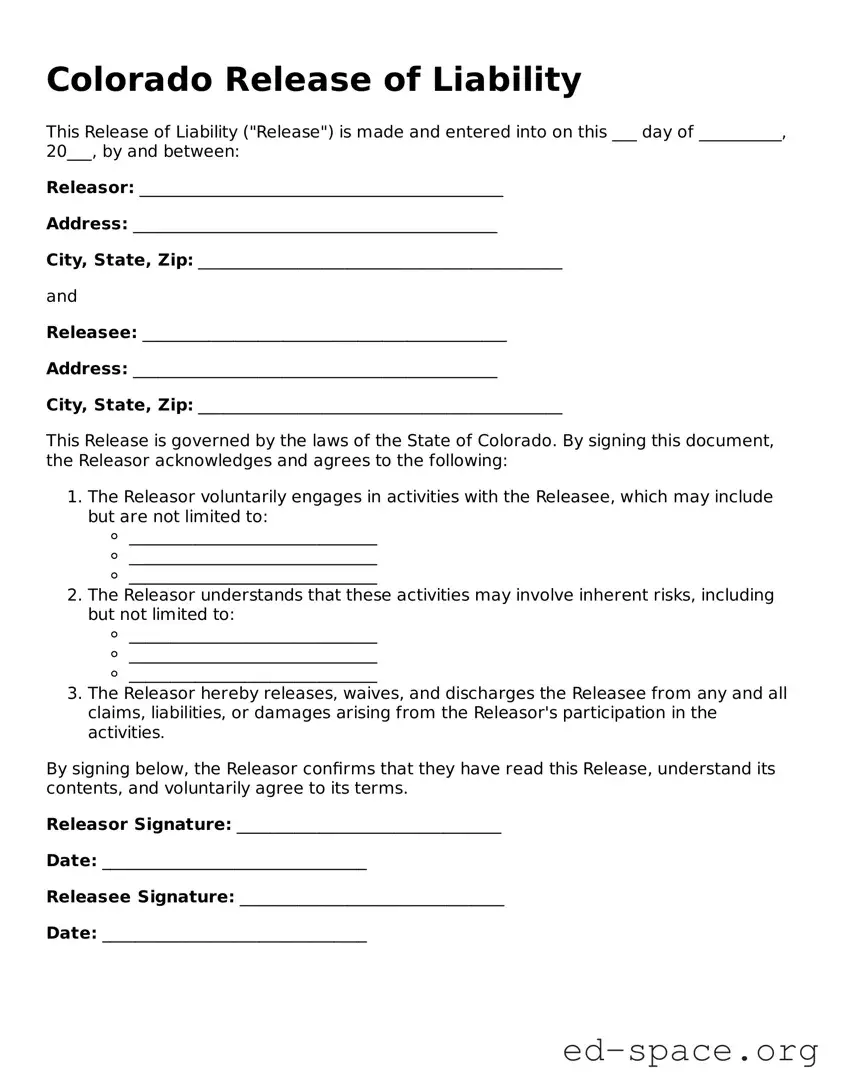
The Colorado Release of Liability form is an essential document designed to protect individuals and organizations from legal claims arising from potential injuries or damages during activities or events. This form is commonly used in various contexts, such as recreational activities, sports events, and even volunteer work. By signing this document, participants acknowledge the inherent risks associated with the activity and agree to waive their right to hold the organizer liable for any injuries sustained. It serves as a crucial tool for both parties, ensuring that participants are aware of the risks involved while also providing peace of mind to organizers. Clarity and transparency are key components of this form, as it outlines the specific activities covered, the responsibilities of each party, and the legal implications of signing. Understanding the nuances of the Colorado Release of Liability form can help individuals make informed decisions about their participation in various activities, safeguarding their interests while allowing for enjoyable experiences.
Colorado Release of Liability
This Release of Liability ("Release") is made and entered into on this ___ day of __________, 20___, by and between:
Releasor: ____________________________________________
Address: ____________________________________________
City, State, Zip: ____________________________________________
and
Releasee: ____________________________________________
Address: ____________________________________________
City, State, Zip: ____________________________________________
This Release is governed by the laws of the State of Colorado. By signing this document, the Releasor acknowledges and agrees to the following:
By signing below, the Releasor confirms that they have read this Release, understand its contents, and voluntarily agree to its terms.
Releasor Signature: ________________________________
Date: ________________________________
Releasee Signature: ________________________________
Date: ________________________________
| Fact Name | Description |
|---|---|
| Purpose | The Colorado Release of Liability form is designed to protect organizations and individuals from legal claims resulting from injuries or damages that may occur during activities. |
| Governing Law | This form is governed by Colorado state law, particularly under the principles of tort law and liability waivers. |
| Voluntary Participation | Participants must voluntarily sign the form, indicating their understanding of the risks involved in the activity. |
| Scope of Release | The release typically covers all claims for injuries, including those caused by negligence, but may not protect against willful misconduct. |
| Minors | For participants under 18, a parent or guardian must sign the form, acknowledging the risks on behalf of the minor. |
| Enforceability | While generally enforceable, courts may scrutinize the language of the release to ensure it is clear and unambiguous. |
After you have gathered the necessary information, you can begin filling out the Colorado Release of Liability form. This form requires specific details to ensure it is completed accurately.
Once you have completed these steps, ensure that all information is accurate. Keep a copy for your records and submit the form as required.
What is a Colorado Release of Liability form?
The Colorado Release of Liability form is a legal document that protects individuals or organizations from being held liable for injuries or damages that may occur during a specific activity or event. By signing this form, participants acknowledge the risks involved and agree not to hold the organizers responsible for any accidents that may happen.
Who should use a Release of Liability form?
This form is typically used by businesses, event organizers, or individuals hosting activities where there is a risk of injury. Common examples include sports events, recreational activities, and adventure sports. It’s essential for anyone facilitating an event where participants could potentially be harmed.
Is a Release of Liability form legally binding in Colorado?
Yes, a properly drafted Release of Liability form is generally considered legally binding in Colorado. However, it must meet specific requirements to be enforceable. This includes being clear and understandable, stating the risks involved, and being signed voluntarily by the participant.
What should be included in a Release of Liability form?
A comprehensive Release of Liability form should include the names of the parties involved, a description of the activity, a statement acknowledging the risks, and a section for the participant's signature. It may also include a date and a statement about the waiver of rights to sue.
Can a minor sign a Release of Liability form?
No, minors cannot legally sign a Release of Liability form on their own. A parent or legal guardian must sign on behalf of the minor. This ensures that the minor is also protected while acknowledging the risks involved.
What happens if someone gets injured despite signing the form?
Even with a signed Release of Liability form, there are circumstances where an injured party may still pursue legal action. If negligence or misconduct can be proven, the release may not protect the organizer. Each case is unique, and legal advice may be necessary to navigate these situations.
Can a Release of Liability form be revoked after signing?
Once signed, a Release of Liability form is generally binding. However, if a participant feels they were misled or coerced into signing, they may have grounds to contest the validity of the form. It's important to read the document carefully before signing.
How can I ensure my Release of Liability form is enforceable?
To make sure your form is enforceable, it should be clear, concise, and easy to understand. It’s advisable to have it reviewed by a legal professional familiar with Colorado laws. This can help ensure that it meets all legal requirements and adequately protects you.
Are there any specific laws in Colorado regarding Release of Liability forms?
Colorado has specific laws that govern liability waivers, especially in relation to recreational activities. These laws emphasize that waivers must be clear and unambiguous. Additionally, certain activities, such as skiing, have their own regulations that must be adhered to when drafting a release.
Where can I find a template for a Colorado Release of Liability form?
Templates for a Colorado Release of Liability form can often be found online or through legal document preparation services. However, it’s important to customize any template to fit your specific needs and to ensure compliance with Colorado law.
Failing to read the entire form thoroughly. Many individuals overlook important sections that clarify the scope of the release.
Not providing complete personal information. Incomplete names, addresses, or contact details can lead to issues in the future.
Incorrectly identifying the activity or event. Ensure that the specific activity being released is clearly stated.
Neglecting to date the form. A missing date can create confusion regarding when the release was signed.
Not signing the form. Some individuals forget to sign, which invalidates the release.
Overlooking witness signatures. If required, a witness signature can be crucial for the form's validity.
Failing to understand the implications of the release. It's important to know what rights are being waived.
Not keeping a copy of the signed form. Retaining a copy is essential for personal records and future reference.
When engaging in activities that carry some level of risk, it’s important to have the right documents in place to protect all parties involved. Alongside the Colorado Release of Liability form, several other forms and documents may be necessary. Each serves a specific purpose and helps clarify responsibilities and expectations.
Having these documents in place can significantly reduce misunderstandings and legal issues down the road. Each form plays a vital role in ensuring that everyone involved understands the risks and responsibilities associated with the activity. Always consider consulting with a legal professional to ensure that these documents meet your specific needs and comply with local laws.
When filling out the Colorado Release of Liability form, it's important to approach the task with care. Here are some guidelines to help ensure the process goes smoothly.
Many people have misunderstandings about the Colorado Release of Liability form. Here are five common misconceptions:
While the Release of Liability form does limit the liability of the party providing the activity, it does not eliminate all responsibility. If negligence or intentional harm occurs, the form may not protect the provider.
Signing the form does not mean you forfeit your right to sue. If the situation involves gross negligence or intentional misconduct, you may still have legal recourse.
Although commonly associated with high-risk activities, the Release of Liability can be used for various events and services. It helps clarify expectations and responsibilities, regardless of the activity's risk level.
Release forms can vary significantly based on the activity, jurisdiction, and specific terms included. It is essential to read each form carefully to understand its implications.
In most cases, minors cannot legally sign a Release of Liability form. A parent or guardian typically must sign on their behalf to ensure the form is valid.
Filling out and using the Colorado Release of Liability form is an important step for individuals and organizations looking to protect themselves from legal claims. Here are some key takeaways to consider:
By understanding these key points, you can better navigate the use of the Colorado Release of Liability form and make informed decisions regarding your activities.