When navigating the world of real estate in Colorado, understanding the Real Estate Purchase Agreement form is essential for both buyers and sellers. This document serves as a foundational tool in real estate transactions, outlining the terms and conditions under which a property will be bought or sold. Key aspects of the form include the purchase price, financing details, and contingencies that protect the interests of both parties. Additionally, it specifies important timelines, such as the closing date and any deadlines for inspections or disclosures. The agreement also addresses the allocation of costs, such as closing fees and repairs, ensuring clarity on financial responsibilities. By providing a structured approach to the transaction, the Real Estate Purchase Agreement helps facilitate a smoother process, fostering transparency and trust between all involved parties.
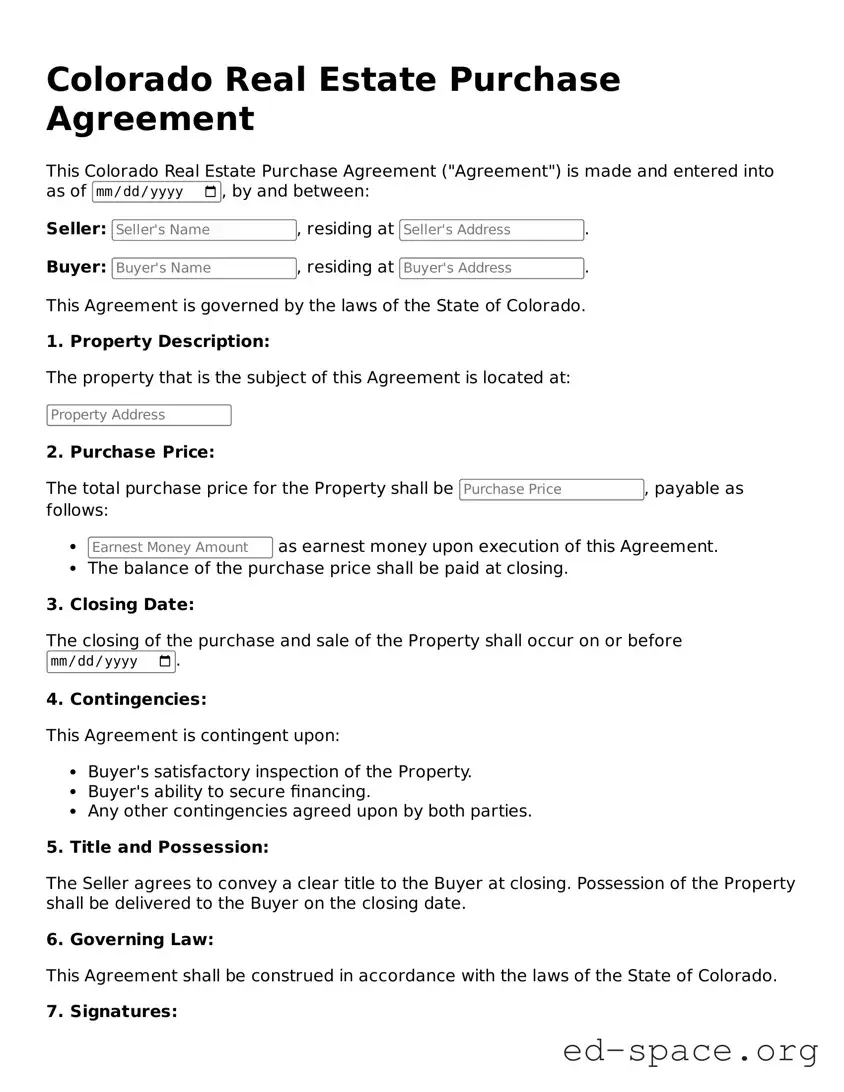
Colorado Real Estate Purchase Agreement
This Colorado Real Estate Purchase Agreement ("Agreement") is made and entered into as of , by and between:
Seller: , residing at .
Buyer: , residing at .
This Agreement is governed by the laws of the State of Colorado.
1. Property Description:
The property that is the subject of this Agreement is located at:
2. Purchase Price:
The total purchase price for the Property shall be , payable as follows:
3. Closing Date:
The closing of the purchase and sale of the Property shall occur on or before .
4. Contingencies:
This Agreement is contingent upon:
5. Title and Possession:
The Seller agrees to convey a clear title to the Buyer at closing. Possession of the Property shall be delivered to the Buyer on the closing date.
6. Governing Law:
This Agreement shall be construed in accordance with the laws of the State of Colorado.
7. Signatures:
IN WITNESS WHEREOF, the parties have executed this Agreement as of the date first above written.
______________________________
Seller's Signature
______________________________
Buyer's Signature
______________________________
Date
| Fact Name | Description |
|---|---|
| Governing Law | The Colorado Real Estate Purchase Agreement is governed by Colorado state law, specifically the Colorado Revised Statutes. |
| Standardized Form | This agreement is a standardized form that is commonly used in residential real estate transactions throughout Colorado. |
| Disclosure Requirements | Colorado law requires sellers to provide specific disclosures regarding the property, which must be included in the agreement. |
| Contingencies | The agreement allows for various contingencies, such as financing and inspection, to protect the interests of both buyers and sellers. |
| Earnest Money | Typically, buyers are required to submit earnest money, which demonstrates their commitment to the purchase and is held in escrow. |
After obtaining the Colorado Real Estate Purchase Agreement form, the next steps involve accurately filling it out to ensure all necessary information is provided. This process is essential for facilitating a clear understanding between the buyer and seller regarding the terms of the property transaction.
Once the form is completed, it should be reviewed for accuracy before being submitted or exchanged between the involved parties. This ensures that everyone is on the same page regarding the terms of the sale.
What is the Colorado Real Estate Purchase Agreement form?
The Colorado Real Estate Purchase Agreement form is a legal document used in real estate transactions within the state of Colorado. It outlines the terms and conditions under which a buyer agrees to purchase a property from a seller. This agreement includes essential details such as the purchase price, financing terms, and contingencies, which protect both parties during the transaction process. It serves as a foundation for the sale and helps ensure that both parties understand their rights and obligations.
What key elements are included in the agreement?
The agreement typically includes several critical components. First, it specifies the property being sold, including the address and legal description. Next, it outlines the purchase price and any earnest money deposit required. Additionally, the agreement details the closing date, any contingencies (like inspections or financing), and the responsibilities of both the buyer and seller. Understanding these elements is crucial for both parties to ensure a smooth transaction.
What contingencies can be included in the agreement?
Contingencies are conditions that must be met for the sale to proceed. Common contingencies in the Colorado Real Estate Purchase Agreement include financing contingencies, which allow the buyer to secure a mortgage, and inspection contingencies, which enable the buyer to have the property professionally inspected. Other contingencies might involve the sale of the buyer's current home or specific repairs that need to be made before closing. These contingencies protect the buyer and help mitigate risks associated with the purchase.
How can buyers and sellers negotiate terms in the agreement?
Negotiation is a vital part of the real estate process. Buyers and sellers can discuss various terms, such as the purchase price, closing date, and any repairs or concessions. Open communication is key. Often, both parties may have specific needs or concerns that can be addressed through negotiation. It is advisable for both sides to be flexible and willing to compromise to reach a mutually beneficial agreement.
What happens if one party breaches the agreement?
If one party fails to fulfill their obligations as outlined in the agreement, it is considered a breach. The non-breaching party has several options, including seeking damages or specific performance, which means asking the court to enforce the terms of the agreement. However, it is essential to consult with a real estate professional or attorney to understand the best course of action. Breaches can complicate transactions, so addressing any issues early on is crucial.
Incomplete Information: Failing to fill out all required fields can lead to delays or complications. Ensure that every section is completed accurately.
Incorrect Dates: Using the wrong dates for the contract signing or closing can create confusion. Double-check all dates for accuracy.
Missing Signatures: All necessary parties must sign the agreement. An unsigned document may not be legally binding.
Omitting Contingencies: Not including important contingencies, such as financing or inspection clauses, can expose buyers to risks. Always specify conditions that must be met.
Vague Property Descriptions: A lack of detail in describing the property can lead to misunderstandings. Clearly outline the property’s boundaries and features.
Ignoring Local Laws: Each locality may have specific requirements for real estate transactions. Familiarize yourself with local regulations to avoid compliance issues.
Misunderstanding Financing Terms: Buyers should clearly understand the financing terms outlined in the agreement. Misinterpretations can lead to financial difficulties down the line.
Neglecting to Review the Agreement: Skipping a thorough review of the entire document can result in overlooked errors. Always read through the agreement multiple times.
Failure to Communicate: Not discussing the agreement with all parties involved can lead to misalignment. Open communication is essential for a smooth transaction.
When buying or selling property in Colorado, several documents often accompany the Real Estate Purchase Agreement. These forms help clarify terms, protect both parties, and ensure a smooth transaction. Here’s a list of common documents you might encounter.
Having these documents prepared and understood can make the real estate transaction process smoother and less stressful. Always consider consulting with a professional if you have questions about any of these forms.
Lease Agreement: This document outlines the terms under which a tenant can occupy a property. Similar to a purchase agreement, it specifies the parties involved, property details, and financial obligations.
Option to Purchase Agreement: This agreement grants a tenant the right to purchase the property at a later date. Like a purchase agreement, it includes terms of sale and conditions that must be met.
Real Estate Listing Agreement: This document establishes a relationship between a seller and a real estate agent. It details the agent’s responsibilities and the terms of the sale, resembling a purchase agreement in its focus on the sale process.
Sales Contract: Often used interchangeably with a purchase agreement, this document outlines the terms of sale for any type of property, detailing price, contingencies, and closing procedures.
Buyer’s Agency Agreement: This agreement defines the relationship between a buyer and their agent. It includes terms of representation and obligations, similar to the way a purchase agreement outlines the buyer's responsibilities.
Closing Disclosure: This document provides a detailed account of the final loan terms and closing costs. It is similar to a purchase agreement in that it finalizes the transaction details before the sale is completed.
Property Disclosure Statement: This document requires sellers to disclose known issues with the property. It complements a purchase agreement by ensuring that buyers are fully informed about the property’s condition.
Title Report: This document outlines the legal status of a property’s title. It is crucial in a real estate transaction, similar to a purchase agreement, as it ensures the buyer is aware of any encumbrances.
Escrow Agreement: This document establishes the terms under which an escrow agent holds funds during a transaction. It parallels a purchase agreement by detailing the conditions under which the sale will be completed.
When filling out the Colorado Real Estate Purchase Agreement form, it's important to approach the task with care. Here are ten things to keep in mind:
By following these guidelines, you can help ensure that your Real Estate Purchase Agreement is complete and accurate.
When it comes to real estate transactions in Colorado, the Real Estate Purchase Agreement (REPA) is a critical document. However, several misconceptions can cloud understanding and lead to confusion. Here are eight common myths surrounding the Colorado Real Estate Purchase Agreement:
Many believe that the REPA is the same for every transaction. In reality, each agreement can be tailored to fit the specific needs of the buyer and seller.
Some think that once both parties sign the agreement, the deal is sealed. However, contingencies and conditions can still allow for changes or cancellations.
This is a common misunderstanding. While it is often used for residential sales, the REPA can also apply to commercial transactions.
While many terms can be negotiated, some aspects, such as state laws and regulations, must be adhered to and are non-negotiable.
People often think that they are locked in once they sign. However, there are provisions within the agreement that allow for certain changes under specific circumstances.
This is not true. Buyers and sellers can fill out the agreement themselves, although it’s advisable to seek professional guidance to avoid pitfalls.
Some buyers assume that signing the REPA means they will automatically secure financing. However, financing is contingent upon lender approval and other factors.
Not all contingencies are created equal. Different transactions may require different contingencies, such as inspections, appraisals, or financing conditions.
Understanding these misconceptions is crucial for anyone involved in a real estate transaction in Colorado. Being informed can lead to smoother negotiations and a more successful closing process.
When filling out and using the Colorado Real Estate Purchase Agreement form, it is essential to keep several key points in mind to ensure a smooth transaction. Below are important takeaways to consider:
By considering these points, individuals can better understand the importance of the Colorado Real Estate Purchase Agreement form and its role in a real estate transaction.