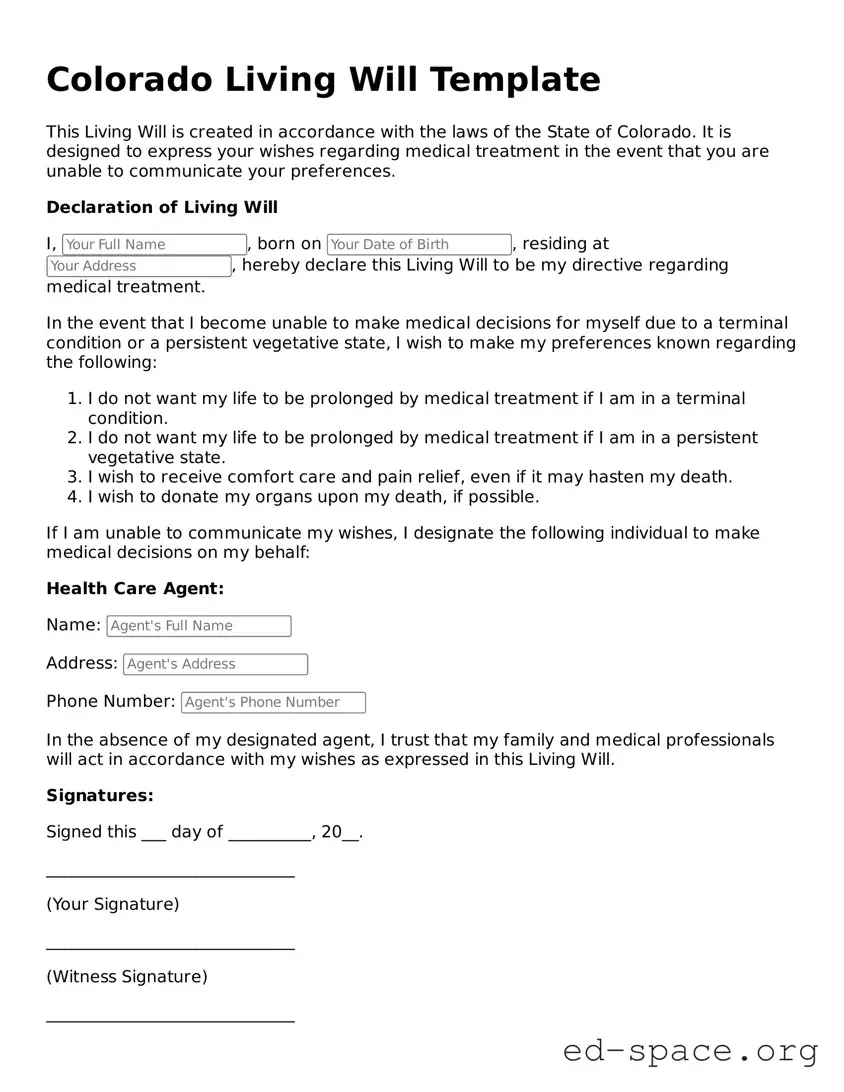
In Colorado, the Living Will form serves as a vital tool for individuals who wish to express their medical treatment preferences in the event they become unable to communicate their wishes. This legal document outlines specific instructions regarding life-sustaining treatments, such as resuscitation efforts and artificial nutrition, ensuring that personal values and desires are respected during critical medical situations. By completing this form, individuals can designate their preferences for end-of-life care, thereby alleviating the burden on family members and healthcare providers who may otherwise face difficult decisions. It is essential to understand the requirements for creating a valid Living Will in Colorado, including the need for signatures from witnesses and the potential for revocation. This form not only empowers individuals to take control of their healthcare decisions but also fosters open conversations about end-of-life issues among loved ones.
Colorado Living Will Template
This Living Will is created in accordance with the laws of the State of Colorado. It is designed to express your wishes regarding medical treatment in the event that you are unable to communicate your preferences.
Declaration of Living Will
I, , born on , residing at , hereby declare this Living Will to be my directive regarding medical treatment.
In the event that I become unable to make medical decisions for myself due to a terminal condition or a persistent vegetative state, I wish to make my preferences known regarding the following:
If I am unable to communicate my wishes, I designate the following individual to make medical decisions on my behalf:
Health Care Agent:
Name:
Address:
Phone Number:
In the absence of my designated agent, I trust that my family and medical professionals will act in accordance with my wishes as expressed in this Living Will.
Signatures:
Signed this ___ day of __________, 20__.
______________________________
(Your Signature)
______________________________
(Witness Signature)
______________________________
(Witness Signature)
This Living Will is valid in the State of Colorado and should be kept in a safe place where it can be easily accessed by your healthcare provider and family.
| Fact Name | Description |
|---|---|
| Purpose | A Colorado Living Will allows individuals to express their wishes regarding medical treatment in case they become unable to communicate those wishes themselves. |
| Governing Law | The Colorado Living Will is governed by the Colorado Revised Statutes, specifically Title 15, Article 18. |
| Eligibility | Any adult, 18 years or older, can create a Living Will in Colorado, provided they are of sound mind. |
| Witness Requirement | To be valid, the Living Will must be signed in the presence of two witnesses or notarized. |
| Revocation | Individuals can revoke their Living Will at any time, verbally or in writing, as long as they are competent to do so. |
| Health Care Proxy | A Living Will can be paired with a Medical Power of Attorney, allowing someone to make health care decisions on your behalf. |
| Advance Directive | The Colorado Living Will is considered an advance directive, guiding healthcare providers about your treatment preferences. |
Filling out the Colorado Living Will form is a crucial step in ensuring your healthcare preferences are known and respected. Once you complete the form, you will need to share it with your healthcare providers and loved ones to ensure everyone is aware of your wishes.
What is a Colorado Living Will?
A Colorado Living Will is a legal document that allows individuals to express their wishes regarding medical treatment in the event they become unable to communicate those wishes themselves. This document specifically addresses end-of-life care and outlines the types of medical interventions a person does or does not want if they are terminally ill or in a persistent vegetative state.
Who should have a Living Will?
Anyone aged 18 or older should consider having a Living Will. It is particularly important for individuals with serious health conditions or those who want to ensure their medical preferences are known. Having this document in place can provide peace of mind for both the individual and their loved ones.
How do I create a Living Will in Colorado?
Creating a Living Will in Colorado involves filling out the appropriate form, which can be obtained online or through legal offices. After completing the form, it must be signed in the presence of two witnesses or a notary public. It is essential to ensure that the witnesses are not related to you or beneficiaries of your estate to maintain the document's validity.
Can I change or revoke my Living Will?
Yes, you can change or revoke your Living Will at any time as long as you are mentally competent. To revoke it, simply destroy the document or create a new one that explicitly states your intention to revoke the previous version. It’s advisable to inform your healthcare providers and family members about any changes to ensure your wishes are respected.
What happens if I don’t have a Living Will?
If you do not have a Living Will, medical decisions may be made by your family members or healthcare providers based on what they believe your wishes would be. This can lead to confusion and potential conflicts among loved ones during difficult times. Having a Living Will helps avoid uncertainty and ensures your preferences are honored.
Is a Living Will the same as a Power of Attorney?
No, a Living Will and a Power of Attorney are different documents. A Living Will specifically addresses your medical treatment preferences, while a Power of Attorney designates someone to make financial or healthcare decisions on your behalf if you are unable to do so. It is advisable to have both documents to ensure comprehensive planning for your future.
Where should I keep my Living Will?
Store your Living Will in a safe but accessible place. Inform your family members, healthcare providers, and anyone designated as your Power of Attorney about its location. Additionally, consider carrying a card in your wallet that indicates you have a Living Will and where it can be found. This can help ensure your wishes are known in case of an emergency.
Not understanding the purpose of a Living Will. Many individuals mistakenly think that a Living Will is the same as a power of attorney. A Living Will specifically addresses end-of-life decisions, while a power of attorney appoints someone to make decisions on your behalf.
Failing to specify treatment preferences. Some people leave sections blank or write vague statements. It's important to clearly outline what types of medical treatments you do or do not want.
Not discussing the Living Will with family members. Many individuals fill out the form without talking to their loved ones. This can lead to confusion and conflict during difficult times.
Overlooking the need for witnesses. Colorado law requires that a Living Will be signed in the presence of two witnesses or a notary. Failing to have the proper signatures can invalidate the document.
Using outdated forms. Some people may download older versions of the Living Will form from the internet. Always ensure you are using the most current version to avoid legal complications.
Not reviewing the document regularly. Life circumstances change. Individuals should revisit their Living Will periodically to ensure it still reflects their wishes.
Being unclear about organ donation wishes. While some may mention organ donation, they might not specify how they want their wishes carried out. Clear instructions can help avoid confusion.
Ignoring state-specific requirements. Each state has its own laws regarding Living Wills. Failing to comply with Colorado's specific requirements can render the document ineffective.
When preparing a Colorado Living Will, it's important to consider other related documents that can help ensure your healthcare wishes are respected. Each of these forms serves a specific purpose and can work in conjunction with your Living Will to provide comprehensive guidance regarding your medical care preferences.
By considering these additional forms and documents alongside your Colorado Living Will, you can create a well-rounded plan that reflects your healthcare preferences and eases the decision-making process for your loved ones. Taking these steps ensures that your wishes are honored, providing peace of mind for you and your family.
A Living Will is a crucial document that outlines an individual's preferences for medical treatment in the event they become unable to communicate their wishes. Several other documents serve similar purposes, focusing on healthcare decisions and end-of-life care. Here’s a list of nine documents that share similarities with a Living Will:
Each of these documents plays a role in ensuring that an individual's healthcare preferences are respected, particularly when they are unable to voice those preferences themselves. Understanding these similarities can help individuals make informed decisions about their healthcare planning.
When filling out the Colorado Living Will form, it’s important to approach the task thoughtfully. Here are some essential dos and don’ts to consider:
Understanding the Colorado Living Will form is essential for making informed decisions about end-of-life care. However, several misconceptions can lead to confusion. Below are four common misconceptions:
Clarifying these misconceptions can help individuals better navigate their healthcare choices and ensure their wishes are respected.
Filling out a Colorado Living Will form is an important step in ensuring your healthcare wishes are respected. Here are some key takeaways to keep in mind:
By taking the time to complete a Living Will, you empower yourself and your loved ones to make informed healthcare decisions. Your voice matters, even when you can no longer speak for yourself.