Creating a comprehensive employee handbook is a vital step for any business operating in Colorado. This document serves as a foundational resource, outlining company policies, employee rights, and expectations. A well-structured handbook addresses essential topics such as workplace conduct, anti-discrimination policies, leave policies, and safety protocols. It also provides clarity on benefits, compensation, and grievance procedures. By establishing these guidelines, employers can foster a positive work environment and mitigate potential legal issues. Moreover, a well-crafted employee handbook not only protects the organization but also empowers employees by providing them with the information they need to navigate their roles effectively. Understanding the components of the Colorado Employee Handbook form is crucial for ensuring compliance with state laws and regulations while also promoting a culture of transparency and accountability within the workplace.
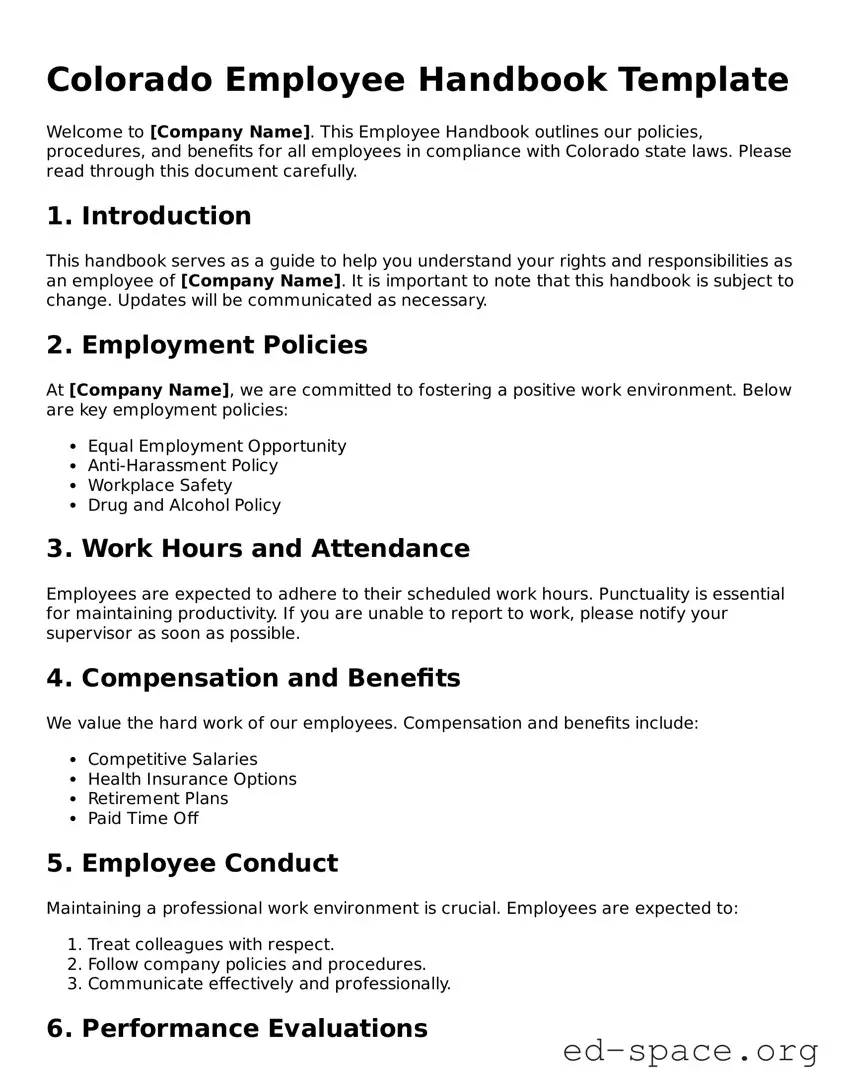
Colorado Employee Handbook Template
Welcome to [Company Name]. This Employee Handbook outlines our policies, procedures, and benefits for all employees in compliance with Colorado state laws. Please read through this document carefully.
1. Introduction
This handbook serves as a guide to help you understand your rights and responsibilities as an employee of [Company Name]. It is important to note that this handbook is subject to change. Updates will be communicated as necessary.
2. Employment Policies
At [Company Name], we are committed to fostering a positive work environment. Below are key employment policies:
3. Work Hours and Attendance
Employees are expected to adhere to their scheduled work hours. Punctuality is essential for maintaining productivity. If you are unable to report to work, please notify your supervisor as soon as possible.
4. Compensation and Benefits
We value the hard work of our employees. Compensation and benefits include:
5. Employee Conduct
Maintaining a professional work environment is crucial. Employees are expected to:
6. Performance Evaluations
Regular performance evaluations will be conducted to assess employee contributions and provide feedback. These evaluations are essential for career development.
7. Termination of Employment
Termination of employment may occur for various reasons, including but not limited to:
8. Acknowledgment of Receipt
All employees are required to sign an acknowledgment form indicating that they have received, read, and understood this handbook. Please sign and return the form to [HR Contact Name] by [Due Date].
Thank you for being a valued member of [Company Name]. Your contributions are important to our success.
| Fact Name | Description |
|---|---|
| Purpose | The Colorado Employee Handbook serves as a guide for employees, outlining company policies, procedures, and expectations. |
| Governing Law | The handbook must comply with Colorado labor laws, including the Colorado Wage Act and the Colorado Anti-Discrimination Act. |
| Content Requirements | It should include essential topics such as workplace conduct, benefits, leave policies, and termination procedures. |
| Distribution | Employers are encouraged to provide the handbook to all employees and obtain their acknowledgment of receipt. |
Filling out the Colorado Employee Handbook form is a crucial step in ensuring that your workplace policies are clear and accessible. Follow these steps carefully to complete the form accurately.
What is the Colorado Employee Handbook form?
The Colorado Employee Handbook form is a document that outlines workplace policies, procedures, and expectations for employees in Colorado. It serves as a guide to help employees understand their rights and responsibilities within the organization. This handbook should be tailored to reflect the specific culture and needs of your workplace.
Why is it important to have an Employee Handbook?
An Employee Handbook is crucial for establishing clear communication between the employer and employees. It helps prevent misunderstandings by providing information on company policies, benefits, and procedures. Additionally, having a well-documented handbook can protect the organization from potential legal issues by ensuring compliance with state and federal laws.
How often should the Employee Handbook be updated?
Who should receive a copy of the Employee Handbook?
All employees should receive a copy of the Employee Handbook, whether in print or digital format. It is essential that new hires receive the handbook during their onboarding process. Additionally, current employees should be informed of any updates or changes to the handbook to ensure everyone is on the same page.
What should be included in the Employee Handbook?
The Employee Handbook should include essential information such as company values, employment policies, benefits, workplace conduct, and procedures for reporting issues. It may also cover topics like anti-discrimination policies, health and safety guidelines, and disciplinary procedures. Tailoring the content to fit your organization’s unique culture is key.
Failing to read the entire handbook before signing. Understanding the policies is crucial.
Not updating personal information. Ensure your contact details are current to receive important communications.
Overlooking the acknowledgment section. Signing without acknowledging the policies can lead to misunderstandings.
Ignoring the deadlines for submission. Late submissions may result in disciplinary actions.
Not asking questions about unclear policies. Seek clarification to avoid confusion later.
Failing to keep a copy for personal records. Retaining a copy can be useful for future reference.
Misunderstanding the consequences of violations. Familiarize yourself with potential repercussions.
Neglecting to inform HR of any discrepancies. Report any errors or concerns promptly.
Assuming all policies are the same as previous handbooks. Changes may occur, so review the current version thoroughly.
When creating a comprehensive employee handbook in Colorado, several other documents and forms can complement it. Each of these plays a vital role in ensuring that both employers and employees are clear on expectations, rights, and responsibilities. Below is a list of essential documents that are often used alongside the Colorado Employee Handbook.
Each of these documents plays a critical role in creating a well-structured workplace. By utilizing them alongside the Colorado Employee Handbook, employers can foster a clear understanding of workplace policies and expectations, contributing to a more harmonious and productive work environment.
Company Policies Manual: Like the Employee Handbook, this document outlines the rules and guidelines that govern employee behavior and expectations within the workplace. It serves as a reference for employees to understand their rights and responsibilities.
Onboarding Guide: This document provides new hires with essential information about the company culture, procedures, and resources available to them. Similar to the Employee Handbook, it helps employees acclimate to their new environment.
Code of Conduct: This document specifies the ethical standards and professional behavior expected from employees. It aligns closely with the Employee Handbook by reinforcing the values and principles that guide workplace interactions.
Benefits Overview: This document details the various benefits available to employees, including health insurance, retirement plans, and leave policies. It complements the Employee Handbook by providing specific information that supports employee well-being.
Safety Manual: This document outlines safety protocols and procedures to ensure a safe working environment. Like the Employee Handbook, it is crucial for informing employees about their safety responsibilities and the measures in place to protect them.
When filling out the Colorado Employee Handbook form, it's important to approach the task with care. Here are some guidelines to help you navigate this process effectively.
Things You Should Do:
Things You Shouldn't Do:
By following these guidelines, you can ensure that your submission is accurate and compliant with company policies. This attention to detail will help foster a positive working relationship with your employer.
Employee handbooks are essential for setting clear expectations and guidelines in the workplace. However, several misconceptions can lead to confusion among employees and employers alike. Here’s a list of ten common misconceptions about the Colorado Employee Handbook form:
This is not true. Each handbook should reflect the specific policies and culture of the organization, tailored to its unique needs and state laws.
While not legally required, having an employee handbook is highly recommended. It serves as a vital resource for both management and staff, outlining rights and responsibilities.
Policies and laws change. Regular reviews and updates ensure the handbook remains relevant and compliant with current regulations.
While it’s important to be thorough, it’s impossible to predict every situation. Focus on key policies and general guidelines that can be adapted as needed.
Many employees may not read the handbook thoroughly. Providing training sessions can help ensure everyone understands its contents.
Most handbooks are not legally binding. They are meant to provide guidance, but employers should clarify that they do not create an employment contract.
Creating and maintaining the handbook is a collaborative effort. Input from various departments can enhance its effectiveness and relevance.
While rules are important, handbooks should also convey the company’s mission, values, and culture to foster a positive work environment.
Clarity is key. Policies should be straightforward and easy to understand, avoiding overly complex language that can confuse employees.
Signing an acknowledgment form does not eliminate the need for ongoing reference. Employees should be encouraged to consult the handbook regularly.
When filling out and using the Colorado Employee Handbook form, there are several important points to keep in mind. These takeaways can help ensure that the handbook is effective and compliant with state regulations.
By focusing on these key aspects, employers can create a comprehensive employee handbook that supports both the organization and its workforce.