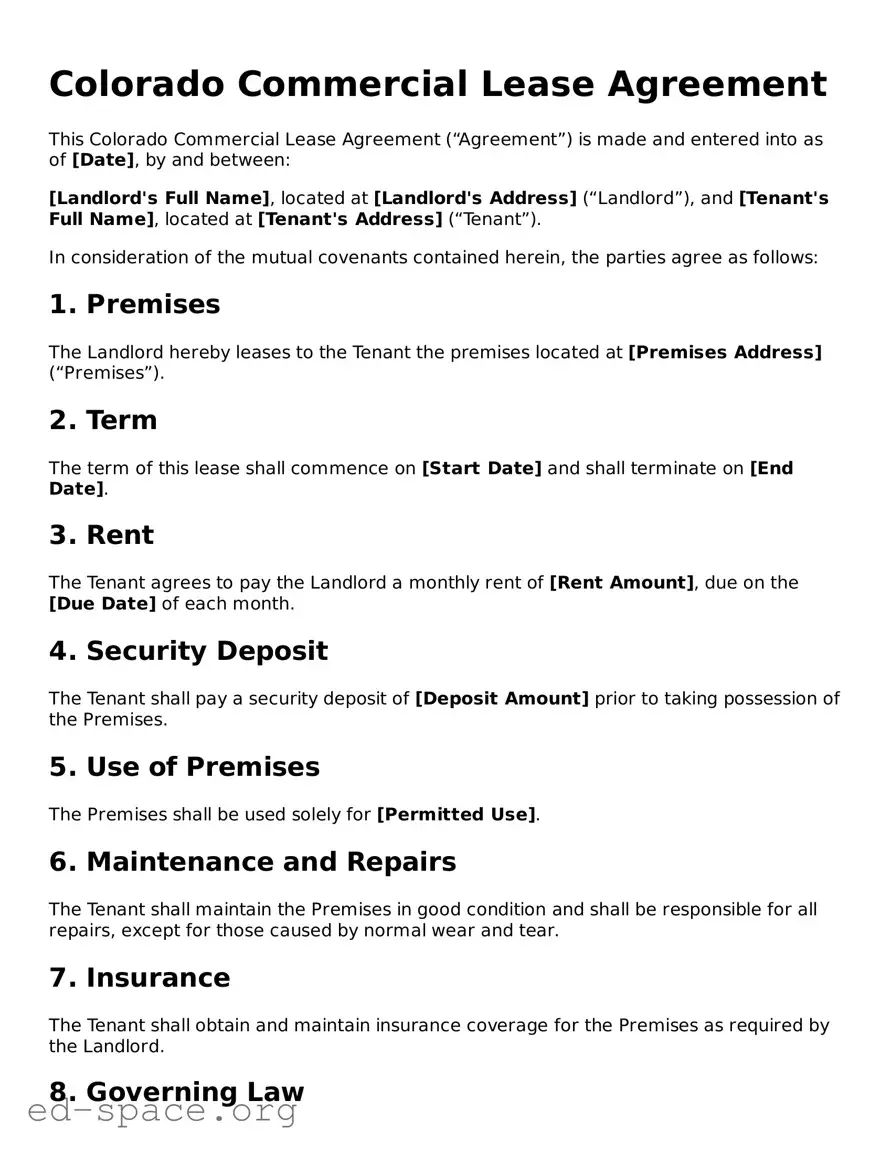
When entering into a commercial lease agreement in Colorado, understanding the essential components of the lease form is crucial for both landlords and tenants. This document outlines the terms of the rental arrangement, including the duration of the lease, the amount of rent, and the responsibilities of each party. It typically specifies the type of property being leased, whether it’s an office space, retail location, or industrial facility. Additionally, the agreement may include provisions for maintenance, utilities, and any restrictions on the use of the property. It’s important to pay attention to clauses related to security deposits, renewal options, and termination rights, as these can significantly impact the leasing experience. Familiarity with these elements can help both parties navigate their rights and obligations, fostering a positive and productive relationship throughout the lease term.
Colorado Commercial Lease Agreement
This Colorado Commercial Lease Agreement (“Agreement”) is made and entered into as of [Date], by and between:
[Landlord's Full Name], located at [Landlord's Address] (“Landlord”), and [Tenant's Full Name], located at [Tenant's Address] (“Tenant”).
In consideration of the mutual covenants contained herein, the parties agree as follows:
1. Premises
The Landlord hereby leases to the Tenant the premises located at [Premises Address] (“Premises”).
2. Term
The term of this lease shall commence on [Start Date] and shall terminate on [End Date].
3. Rent
The Tenant agrees to pay the Landlord a monthly rent of [Rent Amount], due on the [Due Date] of each month.
4. Security Deposit
The Tenant shall pay a security deposit of [Deposit Amount] prior to taking possession of the Premises.
5. Use of Premises
The Premises shall be used solely for [Permitted Use].
6. Maintenance and Repairs
The Tenant shall maintain the Premises in good condition and shall be responsible for all repairs, except for those caused by normal wear and tear.
7. Insurance
The Tenant shall obtain and maintain insurance coverage for the Premises as required by the Landlord.
8. Governing Law
This Agreement shall be governed by the laws of the State of Colorado.
9. Additional Terms
Any additional terms or conditions may be included here:
10. Signatures
IN WITNESS WHEREOF, the parties hereto have executed this Agreement as of the day and year first above written.
______________________________
[Landlord's Name], Landlord
______________________________
[Tenant's Name], Tenant
| Fact Name | Description |
|---|---|
| Purpose | The Colorado Commercial Lease Agreement is used to outline the terms between a landlord and a tenant for commercial property rental. |
| Governing Law | This agreement is governed by Colorado state laws, ensuring that both parties adhere to local regulations. |
| Duration | The lease can specify a fixed term or be month-to-month, depending on the needs of both the landlord and tenant. |
| Security Deposit | Typically, a security deposit is required, which may be used to cover damages or unpaid rent at the end of the lease. |
Filling out the Colorado Commercial Lease Agreement form is straightforward. Follow the steps below to ensure you complete it accurately and efficiently. This will help you establish a clear understanding between the landlord and tenant regarding the terms of the lease.
After completing the form, review it carefully to ensure all information is accurate. Both parties should retain a copy for their records once signed.
What is a Colorado Commercial Lease Agreement?
A Colorado Commercial Lease Agreement is a legally binding document that outlines the terms and conditions under which a landlord rents commercial property to a tenant. This agreement specifies details such as the rental amount, lease duration, property use, and responsibilities of both parties. It serves to protect the interests of both the landlord and the tenant, ensuring a clear understanding of their rights and obligations.
What are the key components of a Commercial Lease Agreement in Colorado?
Several essential components must be included in a Colorado Commercial Lease Agreement. These typically encompass the names of the landlord and tenant, a description of the leased property, the lease term, rental payment details, maintenance responsibilities, and provisions for renewal or termination. Additionally, clauses regarding security deposits, insurance requirements, and dispute resolution may also be included to provide clarity and security for both parties.
How long does a typical commercial lease last in Colorado?
The duration of a commercial lease in Colorado can vary widely, depending on the needs of the parties involved. Leases can range from short-term agreements of one year or less to long-term commitments lasting several years. It is important for both landlords and tenants to negotiate a lease term that suits their business plans and financial situations.
Can a tenant make modifications to the leased property?
Typically, tenants may wish to make modifications to a commercial space to better suit their business operations. However, any alterations usually require prior written consent from the landlord. The lease agreement should clearly outline the process for obtaining permission, as well as any responsibilities for restoring the property to its original condition upon lease termination.
What happens if the tenant fails to pay rent?
If a tenant fails to pay rent as stipulated in the lease agreement, the landlord has several options. Initially, the landlord may issue a notice to the tenant, allowing a specific period to cure the default. If the rent remains unpaid, the landlord may proceed with eviction proceedings. It is crucial for both parties to understand the consequences of non-payment and to communicate openly to resolve any issues that may arise.
Is it necessary to have a lawyer review the lease agreement?
While it is not legally required to have a lawyer review a commercial lease agreement, doing so is highly advisable. A legal professional can help identify potential pitfalls, ensure compliance with local laws, and clarify complex terms. This added layer of protection can prevent misunderstandings and disputes in the future, ultimately benefiting both the landlord and the tenant.
Inaccurate Property Description: Failing to provide a complete and accurate description of the leased property can lead to confusion and disputes. Ensure that the address, suite number, and any relevant details are clearly stated.
Neglecting Lease Term Details: Omitting the start and end dates of the lease can create uncertainty. Clearly specify the duration of the lease to avoid misunderstandings.
Missing Signatures: All parties involved must sign the agreement. A missing signature can render the lease unenforceable. Double-check that all required signatures are present before submitting.
Overlooking Additional Clauses: Important clauses regarding maintenance responsibilities, renewal options, and termination conditions may be overlooked. Review the agreement thoroughly to ensure all necessary terms are included.
When entering into a commercial lease agreement in Colorado, several other forms and documents may be necessary to ensure clarity and protect the interests of both parties. Below is a list of commonly used documents that often accompany a Colorado Commercial Lease Agreement.
These documents play a crucial role in establishing a clear understanding between landlords and tenants, helping to avoid potential disputes and ensuring a smoother leasing process.
Residential Lease Agreement: Like a commercial lease, this document outlines the terms under which a tenant rents a residential property. Both agreements specify the duration of the lease, rental payments, and responsibilities of both parties.
Sublease Agreement: This document allows a tenant to rent out their leased space to another party. Similar to a commercial lease, it includes terms of use, duration, and payment obligations, ensuring all parties understand their rights and responsibilities.
Property Management Agreement: This contract is between a property owner and a management company. It shares similarities with a commercial lease as it details the management responsibilities, fees, and the scope of services provided, ensuring clarity in the landlord-tenant relationship.
Business Partnership Agreement: While not a lease, this document governs the relationship between business partners. It is similar in that it outlines roles, responsibilities, and profit-sharing, establishing a clear framework for collaboration, much like a lease does for tenants and landlords.
Commercial Purchase Agreement: This document facilitates the sale of commercial property. It parallels a lease by detailing the terms of the transaction, including price, contingencies, and timelines, ensuring both buyer and seller are on the same page.
License Agreement: This agreement allows one party to use another's property under specific conditions. Similar to a lease, it defines the terms of use, duration, and any fees involved, providing a structured approach to property usage.
When filling out the Colorado Commercial Lease Agreement form, it’s important to pay attention to detail. Here are some guidelines to help you navigate the process effectively.
Things You Should Do:
Things You Shouldn't Do:
By following these guidelines, you can help ensure a smoother leasing process. Take your time and approach the agreement with care.
Understanding the Colorado Commercial Lease Agreement form can be challenging, and several misconceptions often arise. Here are eight common misunderstandings about this important legal document:
By addressing these misconceptions, both landlords and tenants can better understand their rights and responsibilities under the Colorado Commercial Lease Agreement form.
When filling out and using the Colorado Commercial Lease Agreement form, it is essential to keep several key points in mind. Understanding these aspects can help ensure a smooth leasing process for both landlords and tenants.
Following these guidelines can facilitate a clear understanding of the lease agreement and promote a positive landlord-tenant relationship.