When it comes to buying or selling personal property in Colorado, a Bill of Sale is an essential document that helps ensure a smooth transaction. This form serves as proof of the transfer of ownership from the seller to the buyer, providing important details about the item being sold, such as its description, condition, and sale price. It typically includes the names and addresses of both parties, the date of the transaction, and any relevant terms or conditions. Whether you’re dealing with a vehicle, furniture, or other valuable items, having a properly completed Bill of Sale protects both the buyer and the seller by documenting the agreement and reducing the risk of disputes later on. Understanding the key components of this form can make the buying and selling process more straightforward and secure for everyone involved.
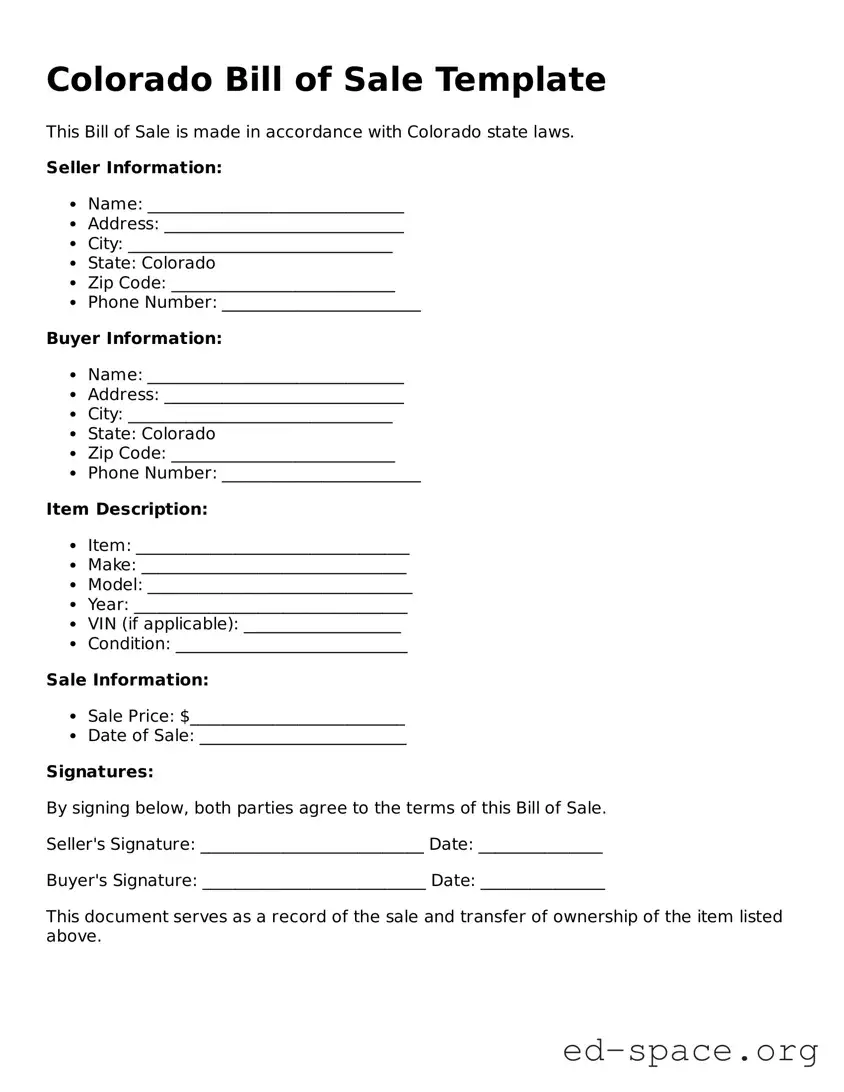
Colorado Bill of Sale Template
This Bill of Sale is made in accordance with Colorado state laws.
Seller Information:
Buyer Information:
Item Description:
Sale Information:
Signatures:
By signing below, both parties agree to the terms of this Bill of Sale.
Seller's Signature: ___________________________ Date: _______________
Buyer's Signature: ___________________________ Date: _______________
This document serves as a record of the sale and transfer of ownership of the item listed above.
| Fact Name | Details |
|---|---|
| Purpose | The Colorado Bill of Sale form is used to document the transfer of ownership of personal property from one party to another. |
| Governing Law | This form is governed by the Colorado Revised Statutes, specifically Title 4, Article 9, which pertains to the Uniform Commercial Code. |
| Types of Property | The Bill of Sale can be used for various types of personal property, including vehicles, boats, and equipment. |
| Requirements | While not always required, it is advisable to have the Bill of Sale signed by both parties and notarized for added legal protection. |
Completing the Colorado Bill of Sale form is a straightforward process that ensures a clear transfer of ownership for personal property. Once the form is filled out correctly, it can be used for various purposes, such as registering the item with the state or for personal record-keeping.
What is a Colorado Bill of Sale form?
A Colorado Bill of Sale form is a legal document that serves as proof of a transaction between a buyer and a seller. It outlines the details of the sale, including the items being sold, their condition, and the purchase price. This form is particularly important for transactions involving vehicles, boats, or personal property, as it helps establish ownership and protects both parties in case of disputes. While it is not always required by law, having a Bill of Sale can provide valuable documentation for both the buyer and the seller.
When should I use a Bill of Sale in Colorado?
You should use a Bill of Sale whenever you buy or sell a significant item, such as a vehicle, boat, or valuable personal property. This document is especially crucial for transactions that involve a change of ownership. In Colorado, a Bill of Sale is often required for registering a vehicle with the Department of Motor Vehicles (DMV). Additionally, it can serve as a record for tax purposes or to verify the legitimacy of the transaction. Even for smaller items, having a Bill of Sale can help clarify the terms of the sale and protect both parties' interests.
What information is typically included in a Colorado Bill of Sale?
A Colorado Bill of Sale generally includes several key pieces of information. First, it identifies the buyer and seller, including their full names and addresses. Next, it describes the item being sold, including details like make, model, year, and Vehicle Identification Number (VIN) for vehicles. The purchase price should also be clearly stated. Additionally, the document may include the date of the transaction and any warranties or conditions related to the sale. Both parties should sign the Bill of Sale to validate the agreement.
Is a Bill of Sale required to complete a transaction in Colorado?
No, a Bill of Sale is not legally required to complete a transaction in Colorado. However, it is highly recommended, especially for high-value items or vehicles. While some transactions may be informal and not require documentation, having a Bill of Sale provides a clear record of the agreement. This can be crucial if disputes arise later or if you need to prove ownership. Always consider the potential benefits of having a written record when engaging in a sale.
Incorrect Information: One of the most common mistakes is providing inaccurate details about the buyer or seller. This includes misspelled names, wrong addresses, or incorrect identification numbers. Always double-check this information.
Missing Signatures: Failing to sign the document is another frequent error. Both the buyer and seller must sign the Bill of Sale to make it valid. Ensure that both parties have signed before finalizing the transaction.
Omitting Sale Details: It's essential to include specific information about the item being sold. This includes the make, model, year, and Vehicle Identification Number (VIN) for vehicles. Leaving out these details can lead to confusion later.
Not Including Payment Information: Clearly stating the sale price is crucial. Some people forget to mention how much was paid or how the payment was made. Including this information helps avoid disputes in the future.
Ignoring Local Regulations: Each state may have specific requirements for a Bill of Sale. Failing to comply with Colorado's regulations can render the document ineffective. Research local laws to ensure compliance.
When engaging in a transaction involving the sale of personal property in Colorado, a Bill of Sale is a crucial document. However, it is often accompanied by other forms and documents that help ensure a smooth transfer of ownership. Below is a list of commonly used documents alongside the Colorado Bill of Sale form, each serving a specific purpose in the transaction process.
Understanding these documents can significantly enhance your confidence when navigating the sale of personal property in Colorado. Each form plays a vital role in protecting the interests of both the buyer and the seller, ensuring a legally sound transaction. Always consider seeking guidance if you have questions or concerns about the process.
When filling out the Colorado Bill of Sale form, it's essential to approach the task with care. Here are some important dos and don'ts to keep in mind.
Following these guidelines will help ensure that your Bill of Sale is completed correctly and serves its purpose effectively.
When it comes to the Colorado Bill of Sale form, several misconceptions can lead to confusion for buyers and sellers alike. Understanding these misconceptions can help ensure a smoother transaction process. Here are four common misunderstandings:
Many people believe that a Bill of Sale is only required when selling a vehicle. In reality, this form can be used for various transactions, including the sale of personal property, boats, and even livestock. Anytime a significant item is sold, having a Bill of Sale can provide proof of the transaction.
Some individuals think that a Bill of Sale does not require notarization to be valid. While notarization is not always necessary in Colorado, having a notary public witness the signing can add an extra layer of authenticity and may be required for certain transactions, particularly those involving vehicles.
Another common belief is that the Bill of Sale primarily benefits the seller. In fact, it protects both parties involved in the transaction. For the buyer, it serves as proof of ownership and can be essential for registration or insurance purposes. For the seller, it provides evidence that the item was sold and may help mitigate future disputes.
Some people think that a Bill of Sale must be filled out in person. While meeting face-to-face is often the best practice, it’s not a requirement. The form can be completed online, and parties can sign it electronically, as long as both parties agree to the terms and have access to the necessary information.
By clearing up these misconceptions, individuals can approach their transactions with greater confidence and clarity.
When filling out and using the Colorado Bill of Sale form, it is important to consider the following key takeaways:
By following these guidelines, individuals can ensure a smooth transaction when using the Colorado Bill of Sale form.