Entering college often marks a significant transition in a young adult's life, bringing with it newfound independence and responsibilities. One of the most critical aspects of this experience is living with a roommate. To foster a harmonious living environment, many colleges encourage students to complete a College Roommate Agreement form. This document serves as a guideline for establishing expectations and responsibilities between roommates. Key components of the agreement typically include preferences regarding cleanliness, shared responsibilities, quiet hours, and guest policies. By addressing these topics upfront, students can minimize potential conflicts and create a respectful atmosphere. Additionally, the form may provide space for roommates to communicate their personal habits, such as study schedules and sleeping patterns, which can further enhance mutual understanding. Ultimately, the College Roommate Agreement is not merely a formality; it is a proactive tool designed to support positive relationships and promote a successful college experience.
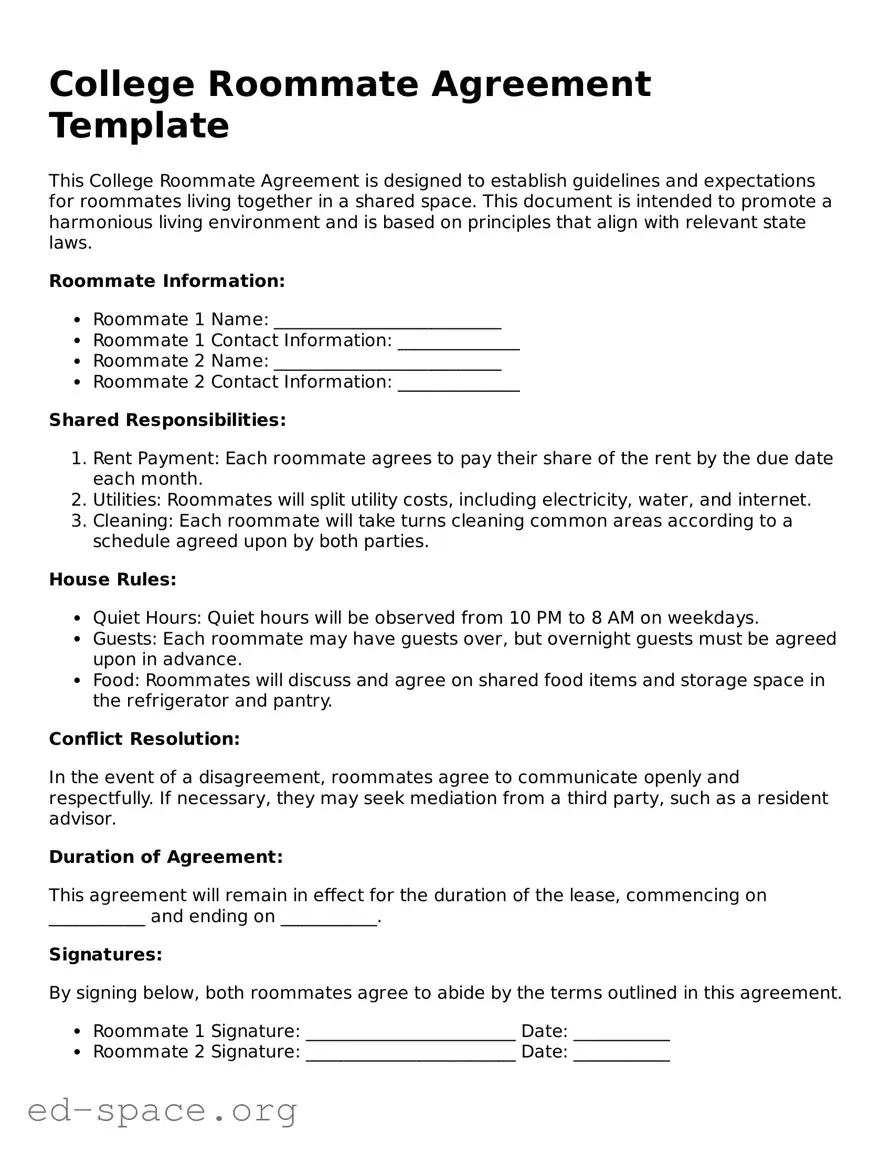
College Roommate Agreement Template
This College Roommate Agreement is designed to establish guidelines and expectations for roommates living together in a shared space. This document is intended to promote a harmonious living environment and is based on principles that align with relevant state laws.
Roommate Information:
Shared Responsibilities:
House Rules:
Conflict Resolution:
In the event of a disagreement, roommates agree to communicate openly and respectfully. If necessary, they may seek mediation from a third party, such as a resident advisor.
Duration of Agreement:
This agreement will remain in effect for the duration of the lease, commencing on ___________ and ending on ___________.
Signatures:
By signing below, both roommates agree to abide by the terms outlined in this agreement.
| Fact Name | Description |
|---|---|
| Purpose | The College Roommate Agreement form helps roommates establish guidelines for living together. It addresses issues like cleanliness, noise levels, and shared responsibilities. |
| Flexibility | Roommates can customize the agreement to suit their specific needs and preferences. This ensures everyone is on the same page from the start. |
| Conflict Resolution | The form often includes a section on how to handle disagreements. This can help prevent conflicts and provide a clear process for resolving issues. |
| State-Specific Forms | Some states have specific guidelines for roommate agreements. For example, California law encourages clear communication and written agreements to avoid misunderstandings. |
| Legal Standing | While the agreement is not a legally binding contract, it can serve as a reference point in case of disputes. It encourages accountability among roommates. |
Filling out the College Roommate Agreement form is an important step in ensuring a smooth living arrangement. By clearly stating preferences and expectations, both roommates can create a comfortable and respectful environment. Follow these steps to complete the form effectively.
What is a College Roommate Agreement form?
The College Roommate Agreement form is a document designed to help college roommates establish guidelines and expectations for their living arrangements. It addresses various aspects of cohabitation, including shared responsibilities, personal preferences, and conflict resolution strategies. This agreement fosters open communication and helps prevent misunderstandings between roommates.
Why should roommates complete this agreement?
Completing the College Roommate Agreement form can significantly enhance the living experience for all roommates involved. It encourages discussions about boundaries, responsibilities, and personal habits. By setting clear expectations from the beginning, roommates can minimize potential conflicts and create a more harmonious living environment.
What topics are typically covered in the agreement?
The agreement generally covers several key areas, including cleanliness, noise levels, guests, shared expenses, and study times. Roommates can also address personal preferences, such as food sharing and privacy needs. Each section can be customized to reflect the unique needs and preferences of the individuals involved.
How should roommates approach filling out the form?
Roommates should approach the form collaboratively. It is beneficial for all parties to discuss each section openly and honestly. Taking the time to listen to each other's perspectives can lead to a better understanding of needs and expectations. It may be helpful to schedule a dedicated time for this discussion to ensure everyone is focused and engaged.
Can the agreement be modified after it is completed?
Yes, the College Roommate Agreement can be modified at any time. As living situations and relationships evolve, it may be necessary to revisit and adjust the agreement. Roommates should communicate openly about any changes they wish to make and come to a mutual agreement before updating the document.
What happens if a conflict arises despite having an agreement?
If a conflict arises, roommates should first refer back to the agreement to see if the issue can be resolved based on the established guidelines. Open communication is key. If necessary, roommates can seek assistance from a resident advisor or a neutral third party to help mediate the situation.
Is the agreement legally binding?
No, the College Roommate Agreement is not a legally binding document. It serves as a guideline for roommates to follow and helps facilitate discussions about living together. While it is not enforceable by law, adhering to the agreement can contribute to a positive living experience.
Where can I obtain a College Roommate Agreement form?
College students can typically obtain a College Roommate Agreement form from their university’s housing office or website. Many institutions provide templates that students can customize. It is also possible to find templates online that can be adapted to fit specific needs.
What should roommates do after completing the agreement?
After completing the agreement, roommates should each keep a copy for their records. It is also advisable to revisit the agreement periodically, especially at the beginning of each semester or when new roommates join. Regular check-ins can help ensure that everyone remains on the same page and that any necessary adjustments are made promptly.
Failing to communicate openly about preferences and habits. Roommates often overlook discussing their daily routines, which can lead to misunderstandings later.
Not being specific enough in outlining shared responsibilities. Vague statements about chores can result in one roommate feeling overwhelmed while the other does not contribute equally.
Neglecting to address quiet hours. Without clear agreements on when noise levels should be reduced, conflicts may arise during study times or late at night.
Ignoring the importance of guest policies. Roommates should discuss how often and when guests are allowed to visit to avoid feelings of discomfort or invasion of privacy.
Overlooking the need for a plan regarding shared items. Roommates may assume that certain items are communal, leading to disputes over personal belongings.
Not considering differing lifestyles and schedules. Roommates should acknowledge that their habits may clash, and they should find ways to accommodate each other.
Failing to revisit the agreement regularly. Situations change, and it is crucial to update the agreement as needed to reflect new circumstances or preferences.
Being too rigid in expectations. Flexibility can foster a better living environment, so roommates should be willing to compromise and adapt to each other's needs.
The College Roommate Agreement form is a helpful tool for students sharing living spaces. It outlines expectations and responsibilities, fostering a positive living environment. In addition to this agreement, several other forms and documents can assist in managing roommate relationships and housing arrangements. Here’s a list of related documents that are often used alongside the College Roommate Agreement.
These documents work together to enhance the college living experience. They help set clear expectations and provide a framework for resolving issues, making it easier for students to focus on their studies and enjoy their time at college.
When filling out the College Roommate Agreement form, it is essential to approach the task thoughtfully. The agreement serves as a foundation for a harmonious living arrangement. Here are some important do's and don'ts to consider:
The College Roommate Agreement form is a helpful tool for students living together. However, several misconceptions surround its purpose and use. Here are six common misunderstandings:
Understanding these misconceptions can help students make the most of their living arrangements and foster a positive environment in their shared space.
When filling out and using the College Roommate Agreement form, consider the following key takeaways: