The CNA Shower Sheets form is a crucial tool designed to enhance the quality of care provided to residents during showering. It serves multiple purposes, primarily focusing on skin monitoring and assessment. When a Certified Nursing Assistant (CNA) assists a resident with bathing, they are required to conduct a thorough visual examination of the resident's skin. This form prompts the CNA to document any abnormalities, such as bruising, skin tears, rashes, or lesions, ensuring that any issues are reported promptly to the charge nurse. Additionally, it includes a body chart for precise location tracking of these abnormalities, allowing for clearer communication among the care team. The form also addresses other important aspects of resident care, including the need for toenail trimming, and it requires signatures from both the CNA and the charge nurse, thereby establishing accountability. By systematically recording skin conditions and interventions, the CNA Shower Sheets form plays an essential role in maintaining the health and well-being of residents in care facilities.
Skin Monitoring: Comprehensive CNA Shower Review
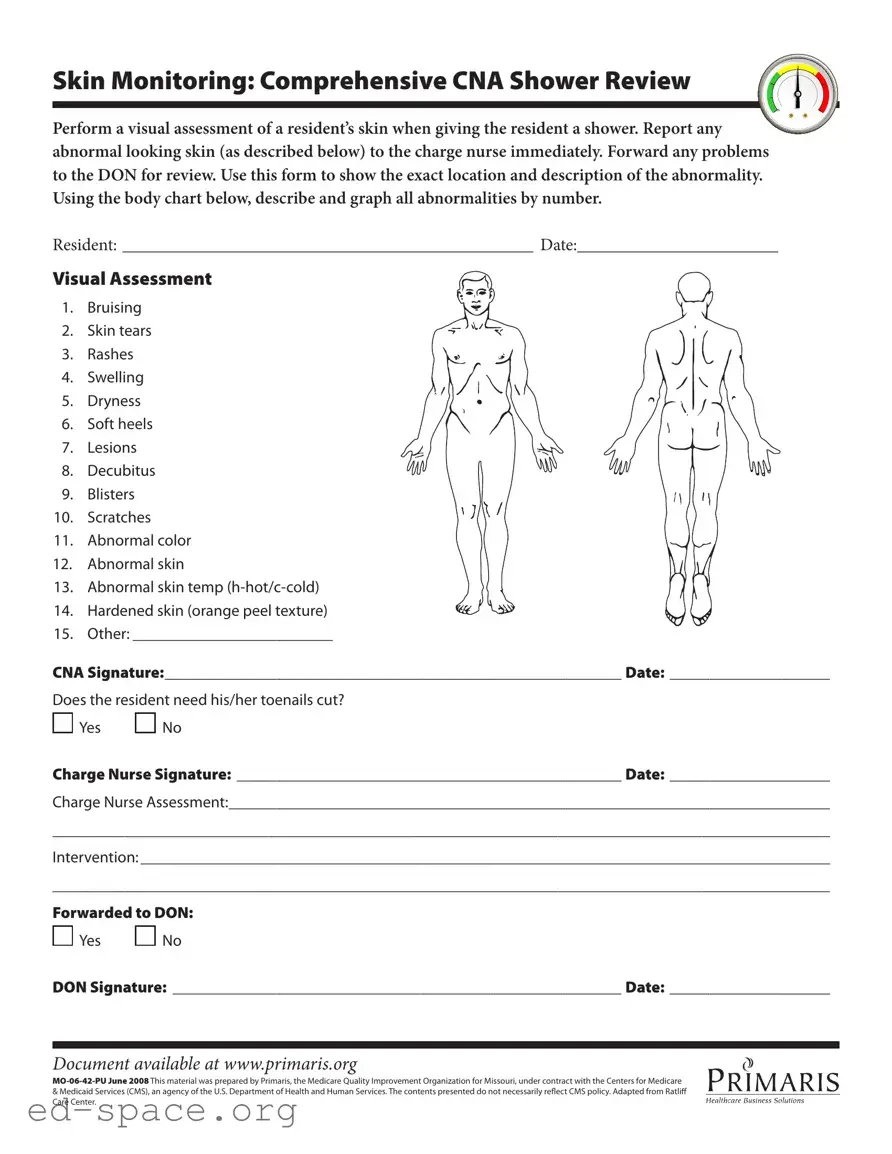
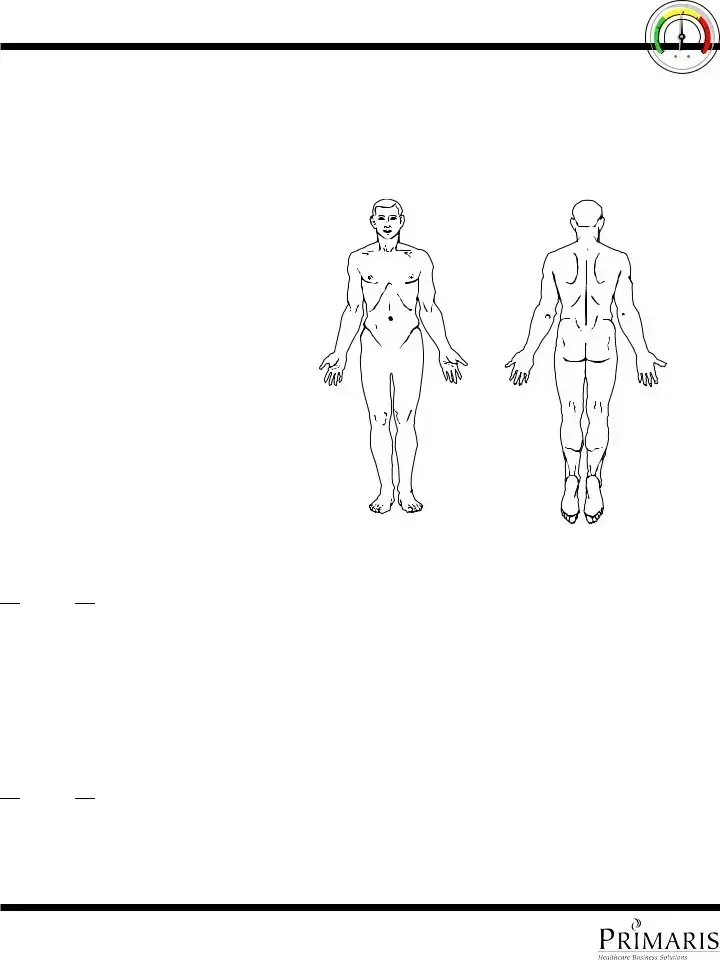
Perform a visual assessment of a resident’s skin when giving the resident a shower. Report any abnormal looking skin (as described below) to the charge nurse immediately. Forward any problems to the DON for review. Use this form to show the exact location and description of the abnormality. Using the body chart below, describe and graph all abnormalities by number.
RESIDENT: _______________________________________________ DATE:_______________________
Visual Assessment
1. Bruising
2. Skin tears
3. Rashes
4. Swelling
5. Dryness
6. Soft heels
7. Lesions
8. Decubitus
9. Blisters
10. Scratches
11. Abnormal color
12. Abnormal skin
13. Abnormal skin temp
14. Hardened skin (orange peel texture)
15. Other: _________________________
CNA Signature:_________________________________________________________ Date: ____________________
Does the resident need his/her toenails cut?
Yes No
Charge Nurse Signature: ________________________________________________ Date: ____________________
Charge Nurse Assessment:___________________________________________________________________________
_________________________________________________________________________________________________
Intervention: ______________________________________________________________________________________
_________________________________________________________________________________________________
Forwarded to DON:
Yes No
DON Signature: ________________________________________________________ Date: ____________________
Document available at www.primaris.org
&Medicaid Services (CMS), an agency of the U.S. Department of Health and Human Services. The contents presented do not necessarily relect CMS policy. Adapted from Ratlif Care Center.
| Fact Name | Details |
|---|---|
| Purpose | The CNA Shower Sheets form is designed to document a visual assessment of a resident’s skin during showering. |
| Skin Monitoring | CNA staff must report any abnormal skin findings, such as bruising or rashes, to the charge nurse immediately. |
| Documentation | Staff should use the body chart included in the form to accurately describe and graph any abnormalities by number. |
| Signature Requirement | The form requires signatures from both the CNA and the charge nurse to confirm the assessment and any necessary interventions. |
| Forwarding Protocol | Any problems identified must be forwarded to the Director of Nursing (DON) for further review and action. |
| Governing Law | This form is governed by regulations set forth by the Centers for Medicare & Medicaid Services (CMS) and applicable state laws. |
Filling out the CNA Shower Sheets form is a straightforward process that requires careful attention to detail. This form is used to document any abnormalities observed during a resident's shower, ensuring that any concerns are promptly communicated to the appropriate healthcare professionals. Following the steps below will help ensure that the form is completed accurately and efficiently.
What is the purpose of the CNA Shower Sheets form?
The CNA Shower Sheets form is designed to assist Certified Nursing Assistants (CNAs) in conducting a thorough visual assessment of a resident's skin during showering. It helps document any abnormalities found, ensuring that they are reported to the charge nurse and addressed appropriately.
What should be included in the visual assessment?
The visual assessment should include a detailed observation of the resident's skin. CNAs should look for issues such as bruising, skin tears, rashes, swelling, dryness, soft heels, lesions, decubitus ulcers, blisters, scratches, abnormal color, and abnormal temperature. Each abnormality should be documented on the form, including its exact location on the body chart provided.
How do I report abnormalities found during the assessment?
Any abnormalities observed during the skin assessment must be reported immediately to the charge nurse. It is important to provide a clear description of the issues identified. The charge nurse will then evaluate the situation and determine the next steps for intervention.
What should I do if I find an abnormality?
If an abnormality is found, the CNA should document it on the form, including its location and description. Afterward, the information should be forwarded to the Director of Nursing (DON) for further review and action.
Is there a section for documenting toenail care?
Yes, the form includes a question regarding whether the resident needs their toenails cut. CNAs should answer "Yes" or "No" based on their assessment. This information is important for the overall care of the resident.
Who signs the form after the assessment is completed?
After completing the assessment, both the CNA and the charge nurse must sign the form. The CNA's signature confirms the assessment was performed, while the charge nurse's signature indicates that they have reviewed the findings.
What happens if the charge nurse identifies additional concerns?
The charge nurse may document any additional assessments or concerns directly on the form. They will also decide on the appropriate interventions and may forward the information to the DON if necessary.
Can the form be used for multiple residents?
No, the CNA Shower Sheets form is intended for individual residents. Each form should be filled out separately to ensure accurate documentation and tracking of each resident's skin health.
Where can I find more information about the form?
Additional information about the CNA Shower Sheets form can be found at www.primaris.org. This website provides resources related to quality improvement in healthcare settings.
Is there a specific date format to use on the form?
Yes, the form requires dates to be filled out in a specific format. Ensure that the date is clearly written next to each signature and in the designated areas to maintain proper documentation.
Not completing the resident's name and date fields accurately. This information is crucial for proper documentation and tracking.
Failing to perform a thorough visual assessment of the resident's skin. Skipping this step can lead to undetected issues.
Overlooking or misreporting abnormalities in the skin. Each type of abnormality should be documented clearly and accurately.
Not using the body chart correctly to mark the location of skin issues. This can cause confusion in understanding the severity and area affected.
Neglecting to include additional comments or details about the resident's condition. Providing context can be vital for further assessment.
Forgetting to obtain the CNA signature and date. This signature serves as verification of the assessment performed.
Not indicating whether the resident needs their toenails cut. This is an important aspect of personal care that should not be missed.
Leaving the charge nurse assessment section blank or incomplete. This feedback is essential for ongoing care.
Failing to forward the form to the Director of Nursing (DON) when necessary. This step ensures that any serious issues are addressed promptly.
Not keeping a copy of the completed form for future reference. Documentation is key in maintaining continuity of care.
The CNA Shower Sheets form is essential for documenting skin assessments during resident showers. However, several other documents often accompany it to ensure comprehensive care and communication within the healthcare team. Below are four commonly used forms that complement the CNA Shower Sheets.
Using these forms in conjunction with the CNA Shower Sheets enhances the quality of care provided to residents. Each document plays a vital role in ensuring that all aspects of a resident's health and well-being are monitored and addressed appropriately.
When filling out the CNA Shower Sheets form, it's important to follow specific guidelines to ensure accurate and effective documentation. Here’s a list of things you should and shouldn't do:
By adhering to these guidelines, you help maintain the quality of care and ensure that important information is communicated effectively within the healthcare team.
Misconceptions about the CNA Shower Sheets form can lead to misunderstandings and improper use. Here are eight common misconceptions clarified:
Addressing these misconceptions is vital for ensuring proper care and documentation practices in the facility.
Filling out the CNA Shower Sheets form is an essential task that ensures proper skin monitoring for residents. Here are some key takeaways to keep in mind:
By following these guidelines, CNAs can enhance the quality of care provided to residents and ensure that any skin issues are addressed promptly and effectively.