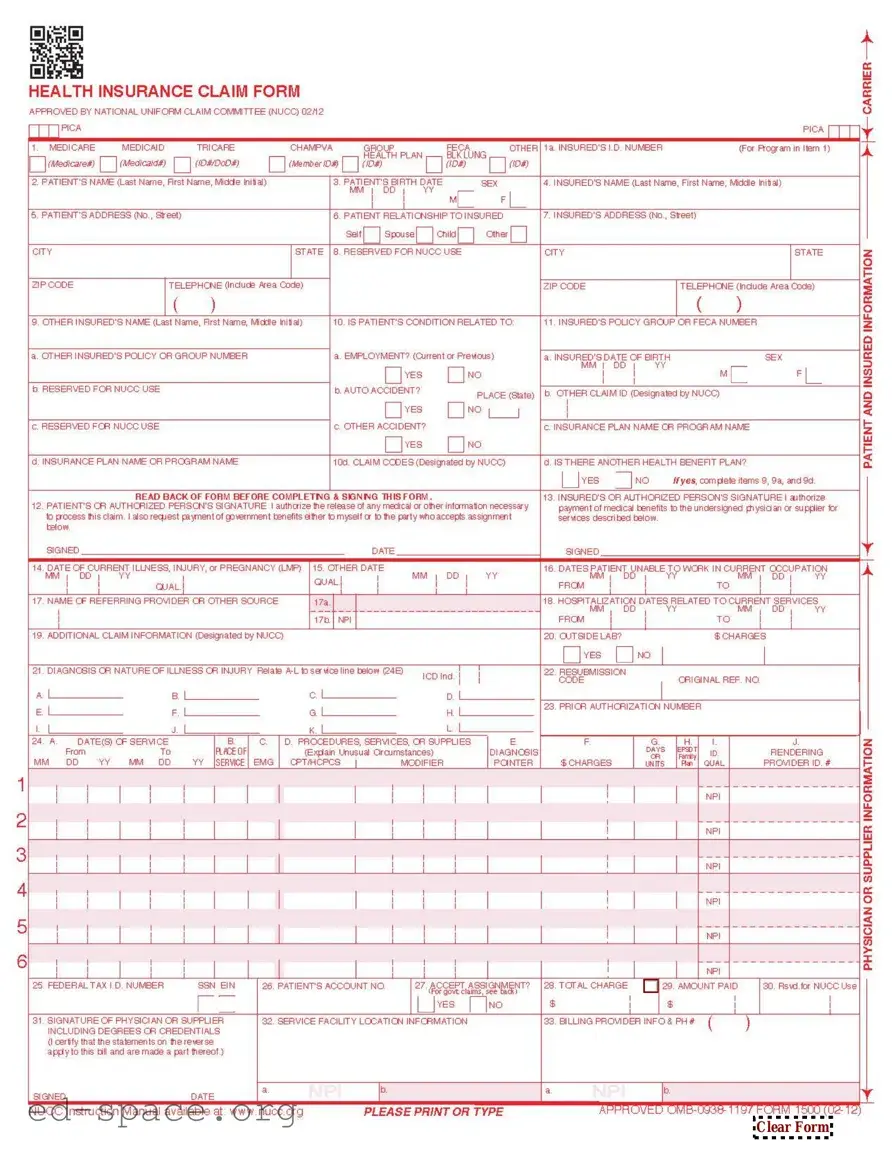
The CMS 1500 form plays a crucial role in the healthcare billing process, serving as a standardized document used by healthcare providers to submit claims for services rendered to patients. This form is essential for ensuring that medical professionals receive timely and accurate reimbursement from insurance companies. It captures vital information, including patient demographics, insurance details, and the specific services provided, which are all necessary for processing claims efficiently. Moreover, the CMS 1500 form is designed to be user-friendly, allowing providers to fill it out with relative ease while adhering to the guidelines set forth by the Centers for Medicare & Medicaid Services (CMS). Understanding the various sections of the form, such as the patient information, provider information, and the coding for diagnoses and procedures, is vital for both healthcare providers and billing specialists. By mastering the CMS 1500 form, healthcare providers can minimize errors, reduce claim denials, and ultimately ensure that patients receive the coverage they deserve.
| Fact Name | Details |
|---|---|
| Purpose | The CMS 1500 form is primarily used for submitting outpatient claims to Medicare and other insurance providers. |
| Format | This form is a standardized document that allows healthcare providers to bill for services rendered to patients. |
| Origin | The form was developed by the Centers for Medicare & Medicaid Services (CMS) to streamline the claims process. |
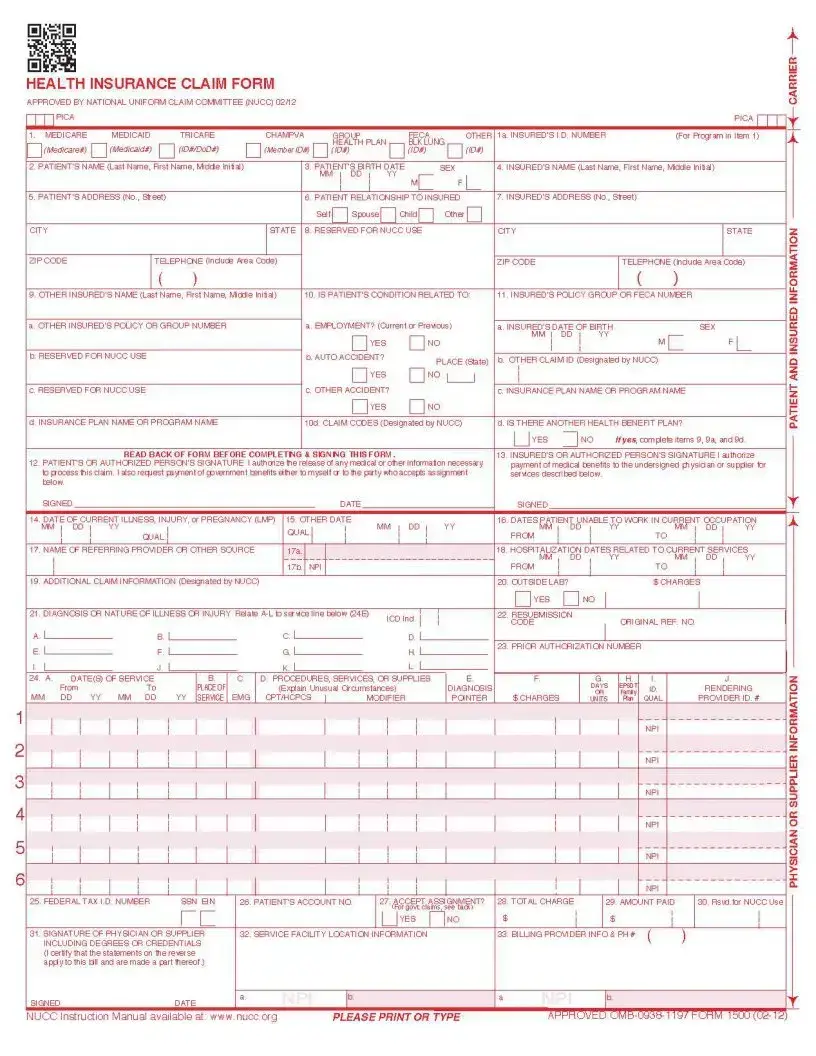
| Structure | The CMS 1500 form consists of 33 fields that capture essential information about the patient, provider, and services provided. |
| State-Specific Forms | Some states have specific requirements or additional forms that must accompany the CMS 1500, governed by state laws. |
| Submission Methods | Claims can be submitted electronically or via paper, although electronic submission is often preferred for efficiency. |
| Updates | The CMS 1500 form has undergone several revisions; the latest version is the 02/12 version, which includes new codes and instructions. |
| Governing Laws | In addition to federal regulations, each state may have its own laws governing the use of the CMS 1500 form, such as state Medicaid regulations. |
Filling out the CMS 1500 form requires attention to detail to ensure accuracy and compliance. Follow these steps carefully to complete the form correctly.
After filling out the CMS 1500 form, review it for any errors or missing information. Ensure that all required signatures are included before submitting it to the appropriate insurance company or billing department.
What is the CMS 1500 form?
The CMS 1500 form is a standard claim form used by healthcare providers to bill Medicare and other health insurance programs. It captures essential information about the patient, the provider, and the services rendered. This form is crucial for ensuring that healthcare providers receive payment for their services.
Who needs to use the CMS 1500 form?
Healthcare providers, including physicians, therapists, and other practitioners, use the CMS 1500 form when submitting claims for services provided to patients. It is primarily utilized by those who are not hospital-based but operate in private practice or outpatient settings.
What information is required on the CMS 1500 form?
Several key details must be included on the CMS 1500 form. This includes the patient's personal information, insurance details, the provider's information, and a description of the services provided. Specific codes for diagnoses and procedures are also necessary to process the claim accurately.
How do I fill out the CMS 1500 form correctly?
To fill out the CMS 1500 form correctly, start by gathering all necessary patient and service information. Each section of the form must be completed accurately. Use the appropriate codes for diagnoses and procedures, and ensure that the billing details match the patient’s insurance information. Double-check for any errors before submission to avoid delays in payment.
Where can I submit the CMS 1500 form?
The CMS 1500 form can be submitted electronically or via mail, depending on the insurance provider's requirements. Many providers prefer electronic submissions for faster processing. Check with the specific insurance company for their preferred submission method and guidelines.
What should I do if my claim is denied?
If a claim submitted using the CMS 1500 form is denied, review the denial notice carefully to understand the reason. Common issues include incorrect coding, missing information, or services not covered by the insurance plan. Once identified, correct the errors and resubmit the claim or appeal the denial if appropriate.
Incorrect Patient Information: One common mistake is entering incorrect or incomplete patient details, such as the name, date of birth, or insurance information. This can lead to delays in processing claims.
Missing or Incorrect Provider Information: Failing to provide accurate information about the healthcare provider can cause claims to be rejected. This includes the National Provider Identifier (NPI) number and practice address.
Improper Use of Codes: Using the wrong diagnosis or procedure codes can result in denials. It’s essential to ensure that the codes match the services provided and are up-to-date.
Inaccurate Dates of Service: Entering incorrect dates for the services rendered can lead to confusion and potential claim rejections. Always double-check the dates before submission.
Omitting Signature: A signature is often required on the form. Failing to sign or provide the necessary authorization can halt the claims process.
Not Following Submission Guidelines: Different insurers may have specific submission guidelines. Ignoring these can lead to claims being returned or denied.
Neglecting to Attach Supporting Documents: Some claims require additional documentation. Not including these can result in delays or denials of payment.
Failure to Review the Form: Submitting the form without a thorough review can lead to multiple errors. A final check can catch mistakes that might otherwise go unnoticed.
The CMS 1500 form is a crucial document used in the healthcare industry for billing purposes. However, it is often accompanied by several other forms and documents that help facilitate the claims process. Understanding these additional documents can streamline the billing experience and ensure that healthcare providers receive timely payments.
In summary, while the CMS 1500 form plays a vital role in healthcare billing, other documents complement its function. Together, they create a comprehensive system that helps healthcare providers manage claims efficiently and ensures patients understand their financial obligations.
When filling out the CMS 1500 form, attention to detail is crucial. Here are seven essential do's and don'ts to keep in mind:
By adhering to these guidelines, you can help ensure a smooth claims process.
The CMS 1500 form is essential for healthcare providers when submitting claims for reimbursement. However, several misconceptions surround its use. Here are ten common misunderstandings:
This is not true. Any healthcare provider who is eligible to bill for services can use the CMS 1500 form, including nurses, therapists, and other allied health professionals.
While it is widely used for Medicare, the CMS 1500 form is also accepted by many private insurance companies and Medicaid programs.
Each patient's information and the services provided will vary, requiring specific details to be filled out for each claim.
Submitting a claim does not guarantee payment. Claims can be denied for various reasons, including incorrect information or lack of medical necessity.
Claims can be corrected or appealed after submission if errors are identified. It's important to address any issues promptly.
This form is primarily used for outpatient services, but it can also be used for certain inpatient services in specific situations.
Different insurers may have unique requirements. It's crucial to check with each insurance provider for their specific guidelines.
Many insurers require supporting documents, such as medical records or referral letters, to process claims effectively.
In fact, many providers now submit the CMS 1500 form electronically, which can speed up the claims process.
This is a misconception. The CMS 1500 form remains a vital tool for healthcare providers and is regularly updated to meet current billing standards.
Understanding these misconceptions can help ensure that claims are submitted correctly and efficiently, improving the chances of timely reimbursement.
Filling out the CMS 1500 form correctly is essential for healthcare providers seeking reimbursement from insurance companies. Here are some key takeaways to consider: