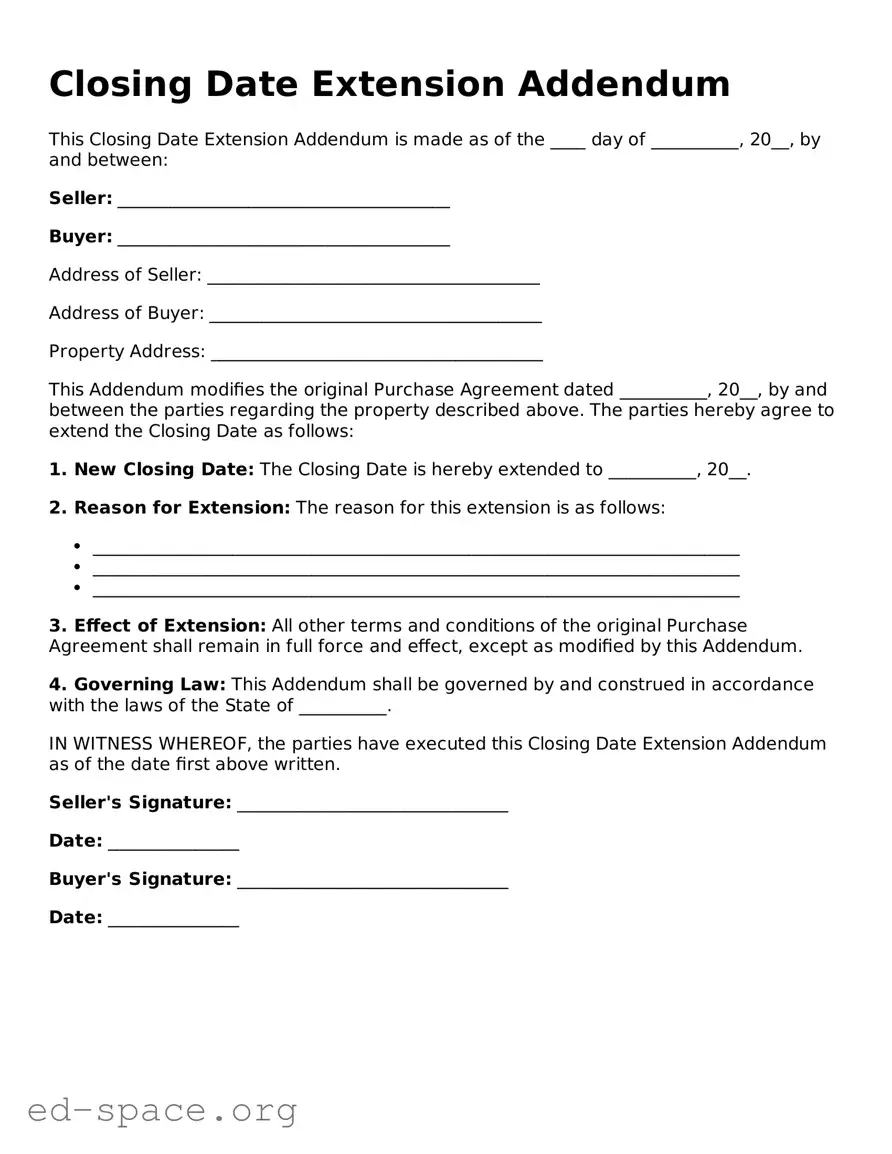
The Closing Date Extension Addendum is an essential document that plays a pivotal role in real estate transactions, particularly when unforeseen circumstances arise that necessitate a delay in the closing process. This addendum allows parties involved in the sale of a property to officially extend the closing date, providing both buyers and sellers with the flexibility to navigate any challenges that may impede the timely completion of the sale. It outlines the new proposed closing date, ensuring that all parties are on the same page and that their interests are protected. Additionally, the form typically requires signatures from both the buyer and seller, solidifying their agreement to the new timeline. By utilizing this addendum, participants can avoid potential disputes and maintain a cooperative atmosphere, ultimately leading to a smoother transaction. Understanding the nuances of this form can greatly benefit anyone involved in real estate, as it serves as a vital tool for managing expectations and facilitating communication between parties.
Closing Date Extension Addendum
This Closing Date Extension Addendum is made as of the ____ day of __________, 20__, by and between:
Seller: ______________________________________
Buyer: ______________________________________
Address of Seller: ______________________________________
Address of Buyer: ______________________________________
Property Address: ______________________________________
This Addendum modifies the original Purchase Agreement dated __________, 20__, by and between the parties regarding the property described above. The parties hereby agree to extend the Closing Date as follows:
1. New Closing Date: The Closing Date is hereby extended to __________, 20__.
2. Reason for Extension: The reason for this extension is as follows:
3. Effect of Extension: All other terms and conditions of the original Purchase Agreement shall remain in full force and effect, except as modified by this Addendum.
4. Governing Law: This Addendum shall be governed by and construed in accordance with the laws of the State of __________.
IN WITNESS WHEREOF, the parties have executed this Closing Date Extension Addendum as of the date first above written.
Seller's Signature: _______________________________
Date: _______________
Buyer's Signature: _______________________________
Date: _______________
| Fact Name | Description |
|---|---|
| Purpose | The Closing Date Extension Addendum is used to extend the closing date of a real estate transaction. |
| Parties Involved | This addendum typically involves the buyer and seller, as both must agree to the extension. |
| Governing Law | The form is subject to state-specific laws, which may vary significantly. For example, in California, it follows the California Civil Code. |
| Mutual Agreement | Both parties must sign the addendum to make the extension legally binding. |
| Timeframe | The addendum should clearly specify the new closing date and any relevant conditions. |
| Impact on Other Terms | Extending the closing date may affect other contractual obligations, such as financing and inspections. |
| Notification Requirement | Parties are typically required to notify each other of any changes or conditions related to the extension. |
| Use in Different States | Many states have their own versions of the addendum, tailored to local real estate practices. |
| Potential Fees | Extensions may incur additional fees or costs, depending on the terms of the original agreement. |
| Legal Advice | It is advisable for both parties to seek legal counsel before signing the addendum to ensure their rights are protected. |
Once you have the Closing Date Extension Addendum form ready, it's time to fill it out carefully. Make sure you have all necessary information at hand, as this will help ensure the process goes smoothly.
What is a Closing Date Extension Addendum?
A Closing Date Extension Addendum is a legal document used in real estate transactions. It allows the parties involved to extend the closing date of a property sale. This extension can be necessary due to various reasons, such as financing delays or the need for additional inspections.
When should I use a Closing Date Extension Addendum?
This addendum should be used when the original closing date cannot be met. If either party anticipates that they will not be ready to close on the agreed date, it is advisable to complete this form to officially document the new closing date.
Who needs to sign the Closing Date Extension Addendum?
All parties involved in the real estate transaction must sign the addendum. This typically includes the buyer, the seller, and their respective agents. Ensuring all signatures are obtained is crucial for the addendum to be legally binding.
What happens if the Closing Date Extension Addendum is not signed?
If the addendum is not signed, the original closing date remains in effect. This may lead to complications, including the potential for breach of contract if one party fails to fulfill their obligations by the original date.
Can the Closing Date be extended multiple times?
Yes, the closing date can be extended multiple times if necessary. Each extension should be documented with a new Closing Date Extension Addendum. It is important to ensure that all parties agree to each extension to avoid misunderstandings.
Is there a limit to how long I can extend the closing date?
There is no specific legal limit to how long a closing date can be extended. However, the parties should agree on a reasonable timeframe. It is advisable to communicate openly about the reasons for the extension and to set a date that allows sufficient time to resolve any outstanding issues.
What should be included in the Closing Date Extension Addendum?
The addendum should include the original closing date, the new closing date, and any reasons for the extension. Additionally, it should state that all other terms of the original contract remain unchanged unless otherwise noted.
How does a Closing Date Extension Addendum affect other contract terms?
Generally, the Closing Date Extension Addendum only modifies the closing date. All other terms and conditions of the original purchase agreement remain in effect unless explicitly stated otherwise in the addendum.
Where can I obtain a Closing Date Extension Addendum form?
Closing Date Extension Addendum forms can often be obtained from real estate agents, brokers, or legal professionals. Additionally, many online legal resources provide templates that can be customized to fit specific transactions.
Failing to include the correct property address. This can lead to confusion about which property the extension applies to.
Not specifying the new closing date. Leaving this blank can result in misunderstandings and delays.
Overlooking the need for all parties' signatures. Without everyone’s consent, the extension may not be valid.
Using an incorrect form version. Always ensure you are using the most current version of the addendum.
Neglecting to provide a reason for the extension. This information can be important for all parties involved.
Not checking for typos or errors in the form. Mistakes can lead to complications or disputes later on.
Failing to keep a copy of the signed addendum. It is essential to have documentation for future reference.
Not notifying the lender or title company about the extension. They need to be informed to adjust their records accordingly.
Missing the deadline for submitting the addendum. Extensions must be filed in a timely manner to be effective.
Assuming that verbal agreements are sufficient. All changes should be documented in writing to avoid misunderstandings.
The Closing Date Extension Addendum form is a crucial document in real estate transactions, allowing parties to extend the closing date under specific circumstances. Several other forms and documents often accompany this addendum to ensure all aspects of the transaction are addressed. Below is a list of these related documents.
Understanding these documents helps ensure a smooth transaction process. Each form plays a specific role in protecting the interests of both buyers and sellers, facilitating a successful real estate deal.
The Closing Date Extension Addendum is a valuable tool in real estate transactions, allowing parties to adjust the timeline of their agreement. Several other documents serve similar purposes, providing flexibility and clarity in various situations. Here’s a look at eight documents that share similarities with the Closing Date Extension Addendum:
Understanding these documents can empower parties in a transaction, ensuring that they can navigate changes smoothly and maintain clear communication throughout the process.
When filling out the Closing Date Extension Addendum form, it's important to follow certain guidelines to ensure accuracy and compliance. Here are seven key dos and don'ts to consider:
Following these guidelines can help facilitate a smoother transaction process and avoid potential issues down the line.
Misconception 1: The Closing Date Extension Addendum is only for buyers.
This form is useful for both buyers and sellers. It allows either party to request an extension of the closing date, ensuring that both sides have the opportunity to address any issues that may arise.
Misconception 2: Using the addendum automatically extends the closing date.
Submitting the addendum does not guarantee an extension. Both parties must agree to the new closing date, and the addendum must be signed by all involved.
Misconception 3: The addendum is only necessary for significant delays.
Even minor delays can warrant the use of the addendum. It's better to use this form proactively to avoid confusion or disputes later on.
Misconception 4: The addendum can be used without any reason for the extension.
While you can request an extension for various reasons, it's important to communicate openly about the need for the delay. Transparency helps maintain trust between both parties.
Understand the purpose of the Closing Date Extension Addendum. This form allows parties to extend the closing date of a real estate transaction, ensuring that all necessary conditions are met before finalizing the sale.
Ensure all parties involved sign the addendum. This includes both the buyer and the seller, as their agreement is essential for the extension to be valid.
Clearly specify the new closing date. Ambiguities can lead to misunderstandings, so it is crucial to provide a specific date to avoid any confusion.
Keep a copy of the signed addendum for your records. Documentation is vital in real estate transactions, and having this form on file can protect your interests in the future.