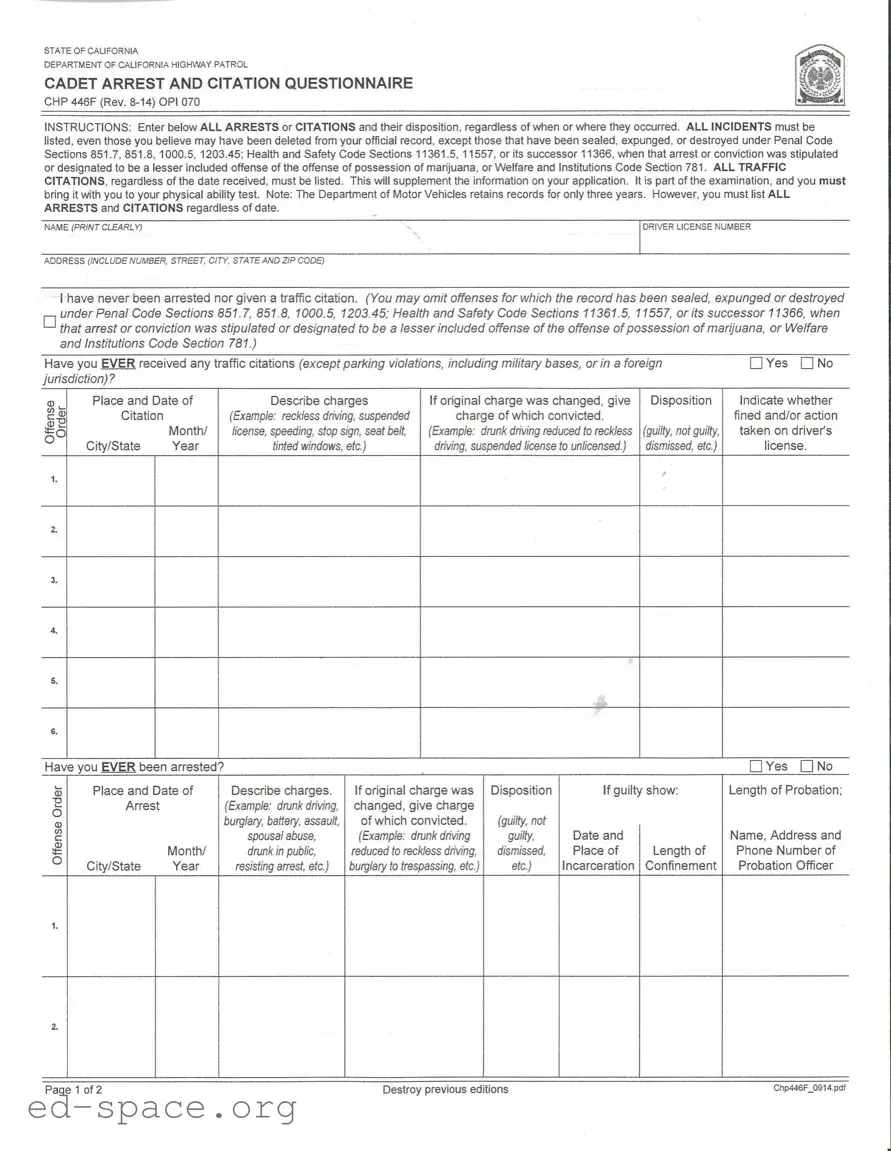
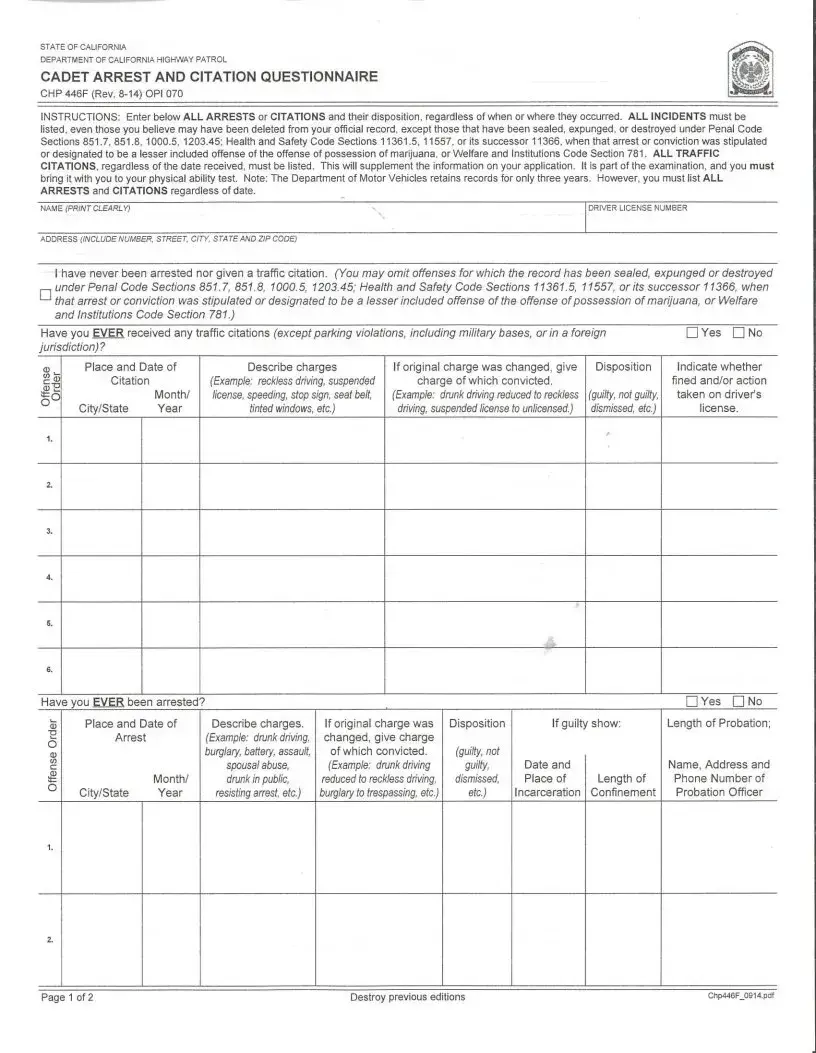
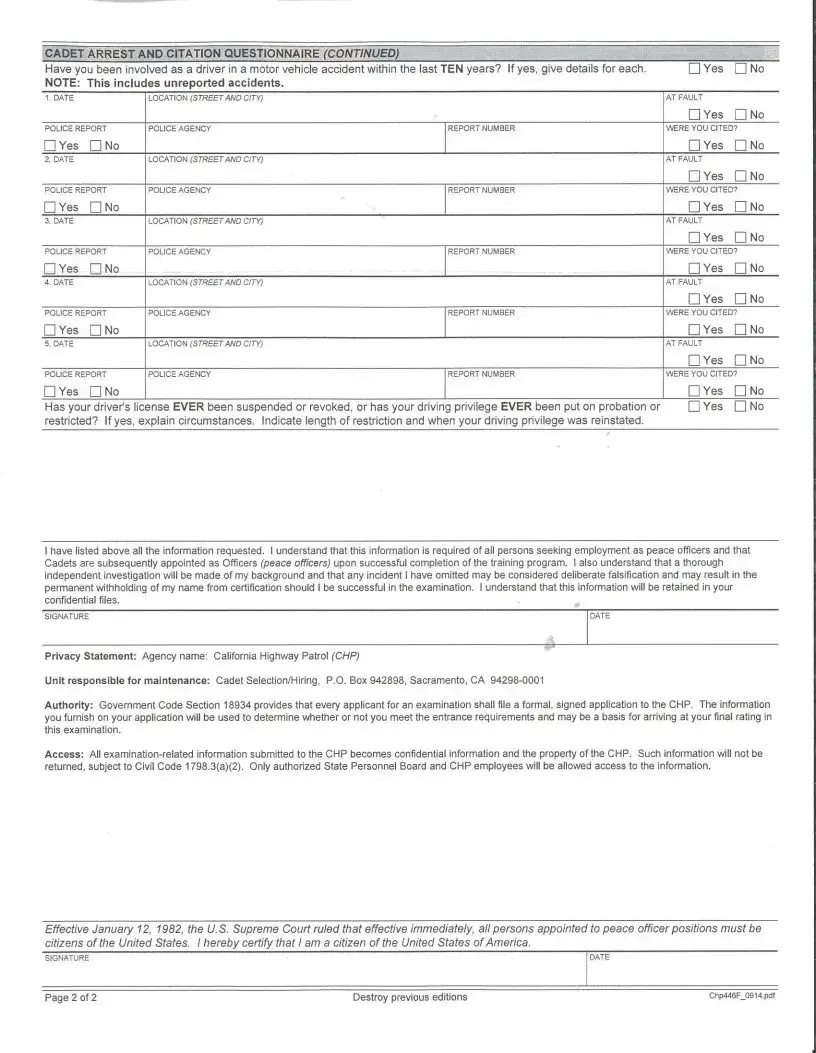
The CHP 446F form, also known as the Cadet Arrest and Citation Questionnaire, plays a crucial role in the application process for individuals aspiring to become peace officers with the California Highway Patrol. This comprehensive document requires applicants to disclose all arrests and citations they have received, regardless of when or where these incidents occurred. It emphasizes transparency, mandating that even incidents believed to be expunged or sealed must be reported, with specific exceptions outlined under various California Penal and Health and Safety Codes. The form also addresses traffic citations, requiring applicants to list every citation received, without regard to the date. This information supplements the application and is essential for the examination process, as candidates must bring the completed form to their physical ability test. The importance of accuracy cannot be overstated, as any omissions may be viewed as deliberate falsification, potentially jeopardizing the applicant's chances of certification. Additionally, the form includes sections for detailing any motor vehicle accidents within the last ten years and inquiries about the status of the applicant’s driver's license. Overall, the CHP 446F form serves as a vital tool for ensuring that all candidates meet the stringent requirements necessary for a career in law enforcement.
| Fact Name | Details |
|---|---|
| Form Purpose | The CHP 446F is used to document all arrests and citations for applicants seeking employment as peace officers with the California Highway Patrol. |
| Required Information | Applicants must list all arrests and citations, regardless of when or where they occurred, except those that have been sealed or expunged. |
| Traffic Citations | All traffic citations must be reported, even if they are older than three years. |
| Examination Requirement | The form is part of the examination process and must be brought to the physical ability test. |
| Sealed Records | Offenses that are sealed, expunged, or destroyed under specific Penal Code sections do not need to be reported. |
| Governing Laws | The form is governed by California Penal Code Sections 851.7, 851.8, 1000.5, and 1203.45, among others. |
| Accident Reporting | Applicants must disclose any involvement in motor vehicle accidents within the last ten years, including unreported ones. |
| License Status | Any suspension or revocation of the driver's license must be explained, including the circumstances and duration of the restriction. |
| Confidentiality | All information submitted is confidential and will be retained by the California Highway Patrol. |
After gathering all necessary information, you are ready to fill out the CHP 446F form. This form requires detailed information about your arrest history and traffic citations. It is crucial to be thorough and accurate, as this information will be reviewed during the application process.
What is the purpose of the CHP 446F form?
The CHP 446F form is a Cadet Arrest and Citation Questionnaire used by the California Highway Patrol. It collects information about any arrests or traffic citations you may have received. This information is necessary for the application process for becoming a peace officer and is part of the examination requirements.
Who needs to fill out the CHP 446F form?
Anyone applying to become a cadet with the California Highway Patrol must complete the CHP 446F form. This includes providing details about all arrests and citations, regardless of when or where they occurred, except for those that have been sealed, expunged, or destroyed under specific legal codes.
What should I include in the form regarding traffic citations?
You must list all traffic citations you have received, regardless of the date. This includes any citations for speeding, reckless driving, or other traffic violations. Even if the citation was dismissed or you were found not guilty, it still needs to be included on the form.
What if I have never been arrested or received a traffic citation?
If you have never been arrested or received a traffic citation, you can indicate this on the form. However, ensure that you only omit incidents that have been sealed or expunged under the relevant legal codes.
What happens if I omit information from the form?
Omitting information can be viewed as deliberate falsification. This may lead to your application being rejected or your name being permanently withheld from certification, even if you pass the examination. It is crucial to provide complete and accurate information.
Do I need to bring the CHP 446F form to the physical ability test?
Yes, you must bring the completed CHP 446F form with you to your physical ability test. It supplements the information on your application and is an essential part of the examination process.
What should I do if my driver's license has been suspended or revoked?
If your driver's license has ever been suspended or revoked, you need to explain the circumstances on the form. Include the length of the restriction and when your driving privilege was reinstated. This information is important for the evaluation of your application.
Is the information I provide on the CHP 446F form confidential?
Yes, all information submitted on the CHP 446F form is confidential. It becomes the property of the California Highway Patrol and will not be returned. Only authorized personnel will have access to this information.
Not Listing All Incidents: Many applicants fail to include all arrests and citations, thinking that some incidents may not matter. Every incident counts, even those that seem minor.
Omitting Sealed or Expunged Records: While sealed or expunged records can be omitted, some individuals mistakenly include these incidents, leading to unnecessary complications.
Incorrectly Reporting Traffic Citations: Some applicants forget to mention traffic citations, especially those older than three years. All traffic citations must be listed, regardless of the date.
Misunderstanding the Definition of 'Citation': Applicants often confuse citations with other types of legal actions. It’s essential to understand that all traffic citations, except parking violations, must be reported.
Failing to Provide Complete Disposition Information: Some individuals do not fully explain the disposition of their arrests or citations. It’s crucial to clarify whether charges were dismissed, reduced, or resulted in a conviction.
Neglecting to Include Details of Motor Vehicle Accidents: Applicants sometimes overlook reporting motor vehicle accidents, including unreported ones. All accidents within the last ten years should be documented.
Inaccurate Personal Information: Errors in personal information, such as name or address, can lead to delays or complications in the application process. Ensure that all details are accurate and clearly printed.
Not Understanding the Consequences of Omissions: Many applicants underestimate the seriousness of omitting information. Deliberate falsification can lead to disqualification from the hiring process.
The CHP 446F form is an important document used in the application process for those seeking to become peace officers in California. Along with this form, several other documents may be required or beneficial to complete the application process. Below is a list of forms and documents that are commonly associated with the CHP 446F form.
These documents play a crucial role in the application process for peace officer positions. Gathering and completing them accurately can help streamline the evaluation process and ensure that all necessary information is provided to the California Highway Patrol.
The CHP 446F form is an essential document used by the California Highway Patrol for assessing the background of applicants for cadet positions. Several other documents serve similar purposes in various contexts. Below are five documents that share similarities with the CHP 446F form:
When filling out the CHP 446F form, it’s important to be thorough and accurate. Here are five things you should and shouldn’t do:
Misconceptions about the CHP 446F form can lead to confusion for applicants. Here are five common misunderstandings:
Key Takeaways for Filling Out and Using the CHP 446F Form