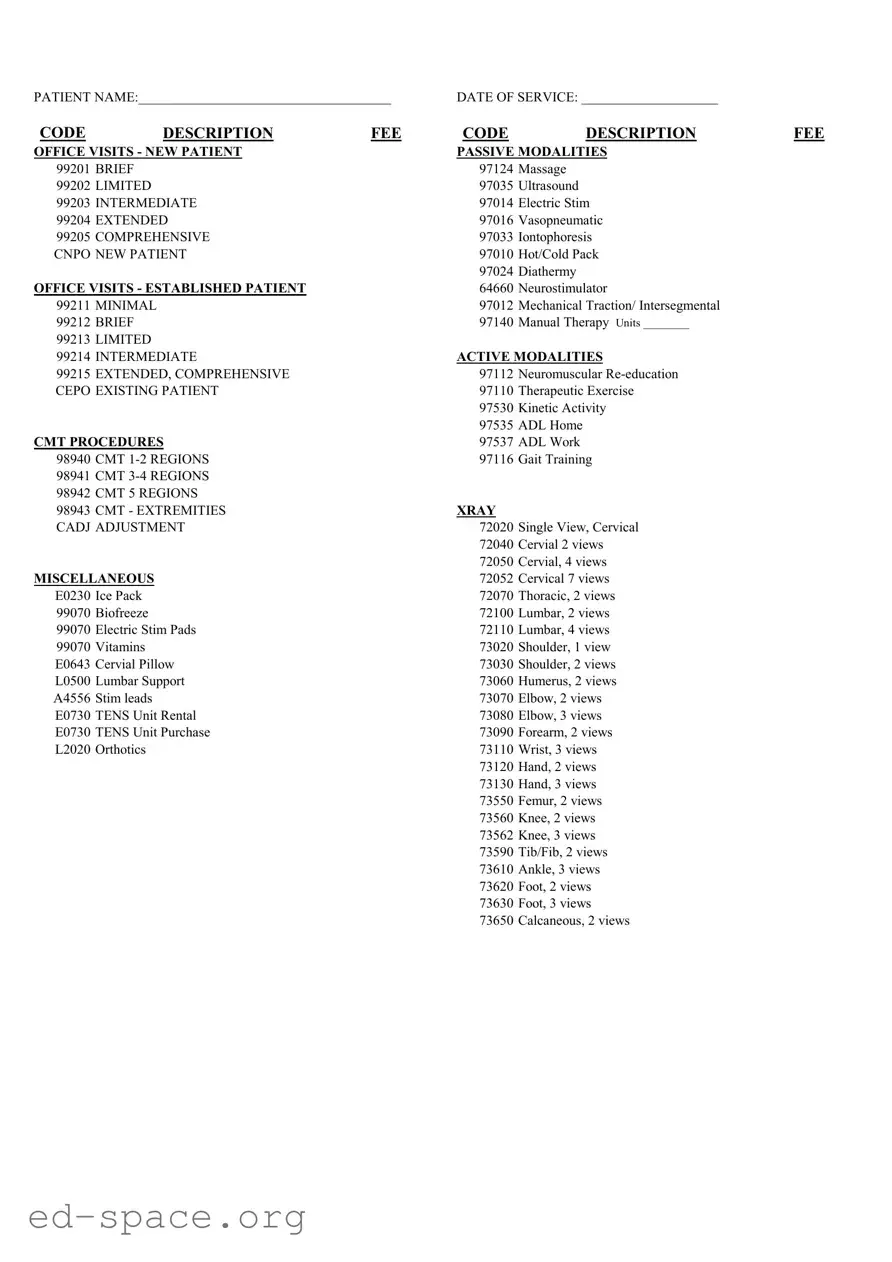
The Chiropractic Superbill form serves as an essential document in the chiropractic practice, streamlining the billing process and ensuring that both patients and providers have a clear record of services rendered. This form typically includes the patient's name and the date of service, which are crucial for accurate record-keeping. It categorizes various services into sections such as office visits for new and established patients, passive modalities, active modalities, and chiropractic manipulation treatment (CMT) procedures. Each service listed is accompanied by a specific code and corresponding fee, allowing for straightforward billing and insurance claims. For instance, new patient office visits range from brief consultations to comprehensive evaluations, while established patient visits are similarly categorized. Additionally, the form encompasses a variety of modalities, including massage therapy, ultrasound, and electrical stimulation, which are vital in patient care. Furthermore, it lists necessary imaging services, such as X-rays of different body regions, along with miscellaneous items like ice packs and TENS units, which may be used in treatment. By providing a detailed account of services and associated costs, the Chiropractic Superbill form not only aids in the administrative aspects of chiropractic care but also enhances transparency for patients regarding their treatment plans and financial obligations.
PATIENT NAME:_____________________________________ DATE OF SERVICE: ____________________
CODE |
DESCRIPTION |
FEE |
CODE |
DESCRIPTION |
FEE |
OFFICE VISITS - NEW PATIENT |
|
PASSIVE MODALITIES |
|
||
99201 |
BRIEF |
|
97124 |
Massage |
|
99202 |
LIMITED |
|
97035 |
Ultrasound |
|
99203 |
INTERMEDIATE |
|
97014 |
Electric Stim |
|
99204 |
EXTENDED |
|
97016 |
Vasopneumatic |
|
99205 |
COMPREHENSIVE |
|
97033 |
Iontophoresis |
|
CNPO NEW PATIENT |
|
97010 |
Hot/Cold Pack |
|
|
|
|
|
97024 |
Diathermy |
|
OFFICE VISITS - ESTABLISHED PATIENT |
|
64660 |
Neurostimulator |
|
|
99211 |
MINIMAL |
|
97012 |
Mechanical Traction/ Intersegmental |
|
99212 |
BRIEF |
|
97140 |
Manual Therapy Units ________ |
|
99213 |
LIMITED |
|
|
|
|
99214 |
INTERMEDIATE |
|
ACTIVE MODALITIES |
|
|
99215 |
EXTENDED, COMPREHENSIVE |
|
97112 |
Neuromuscular |
|
CEPO EXISTING PATIENT |
|
97110 |
Therapeutic Exercise |
|
|
|
|
|
97530 |
Kinetic Activity |
|
|
|
|
97535 |
ADL Home |
|
CMT PROCEDURES |
|
97537 |
ADL Work |
|
|
98940 |
CMT |
|
97116 |
Gait Training |
|
98941 |
CMT |
|
|
|
|
98942 |
CMT 5 REGIONS |
|
|
|
|
98943 |
CMT - EXTREMITIES |
|
XRAY |
|
|
CADJ ADJUSTMENT |
|
72020 |
Single View, Cervical |
|
|
|
|
|
72040 |
Cervial 2 views |
|
|
|
|
72050 |
Cervial, 4 views |
|
MISCELLANEOUS |
|
72052 |
Cervical 7 views |
|
|
E0230 |
Ice Pack |
|
72070 |
Thoracic, 2 views |
|
99070 |
Biofreeze |
|
72100 |
Lumbar, 2 views |
|
99070 |
Electric Stim Pads |
|
72110 |
Lumbar, 4 views |
|
99070 |
Vitamins |
|
73020 |
Shoulder, 1 view |
|
E0643 |
Cervial Pillow |
|
73030 |
Shoulder, 2 views |
|
L0500 |
Lumbar Support |
|
73060 |
Humerus, 2 views |
|
A4556 |
Stim leads |
|
73070 |
Elbow, 2 views |
|
E0730 |
TENS Unit Rental |
|
73080 |
Elbow, 3 views |
|
E0730 |
TENS Unit Purchase |
|
73090 |
Forearm, 2 views |
|
L2020 |
Orthotics |
|
73110 |
Wrist, 3 views |
|
|
|
|
73120 |
Hand, 2 views |
|
|
|
|
73130 |
Hand, 3 views |
|
|
|
|
73550 |
Femur, 2 views |
|
|
|
|
73560 |
Knee, 2 views |
|
|
|
|
73562 |
Knee, 3 views |
|
|
|
|
73590 |
Tib/Fib, 2 views |
|
|
|
|
73610 |
Ankle, 3 views |
|
|
|
|
73620 |
Foot, 2 views |
|
|
|
|
73630 |
Foot, 3 views |
|
|
|
|
73650 |
Calcaneous, 2 views |
|
| Fact Name | Details |
|---|---|
| Patient Information | The form requires the patient's name and date of service for accurate record-keeping. |
| Code Descriptions | Each service has a corresponding code and description to identify the treatment provided. |
| New Patient Visits | Office visits for new patients are categorized from brief (99201) to comprehensive (99205). |
| Established Patient Visits | Established patient visits range from minimal (99211) to extended (99215). |
| Passive Modalities | Includes treatments like massage (97124) and ultrasound (97035), which are non-active therapies. |
| Active Modalities | Active therapies such as therapeutic exercise (97110) and neuromuscular re-education (97112) are also listed. |
| CMT Procedures | Chiropractic manipulative treatment (CMT) is categorized by the number of regions treated (e.g., 98940 for 1-2 regions). |
| X-ray Codes | X-ray codes are included for various views, such as cervical (72020) and lumbar (72100). |
| Miscellaneous Items | Additional items like ice packs (E0230) and TENS unit rentals (E0730) are also part of the form. |
| State-Specific Laws | Each state may have specific regulations governing the use of the superbill; consult local laws for compliance. |
Completing the Chiropractic Superbill form is an essential step in ensuring that your chiropractic services are accurately documented for billing and insurance purposes. This form collects vital information about the patient, services rendered, and associated fees. By following the steps outlined below, you will be able to fill out the form correctly and efficiently.
After completing the form, review all entries for accuracy. This will help ensure that the billing process runs smoothly and that the patient’s insurance claims are processed without delay. Keeping a copy of the filled-out Superbill for your records is also a good practice.
What is a Chiropractic Superbill?
A Chiropractic Superbill is a detailed document that outlines the services provided during a chiropractic visit. It includes information such as the patient's name, date of service, codes for the services rendered, and associated fees. This form is essential for insurance claims and patient records.
Why do I need a Superbill?
The Superbill is crucial for patients seeking reimbursement from their insurance providers. It serves as proof of the services received and allows insurance companies to process claims accurately. Having a Superbill can expedite the reimbursement process.
What information is included on the Superbill?
The Superbill contains the patient's name, date of service, and a list of services with corresponding codes and fees. It includes office visit codes for both new and established patients, various treatment modalities, chiropractic adjustment codes, and x-ray services.
How do I read the codes on the Superbill?
The codes are standardized and correspond to specific services. For example, "99201" indicates a brief office visit for a new patient, while "98940" refers to a chiropractic manipulation treatment for 1-2 regions. Each code is associated with a fee that reflects the cost of that service.
Can I submit the Superbill to my insurance company?
Yes, you can submit the Superbill to your insurance company for reimbursement. Ensure that you follow your insurer's guidelines for submitting claims, as some may require additional documentation or specific forms.
What if my insurance company requests additional information?
If your insurance company requests more information, you may need to provide additional documentation, such as treatment notes or a referral. It's essential to respond promptly to any requests to avoid delays in processing your claim.
Is the Superbill the same as an invoice?
No, a Superbill is not the same as an invoice. While both documents detail services rendered, a Superbill is specifically designed for insurance purposes, whereas an invoice is typically a request for payment from the patient.
How long should I keep my Superbill?
It is advisable to keep your Superbill for at least one year. This timeframe allows you to reference it if needed for insurance claims or tax purposes. Some individuals choose to keep it longer for personal records.
What should I do if there is an error on my Superbill?
If you notice an error on your Superbill, contact your chiropractic office immediately. They can correct the mistake and provide you with an updated version. Accuracy is vital for insurance claims and personal records.
Can I request a Superbill for past visits?
Yes, you can request a Superbill for past visits. Contact your chiropractic office, and they should be able to provide you with the necessary documents for any previous appointments.
Incomplete Patient Information: Many individuals forget to fill out their full name or date of service. This can lead to delays in processing and potential issues with insurance claims.
Incorrect Coding: Selecting the wrong code for services rendered is a common mistake. Each service has a specific code, and using the incorrect one can result in claim denials.
Omitting Fees: Failing to list the fees associated with each service can create confusion. This information is crucial for both the provider and the patient to understand the financial aspect of the care received.
Neglecting to Specify Modality: Patients often forget to indicate which passive or active modalities were utilized during their visit. This can lead to discrepancies in billing and treatment records.
Not Signing the Form: A signature is essential for validating the document. Without it, the superbill may be considered incomplete, impacting billing and insurance reimbursement.
Failure to Review for Accuracy: Many individuals submit the form without double-checking for errors. Taking a moment to review can prevent costly mistakes and ensure that all information is correct.
The Chiropractic Superbill is an essential document for billing and insurance purposes in chiropractic care. Along with the Superbill, several other forms and documents are commonly used to ensure proper documentation and streamline the administrative process. Here’s a list of these important documents.
Using these documents in conjunction with the Chiropractic Superbill helps ensure a smooth operation within a chiropractic practice. Proper documentation not only aids in billing but also enhances patient care and compliance with regulations.
The Chiropractic Superbill form serves as a detailed summary of services provided to a patient, including codes for various treatments and fees. This document is similar to several other forms commonly used in healthcare settings. Below are four documents that share similarities with the Chiropractic Superbill:
When filling out the Chiropractic Superbill form, attention to detail is crucial. This ensures that the billing process runs smoothly and accurately reflects the services provided. Here’s a list of six essential do's and don'ts to guide you through the process.
Following these guidelines will help streamline the billing process and ensure that all services are accurately documented and reimbursed. Take your time, and don't hesitate to ask for clarification if you're unsure about any part of the form.
Misconception 1: The Chiropractic Superbill is only for insurance claims.
Many people believe that the Chiropractic Superbill is solely used for submitting insurance claims. In reality, it serves multiple purposes. Patients can use it for their personal records, to understand their treatment costs, and to submit claims for reimbursement directly to their insurance providers if needed.
Misconception 2: All chiropractors use the same Superbill format.
Not all chiropractors utilize the same format for their Superbills. Each practitioner may customize the form based on their services, codes, and billing practices. Therefore, patients may encounter variations in the structure and content of the Superbill from different chiropractic offices.
Misconception 3: The Superbill includes a detailed explanation of each service.
Some assume that the Superbill will provide an extensive description of each service rendered. However, the Superbill typically lists codes and brief descriptions. For detailed explanations, patients should refer to their treatment notes or consult directly with their chiropractor.
Misconception 4: A Superbill guarantees insurance reimbursement.
Patients often think that having a Superbill ensures their insurance will reimburse them for chiropractic services. This is not always the case. Reimbursement depends on individual insurance policies and coverage terms, which may vary significantly from one provider to another.
Understanding the Chiropractic Superbill form is essential for both patients and providers. Here are four key takeaways to keep in mind when filling out and using this important document: