In today’s digital age, capturing and sharing moments through photographs has become an integral part of life, especially when it comes to children. Whether it’s for school events, family gatherings, or promotional materials for activities, parents often find themselves needing to navigate the nuances of photography and consent. A Child Photo Release form serves as a crucial tool in this process. It allows parents or guardians to grant permission for the use of their child's image in various contexts, ensuring that rights are respected and that there are no misunderstandings regarding the use of these images. This form typically outlines the specific purposes for which the photographs may be used, such as in newsletters, websites, or social media platforms. Additionally, it addresses the duration of the consent, the scope of usage, and any potential compensation, if applicable. By understanding and utilizing this form, parents can feel secure in their decision-making, while organizations can operate transparently and ethically, fostering trust and cooperation between all parties involved.
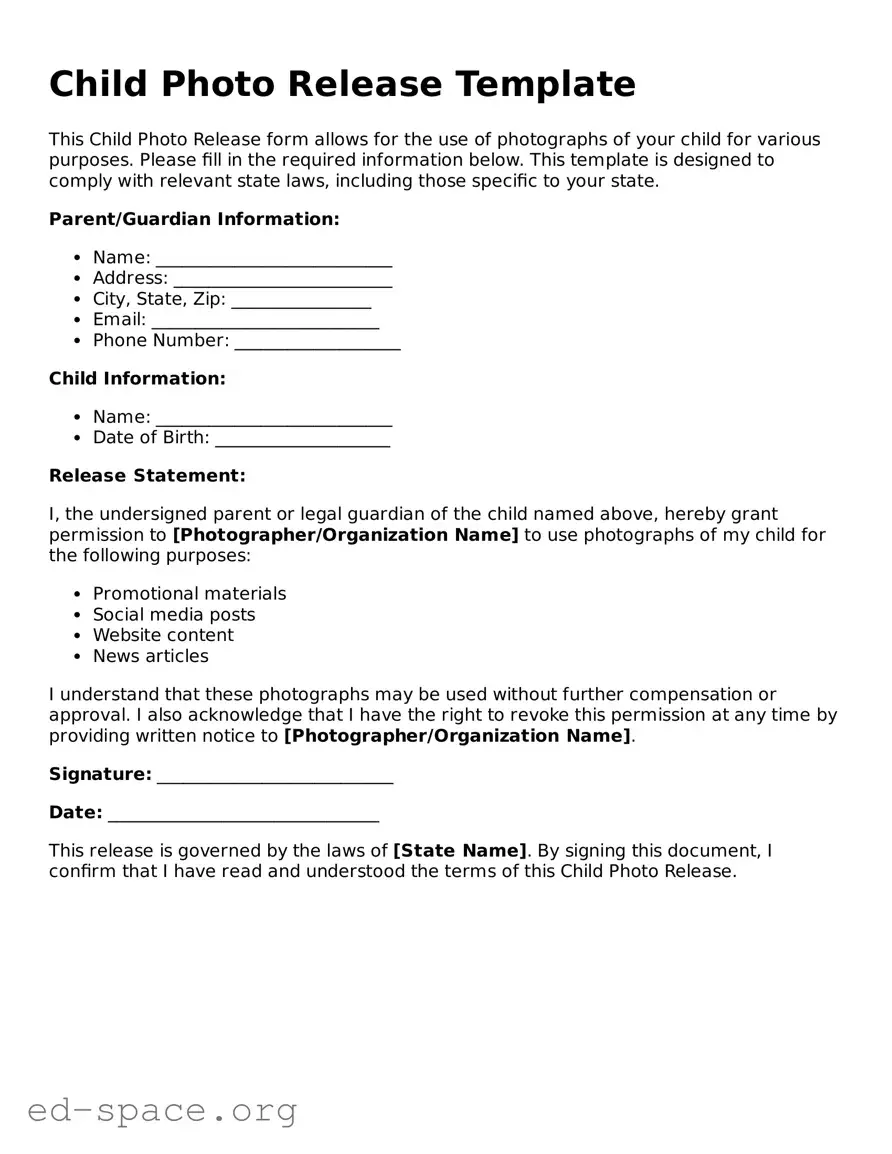
Child Photo Release Template
This Child Photo Release form allows for the use of photographs of your child for various purposes. Please fill in the required information below. This template is designed to comply with relevant state laws, including those specific to your state.
Parent/Guardian Information:
Child Information:
Release Statement:
I, the undersigned parent or legal guardian of the child named above, hereby grant permission to [Photographer/Organization Name] to use photographs of my child for the following purposes:
I understand that these photographs may be used without further compensation or approval. I also acknowledge that I have the right to revoke this permission at any time by providing written notice to [Photographer/Organization Name].
Signature: ___________________________
Date: _______________________________
This release is governed by the laws of [State Name]. By signing this document, I confirm that I have read and understood the terms of this Child Photo Release.
| Fact Name | Description |
|---|---|
| Definition | A Child Photo Release form is a legal document that allows parents or guardians to grant permission for the use of their child's photographs. |
| Purpose | This form is used to protect the rights of both the child and the photographer or organization using the images. |
| Consent Requirement | Parental or guardian consent is mandatory for any use of a child's image in promotional materials, websites, or social media. |
| Revocation of Consent | Parents can revoke consent at any time, but this may not apply retroactively to images already published. |
| State-Specific Forms | Some states have specific requirements for child photo releases. For example, California requires compliance with Civil Code Section 3344. |
| Duration of Consent | The form typically specifies how long the consent lasts, which can vary based on the intended use of the images. |
| Compensation | While not always required, some forms may include provisions for compensation to the child or guardian for the use of the images. |
| Liability Protection | Using a Child Photo Release form can help protect the photographer or organization from potential legal claims related to image use. |
| Legal Age | In most states, individuals under 18 cannot sign the form themselves; a parent or guardian must provide consent. |
After obtaining the Child Photo Release form, it is essential to complete it accurately to ensure that all necessary permissions are granted. This process involves providing specific information about the child and the parent or guardian, along with any other required details. Follow the steps below to fill out the form properly.
Once the form is completed, it should be submitted to the appropriate party as instructed. Ensure that all information is clear and legible to avoid any issues with processing the release.
What is a Child Photo Release form?
A Child Photo Release form is a legal document that grants permission for photographs or videos of a child to be taken and used by a specific individual or organization. This form ensures that the rights of the child and their guardians are protected while allowing for the sharing of images in various contexts, such as marketing materials, websites, or social media platforms.
Why is a Child Photo Release form necessary?
This form is essential because it provides clear consent from a parent or guardian, which is crucial for protecting the child's privacy and legal rights. Without this permission, using a child's image could lead to potential legal issues, including claims of invasion of privacy or unauthorized use of likeness. The form serves as a safeguard for both the child and the entity using the images.
Who needs to sign the Child Photo Release form?
The form must be signed by a parent or legal guardian of the child. This ensures that the person giving consent has the legal authority to make decisions on behalf of the child. In cases where both parents share custody, it is advisable to have both parents sign the form to avoid any disputes regarding the use of the child's images.
What information is typically included in the form?
A standard Child Photo Release form generally includes the child's name, the name of the parent or guardian granting permission, and details about how the images will be used. It may also specify the duration of the permission and any limitations on the use of the images. This clarity helps prevent misunderstandings and ensures all parties are on the same page.
Can a parent revoke the consent after signing the form?
Yes, a parent or guardian can revoke consent at any time. However, it is important to note that any revocation should be communicated in writing to the party that received the original consent. While the revocation will stop future use of the child's images, it may not apply retroactively to images that have already been published or distributed.
Are there any age restrictions for the Child Photo Release form?
The Child Photo Release form is typically used for minors, which are individuals under the age of 18. Since minors cannot legally provide consent, a parent or guardian must sign the form on their behalf. The specific age at which a child can start signing their own consent forms varies by state, but it is generally advisable to have a guardian's approval until the child reaches adulthood.
What happens if the form is not signed?
If the Child Photo Release form is not signed, the individual or organization will not have the legal right to use the child's images. This lack of consent can lead to potential legal complications and ethical concerns. It is always best practice to obtain a signed release before capturing or using any images of a child to ensure compliance with privacy laws and respect for the child's rights.
Failing to provide complete information about the child. It is crucial to include the child's full name, date of birth, and any other identifying details required by the form.
Not obtaining proper consent from all necessary parties. If both parents or guardians are involved, ensure that both sign the form to avoid future disputes.
Leaving out specific usage details. The form should clearly state how and where the child's photos will be used, whether for promotional materials, websites, or social media.
Neglecting to check the expiration date of the release. Some forms may have a validity period, and using an outdated form could lead to complications.
Not keeping a copy of the signed form. Always retain a copy for personal records. This can be essential if questions arise later about consent.
Overlooking revocation procedures. If a parent or guardian decides to withdraw consent, the form should outline how this can be done effectively.
Using ambiguous language when filling out the form. Clarity is vital. Avoid vague terms that could lead to misunderstandings regarding the scope of the release.
When working with children, particularly in settings involving photography or videography, several documents may accompany a Child Photo Release form. Each of these forms serves a specific purpose, ensuring that the rights and responsibilities of all parties are clear. Below is a list of common forms and documents often used in conjunction with the Child Photo Release form.
These documents help protect the rights of children and their families while ensuring that organizations can use images and videos responsibly. Always ensure that you have the necessary permissions and agreements in place before proceeding with any photography or videography involving children.
The Child Photo Release form is a document that allows parents or guardians to give permission for their child's image to be used in various contexts. Several other documents serve similar purposes, allowing for the release or use of personal information or images. Here are eight documents that share similarities with the Child Photo Release form:
When filling out a Child Photo Release form, it's essential to approach it with care. Here are some important dos and don'ts to keep in mind:
Many people have misunderstandings about the Child Photo Release form. Here are four common misconceptions:
This is not true. Anyone taking photos of children for any purpose, including parents, teachers, or volunteers, should consider using a Child Photo Release form to protect themselves legally.
This misconception is misleading. The release can specify a time frame or particular uses for the photos, allowing parents to control how long and in what context the images can be shared.
In reality, a Child Photo Release form can be used for private events as well. Anytime photos are taken and may be shared publicly, it's wise to have a release.
This is incorrect. Parents can revoke consent at any time, depending on the terms outlined in the release. It’s important to understand the specifics of the agreement.
When utilizing the Child Photo Release form, it is essential to understand its purpose and implications. Here are some key takeaways:
Completing the Child Photo Release form accurately ensures compliance and protects the rights of both the child and the parent or guardian.