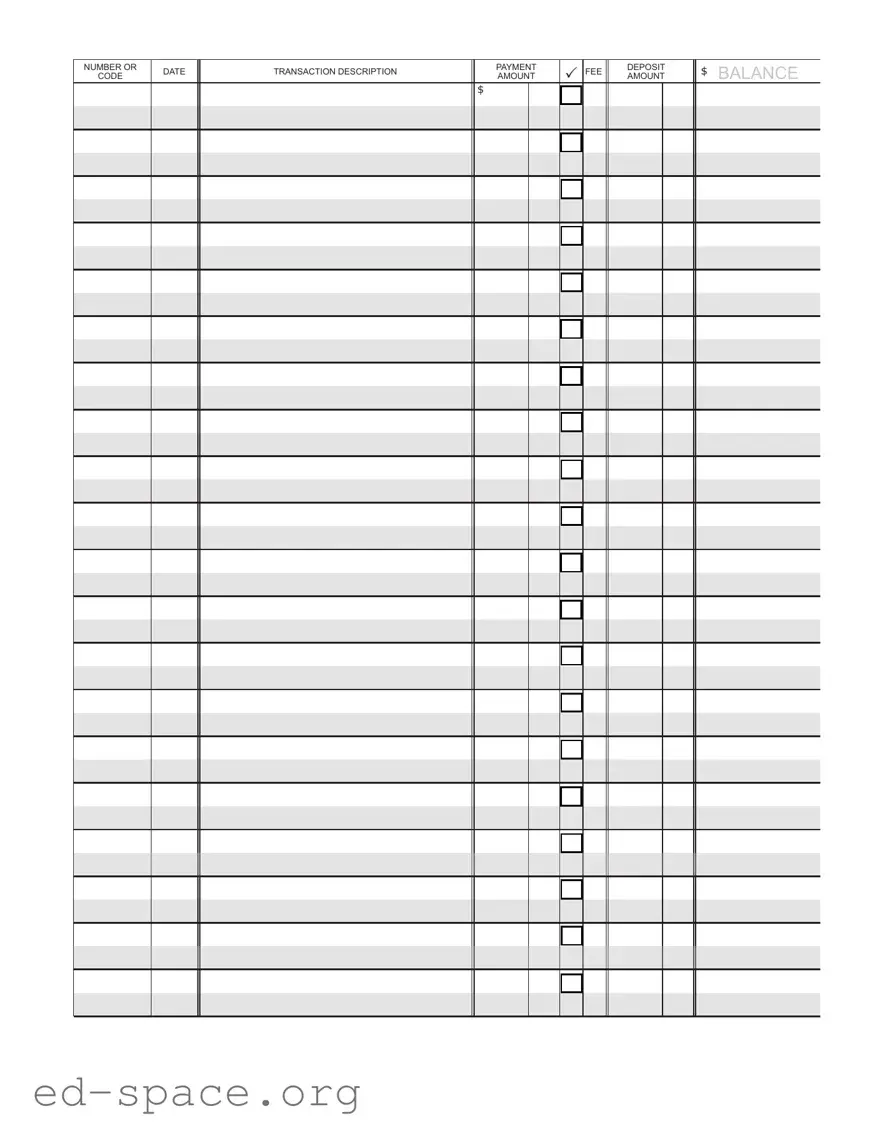
The Check Register form is an essential tool for individuals and businesses alike, designed to help track and manage financial transactions effectively. This form provides a clear and organized way to record details of each check issued, including the date, check number, payee, and amount. Additionally, it allows users to note any deposits and withdrawals, ensuring that the balance remains accurate and up-to-date. By maintaining a check register, users can easily monitor their spending habits, identify discrepancies, and prepare for audits or tax preparation. Overall, this form serves as a vital resource for maintaining financial accountability and ensuring that all monetary activities are documented in a systematic manner.
NUMBER OR |
DATE |
TRANSACTION DESCRIPTION |
PAYMENT |
|
FEE |
DEPOSIT |
$ BALANCE |
||
CODE |
AMOUNT |
AMOUNT |
|||||||
|
|
|
$ |
|
|
|
|
|
|
|
|
|
|
|
|
|
|
|
|
|
|
|
|
|
|
|
|
|
|
|
|
|
|
|
|
|
|
|
|
|
|
|
|
|
|
|
|
|
|
|
|
|
|
|
|
|
|
|
|
|
|
|
|
|
|
|
|
|
|
|
|
|
|
|
|
|
|
|
|
|
|
|
|
|
|
|
|
|
|
|
|
|
|
|
|
|
|
|
|
|
|
|
|
|
|
|
|
|
|
|
|
|
|
|
|
|
|
|
|
|
|
|
|
|
|
|
|
|
|
|
|
|
|
|
|
|
|
|
|
|
|
|
|
|
|
|
|
|
|
|
|
|
|
|
|
|
|
|
|
|
|
|
|
|
|
|
|
|
|
|
|
|
|
|
|
|
|
|
|
|
|
|
|
|
|
|
|
|
|
|
|
|
|
|
|
|
|
|
|
|
|
|
|
|
|
|
|
|
|
|
|
|
|
|
|
|
|
|
|
|
|
|
|
|
|
|
|
|
|
|
|
|
|
|
|
|
|
|
|
|
|
|
|
|
|
|
|
|
|
|
|
|
|
|
|
|
|
|
|
|
|
|
|
|
|
|
|
|
|
|
|
|
|
|
|
|
|
|
|
|
|
|
|
|
|
|
|
|
|
|
|
|
|
|
|
|
|
|
|
|
|
|
|
|
|
|
|
|
|
|
|
|
|
|
|
|
|
|
|
|
|
|
|
|
|
|
|
|
|
|
|
|
|
|
|
|
|
|
|
|
|
|
|
|
|
|
|
|
|
|
|
|
|
|
|
|
|
|
|
|
|
|
|
|
|
|
|
|
|
|
|
|
|
|
|
|
|
|
|
|
|
|
|
|
|
|
|
|
|
|
|
|
|
|
|
|
|
|
|
|
|
|
|
|
|
|
|
|
|
| Fact Name | Details |
|---|---|
| Purpose | The Check Register form is used to track checks issued and received, providing a clear record of transactions. |
| Structure | This form typically includes fields for the date, check number, payee, amount, and balance. |
| Importance | Maintaining an accurate check register helps individuals and businesses manage their finances effectively. |
| Legal Requirement | Some states require businesses to maintain a check register for tax and auditing purposes. |
| Governing Law (California) | California Corporations Code Section 1501 mandates record-keeping for corporations, including financial transactions. |
| Governing Law (New York) | New York Business Corporation Law Section 624 requires businesses to keep records of financial transactions. |
| Record Retention | It is advisable to retain check registers for at least seven years for tax and legal purposes. |
| Digital Options | Many accounting software solutions offer digital check register forms, enhancing ease of use and accessibility. |
Filling out the Check Register form is a straightforward process that helps keep track of your financial transactions. It is important to ensure that all entries are accurate and complete to maintain a clear record of your finances. Follow the steps below to properly fill out the form.
What is a Check Register form?
A Check Register form is a tool used to track all transactions made through a checking account. It records details such as check numbers, dates, payees, amounts, and the balance after each transaction. This helps individuals and businesses maintain accurate financial records and monitor their spending.
Why is it important to maintain a Check Register?
Maintaining a Check Register is crucial for several reasons. It allows users to keep an accurate record of their financial activities, helps prevent overdrafts, and assists in budgeting. Additionally, it provides a way to reconcile bank statements, ensuring that all transactions are accounted for and discrepancies are identified promptly.
How often should I update my Check Register?
It is advisable to update the Check Register immediately after each transaction. This practice ensures that the information is current and minimizes the risk of errors. Regular updates also make it easier to track spending patterns and manage finances effectively.
What information should I include in my Check Register?
Each entry in the Check Register should include the date of the transaction, check number (if applicable), payee name, transaction amount, and a brief description of the transaction. Additionally, users should update the running balance after each entry to reflect the current state of their finances.
Can I use a digital version of a Check Register?
Yes, many individuals and businesses opt for digital versions of Check Registers. Software programs and mobile apps can simplify the tracking process, offering features like automatic calculations and easy access to past transactions. However, it is essential to ensure that digital records are backed up to prevent data loss.
What should I do if I make a mistake in my Check Register?
If a mistake is made, it is important to correct it as soon as possible. Users should strike through the incorrect entry, write the correct information above it, and initial the change. This method maintains a clear record of transactions while ensuring that accurate information is available for future reference.
How does a Check Register help with budgeting?
A Check Register aids in budgeting by providing a clear picture of income and expenses. By regularly recording transactions, users can identify spending habits, set financial goals, and adjust their budgets accordingly. This proactive approach fosters better financial management and promotes savings.
Is a Check Register necessary if I use online banking?
While online banking provides access to transaction history, maintaining a Check Register is still beneficial. It allows for more detailed tracking of expenses and provides a way to monitor spending in real-time. Additionally, it can help identify discrepancies between personal records and bank statements.
What are the consequences of not using a Check Register?
Not using a Check Register can lead to overspending, overdraft fees, and difficulty in tracking financial health. Without accurate records, individuals may struggle to manage their budgets effectively and may miss opportunities for savings. Regularly updating a Check Register can prevent these issues and promote financial stability.
How can I obtain a Check Register form?
Check Register forms are widely available. They can be found online for download, at office supply stores, or through banking institutions. Many banks also provide printed Check Register forms to their customers. Users can choose a format that best suits their needs, whether digital or paper-based.
When filling out a Check Register form, it is important to be meticulous and careful. Here are some common mistakes that individuals often make:
Every transaction should have a date. Omitting this information can lead to confusion about the timing of transactions.
Each check should have a unique number. Not recording it can make tracking payments difficult.
Double-check the amount before finalizing the entry. A simple typo can lead to significant discrepancies in your balance.
Labeling each transaction helps in understanding spending patterns. Without categories, it becomes harder to analyze financial habits.
Always calculate and update the balance after each entry. This ensures you have an accurate view of your finances at any given time.
While shorthand can save time, it may lead to confusion later. Use clear and understandable terms.
Regular reconciliation with bank statements is crucial. This practice helps identify errors and discrepancies early.
A cluttered or messy check register can lead to mistakes. Keep entries neat and organized for clarity.
By being aware of these common mistakes, individuals can maintain a more accurate and effective Check Register, leading to better financial management.
The Check Register form is an essential tool for tracking your financial transactions, particularly when it comes to managing checks. However, it often works best in conjunction with several other forms and documents that can enhance your financial management process. Below is a list of common documents that are frequently used alongside the Check Register form, each serving a unique purpose.
By utilizing these documents alongside the Check Register form, you can create a comprehensive approach to managing your finances. Each form plays a crucial role in ensuring that your financial records are accurate, organized, and easy to track. This holistic view not only simplifies your financial management but also enhances your overall financial literacy.
The Check Register form serves as an essential tool for tracking financial transactions. It shares similarities with several other documents used in personal and business finance. Below are six documents that have comparable functions to the Check Register form:
When filling out the Check Register form, attention to detail is crucial. Here are some important dos and don'ts to consider:
By following these guidelines, you can ensure that your Check Register form is filled out correctly and efficiently.
Many people have misunderstandings about the Check Register form. Here are six common misconceptions:
Understanding these points can help you make the most of your Check Register form.
When managing your finances, a Check Register form is an essential tool. Here are key takeaways to consider when filling out and using this form:
By following these guidelines, you can effectively manage your finances and maintain control over your checking account.