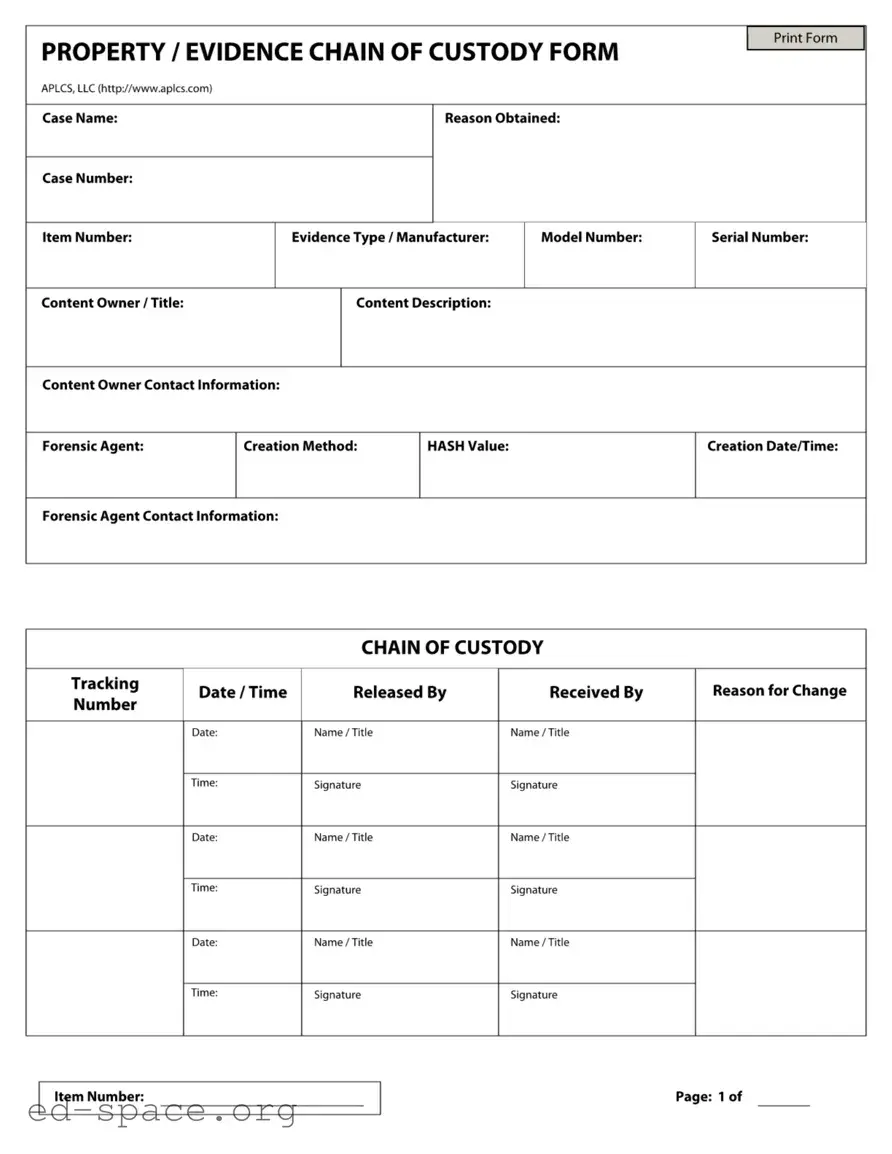
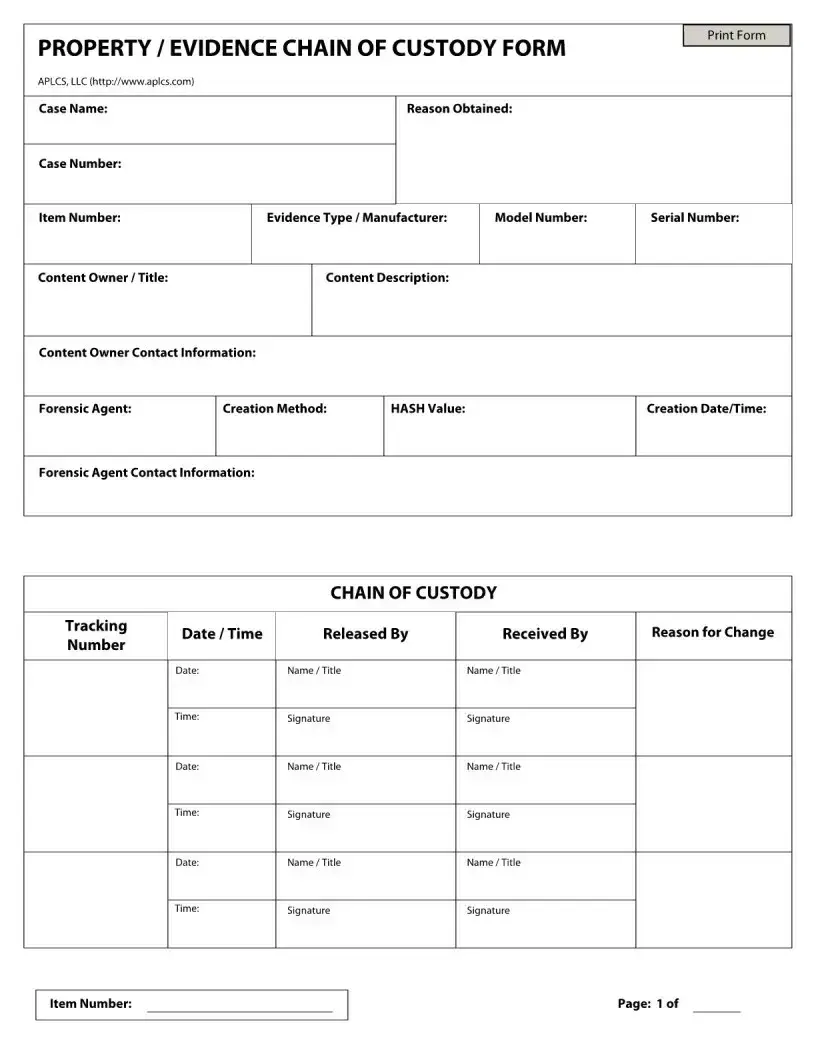
The Chain of Custody form plays a crucial role in maintaining the integrity of evidence throughout its lifecycle. This document meticulously tracks the handling of property or evidence, ensuring that every interaction is recorded and accounted for. Key elements include the case name, case number, and item number, which help identify the specific evidence in question. Additionally, details such as the type of evidence, its manufacturer, model number, and serial number provide essential context. The form also captures information about the content owner, including contact details, and describes the evidence in a way that ensures clarity and precision. Forensic agents are identified along with their contact information, reinforcing accountability. The tracking number and HASH value serve as vital identifiers, while the chain of custody section meticulously logs each transfer of the evidence, documenting the date, time, and signatures of those involved. This comprehensive approach not only safeguards the evidence but also upholds the standards of legal and forensic processes.

| Fact Name | Description |
|---|---|
| Purpose | The Chain of Custody form is essential for documenting the handling of evidence. It ensures that the evidence is preserved and can be reliably traced from its collection to its presentation in court. |
| Importance of Accuracy | Accurate completion of the form is crucial. Any mistakes or omissions can lead to questions about the integrity of the evidence, potentially impacting legal proceedings. |
| State-Specific Forms | Different states may have specific requirements for Chain of Custody forms. For example, California law mandates detailed tracking of evidence to comply with the California Evidence Code. |
| Key Components | The form includes vital information such as case details, item descriptions, and signatures of individuals involved in the evidence handling process. Each entry serves to maintain a clear chain of accountability. |
After gathering the necessary information, the next step involves completing the Chain Of Custody form. This form is essential for documenting the handling and transfer of evidence. Each section must be filled out accurately to ensure proper tracking and accountability.
For the Chain of Custody section, record the following:
Once the form is completed, it should be reviewed for accuracy before submission or filing. Keeping a copy for your records is also advisable.
What is a Chain of Custody form?
A Chain of Custody form is a critical document used to track the handling of evidence or property in legal cases. It records every individual who has had possession of the evidence, ensuring that its integrity is maintained throughout the legal process. This form helps establish the authenticity and reliability of the evidence presented in court.
Why is the Chain of Custody important?
The Chain of Custody is essential because it helps prevent tampering or contamination of evidence. By documenting who handled the evidence and when, the form provides a clear trail that can be scrutinized during legal proceedings. This transparency is vital for ensuring that the evidence can be trusted and is admissible in court.
What information is included in a Chain of Custody form?
A Chain of Custody form typically includes details such as the case name, case number, item number, evidence type, and descriptions of the content. It also captures the names and titles of individuals who released or received the evidence, along with the dates and times of each transfer. Additionally, the form may contain signatures to verify each transaction.
How is a Chain of Custody form filled out?
Filling out a Chain of Custody form requires attention to detail. Start by entering the case name and number, followed by the specific item details, such as type and description. Each time the evidence changes hands, the individual releasing it must sign and date the form, while the recipient does the same. This process continues until the evidence is no longer needed.
Who is responsible for maintaining the Chain of Custody?
The responsibility for maintaining the Chain of Custody typically falls on law enforcement agencies, forensic teams, or legal professionals involved in the case. Each person who handles the evidence must ensure that the Chain of Custody form is accurately completed and securely stored, safeguarding the evidence's integrity.
What happens if the Chain of Custody is broken?
If the Chain of Custody is broken, the evidence may be deemed inadmissible in court. A break could occur if there is missing documentation, unauthorized access, or any signs of tampering. This can severely impact a case, as it raises questions about the evidence's reliability and can undermine the prosecution's or defense's arguments.
Can a Chain of Custody form be amended?
Yes, a Chain of Custody form can be amended, but it must be done carefully. Any changes should be documented, and individuals involved should sign off on the amendments to maintain accountability. Clear notation of the reason for the change is essential to ensure that the integrity of the Chain of Custody is preserved.
Where should a Chain of Custody form be stored?
A Chain of Custody form should be stored securely, often alongside the evidence it pertains to. This ensures that it is easily accessible for review during legal proceedings. Digital records may also be maintained for additional security and ease of access, but they should be backed up and protected from unauthorized access.
Failing to provide a Case Name. This critical detail helps identify the specific case associated with the evidence.
Neglecting to fill out the Case Number. Without this number, tracking and referencing the case can become challenging.
Omitting the Item Number. Each piece of evidence should have a unique identifier to ensure proper handling and tracking.
Not specifying the Evidence Type / Manufacturer. This information is essential for understanding the nature of the evidence.
Leaving out the Content Owner / Title. Identifying who owns the content is necessary for accountability and communication.
Failing to include Contact Information for the Content Owner. This can hinder follow-up and clarification if needed.
Not documenting the CHAIN OF CUSTODY accurately. Each entry must be completed with the correct date, time, names, and signatures to maintain the integrity of the evidence.
When managing evidence and property, several forms and documents complement the Chain of Custody form. Each of these documents plays a vital role in ensuring that evidence is handled properly and accounted for throughout the process. Below is a list of commonly used documents.
Each of these documents supports the integrity of the evidence handling process. They help maintain transparency and accountability, ensuring that all parties involved are informed and that the evidence remains reliable throughout its lifecycle.
When filling out the Chain of Custody form, it is important to follow certain guidelines to ensure accuracy and integrity. Here are some things you should and shouldn't do:
By following these guidelines, you help maintain the chain of custody and ensure that the evidence is handled properly.
Here are 10 misconceptions about the Chain of Custody form:
Here are some important points to remember when filling out and using the Chain of Custody form: