In today’s digital age, where information spreads rapidly, protecting one’s reputation has become increasingly important. A Cease and Desist Slander and Libel Letter serves as a crucial tool for individuals and businesses facing false statements that could harm their image. This letter is not just a formal request; it’s a clear and direct way to address the issue of defamation. By outlining specific claims that are believed to be untrue, the letter demands the recipient stop making these damaging statements. It typically includes a description of the slanderous or libelous content, the impact it has had, and a request for retraction or correction. Additionally, it often warns of potential legal action if the behavior continues. Understanding how to effectively use this letter can empower those affected by defamation to take control of their narrative and seek justice in a constructive manner.
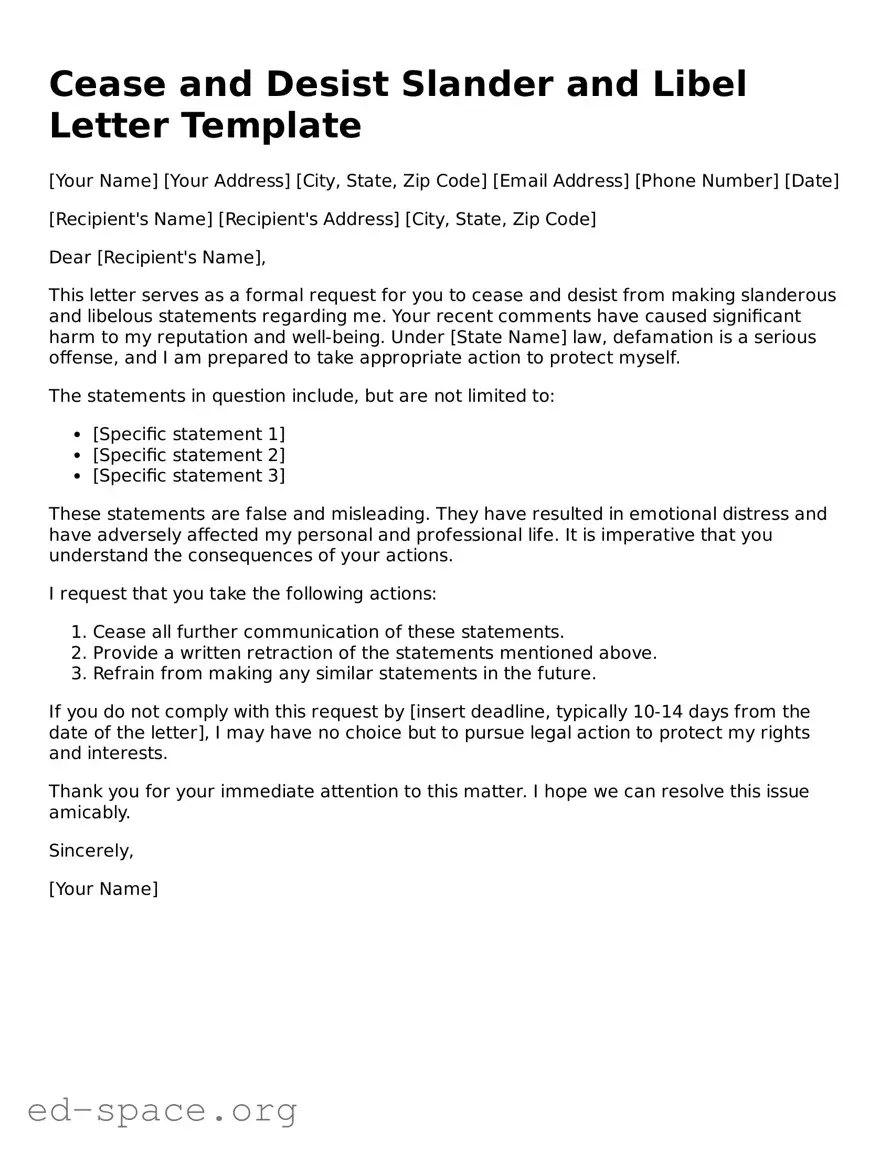
Cease and Desist Slander and Libel Letter Template
[Your Name] [Your Address] [City, State, Zip Code] [Email Address] [Phone Number] [Date]
[Recipient's Name] [Recipient's Address] [City, State, Zip Code]
Dear [Recipient's Name],
This letter serves as a formal request for you to cease and desist from making slanderous and libelous statements regarding me. Your recent comments have caused significant harm to my reputation and well-being. Under [State Name] law, defamation is a serious offense, and I am prepared to take appropriate action to protect myself.
The statements in question include, but are not limited to:
These statements are false and misleading. They have resulted in emotional distress and have adversely affected my personal and professional life. It is imperative that you understand the consequences of your actions.
I request that you take the following actions:
If you do not comply with this request by [insert deadline, typically 10-14 days from the date of the letter], I may have no choice but to pursue legal action to protect my rights and interests.
Thank you for your immediate attention to this matter. I hope we can resolve this issue amicably.
Sincerely,
[Your Name]
| Fact Name | Description |
|---|---|
| Purpose | A Cease and Desist Slander and Libel Letter is used to formally request the cessation of defamatory statements. |
| Recipient | This letter is typically addressed to the individual or entity making the slanderous or libelous statements. |
| Content Requirements | The letter should clearly identify the statements in question and explain why they are defamatory. |
| Governing Laws | State-specific laws govern defamation. For example, California Civil Code Section 44 covers slander and libel. |
| Response Time | Recipients are usually given a specified timeframe to respond or cease the defamatory actions. |
| Consequences of Ignoring | If ignored, the sender may pursue legal action for damages resulting from the defamation. |
Once you have gathered the necessary information, you will be ready to fill out the Cease and Desist Slander and Libel Letter form. This letter is an important step in addressing harmful statements that may have been made against you. By completing this form, you are taking action to protect your reputation and seek resolution.
After completing the form, consider sending it to the recipient and retaining a copy for your records. This documentation may be essential if further action is needed in the future.
What is a Cease and Desist Slander and Libel Letter?
A Cease and Desist Slander and Libel Letter is a formal document sent to an individual or entity that has made false statements about you or your business. This letter demands that they stop making these harmful statements and refrain from further defamation. It serves as a warning and can be an important step before considering legal action.
When should I use this letter?
You should use this letter when you believe that someone has made false and damaging statements about you or your business. If these statements have harmed your reputation or caused emotional distress, sending a Cease and Desist letter can help protect your rights and signal that you take the matter seriously.
What information should be included in the letter?
The letter should include your contact information, the recipient’s information, a clear description of the defamatory statements, and evidence supporting your claims. Additionally, it should state the specific actions you want the recipient to take, such as retracting the statements and ceasing further communication. Finally, it should include a deadline for compliance.
Is a Cease and Desist Letter legally binding?
A Cease and Desist Letter is not a legally binding document. However, it serves as a formal request to stop harmful behavior. If the recipient ignores the letter, you may have grounds to pursue legal action. The letter can also demonstrate that you made a good faith effort to resolve the issue before escalating it to court.
What happens if the recipient ignores the letter?
If the recipient ignores the letter, you may consider taking further action. This can include seeking legal counsel to discuss your options, which may involve filing a lawsuit for defamation. Documenting all communications, including the letter and any responses, will be important if you decide to pursue legal action.
Can I send this letter myself, or should I hire an attorney?
You can send the letter yourself, especially if the situation is straightforward. However, hiring an attorney may be beneficial if the case is complex or if you are unsure about the legal implications. An attorney can help ensure that the letter is properly drafted and that your rights are fully protected.
What should I do if I receive a Cease and Desist Letter?
If you receive a Cease and Desist Letter, take it seriously. Review the claims made against you and consider seeking legal advice. Responding promptly and appropriately can help mitigate any potential legal consequences. Ignoring the letter may escalate the situation and lead to further legal action.
Not Clearly Identifying the Parties: It’s essential to specify who is involved in the slander or libel. Failing to clearly identify both the sender and the recipient can lead to confusion.
Vague Language: Using ambiguous terms can weaken your case. Be specific about the statements made and how they are harmful.
Omitting Relevant Details: Providing context is crucial. Include dates, locations, and any witnesses that can support your claims.
Neglecting to State the Demand: Clearly outline what you want the recipient to do. Whether it’s to retract a statement or cease further communication, be explicit.
Failure to Include Evidence: Supporting your claims with evidence can strengthen your position. Attach any relevant documents or recordings if available.
Ignoring Legal Requirements: Different jurisdictions have varying laws regarding slander and libel. Not adhering to these laws can jeopardize your letter’s effectiveness.
Not Proofreading: Typos or grammatical errors can undermine your credibility. Take the time to review your letter before sending it.
When dealing with issues of slander and libel, a Cease and Desist letter is often just the first step. Several other forms and documents may be used in conjunction with this letter to strengthen your position or to take further action. Below is a list of commonly associated documents that can be beneficial in addressing defamation claims.
Each of these documents plays a unique role in addressing slander and libel issues. Together, they can create a comprehensive approach to protecting your reputation and ensuring that your concerns are taken seriously.
When dealing with a Cease and Desist Slander and Libel Letter, it’s crucial to approach the situation thoughtfully. Here’s a list of things you should and shouldn’t do while filling out the form:
By following these guidelines, you can ensure that your letter is effective and professional. Remember, clarity and respect go a long way in resolving conflicts.
Misconceptions about the Cease and Desist Slander and Libel Letter can lead to confusion about its purpose and effectiveness. Here are five common misunderstandings:
Many believe that sending a cease and desist letter will instantly stop the offending party from making false statements. In reality, while it serves as a formal request, compliance is not guaranteed. The recipient may choose to ignore it, and further legal action may be necessary.
Some think that cease and desist letters can only be sent to individuals. This is incorrect. Organizations, businesses, and even online platforms can be addressed in such letters if they are involved in spreading defamatory information.
While having a lawyer draft the letter can add credibility, it is not a legal requirement. Individuals can write their own letters, but they should ensure that the content is clear and factual to avoid potential backlash.
Some people believe that once the letter is sent, the issue is resolved. However, this is often just the beginning. If the slander or libel continues, further legal steps may be necessary to seek resolution.
Many assume that cease and desist letters are only appropriate for severe cases. However, even minor instances of slander or libel can warrant such a letter, especially if they affect one’s reputation or livelihood.
When dealing with slander and libel, a Cease and Desist letter serves as an important tool for individuals seeking to protect their reputation. Here are seven key takeaways regarding the use of this form:
Utilizing a Cease and Desist letter effectively can help protect one’s reputation and encourage resolution without resorting to litigation.