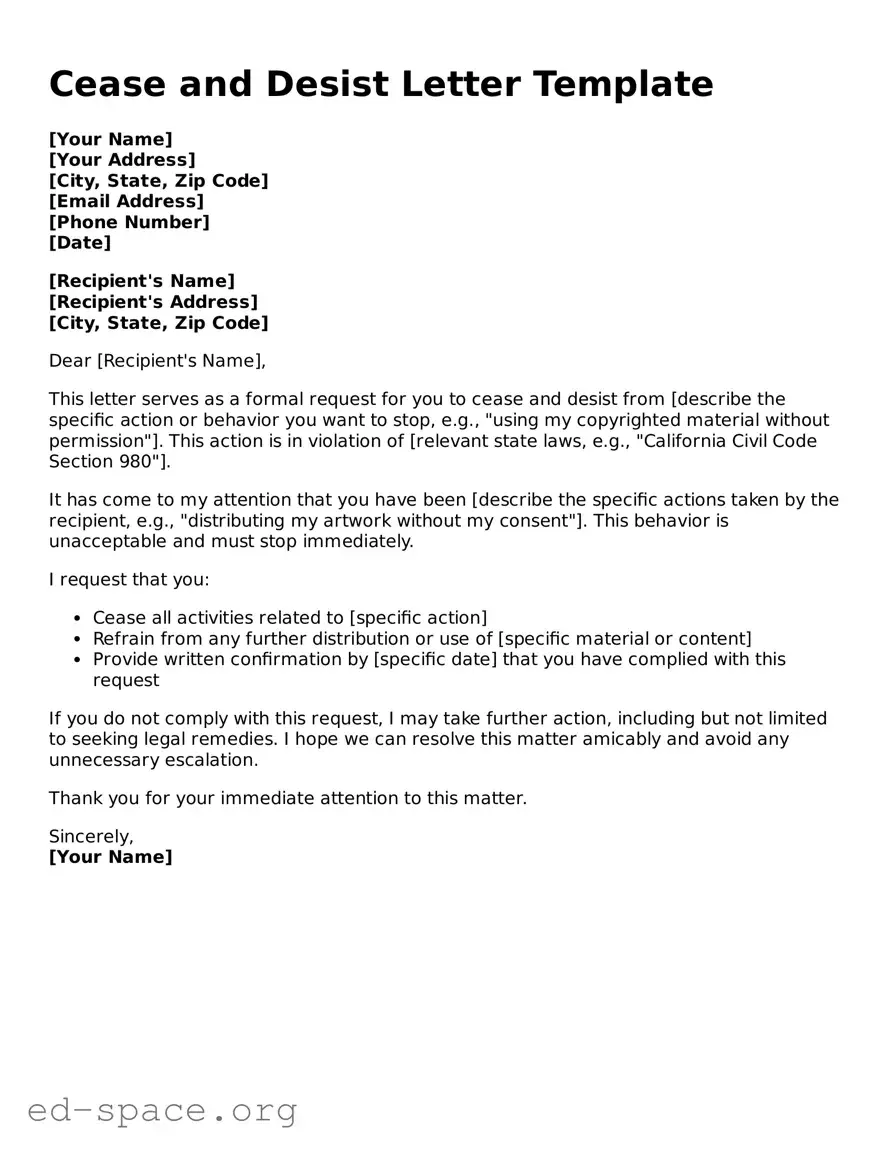
When disputes arise, whether in business or personal matters, a Cease and Desist Letter can serve as a vital first step in resolving conflicts. This letter acts as a formal request for an individual or organization to stop certain actions that are believed to infringe on rights or cause harm. Typically, it outlines the specific behavior that is objectionable, such as copyright infringement, harassment, or breach of contract. By clearly stating the reasons for the request, the letter provides the recipient with an understanding of the sender's position and the potential consequences of ignoring the request. It often includes a deadline for compliance, encouraging prompt action to avoid further legal steps. Furthermore, while the letter is not a legally binding document, it can carry significant weight in negotiations and may serve as evidence should the situation escalate to court. Understanding the components of a Cease and Desist Letter is essential for anyone looking to protect their rights and interests effectively.
Cease and Desist Letter Template
[Your Name]
[Your Address]
[City, State, Zip Code]
[Email Address]
[Phone Number]
[Date]
[Recipient's Name]
[Recipient's Address]
[City, State, Zip Code]
Dear [Recipient's Name],
This letter serves as a formal request for you to cease and desist from [describe the specific action or behavior you want to stop, e.g., "using my copyrighted material without permission"]. This action is in violation of [relevant state laws, e.g., "California Civil Code Section 980"].
It has come to my attention that you have been [describe the specific actions taken by the recipient, e.g., "distributing my artwork without my consent"]. This behavior is unacceptable and must stop immediately.
I request that you:
If you do not comply with this request, I may take further action, including but not limited to seeking legal remedies. I hope we can resolve this matter amicably and avoid any unnecessary escalation.
Thank you for your immediate attention to this matter.
Sincerely,
[Your Name]
| Fact Name | Description |
|---|---|
| Definition | A cease and desist letter is a formal request for an individual or organization to stop engaging in a specific activity. |
| Purpose | These letters serve to inform the recipient that their actions are infringing on someone's rights or causing harm. |
| Legal Standing | While a cease and desist letter is not a legally binding document, it can be an important first step in resolving disputes. |
| State-Specific Forms | Some states have specific requirements for cease and desist letters, which may include particular language or formatting. |
| Governing Law (California) | In California, the Unfair Competition Law may govern certain cease and desist situations. |
| Governing Law (New York) | In New York, the General Business Law can apply, particularly in cases of false advertising or deceptive practices. |
| Governing Law (Texas) | In Texas, the Texas Deceptive Trade Practices Act provides a legal framework for addressing certain grievances. |
| Delivery Method | Sending the letter via certified mail is often recommended to ensure the recipient receives it and to have proof of delivery. |
| Response Time | Typically, the recipient is given a specific time frame to respond or cease the disputed activity, often ranging from 10 to 30 days. |
| Potential Outcomes | If ignored, the sender may pursue legal action, which could lead to court proceedings or settlements. |
After obtaining the Cease and Desist Letter form, it is essential to fill it out accurately to ensure your concerns are clearly communicated. Follow these steps carefully to complete the form.
Once the form is filled out, it is important to send it to the recipient promptly. Consider using certified mail to ensure it is received and documented properly.
What is a Cease and Desist Letter?
A Cease and Desist Letter is a formal request to stop certain activities that are believed to be infringing on your rights. This letter serves as a warning to the recipient, urging them to halt the specified actions to avoid further legal consequences. It can address issues such as copyright infringement, trademark violations, or harassment.
When should I use a Cease and Desist Letter?
You should consider using a Cease and Desist Letter when you believe someone is unlawfully using your intellectual property, such as trademarks or copyrighted material. It's also appropriate if you are facing harassment or defamation. Sending this letter can often resolve disputes without needing to escalate the matter to court.
What should be included in a Cease and Desist Letter?
Your letter should clearly identify the parties involved, describe the actions you want to stop, and explain why those actions are problematic. Include any relevant evidence or documentation that supports your claims. It's also wise to specify a timeline for compliance, outlining what will happen if the recipient does not comply.
Is a Cease and Desist Letter legally binding?
A Cease and Desist Letter is not a legally binding document. However, it serves as a formal notice and can be an important step in resolving disputes. If the recipient ignores the letter, you may have grounds to pursue legal action. Always consult with a legal professional for advice tailored to your situation.
What happens if the recipient ignores the letter?
If the recipient ignores your Cease and Desist Letter, you have several options. You can choose to pursue legal action, which may involve filing a lawsuit. Alternatively, you could seek mediation or arbitration, depending on the nature of the dispute. Documenting all communications is crucial, as it may support your case if you decide to take further action.
Incomplete Information: Many individuals fail to provide all the necessary details, such as their name, address, and the specific nature of the complaint. Omitting this information can lead to confusion and delays in addressing the issue.
Vague Language: Using unclear or ambiguous terms can undermine the letter's effectiveness. It's crucial to be specific about the actions that need to stop and the reasons why they are problematic.
Failure to State Legal Grounds: Some people neglect to mention the legal basis for their request. Clearly stating the laws or rights that support the demand can strengthen the letter's impact.
Ignoring Proper Formatting: A poorly formatted letter can appear unprofessional. Adhering to a clear structure, including a proper salutation and closing, enhances the letter's credibility.
Not Keeping a Copy: Many forget to keep a copy of the letter for their records. Retaining a copy is essential for future reference and can be crucial if further action is needed.
A Cease and Desist Letter is often accompanied by other important documents that can help clarify the situation or support the claims made in the letter. Here are four common forms and documents that may be used alongside a Cease and Desist Letter:
These documents can enhance the effectiveness of a Cease and Desist Letter by providing additional context and supporting evidence. Understanding these forms can help individuals navigate the process more effectively.
When filling out the Cease and Desist Letter form, it is important to follow certain guidelines to ensure clarity and effectiveness. Below is a list of things you should and shouldn't do:
Misconceptions about Cease and Desist Letters are common. Here are seven of them explained clearly.
Many people believe that only lawyers can send these letters. In reality, anyone can draft and send a cease and desist letter. However, having legal expertise can enhance its effectiveness.
Some think that a cease and desist letter is the same as a lawsuit. In fact, it is often a warning. It gives the recipient a chance to stop the alleged behavior before legal action is taken.
This is a common misunderstanding. A cease and desist letter is not a court order. It is a request for someone to stop an action, but it does not have the force of law unless a court enforces it.
While it is wise to take these letters seriously, there is no legal obligation to comply right away. Recipients often have time to respond or negotiate.
Not all letters are created equal. They can vary greatly in tone, content, and purpose. Each letter should be tailored to the specific situation.
This is a risky assumption. Ignoring the letter can lead to further legal action. It is generally advisable to respond or seek legal advice.
While these letters are often associated with copyright, they can address a variety of issues. They may involve trademark infringement, harassment, or other legal disputes.
When filling out and using a Cease and Desist Letter form, it is essential to keep several key points in mind. These takeaways will help ensure that the letter is effective and serves its intended purpose.
Following these guidelines can help you create a strong Cease and Desist Letter that effectively communicates your concerns.