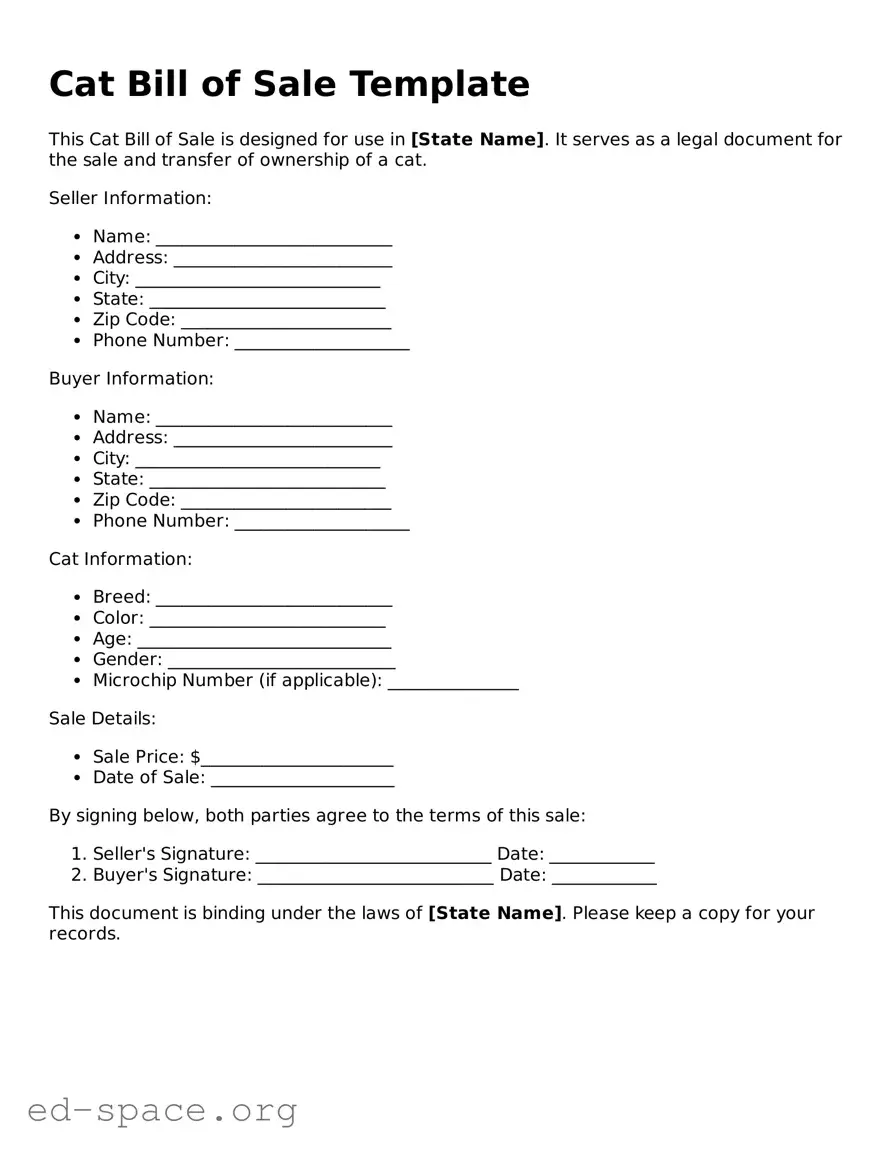
The Cat Bill of Sale form serves as an essential document in the transfer of ownership for feline companions, ensuring that both the seller and the buyer have a clear understanding of the transaction. This form typically includes vital information such as the names and addresses of both parties, a detailed description of the cat, and the agreed-upon sale price. Additionally, it often contains sections that address the cat's health status, any vaccinations received, and whether the cat has been spayed or neutered. By outlining these details, the form helps to protect the interests of both parties and establishes a legal record of the sale. Furthermore, it may also include clauses regarding any warranties or guarantees associated with the cat, which can provide peace of mind for the new owner. Overall, the Cat Bill of Sale form is a straightforward yet crucial tool in facilitating a smooth transition of pet ownership, fostering transparency and accountability in the process.
Cat Bill of Sale Template
This Cat Bill of Sale is designed for use in [State Name]. It serves as a legal document for the sale and transfer of ownership of a cat.
Seller Information:
Buyer Information:
Cat Information:
Sale Details:
By signing below, both parties agree to the terms of this sale:
This document is binding under the laws of [State Name]. Please keep a copy for your records.
| Fact Name | Description |
|---|---|
| Purpose | A Cat Bill of Sale form is used to document the sale and transfer of ownership of a cat between a seller and a buyer. |
| Legal Requirements | In many states, a bill of sale is not legally required for pet transactions, but it is highly recommended for record-keeping purposes. |
| Information Included | The form typically includes details such as the seller's and buyer's names, the cat's description, and the sale price. |
| State Variations | Some states may have specific requirements for pet sales, including health certificates or vaccination records. |
| Governing Laws | In California, for example, the sale of pets is governed by the California Civil Code, while other states may have their own regulations. |
| Signatures | Both the seller and buyer should sign the form to validate the transaction, providing proof of the agreement. |
After obtaining the Cat Bill of Sale form, you will need to complete it accurately to ensure a smooth transaction. This document serves as proof of sale and will require specific information about both the buyer and the seller, as well as details about the cat being sold. Follow the steps below to fill out the form correctly.
Once the form is completed and signed, keep a copy for your records. This will serve as your proof of the transaction. The buyer should also retain their copy for future reference.
What is a Cat Bill of Sale?
A Cat Bill of Sale is a legal document that records the sale and transfer of ownership of a cat from one party to another. It serves as proof of the transaction and outlines the details of the sale, including the purchase price and any conditions of the sale.
Why do I need a Cat Bill of Sale?
This document is important for both the buyer and the seller. It protects the seller by providing evidence of the sale, which can be useful in case of disputes. For the buyer, it establishes ownership and can be helpful for registration or veterinary purposes.
What information should be included in a Cat Bill of Sale?
A comprehensive Cat Bill of Sale should include the names and contact information of both the seller and buyer, a description of the cat (including breed, age, color, and any identifying features), the sale price, and the date of the transaction. It may also include any warranties or guarantees related to the cat's health.
Is a Cat Bill of Sale required by law?
While it is not always legally required to have a Cat Bill of Sale, it is highly recommended. Some states may have specific laws regarding the sale of pets, and having this document can help ensure compliance and protect both parties involved.
Can I create my own Cat Bill of Sale?
Yes, you can create your own Cat Bill of Sale. Ensure it includes all necessary details and is signed by both parties. However, using a template or a professionally prepared form can help ensure that all legal requirements are met.
What if the cat has health issues?
If the cat has known health issues, it is essential to disclose this information in the Cat Bill of Sale. This protects the seller from future claims and ensures the buyer is fully informed before completing the purchase.
Do I need witnesses or notarization for a Cat Bill of Sale?
Witnesses and notarization are not typically required for a Cat Bill of Sale. However, having a witness can add an extra layer of protection and credibility to the document. Check your state laws for any specific requirements.
What happens if I lose the Cat Bill of Sale?
If you lose the Cat Bill of Sale, it may be challenging to prove ownership. It is advisable to keep a copy in a safe place. If lost, you can create a new document stating the details of the original sale and have both parties sign it again.
Can I use a Cat Bill of Sale for other pets?
Yes, a Cat Bill of Sale can serve as a model for other pet sales. However, ensure that the document is tailored to fit the specific type of animal being sold, as different pets may have different legal considerations.
Where can I find a Cat Bill of Sale template?
You can find Cat Bill of Sale templates online through legal websites, pet organizations, or local animal shelters. Ensure that any template you choose complies with your state’s laws and includes all necessary information.
Incomplete Information: Many people forget to fill out all required fields. Missing details can lead to confusion or disputes later on.
Incorrect Cat Description: It's crucial to provide an accurate description of the cat. This includes the breed, age, color, and any distinguishing features. An unclear description can create issues in ownership verification.
Not Including Sale Price: Failing to specify the sale price can complicate the transaction. It's important to document the agreed amount to avoid misunderstandings.
Omitting Signatures: Both the seller and buyer need to sign the form. Without signatures, the document may not hold up as a legal record of the transaction.
Neglecting to Date the Document: A date is essential for establishing when the sale took place. Without it, tracking ownership history can become problematic.
Not Keeping Copies: After filling out the form, some forget to make copies for both parties. Retaining a copy is vital for future reference and proof of ownership.
When purchasing or selling a cat, several documents may accompany the Cat Bill of Sale form to ensure a smooth transaction. Each of these forms serves a specific purpose, providing essential information for both the buyer and seller. Below is a list of common documents that are often used in conjunction with the Cat Bill of Sale.
These documents collectively support the sale and ownership transition of a cat, ensuring that both parties are informed and protected. Proper documentation can help prevent misunderstandings and promote responsible pet ownership.
When filling out the Cat Bill of Sale form, it’s important to ensure that all information is accurate and complete. Here’s a list of things you should and shouldn’t do to make the process smoother and more effective.
By following these guidelines, you can ensure a smooth transaction when selling or buying a cat. Clear communication and thoroughness are key to a successful sale.
The Cat Bill of Sale form is an important document for anyone involved in the sale or transfer of a cat. However, several misconceptions often arise regarding its purpose and use. Below is a list of common misunderstandings along with clarifications to help you navigate this process more effectively.
This is not true. A Cat Bill of Sale is beneficial for any sale or transfer of a cat, regardless of its breed. It provides a record of the transaction.
While it may not hold the same weight as a formal contract, a properly completed Cat Bill of Sale can serve as evidence of the sale and can be enforceable in court.
Including health information is actually a good practice. It helps the new owner understand any medical needs and the cat's health history.
Anyone who sells or transfers ownership of a cat should use a Cat Bill of Sale. This includes individuals rehoming their pets.
Even if you are gifting a cat, using a Cat Bill of Sale can clarify the transfer of ownership and protect both parties.
It is best to complete the Cat Bill of Sale at the time of the transaction. This ensures that both parties agree on the terms and details right away.
While verbal agreements can be made, they are difficult to enforce. A written Cat Bill of Sale provides clear documentation of the transaction.
For the Cat Bill of Sale to be effective, it should be signed by both the seller and the buyer. This confirms that both parties agree to the terms.
While templates can be helpful, it’s important to tailor the form to your specific situation. Ensure that all relevant details are included to avoid misunderstandings.
Understanding these misconceptions can help ensure a smooth transaction when selling or transferring a cat. Always take the time to fill out the Cat Bill of Sale accurately and completely.
When engaging in the process of buying or selling a cat, utilizing a Cat Bill of Sale form is essential. This document serves as a formal record of the transaction and protects both the buyer and seller. Here are some key takeaways to consider:
By adhering to these key points, individuals can navigate the process of buying or selling a cat with greater confidence and clarity.