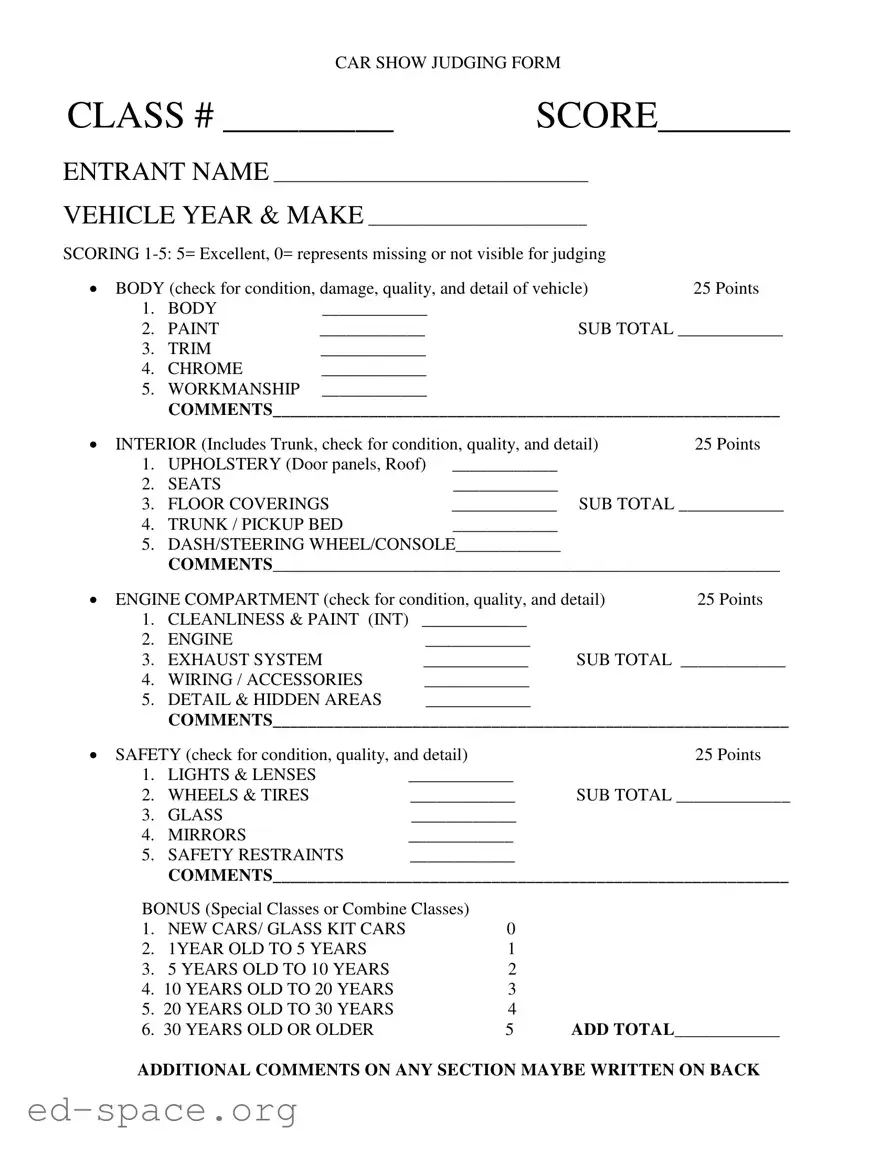
Car shows are not just about showcasing stunning vehicles; they also provide a platform for enthusiasts to appreciate the craftsmanship and dedication that goes into each automobile. The Car Show Judging Form plays a pivotal role in this appreciation process, serving as a structured guideline for judges to evaluate various aspects of each entry. This form is divided into several key categories: Body, Interior, Engine Compartment, and Safety, each carrying a maximum score of 25 points. Judges assess the condition, quality, and detail of vehicles in these areas, with specific criteria for each category. For instance, under Body, judges look for the condition and quality of the paint, trim, and chrome, while the Interior section focuses on upholstery, seats, and trunk cleanliness. Additionally, the Engine Compartment evaluation includes cleanliness, engine condition, and attention to hidden areas. Safety is not overlooked, as judges also examine lights, tires, and safety restraints. A bonus scoring section rewards special classes, adding an exciting layer to the judging process. Overall, the Car Show Judging Form ensures that every vehicle is evaluated fairly and comprehensively, celebrating the artistry and engineering that make car shows a beloved event for fans and participants alike.
|
|
CAR SHOW JUDGING FORM |
|
|
CLASS # _________ |
SCORE_______ |
|||
ENTRANT NAME ____________________________________ |
|
|||
VEHICLE YEAR & MAKE _________________________ |
|
|||
SCORING |
|
|||
BODY (check for condition, damage, quality, and detail of vehicle) |
25 Points |
|||
1. |
BODY |
____________ |
|
|
2. |
PAINT |
____________ |
SUB TOTAL ____________ |
|
3. |
TRIM |
____________ |
|
|
4. |
CHROME |
____________ |
|
|
5. |
WORKMANSHIP |
____________ |
|
|
|
COMMENTS__________________________________________________________ |
|||
INTERIOR (Includes Trunk, check for condition, quality, and detail) |
25 Points |
|||
1. |
UPHOLSTERY (Door panels, Roof) |
____________ |
|
|
2. |
SEATS |
|
____________ |
|
3. |
FLOOR COVERINGS |
____________ SUB TOTAL ____________ |
||
4. |
TRUNK / PICKUP BED |
____________ |
|
|
5.DASH/STEERING WHEEL/CONSOLE____________
COMMENTS__________________________________________________________
ENGINE COMPARTMENT (check for condition, quality, and detail) |
25 Points |
|||
1. |
CLEANLINESS & PAINT (INT) ____________ |
|
|
|
2. |
ENGINE |
____________ |
|
|
3. |
EXHAUST SYSTEM |
____________ |
SUB TOTAL ____________ |
|
4. |
WIRING / ACCESSORIES |
____________ |
|
|
5. |
DETAIL & HIDDEN AREAS |
____________ |
|
|
|
COMMENTS___________________________________________________________ |
|||
SAFETY (check for condition, quality, and detail) |
|
25 Points |
||
1. |
LIGHTS & LENSES |
____________ |
|
|
2. |
WHEELS & TIRES |
____________ |
SUB TOTAL _____________ |
|
3. |
GLASS |
____________ |
|
|
4. |
MIRRORS |
____________ |
|
|
5. |
SAFETY RESTRAINTS |
____________ |
|
|
|
COMMENTS___________________________________________________________ |
|||
BONUS (Special Classes or Combine Classes) |
|
|
||
1. |
NEW CARS/ GLASS KIT CARS |
0 |
|
|
2. |
1YEAR OLD TO 5 YEARS |
1 |
|
|
3. |
5 YEARS OLD TO 10 YEARS |
2 |
|
|
4. |
10 YEARS OLD TO 20 YEARS |
3 |
|
|
5. |
20 YEARS OLD TO 30 YEARS |
4 |
|
|
6. |
30 YEARS OLD OR OLDER |
5 |
ADD TOTAL____________ |
|
ADDITIONAL COMMENTS ON ANY SECTION MAYBE WRITTEN ON BACK
| Fact Name | Description |
|---|---|
| Class Number | Each entry in the car show must include a designated class number, which helps categorize the vehicles for judging. |
| Scoring System | The judging uses a scoring system from 0 to 5, where 5 indicates excellence and 0 signifies that an aspect is missing or not visible. |
| Body Evaluation | Judges assess the vehicle's body condition, including damage, quality, and detail, contributing a maximum of 25 points. |
| Interior Assessment | The interior, including upholstery and trunk condition, is evaluated similarly, with a total of 25 points available. |
| Engine Compartment | Judging the engine compartment focuses on cleanliness, paint, and overall condition, also allowing for 25 points. |
| Safety Checks | Safety features such as lights, wheels, and restraints are scrutinized, with a potential score of 25 points in this category. |
Completing the Car Show Judging form involves several steps that guide you through evaluating various aspects of a vehicle. This structured approach ensures that all necessary details are captured accurately, allowing for a fair assessment of the vehicle being judged. Follow these steps carefully to fill out the form correctly.
What is the purpose of the Car Show Judging Form?
The Car Show Judging Form is designed to provide a structured and fair method for evaluating vehicles at car shows. It helps judges assess various aspects of a car, including its body, interior, engine compartment, and safety features. By using this form, judges can ensure that every vehicle is judged consistently and fairly, allowing for an enjoyable experience for both participants and spectators.
How is the scoring system structured on the form?
The scoring system on the Car Show Judging Form uses a scale from 0 to 5 for each category, where 5 represents excellent condition and 0 indicates that a feature is missing or not visible for judging. Each major section—body, interior, engine compartment, and safety—has a total of 25 points available, allowing for a maximum score of 100 points. This structured approach helps judges make informed decisions based on specific criteria.
What categories are included in the judging process?
Judging is divided into four main categories: Body, Interior, Engine Compartment, and Safety. Each category contains specific elements that judges will evaluate. For example, the Body category includes checks for condition, damage, and quality of the vehicle's exterior. Similarly, the Interior category covers aspects such as upholstery, seats, and trunk condition. This comprehensive evaluation ensures that all significant features of the vehicle are considered.
Can judges provide comments on the Car Show Judging Form?
Yes, judges are encouraged to provide comments in the designated areas of the form. These comments can offer valuable insights into the vehicle’s strengths and areas for improvement. Additionally, judges can write additional comments on the back of the form if they feel it is necessary to elaborate on their evaluations. This feedback can be beneficial for participants looking to enhance their vehicles for future shows.
What is the significance of the bonus scoring section?
The bonus scoring section is included to recognize special classes of vehicles or unique circumstances. It allows judges to award extra points based on the age of the car, with categories ranging from new cars to those over 30 years old. This section acknowledges the effort and dedication that goes into maintaining or restoring vehicles of different ages, ensuring that all participants have a fair chance at recognition.
How can participants prepare for judging?
Participants can prepare for judging by ensuring their vehicles are clean and well-maintained. Attention to detail in both the exterior and interior can significantly impact scores. It is also helpful to familiarize oneself with the judging criteria outlined in the Car Show Judging Form. By understanding what judges will be looking for, participants can present their vehicles in the best possible light, enhancing their chances for a favorable evaluation.
Neglecting to Read Instructions Carefully: Many participants rush through the form without fully understanding the requirements. Each section has specific criteria that need attention. Take a moment to read the instructions to ensure all areas are covered.
Inaccurate Scoring: Scoring can be tricky. Some people might score a vehicle too high or too low based on personal bias rather than the actual condition. It’s essential to be objective and consistent with the scoring scale provided.
Skipping Comments: Comments are vital for providing context to the scores. Leaving this section blank can lead to misunderstandings about why a particular score was given. Use this space to explain your evaluations.
Failing to Provide Vehicle Information: Omitting the vehicle year and make can create confusion. Ensure all relevant information is filled out clearly. This helps judges identify and categorize the vehicle correctly.
Overlooking the Bonus Section: The bonus points can significantly impact the overall score. Some entrants forget to calculate or include these points. Don’t miss out on this opportunity to enhance your score!
Ignoring Additional Comments: The back of the form is a valuable space for any extra thoughts or observations. Skipping this can mean missing out on sharing insights that could benefit the judging process.
When organizing a car show, several forms and documents work in tandem with the Car Show Judging Form. Each serves a specific purpose to ensure a smooth and successful event. Below is a list of commonly used forms that complement the judging process.
Utilizing these forms alongside the Car Show Judging Form enhances the overall experience for both participants and organizers. Each document plays a vital role in ensuring that the event runs smoothly and efficiently.
When filling out the Car Show Judging form, it is important to approach the task with care and attention to detail. Here are some key points to consider:
Misconceptions can often cloud understanding, especially when it comes to something as detailed as a Car Show Judging form. Here are eight common misconceptions that participants and spectators may have:
Understanding these misconceptions can enhance the experience for both participants and judges, fostering a more enjoyable and fair car show environment.
When using the Car Show Judging form, consider the following key takeaways: