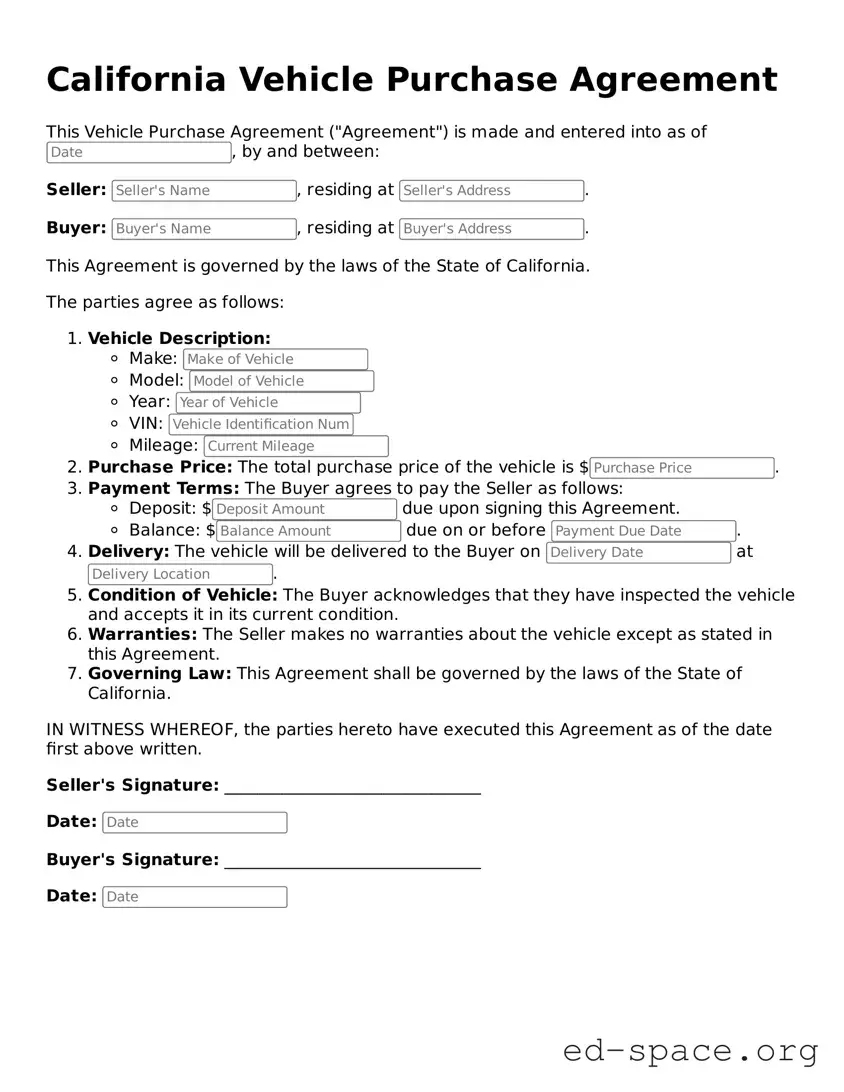
When purchasing a vehicle in California, a Vehicle Purchase Agreement is an essential document that outlines the terms of the sale between the buyer and the seller. This agreement serves as a written record of the transaction, detailing important aspects such as the vehicle's make, model, year, and Vehicle Identification Number (VIN). It also specifies the purchase price, payment method, and any warranties or guarantees provided by the seller. Additionally, the form may include information about financing options, trade-ins, and any applicable taxes or fees. By clearly laying out the responsibilities and expectations of both parties, the Vehicle Purchase Agreement helps to prevent misunderstandings and disputes, ensuring a smoother transaction process. Understanding this form is crucial for anyone looking to buy a vehicle in California, as it protects the interests of both the buyer and the seller while complying with state regulations.
California Vehicle Purchase Agreement
This Vehicle Purchase Agreement ("Agreement") is made and entered into as of , by and between:
Seller: , residing at .
Buyer: , residing at .
This Agreement is governed by the laws of the State of California.
The parties agree as follows:
IN WITNESS WHEREOF, the parties hereto have executed this Agreement as of the date first above written.
Seller's Signature: _______________________________
Date:
Buyer's Signature: _______________________________
Date:
| Fact Name | Description |
|---|---|
| Purpose | The California Vehicle Purchase Agreement form serves as a contract between the buyer and the seller, outlining the terms of the vehicle sale. |
| Governing Law | This agreement is governed by the California Civil Code, particularly sections related to contracts and sales. |
| Essential Elements | The form typically includes details such as the buyer's and seller's information, vehicle description, purchase price, and payment terms. |
| Signatures Required | Both parties must sign the agreement to validate the contract, confirming their acceptance of the terms outlined. |
| Disclosure Requirements | Sellers are required to disclose certain information about the vehicle, including its condition and any known defects. |
| Legal Implications | Once signed, the agreement becomes a legally binding document, meaning both parties must adhere to its terms or face potential legal consequences. |
Filling out the California Vehicle Purchase Agreement form is an important step in finalizing your vehicle purchase. Once completed, this form serves as a record of the transaction between the buyer and the seller, ensuring both parties have a clear understanding of the terms involved.
After completing the form, both parties should retain a copy for their records. This documentation is essential for future reference and may be required for vehicle registration and title transfer.
What is a California Vehicle Purchase Agreement form?
The California Vehicle Purchase Agreement form is a legal document that outlines the terms and conditions of a vehicle sale between a buyer and a seller. This agreement serves to protect both parties by detailing the specifics of the transaction, including the vehicle's identification details, purchase price, and any warranties or conditions that apply.
Why is it important to use a Vehicle Purchase Agreement?
Using a Vehicle Purchase Agreement is crucial for several reasons. It provides a clear record of the transaction, which can help prevent misunderstandings or disputes down the line. Additionally, it ensures that both the buyer and seller are aware of their rights and obligations, making the process smoother and more transparent.
What information is typically included in the Vehicle Purchase Agreement?
A typical Vehicle Purchase Agreement includes essential details such as the buyer's and seller's names and addresses, the vehicle's make, model, year, and Vehicle Identification Number (VIN), the purchase price, payment method, and any additional terms or conditions agreed upon. It may also outline warranties, if any, and the responsibilities of both parties.
Can the Vehicle Purchase Agreement be modified after signing?
Once both parties have signed the Vehicle Purchase Agreement, modifications can be challenging. However, if both the buyer and seller agree to changes, they should be documented in writing and signed by both parties to ensure clarity and enforceability. It’s best to discuss any changes before signing to avoid complications.
Is the Vehicle Purchase Agreement legally binding?
Yes, the Vehicle Purchase Agreement is legally binding once both parties have signed it. This means that both the buyer and seller are obligated to adhere to the terms outlined in the agreement. If either party fails to comply, the other may have legal recourse to enforce the agreement or seek damages.
What should I do if I encounter issues after the sale?
If issues arise after the sale, such as undisclosed defects or failure to transfer the title, the first step is to refer back to the Vehicle Purchase Agreement. This document will guide you in understanding your rights and responsibilities. If necessary, consider seeking legal advice to explore your options for resolution.
Where can I obtain a California Vehicle Purchase Agreement form?
You can obtain a California Vehicle Purchase Agreement form from various sources, including online legal document providers, car dealerships, or even local DMV offices. It’s important to ensure that the form you use complies with California laws and is tailored to your specific transaction needs.
Incomplete Information: One common mistake is failing to fill out all required fields. Buyers often overlook sections such as the vehicle identification number (VIN) or the purchase price. This can lead to delays or complications in the registration process.
Incorrect Vehicle Details: Another frequent error involves entering incorrect details about the vehicle. This includes misspelling the make or model, or providing an inaccurate VIN. Such inaccuracies can create legal issues down the line.
Not Reviewing Terms: Many individuals neglect to read the terms and conditions thoroughly. Skimming through the fine print can result in misunderstandings about warranties, fees, or financing terms. Buyers should take the time to understand what they are agreeing to.
Missing Signatures: Finally, forgetting to sign the agreement is a common oversight. Both the buyer and seller must sign the document for it to be valid. Without signatures, the agreement may not hold up in legal situations.
The California Vehicle Purchase Agreement is a crucial document in the vehicle buying process. However, several other forms and documents often accompany it to ensure a smooth transaction. Here’s a list of those important documents:
Understanding these documents is vital for anyone involved in a vehicle purchase. Each plays a specific role in ensuring the transaction is legal and complete. Being prepared with these forms can save time and prevent complications down the road.
The Vehicle Purchase Agreement is a crucial document in the process of buying a vehicle. It outlines the terms and conditions of the sale. Several other documents share similarities with this agreement, each serving a specific purpose in the transaction. Here’s a list of eight documents that are similar to the Vehicle Purchase Agreement:
Each of these documents plays a vital role in the vehicle purchasing process, ensuring that both parties are protected and that the transaction is clear and legally binding.
When completing the California Vehicle Purchase Agreement form, it is essential to follow certain guidelines to ensure accuracy and compliance. Here are nine important dos and don'ts to consider:
The California Vehicle Purchase Agreement form is a crucial document for anyone buying or selling a vehicle in California. However, there are several misconceptions surrounding this form that can lead to confusion. Here are eight common misconceptions:
Many believe that the Vehicle Purchase Agreement is just a formality. In reality, it serves as a legally binding contract between the buyer and seller once both parties sign it.
This form is required for both new and used vehicle purchases. Whether you are buying a brand-new car or a pre-owned one, the agreement is essential.
Some individuals think that verbal agreements can replace written contracts. However, having a written agreement provides clarity and protection for both parties.
While both documents serve similar purposes, the Vehicle Purchase Agreement includes more detailed terms and conditions compared to a simple bill of sale.
Buyers often assume that a down payment is optional. However, many sellers may require a down payment as part of the agreement to secure the purchase.
Once the Vehicle Purchase Agreement is signed, changes cannot be made without the consent of both parties. Altering the agreement without agreement can lead to disputes.
This form is used in both private sales and transactions involving dealerships. It is essential for any vehicle purchase in California.
Many believe the Vehicle Purchase Agreement does not cover warranties. In fact, it often outlines any warranties or guarantees related to the vehicle.
Understanding these misconceptions can help buyers and sellers navigate the vehicle purchasing process more effectively. Clarity regarding the Vehicle Purchase Agreement is essential for a smooth transaction.
When engaging in the purchase of a vehicle in California, it is crucial to understand the Vehicle Purchase Agreement form. This document serves as a binding contract between the buyer and the seller. Here are some key takeaways to consider:
Understanding these aspects of the California Vehicle Purchase Agreement form can significantly ease the process of vehicle purchasing and help protect the interests of both parties involved.