In California, planning for the future of your property is essential, and the Transfer-on-Death Deed (TOD) form offers a straightforward solution for homeowners. This form allows property owners to designate beneficiaries who will automatically receive the property upon their death, bypassing the often lengthy and costly probate process. By completing a TOD deed, you can ensure that your loved ones inherit your property without the usual legal hurdles. It's important to note that this deed only takes effect after the owner's death, allowing the owner to retain full control of the property during their lifetime. Additionally, the form is revocable, meaning you can change your mind or update beneficiaries as your circumstances evolve. Understanding how to properly fill out and file this form can save your family time and money, making it a valuable tool in estate planning.
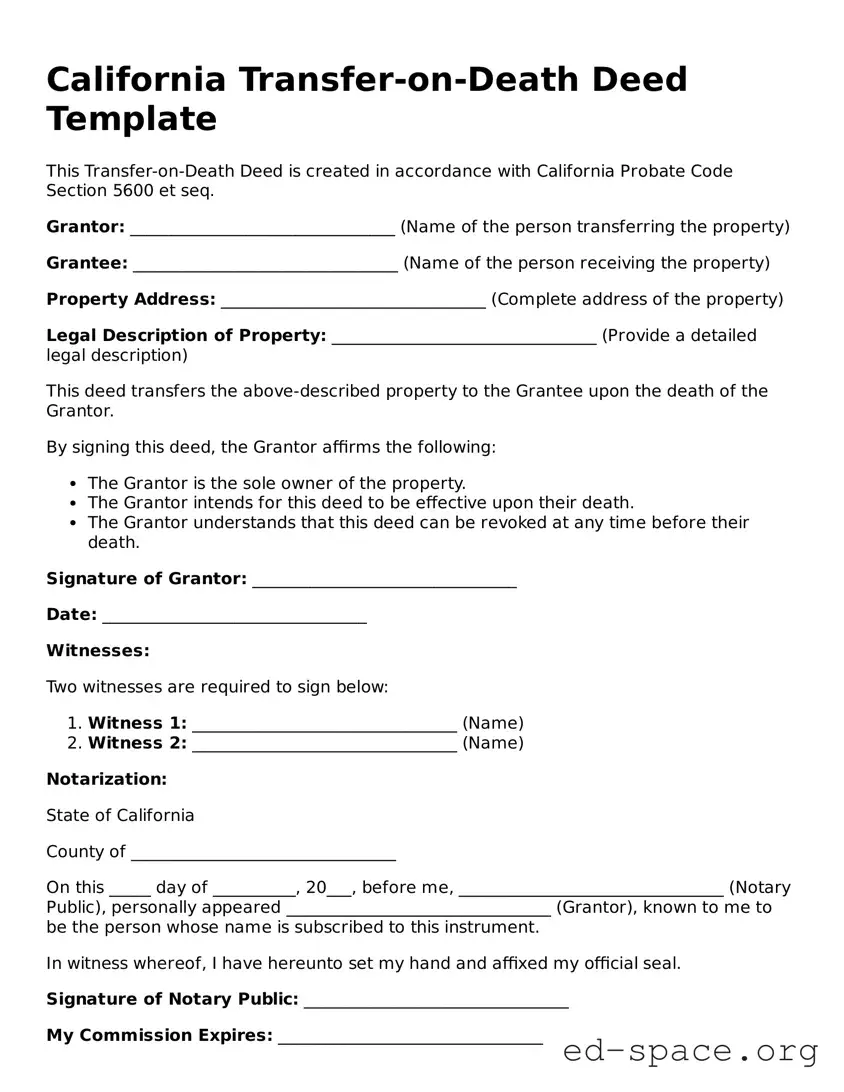
California Transfer-on-Death Deed Template
This Transfer-on-Death Deed is created in accordance with California Probate Code Section 5600 et seq.
Grantor: ________________________________ (Name of the person transferring the property)
Grantee: ________________________________ (Name of the person receiving the property)
Property Address: ________________________________ (Complete address of the property)
Legal Description of Property: ________________________________ (Provide a detailed legal description)
This deed transfers the above-described property to the Grantee upon the death of the Grantor.
By signing this deed, the Grantor affirms the following:
Signature of Grantor: ________________________________
Date: ________________________________
Witnesses:
Two witnesses are required to sign below:
Notarization:
State of California
County of ________________________________
On this _____ day of __________, 20___, before me, ________________________________ (Notary Public), personally appeared ________________________________ (Grantor), known to me to be the person whose name is subscribed to this instrument.
In witness whereof, I have hereunto set my hand and affixed my official seal.
Signature of Notary Public: ________________________________
My Commission Expires: ________________________________
| Fact Name | Details |
|---|---|
| What is a Transfer-on-Death Deed? | A Transfer-on-Death Deed allows property owners in California to designate a beneficiary who will receive the property upon the owner's death, avoiding probate. |
| Governing Law | The Transfer-on-Death Deed is governed by California Probate Code Sections 5600-5696. |
| Requirements for Validity | The deed must be signed by the property owner, notarized, and recorded with the county recorder's office before the owner's death to be valid. |
| Revocation | The property owner can revoke the deed at any time before their death, allowing for flexibility in estate planning. |
Filling out the California Transfer-on-Death Deed form is an important step for those looking to transfer property upon death. Once you have completed the form, it will need to be signed and recorded to ensure it is valid and effective.
After recording the deed, keep a copy in a safe place and inform your beneficiaries about the transfer. This will help ensure a smooth transition of property ownership when the time comes.
What is a Transfer-on-Death Deed in California?
A Transfer-on-Death Deed (TOD Deed) is a legal document that allows an individual to transfer real estate to a designated beneficiary upon their death. This type of deed helps avoid probate, which can be a lengthy and costly process. The property owner retains full control of the property during their lifetime and can change the beneficiary at any time before their death.
Who can use a Transfer-on-Death Deed?
Any individual who owns real estate in California can utilize a Transfer-on-Death Deed. This includes homeowners, landlords, and anyone holding title to property. However, the deed must be properly executed and recorded to be valid, ensuring that it meets all state requirements.
How do I complete a Transfer-on-Death Deed?
To complete a Transfer-on-Death Deed, you will need to fill out a specific form that includes details such as the property description, the name of the beneficiary, and the signature of the property owner. It is essential to follow the instructions carefully and ensure that the deed is notarized and recorded with the county recorder's office where the property is located. This step is crucial for the deed to take effect upon the owner's death.
Can I change the beneficiary on my Transfer-on-Death Deed?
Yes, you can change the beneficiary on your Transfer-on-Death Deed at any time before your death. To do this, you must complete a new TOD Deed form that names the new beneficiary and record it with the county recorder's office. It is important to ensure that the new deed is executed correctly to avoid any confusion regarding your wishes.
Are there any limitations on who I can name as a beneficiary?
While you have the flexibility to choose any individual or entity as a beneficiary, there are some limitations. For instance, if you name a minor child, a guardian may need to be appointed to manage the property until the child reaches adulthood. Additionally, naming multiple beneficiaries may lead to complications regarding how the property is divided or managed after your death.
What happens if I sell the property before I die?
If you sell the property that is subject to a Transfer-on-Death Deed before your death, the deed becomes void. The new owner will not have any rights to the property under the TOD Deed. It is important to keep your beneficiary informed of any significant changes to your property ownership to avoid misunderstandings.
Is there any tax implication for the beneficiary receiving the property?
Generally, the beneficiary of a Transfer-on-Death Deed does not face immediate tax implications upon receiving the property. However, they may be responsible for property taxes and any capital gains taxes if they decide to sell the property later. It's advisable for beneficiaries to consult with a tax professional to understand their specific tax obligations related to the inherited property.
Incorrect Property Description: One common mistake is failing to provide a complete and accurate description of the property. This includes not specifying the correct address, parcel number, or legal description. Ensure all details match the official records to avoid confusion.
Not Including All Owners: If the property is owned by multiple people, all owners must sign the deed. Omitting a co-owner can lead to legal complications and might invalidate the deed.
Failure to Sign or Notarize: The deed must be signed by the transferor and notarized. Neglecting this step can render the deed ineffective. Always double-check that all signatures are present and that the notary's seal is affixed.
Not Recording the Deed: After completing the form, it is crucial to record the deed with the county recorder's office. Failing to do so means the transfer may not be recognized upon the transferor's death.
The California Transfer-on-Death Deed allows property owners to transfer their real estate to a designated beneficiary upon their death, without the need for probate. While this deed is a key document, several other forms and documents may accompany it to ensure a smooth transfer process. Below are some commonly used documents in conjunction with the Transfer-on-Death Deed.
Understanding these documents can help property owners navigate the process of transferring their assets smoothly and efficiently. Consulting with a legal professional is advisable to ensure that all necessary forms are completed correctly and in accordance with California law.
The Transfer-on-Death Deed (TOD) is a unique legal document, but it shares similarities with several other documents used for transferring property or assets. Below is a list of eight documents that are comparable to the TOD Deed, along with a brief explanation of each.
When filling out the California Transfer-on-Death Deed form, there are important considerations to keep in mind. Below is a list of actions to take and avoid during this process.
Many people have misunderstandings about the California Transfer-on-Death Deed form. Here are four common misconceptions:
Filling out and using the California Transfer-on-Death Deed form can be an important step in estate planning. Here are some key takeaways to consider:
Understanding these key aspects can help ensure that the Transfer-on-Death Deed is executed properly, facilitating a smoother transition of property ownership after death.