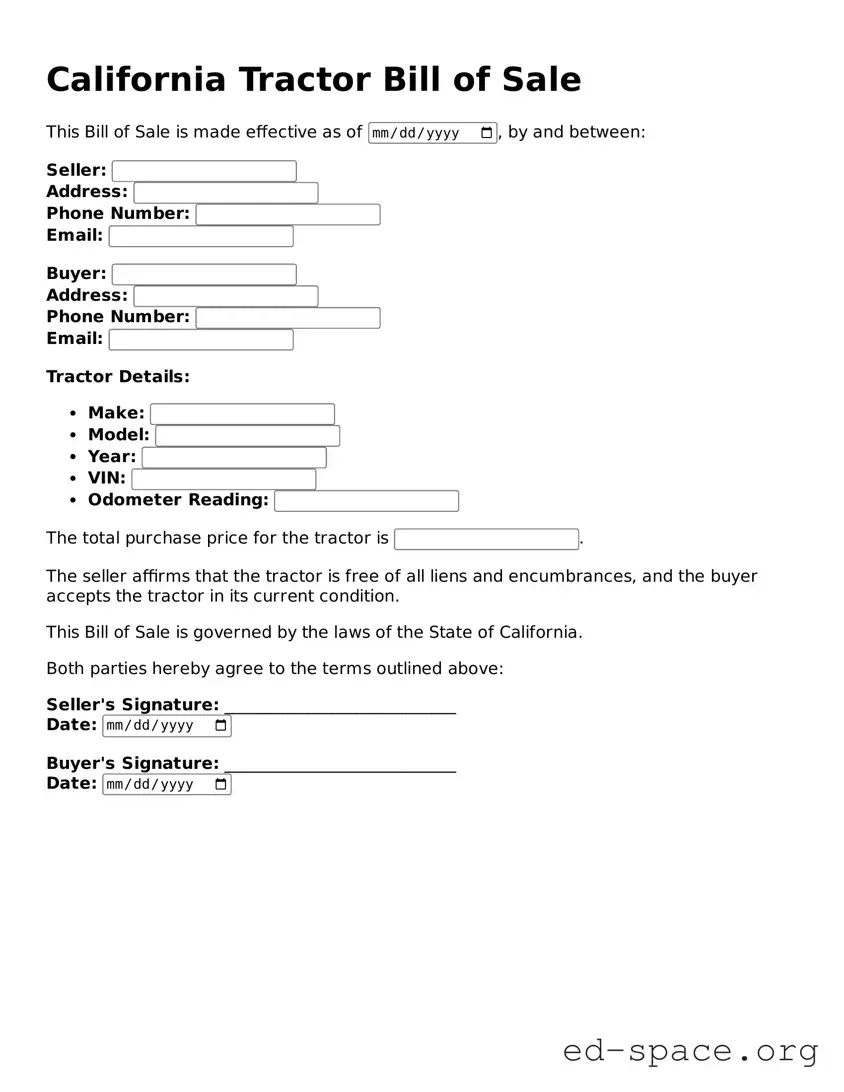
When it comes to buying or selling a tractor in California, having the right documentation is crucial. The California Tractor Bill of Sale form serves as a key record in these transactions, providing essential details about the sale. This form typically includes information such as the names and addresses of both the buyer and seller, a description of the tractor being sold—including its make, model, and identification number—and the sale price. Additionally, the form often requires the date of the transaction and may include a statement about any warranties or guarantees associated with the sale. By filling out this form correctly, both parties can protect their interests and ensure a smooth transfer of ownership. Whether you’re a seasoned farmer or a first-time buyer, understanding the importance of this document can make all the difference in your agricultural dealings.
California Tractor Bill of Sale
This Bill of Sale is made effective as of , by and between:
Seller:
Address:
Phone Number:
Email:
Buyer:
Address:
Phone Number:
Email:
Tractor Details:
The total purchase price for the tractor is .
The seller affirms that the tractor is free of all liens and encumbrances, and the buyer accepts the tractor in its current condition.
This Bill of Sale is governed by the laws of the State of California.
Both parties hereby agree to the terms outlined above:
Seller's Signature: ____________________________
Date:
Buyer's Signature: ____________________________
Date:
| Fact Name | Description |
|---|---|
| Purpose | The California Tractor Bill of Sale form serves as a legal document that records the sale and transfer of ownership of a tractor between a seller and a buyer. |
| Governing Law | This form is governed by California Civil Code Section 1738, which outlines the requirements for the transfer of personal property. |
| Essential Information | It typically includes essential details such as the names and addresses of the buyer and seller, the tractor's make, model, year, and Vehicle Identification Number (VIN). |
| Signatures Required | Both the seller and buyer must sign the form to validate the transaction, ensuring mutual agreement on the sale. |
| Consideration | The form should state the purchase price, which is the consideration for the sale, providing clarity on the terms of the transaction. |
| Record Keeping | Once completed, it is advisable for both parties to keep a copy of the bill of sale for their records, as it may be required for future reference or legal purposes. |
| Transfer of Title | While the bill of sale documents the sale, the buyer must also ensure that the title is transferred through the California Department of Motor Vehicles (DMV) to officially register the tractor in their name. |
After obtaining the California Tractor Bill of Sale form, you will need to complete it accurately to ensure a smooth transaction. Gather all necessary information before starting to fill out the form. This will help prevent any delays or issues later on.
Once completed, the form should be kept by both the buyer and seller for their records. It may be required for future reference, especially for registration or title transfer purposes.
What is a California Tractor Bill of Sale?
A California Tractor Bill of Sale is a document used to record the sale of a tractor in California. It provides proof of the transaction between the buyer and the seller. This form includes important details such as the names of both parties, the tractor's description, and the sale price. Having this document helps protect both the buyer and seller in the event of any disputes.
Do I need a Bill of Sale for a tractor in California?
While a Bill of Sale is not legally required for every tractor sale in California, it is highly recommended. This document serves as a record of the transaction and can help clarify ownership. It is particularly useful if the tractor is being registered or if there are any questions about the sale in the future.
What information is included in the California Tractor Bill of Sale?
The California Tractor Bill of Sale typically includes the following information: the names and addresses of the buyer and seller, the date of the sale, a detailed description of the tractor (including make, model, year, and VIN), the sale price, and any terms of the sale. Both parties should sign the document to validate the transaction.
Is the Bill of Sale the same as the title?
No, the Bill of Sale is not the same as the title. The title is an official document that proves ownership of the tractor. The Bill of Sale is a receipt for the transaction. However, both documents are important. When buying a tractor, the buyer should ensure they receive the title along with the Bill of Sale.
Can I create my own Bill of Sale for a tractor?
Yes, you can create your own Bill of Sale for a tractor. It is important to include all necessary information to make the document clear and effective. Many templates are available online, which can help you ensure that you include all required details. Just remember that both parties should sign the document for it to be valid.
Where do I file the Bill of Sale after completing it?
In California, you do not need to file the Bill of Sale with any government agency. However, it is wise for both the buyer and seller to keep a copy for their records. If the tractor is being registered, the buyer will need to present the Bill of Sale along with the title to the Department of Motor Vehicles (DMV).
Incomplete Information: Failing to fill out all required fields is a common mistake. Every section, including the buyer's and seller's information, must be completed to ensure the document is valid.
Incorrect Vehicle Identification Number (VIN): The VIN is crucial for identifying the tractor. Double-checking this number against the tractor itself can prevent future disputes.
Missing Signatures: Both the buyer and seller must sign the document. Omitting a signature can render the bill of sale invalid.
Failure to Date the Document: Not including the date of the transaction is another common oversight. This date is important for record-keeping and legal purposes.
Neglecting to Include Payment Details: Clearly stating the sale price and payment method helps clarify the transaction. This information is vital for both parties.
Not Keeping Copies: After filling out the bill of sale, it’s essential to keep copies for personal records. This can be helpful for future reference or in case of disputes.
Ignoring State Requirements: Each state may have specific requirements for a bill of sale. Familiarizing oneself with California's regulations ensures compliance and protects both parties.
The California Tractor Bill of Sale form is an essential document for anyone involved in the sale or purchase of a tractor in California. However, several other forms and documents are often used in conjunction with this bill of sale to ensure a smooth transaction and compliance with state regulations. Below is a list of these documents, each serving a specific purpose in the process.
Each of these documents plays a vital role in the transaction process, helping to protect the rights of both the buyer and the seller. Understanding and preparing these forms can facilitate a smoother transfer of ownership and ensure compliance with California regulations.
When filling out the California Tractor Bill of Sale form, it is important to approach the process with care. Here are some guidelines to help ensure accuracy and compliance.
By following these guidelines, individuals can facilitate a smoother transaction and ensure that all necessary details are accurately documented.
When dealing with the California Tractor Bill of Sale form, there are several misconceptions that can lead to confusion. Understanding the truth behind these myths can help ensure a smoother transaction. Here are five common misconceptions:
Understanding these misconceptions can help ensure that the process of buying or selling a tractor in California is clear and straightforward. Being informed is the first step towards a successful transaction.
When filling out and using the California Tractor Bill of Sale form, several important points should be kept in mind. These takeaways will help ensure a smooth transaction and proper documentation.