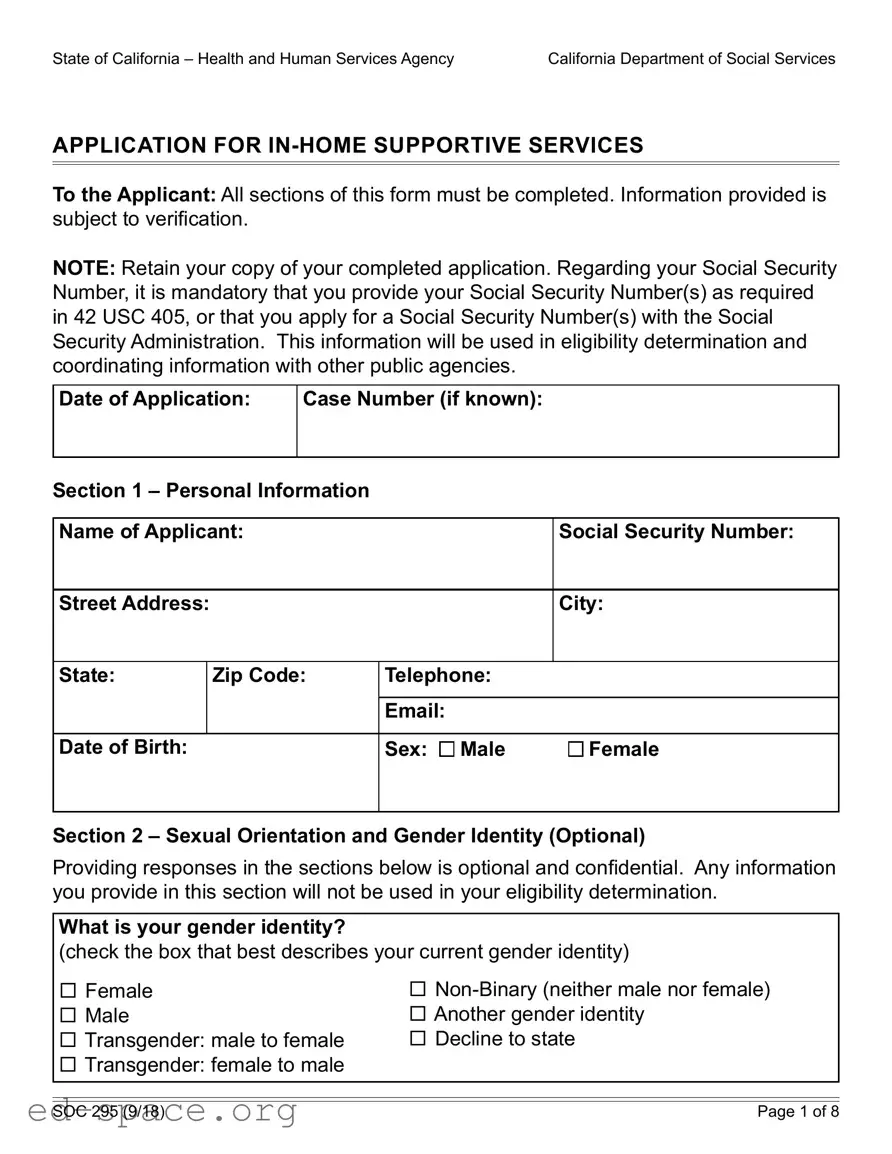
The California SOC 295 form is a crucial document for individuals seeking In-Home Supportive Services (IHSS) from the California Department of Social Services. This application requires the completion of various sections, each designed to gather essential information about the applicant and their household. Key details include personal identification, contact information, and Social Security numbers, which are necessary for eligibility verification. Additionally, applicants can optionally provide information regarding their sexual orientation and gender identity, which remains confidential and does not influence the eligibility process. The form also addresses veteran status, SSI/SSP benefits, and past IHSS usage, ensuring that the Department has a comprehensive understanding of the applicant's situation. Household information, including the names and birthdates of family members, must be listed to assess the household's needs accurately. Furthermore, the form collects data on ethnic origin and preferred languages to comply with legal requirements, while also offering communication accommodations for applicants with visual impairments. Lastly, the applicant must affirm the accuracy of the information provided and acknowledge their responsibilities as an IHSS employer, underscoring the importance of this form in securing necessary support services.

State of California – Health and Human Services Agency |
California Department of Social Services |
APPLICATION FOR
To the Applicant: All sections of this form must be completed. Information provided is subject to verification.
NOTE: Retain your copy of your completed application. Regarding your Social Security Number, it is mandatory that you provide your Social Security Number(s) as required in 42 USC 405, or that you apply for a Social Security Number(s) with the Social Security Administration. This information will be used in eligibility determination and coordinating information with other public agencies.
Date of Application: |
Case Number (if known): |
|
|||
|
|
|
|
|
|
Section 1 – Personal Information |
|
|
|||
|
|
|
|
|
|
Name of Applicant: |
|
|
Social Security Number: |
||
|
|
|
|
|
|
Street Address: |
|
|
|
City: |
|
|
|
|
|
|
|
State: |
|
Zip Code: |
Telephone: |
|
|
|
|
|
|
|
|
|
|
|
|
Email: |
|
|
|
|
|
|
|
Date of Birth: |
|
|
Sex: Male |
Female |
|
|
|
|
|
|
|
Section 2 – Sexual Orientation and Gender Identity (Optional)
Providing responses in the sections below is optional and confidential. Any information you provide in this section will not be used in your eligibility determination.
What is your gender identity?
(check the box that best describes your current gender identity)
Female
Male
Transgender: male to female
Transgender: female to male
Another gender identity
Decline to state
SOC 295 (9/18) |
Page 1 of 8 |
State of California – Health and Human Services Agency |
California Department of Social Services |
|
|
|
|
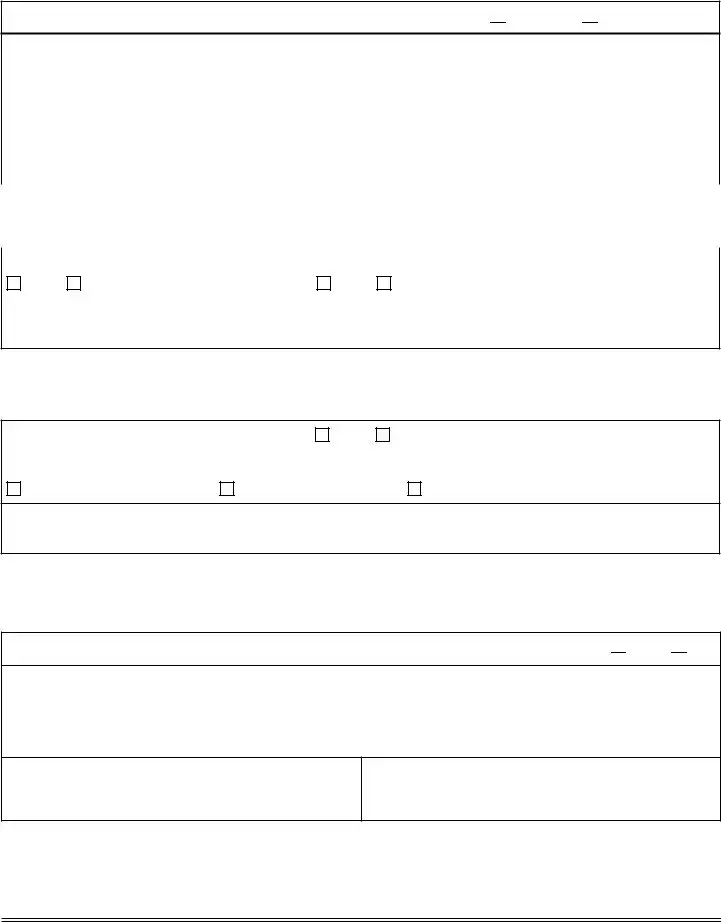
What sex was listed on your original birth certificate? Female Male
How do you describe your sexual orientation?
Select one answer. |
|
|
Straight/heterosexual |
Another sexual orientation |
|
Gay or lesbian |
Unknown |
|
Bisexual |
Decline to state |
|
Queer |
|
|
Section 3 – Veteran Information |
|
|
|
|
|
Are you a Veteran? |
|
Are you a Spouse/Child of a Veteran? |
Yes No |
|
Yes No |
|
|
|
If YES, give Veteran name and Claim Number:
Section 4 – SSI/SSP Information
Do you receive SSI/SSP benefits? Yes |
No |
|
|
||
If yes, check your type of living arrangement: |
||
Independent Living |
Board and Care |
Home of Another |
Services being requested:
Section 5 – Past IHSS Information
Have you received
If Yes, complete the following.
Date and county where service was last received:
Total Monthly Hours:
Name Used (if different from above):
SOC 295 (9/18) |
Page 2 of 8 |

State of California – Health and Human Services Agency |
California Department of Social Services |
||||
|
|
|
|||
|
|
|
|||
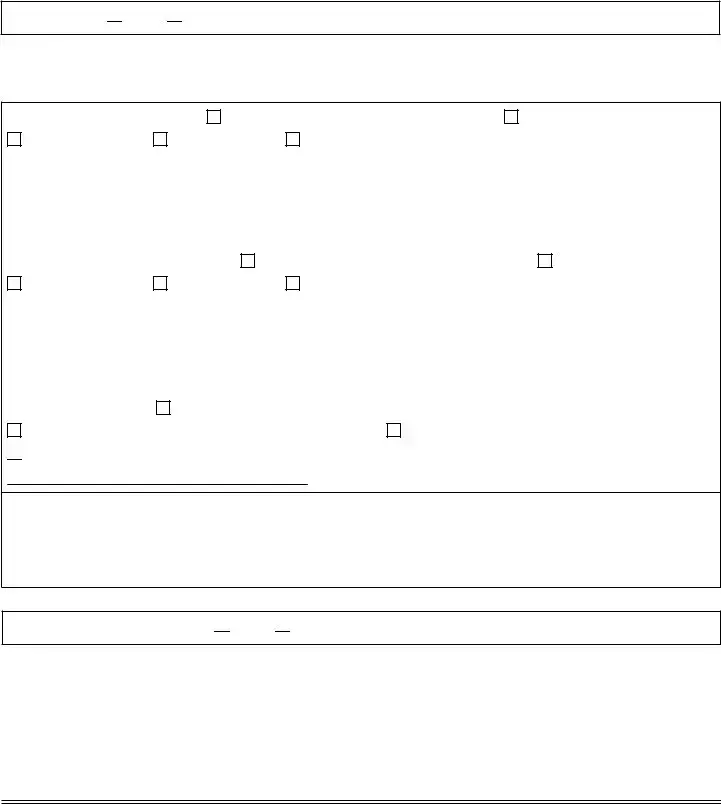
Section 6 – Household Information |
|
||||
List Household Members: |
|
|
|
||
|
|
|
|
|
|
Name of Spouse: |
|
|
|
|
|
|
|
|
|
|
|
Birthdate: |
|
|
|
Social Security Number: |
|
|
|
|
|
|
|
Name of: |
Parent |
Child |
Other Relative |
||
|
|
|
|
|
|
Birthdate: |
|
|
|
Social Security Number: |
|
|
|
|
|
|
|
Name of: |
Parent |
Child |
Other Relative |
||
|
|
|
|
|
|
Birthdate: |
|
|
|
Social Security Number: |
|
|
|
|
|
|
|
Name of: |
Parent |
Child |
Other Relative |
||
|
|
|
|
|
|
Birthdate: |
|
|
|
Social Security Number: |
|
|
|
|
|
|
|
Name of: |
Parent |
Child |
Other Relative |
||
|
|
|
|
|
|
Birthdate: |
|
|
|
Social Security Number: |
|
|
|
|
|
|
|
Name of: |
Parent |
Child |
Other Relative |
||
|
|
|
|
|
|
Birthdate: |
|
|
|
Social Security Number: |
|
|
|
|
|
|
|
Section 7 – Ethnic and Language Information
The law requires that information on ethnic origin and primary language be collected.
If you do not complete this section, social service staff will make a determination. The information will not affect your eligibility for service.
A. My Ethnic Origin is:
PLEASE CHOOSE ONE
(See Page 8 for a list of Ethnicities and Codes)
B1. What language do you prefer to read?
PLEASE CHOOSE ONE
B2. What language do you prefer to speak?
PLEASE CHOOSE ONE
(Please choose one from the list of Languages and Codes on Page 8)
SOC 295 (9/18) |
Page 3 of 8 |
State of California – Health and Human Services Agency |
California Department of Social Services |
|
|
|
|
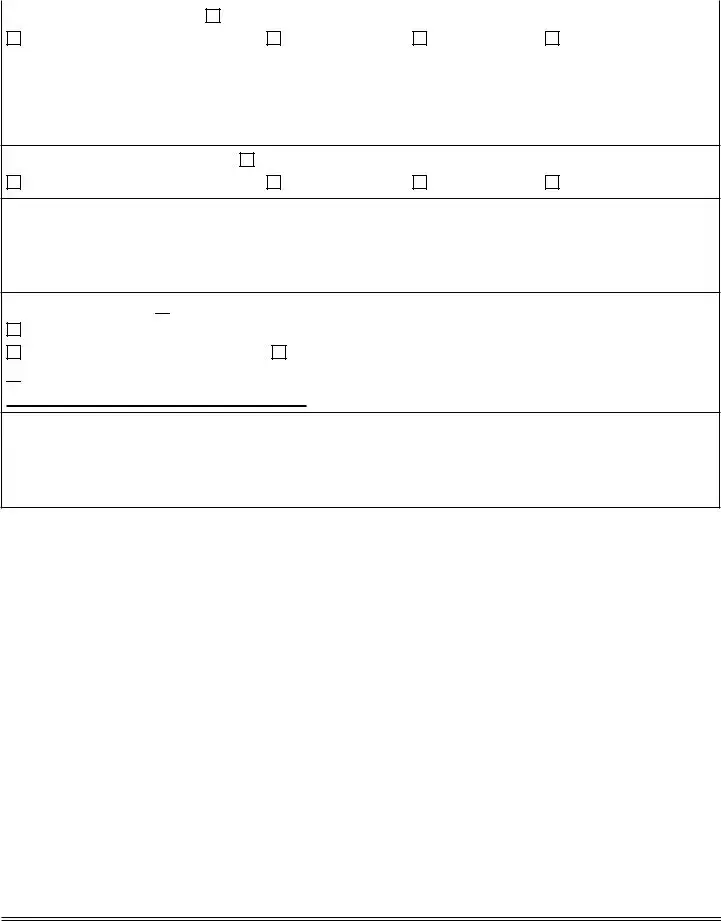
Section 8 – Communication Accommodations
To accommodate blind or
in the following alternative formats. Please indicate which format you would prefer, if applicable. Providing information in this section will not affect your eligibility for
services.
I am Blind: Yes No
If yes, please choose one of the following for each of the three types of Department of Social Services (DSS) documents listed.
For Notices of Action: No accommodation is needed |
Braille Documents |
||||
Audio CD |
Data CD |
|
County Support |
|
|
|
|
||||
(If County Support, describe requested support) |
|
||||
|
|
|
|||
For IHSS Required forms: |
No accommodation is needed |
Braille Documents |
|||
Audio CD |
Data CD |
|
County Support |
|
|
|
|
||||
(If County Support, describe requested support) |
|
||||
|
|
||||
For Timesheets: No accommodation is needed |
|
||||
Telephonic System (4 Digit RAN: |
) |
County Support |
|||
Electronic Timesheet System (ETS) (Applicants and providers must first register at https://www.etimesheets.ihss.ca.gov)
(If County Support, describe requested support)
I am Visually Impaired: Yes No
If yes, please choose one of the following for each of the three types of Department of Social Services (DSS) documents listed.
SOC 295 (9/18) |
Page 4 of 8 |
State of California – Health and Human Services Agency |
California Department of Social Services |
||
|
|
|
|
|
|
|
|
|
|
|
|
For Notices of Action: |
No accommodation is needed |
|
|
18 point font documents |
Audio CD |
Data CD |
County Support |
|
|
||
(If County Support, describe requested support) |
|
||
For IHSS Required forms: No accommodation is needed |
|
||
18 point font documents |
Audio CD |
Data CD |
County Support |
(If County Support, describe requested support)
For Timesheets: No accommodation is needed
Telephonic System (4 Digit RAN: |
) |
|
18 point font documents |
County Support |
|
Electronic Timesheet System (ETS) (Applicants and providers must first register at
https://www.etimesheets.ihss.ca.gov)
(If County Support, describe requested support, including
Section 9 – Affirmation
I affirm that the above information is true to the best of my knowledge and belief. I agree to cooperate fully if verification of the above statements is required in the future.
I also understand that as the employer of my IHSS provider(s) I am responsible for:
1.Hiring, training, supervising, scheduling and, when necessary, firing my provider(s).
2.Ensuring the total hours reported by all providers who work for me do not exceed my IHSS authorized hours each month.
3.Referring any individual I want to hire to the County IHSS office to complete the provider eligibility process.
4.Notifying the County IHSS office within 10 days when I hire or fire a provider.
SOC 295 (9/18) |
Page 5 of 8 |

State of California – Health and Human Services Agency |
California Department of Social Services |
|
|
|
|
In addition, I understand and agree to the following terms and limitations regarding payment for services by the IHSS program:
1.In order for any individual to be paid by the IHSS program, they must be approved as an IHSS eligible provider.
2.If I choose to have an individual work for me who has not yet been approved as an eligible IHSS provider, I will be responsible for paying him/her if he/she is not approved.
3.The IHSS program will not pay for any services provided to me until my application for services is approved and then will only pay for those services that are authorized for me to receive by the IHSS Program.
4.I will be responsible for paying for any services I receive that are not included in my IHSS authorization.
5.I will be responsible for paying my
I also understand and agree to cooperate with the following as a part of my eligibility for IHSS:
To promote program integrity and quality assurance, I may be subject to (un)announced visits to my home and that I or my provider(s) may receive letters identifying program requirement concerns from the State Department of Health Care Services (DHCS), California Department of Social Services (CDSS) and/or the County in which I receive services.
The purpose of the visits and letters is to ensure that program requirements are being followed and that the authorized services are necessary for you to remain safely in your home. The visit will also verify that the authorized services are being provided, that the quality of those services is acceptable, and that your
If it is found that IHSS services are not required or not being properly provided, you and/or your provider may be subject to a
SOC 295 (9/18) |
Page 6 of 8 |
State of California – Health and Human Services Agency |
California Department of Social Services |
|
|
|
|
Section 10 – Signature(s)
Signature of Applicant:
Date:
Signature of Applicant’s Representative (only if applicable): Date:
Representative’s Relationship to Applicant (only if applicable):
Representative’s Telephone Number (only if applicable):
Representative’s Address (only if applicable):
To report suspected fraud or abuse in the provision or receipt of IHSS services, please call the fraud hotline at
FOR AGENCY USE ONLY
Income Eligible: |
Status Eligible: |
||
Yes No |
Yes No |
|
|
|
|
|
|
MAGI Eligible Recipient: |
|
Verification: |
|
Disabled 12 months or longer |
|
|
|
At risk without IHSS |
|
|
|
|
|
|
|
Notes: |
|
|
|
Signature of Social Worker or Agency Representative:
Telephone Number:
SOC 295 (9/18) |
Page 7 of 8 |

State of California – Health and Human Services Agency |
|
California Department of Social Services |
|
|
|
|
|
|
Ethnic Codes: |
Language Codes: |
|
A. White. |
1. |
American Sign Language |
B. Hispanic. |
|
(AMISLAN or ASL). |
C. Black. |
2. |
Spanish - NOA will be issued |
D. Other Asian or Pacific Islander. |
|
in Spanish. |
E. American Indian or Alaskan Native. |
3. |
Cantonese. |
F. Filipino. |
4. |
Japanese. |
G. Chinese. |
5. |
Korean. |
H. Cambodian. |
6. |
Tagalog. |
I. Japanese. |
7. |
Other |
J. Korean. |
8. |
English. |
K. Samoan. |
9. |
Spanish - NOA will be issued |
L. Asian Indian. |
|
in English. |
M. Hawaiian. |
10. Other Sign Language. |
|
N. Guamanian. |
11. |
Mandarin. |
O. Laotian. |
12. Other Chinese Languages. |
|
P. Vietnamese. |
13. Cambodian. |
|
Q. Other. |
14. Armenian. |
|
R. Mixed Ethnicity. |
15. Ilacano. |
|
|
16. Mien. |
|
|
17. Hmong. |
|
18. Lao.
19. Turkish.
20. Hebrew.
21. French.
22. Polish.
23. Russian.
24. Portuguese.
25. Italian.
26. Arabic.
27. Samoan.
28. Thai.
29. Farsi.
30. Vietnamese.
SOC 295 (9/18) |
Page 8 of 8 |
| Fact Name | Details |
|---|---|
| Purpose | The SOC 295 form is used to apply for In-Home Supportive Services (IHSS) in California. |
| Governing Law | This form is governed by California Welfare and Institutions Code Section 12300 and federal law under 42 USC 405. |
| Social Security Requirement | Applicants must provide their Social Security Number, which is crucial for eligibility determination. |
| Confidentiality | Information regarding sexual orientation and gender identity is optional and kept confidential. |
| Verification | All information submitted is subject to verification by the California Department of Social Services. |
Completing the California SOC 295 form is an essential step in applying for In-Home Supportive Services (IHSS). After filling out this form, you will be able to submit your application for review, which will help determine your eligibility for these vital services. It is crucial to ensure all sections are accurately filled out to avoid delays in processing.
After completing the form, make sure to keep a copy for your records. You will then be ready to submit your application to the appropriate agency for processing.
What is the purpose of the California SOC 295 form?
The California SOC 295 form is an application for In-Home Supportive Services (IHSS). It collects essential information about the applicant to determine eligibility for services that assist individuals with disabilities or the elderly in their daily living activities. The form must be completed in full, as all information provided is subject to verification.
Who needs to complete the SOC 295 form?
Any individual seeking In-Home Supportive Services in California must complete the SOC 295 form. This includes applicants who may have received IHSS in the past or are applying for the first time. Additionally, household members may need to be listed to provide a complete picture of the living situation.
Is it mandatory to provide a Social Security Number on the form?
Yes, providing a Social Security Number is mandatory as per federal law. The information is crucial for eligibility determination and for coordinating with other public agencies. If an applicant does not have a Social Security Number, they must apply for one with the Social Security Administration.
What happens if I do not complete the optional sections on sexual orientation and gender identity?
Completing the sections on sexual orientation and gender identity is entirely optional. If these sections are left blank, it will not affect your eligibility for services. This information is collected confidentially and is not used in the determination process.
What should I do if I have received IHSS before?
If you have received IHSS in the past, you need to indicate this on the SOC 295 form. You will be asked to provide details such as the date and county where you last received services and the total monthly hours you were authorized. This information helps in assessing your current needs.
Can I request communication accommodations on the SOC 295 form?
Yes, the SOC 295 form allows applicants to request communication accommodations. If you are blind or visually impaired, you can indicate your preferred format for receiving IHSS documents. Options include Braille, audio CDs, or large print documents. This request will not affect your eligibility for services.
What is the significance of the affirmation section at the end of the form?
The affirmation section is a declaration by the applicant that all provided information is accurate to the best of their knowledge. By signing this section, applicants agree to cooperate with any future verification processes and acknowledge their responsibilities as an employer of their IHSS providers.
How should I keep track of my completed SOC 295 form?
It is essential to retain a copy of your completed SOC 295 form for your records. This will help you keep track of the information you provided and can be useful for future reference or in case of any questions regarding your application.
Incomplete Personal Information: Many applicants fail to fill out all required fields in Section 1. Missing information such as your Social Security Number or date of birth can delay processing and potentially jeopardize your application.
Neglecting Optional Sections: While Sections 2 and 7 are optional, skipping them can lead to missed opportunities for support. Providing information about sexual orientation, gender identity, and ethnic background may help tailor services to your needs.
Incorrect Household Information: Listing household members inaccurately in Section 6 can create confusion. Ensure that all names, birthdates, and Social Security Numbers are correct to avoid complications in your application.
Failure to Retain a Copy: After completing the application, many forget to keep a copy for their records. Retaining your application is crucial for future reference and follow-ups.
Ignoring Communication Accommodations: If you have specific communication needs, such as being blind or visually impaired, it’s essential to indicate this in Section 8. Not doing so may lead to difficulties in receiving important information about your application.
The California SOC 295 form is a critical document used for applying for In-Home Supportive Services (IHSS). It collects essential personal information and details about the applicant's needs. Alongside this form, several other documents may be required or beneficial during the application process. Below is a list of commonly associated forms and documents that applicants might encounter.
Understanding these associated forms and documents can streamline the application process for In-Home Supportive Services. Each document serves a specific purpose, helping to ensure that applicants receive the support they need in a timely manner.
The California SOC 295 form is essential for applying for In-Home Supportive Services (IHSS). Several other documents serve similar purposes in gathering personal and eligibility information. Here’s a list of eight documents that share similarities with the SOC 295 form:
When filling out the California SOC 295 form, it is important to follow certain guidelines to ensure accuracy and compliance. Below is a list of things you should and shouldn't do.
Understanding the California SOC 295 form is crucial for applicants seeking In-Home Supportive Services (IHSS). However, several misconceptions can lead to confusion. Below is a list of common misunderstandings about this form.
This form is mandatory for anyone applying for IHSS. All sections must be completed to ensure eligibility.
In fact, it is mandatory to provide your Social Security Number, as required by federal law. This information is vital for determining eligibility.
The sections on sexual orientation and gender identity are optional and confidential. They do not influence the eligibility determination.
Even if you have received IHSS before, you must still complete the relevant sections regarding past services to help the county assess your current needs.
While it may seem optional, the law requires this information to be collected. If you do not provide it, social service staff will make a determination based on available data.
It is important to keep a copy of your completed application for your records. This will help you track your application status and provide necessary information if needed.
Applicants who are blind or visually impaired can request specific accommodations. This includes options for receiving documents in alternative formats.
This section is critical. By signing it, you affirm that the information provided is accurate and that you understand your responsibilities as an employer of your IHSS provider(s).
While timely submission is important, ensuring that all information is accurate is crucial for a smooth application process. Inaccuracies can lead to delays or denials of services.
When filling out and using the California SOC 295 form, keep these key takeaways in mind: