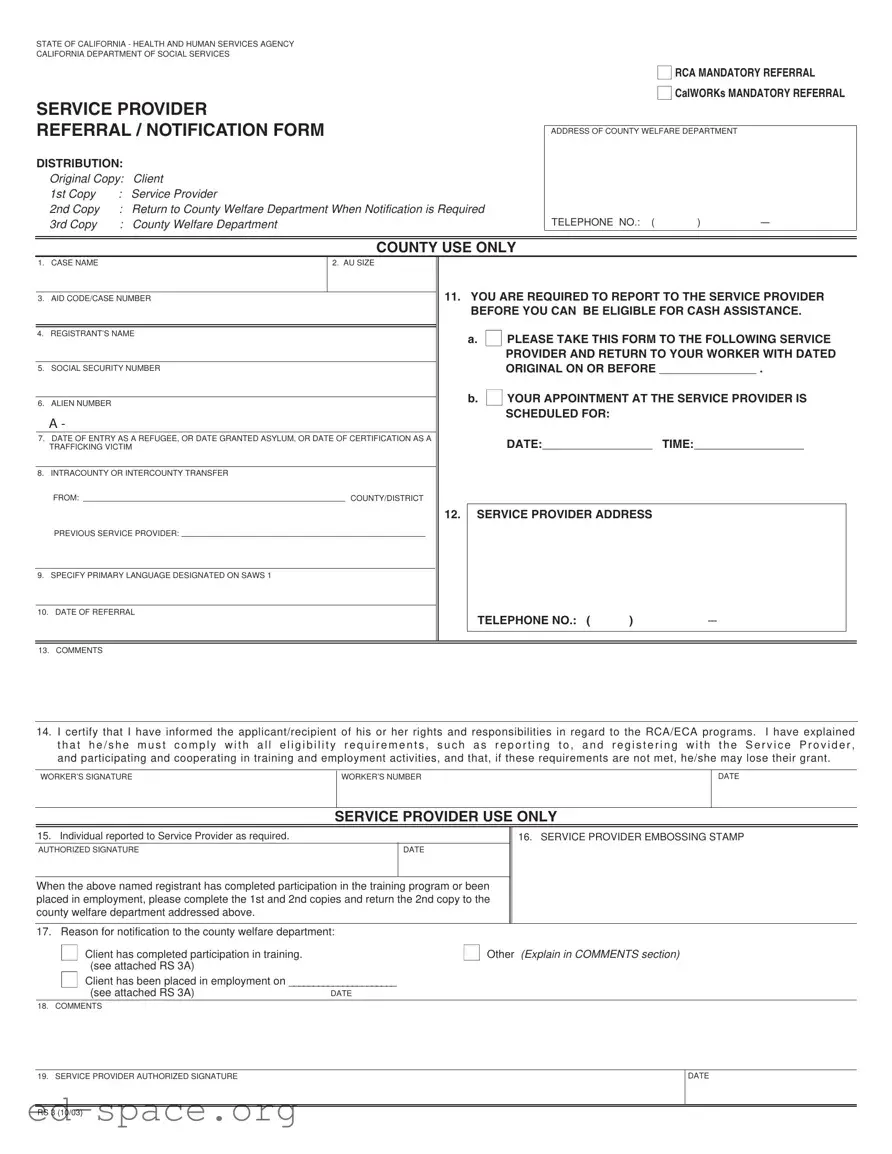
The California Rs 3 form serves as a crucial document within the state’s welfare system, particularly for individuals seeking cash assistance through programs such as Refugee Cash Assistance (RCA) and CalWORKs. This mandatory referral form facilitates the connection between applicants and service providers, ensuring that individuals comply with eligibility requirements. It requires specific information, including the case name, aid code, and registrant details, such as social security and alien numbers. Additionally, the form outlines the necessity for clients to report to designated service providers to maintain their eligibility for benefits. It includes sections for scheduling appointments and provides space for comments, allowing for clear communication between the client, service provider, and county welfare department. Upon completion of the training program or employment placement, the service provider must notify the county welfare department, highlighting the importance of this form in tracking participant progress. Ultimately, the Rs 3 form is essential for both administrative compliance and the support of individuals navigating the welfare system.

STATE OF CALIFORNIA - HEALTH AND HUMAN SERVICES AGENCY
CALIFORNIA DEPARTMENT OF SOCIAL SERVICES
■ RCA MANDATORY REFERRAL
■ CALWORKS MANDATORY REFERRAL
SERVICE PROVIDER
REFERRAL / NOTIFICATION FORM
DISTRIBUTION:
Original Copy: |
Client |
|
1st Copy |
: |
Service Provider |
2nd Copy |
: |
Return to County Welfare Department When Notification is Required |
3rd Copy |
: |
County Welfare Department |
ADDRESS OF COUNTY WELFARE DEPARTMENT
TELEPHONE NO.: ( |
) |
|
|
|
|
|
COUNTY USE ONLY |
|
|
|
|||
1. |
CASE NAME |
2. AU SIZE |
|
|
|
|
|
||||
|
|
|
|
|
|
|
11. YOU ARE REQUIRED TO REPORT TO THE SERVICE PROVIDER |
||||
3. |
AID CODE/CASE NUMBER |
|
|
|
|||||||
|
|
|
|
|
|
|
|
BEFORE YOU CAN BE ELIGIBLE FOR CASH ASSISTANCE. |
|||
|
|
|
|
|
|
A. ■ PLEASE TAKE THIS FORM TO THE FOLLOWING SERVICE |
|||||
|
|
|
|
|
|
||||||
4. |
REGISTRANT’S NAME |
|
|
|
|
||||||
|
|
|
|
|
|
|
|
||||
|
|
|
|
|
|
|
|
PROVIDER AND RETURN TO YOUR WORKER WITH DATED |
|||
|
|
|
|
|
|
|
|
ORIGINAL ON OR BEFORE _______________ . |
|||
5. |
SOCIAL SECURITY NUMBER |
|
|
|
|
||||||
|
|
|
|
|
|
|
|
B. ■ YOUR APPOINTMENT AT THE SERVICE PROVIDER IS |
|||
6. |
ALIEN NUMBER |
|
|
|
|||||||
|
|
|
|
|
|
|
|
||||
A - |
|
|
|
|
SCHEDULED FOR: |
|
|
|
|||
|
|
|
|
|
|
|
|
||||
7. |
DATE OF ENTRY AS A REFUGEE, OR DATE GRANTED ASYLUM, OR DATE OF CERTIFICATION AS A |
|
DATE:_________________ |
TIME:_________________ |
|||||||
|
TRAFFICKING VICTIM |
|
|
|
|
||||||
|
|
|
|
|
|
|
|
|
|
|
|
8. INTRACOUNTY OR INTERCOUNTY TRANSFER |
|
|
|
|
|
|
|
|
|||
|
FROM: |
|
|
|
COUNTY/DISTRICT |
|
|
|
|
|
|
|
|
|
|
|
|
|
|
|
|||
|
|
|
|
|
|
|
12. |
SERVICE PROVIDER ADDRESS |
|
|
|
|
PREVIOUS SERVICE PROVIDER: |
|
|
|
|
|
|
|
|
|
|
|
|
|
|
|
|
|
|
|
|
|
|
9. SPECIFY PRIMARY LANGUAGE DESIGNATED ON SAWS 1 |
|
|
|
|
|
|
|
|
|||
|
|
|
|
|
|
|
|
|
|
|
|
10. |
DATE OF REFERRAL |
|
|
|
|
TELEPHONE NO.: ( |
) |
|
|||
|
|
|
|
|
|
|
|
|
|||
|
|
|
|
|
|
|
|
|
|
|
|
|
|
|
|
|
|
|
|
|
|
|
|
|
|
|
|
|
|
|
|
|
|
|
|
13. |
COMMENTS |
|
|
|
|
|
|
|
|
||
14. I certify that I have informed the applicant/recipient of his or her rights and responsibilities in regard to the RCA/ECA programs. I have explained t h a t h e / s h e m u s t c o m p l y w i t h a l l e l i g i b i l i t y r e q u i r e m e n t s , s u c h a s r e p o r t i n g t o , a n d r e g i s t e r i n g w i t h t h e S e r v i c e P r o v i d e r , and participating and cooperating in training and employment activities, and that, if these requirements are not met, he/she may lose their grant.
WORKER’S SIGNATURE
WORKER’S NUMBER
DATE
|
SERVICE PROVIDER USE ONLY |
||
|
|
|
|
15. Individual reported to Service Provider as required. |
|
|
16. SERVICE PROVIDER EMBOSSING STAMP |
AUTHORIZED SIGNATURE |
|
DATE |
|
|
|
|
|
When the above named registrant has completed participation in the training program or been placed in employment, please complete the 1st and 2nd copies and return the 2nd copy to the county welfare department addressed above.
17. Reason for notification to the county welfare department:
■ Client has completed participation in training. |
■ Other (Explain in COMMENTS section) |
|
■ |
(see attached RS 3A) |
|
Client has been placed in employment on ______________________ |
||
|
(see attached RS 3A) |
DATE |
18. COMMENTS
19.SERVICE PROVIDER AUTHORIZED SIGNATURE
RS 3 (10/03)
DATE
SERVICE PROVIDER REFERRAL FORM
Instructions
County Use Only
1.Case Name
2.AU Size
3.Aid Code/Case Number
4.Registrant’s Name
5.Social Security Number
6.Alien Number
7.Date of Entry to U.S. or Date Granted Asylum
8.Intracounty or Intercounty Transfer
9.Specify primary language designated on SAWS 1.
10.Date of Referral
11a. Check this box and enter the date that the registrant is to return the validated original RS 3 form to the Worker.
11b. If you make an appointment for the registrant to report to the Service Provider, check this box and enter the date and time of the appointment.
12.Service Provider Address
13.Comments
14.Worker Name and Worker Number
Service Provider Use Only
15.Authorized Signature
16.Service Provider Embossing Stamp
17.Check the appropriate box to indicate why notification is being made.
18.Comments
19.Service Provider Authorized Signature
| Fact Name | Description |
|---|---|
| Purpose | The California RS 3 form is used for mandatory referrals of clients to service providers under the RCA and CalWORKs programs. |
| Governing Laws | This form is governed by California Welfare and Institutions Code Sections 11200-11204, which outline the requirements for cash assistance eligibility. |
| Distribution | Upon completion, the original copy goes to the client, the first copy is for the service provider, and the second copy is returned to the County Welfare Department. |
| Client Responsibilities | Clients must report to the service provider and return the dated original form to their worker to maintain eligibility for cash assistance. |
| Completion Requirements | Service providers must complete the form after the client has participated in training or been placed in employment, returning the necessary copies to the county. |
Filling out the California RS 3 form is a straightforward process. Follow these steps carefully to ensure that all required information is provided accurately. Once completed, the form will need to be submitted to the appropriate county welfare department.
What is the California RS 3 form?
The California RS 3 form is a mandatory referral and notification form used by the California Department of Social Services. It is primarily for individuals receiving cash assistance through programs like RCA (Refugee Cash Assistance) and CalWORKs. This form ensures that clients report to designated service providers as part of their eligibility requirements for cash assistance. It helps facilitate the necessary connections between clients and service providers, which can include training and employment opportunities.
Who needs to fill out the RS 3 form?
The RS 3 form must be completed for individuals who are part of an Assistance Unit (AU) and are required to register with a service provider. This includes refugees and certain eligible individuals seeking cash assistance. The form must be filled out by a county welfare worker and includes essential details such as the client's name, social security number, and appointment information with the service provider.
What happens after the RS 3 form is submitted?
Once the RS 3 form is submitted, the client must report to the designated service provider by the specified date. The service provider will then verify the client's attendance and participation. After completing the required activities, the service provider will return copies of the form to the county welfare department, indicating whether the client has fulfilled their obligations. This process is crucial for maintaining eligibility for cash assistance.
What should I do if I miss my appointment with the service provider?
If you miss your appointment, it is important to contact the service provider as soon as possible. They may be able to reschedule your appointment. Missing the appointment could affect your eligibility for cash assistance, so taking prompt action is essential. You may also want to inform your county welfare worker about the situation to discuss any potential impacts on your case.
Can I get help filling out the RS 3 form?
Yes, assistance is available for filling out the RS 3 form. You can reach out to your county welfare department for guidance. They can provide support and answer any questions you may have about the form and the process. Additionally, service providers may also offer help to ensure that you complete the form correctly and understand your responsibilities.
Incorrect Personal Information: One common mistake is entering the wrong details for the registrant. This includes the name, social security number, or alien number. Double-checking these details can help avoid complications later.
Missing Signatures: Not signing the form can lead to delays. Both the worker's signature and the service provider's signature are essential. Make sure these are included before submission.
Omitting Required Dates: Failing to fill in important dates, such as the referral date or appointment date, can cause confusion. Ensure all necessary dates are clearly stated to keep the process moving smoothly.
Not Following Instructions: Each section of the form has specific instructions. Ignoring these can result in incomplete information. Take the time to read and follow the guidelines carefully to ensure accuracy.
The California Rs 3 form is an essential document used in the state's welfare system, specifically for mandatory referrals to service providers. Alongside this form, there are several other important documents that often come into play. Here’s a brief overview of four commonly used forms and documents that work in conjunction with the Rs 3.
Understanding these documents can streamline the process of applying for assistance and ensure compliance with program requirements. Having everything in order makes a significant difference in receiving timely support.
The California RS 3 form is similar to several other documents used in social services and public assistance programs. Below are six documents that share characteristics with the RS 3 form:
Filling out the California RS 3 form can seem daunting, but with the right approach, it becomes much easier. Here are some important dos and don'ts to keep in mind:
By following these guidelines, you can help ensure that your form is filled out correctly and submitted on time. Good luck!
Understanding the California Rs 3 form can be challenging due to various misconceptions. Here are six common misunderstandings clarified:
This is incorrect. The Rs 3 form is mandatory for individuals receiving cash assistance. They must report to the service provider as part of their eligibility requirements.
In reality, existing recipients who are referred for services must also complete this form. It is part of ongoing compliance with program requirements.
This is not true. There are specific deadlines for submitting the Rs 3 form. Recipients must return it to their worker by the designated date to maintain their assistance.
While the form is specifically designed for refugees and asylees, it can also apply to other individuals receiving cash assistance under certain programs.
This is misleading. After submitting the Rs 3 form, recipients must still participate in training and employment activities as required. Failure to do so can lead to loss of benefits.
This is a misconception. Recipients are responsible for ensuring they comply with all requirements outlined in the Rs 3 form, including attending appointments and reporting back to their worker.
Here are the key takeaways regarding the California RS 3 form:
Ensure all sections are filled out completely and accurately to avoid delays in processing. Adherence to deadlines is crucial for maintaining eligibility for assistance.