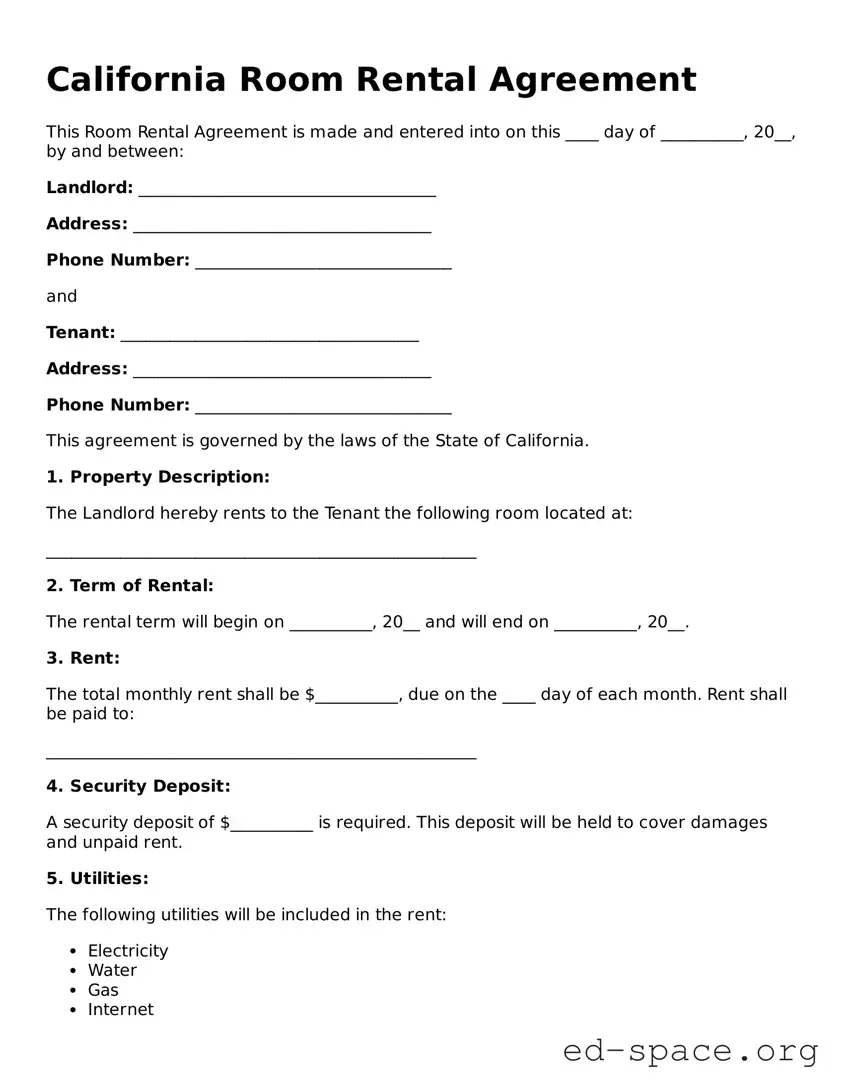
The California Room Rental Agreement form serves as a vital document for both landlords and tenants, outlining the terms and conditions of renting a room within a residential property. This agreement typically includes essential information such as the rental amount, payment due dates, and the duration of the lease. Additionally, it specifies the responsibilities of both parties regarding maintenance, utilities, and any restrictions on the use of shared spaces. By clearly delineating rules about security deposits, notice periods for termination, and the handling of repairs, the form aims to protect the interests of both the landlord and the tenant. Understanding these key components is crucial for anyone entering into a room rental arrangement in California, as it helps ensure a smooth and respectful living experience. Whether you are a first-time renter or an experienced landlord, familiarizing yourself with this agreement can prevent misunderstandings and disputes down the line.
California Room Rental Agreement
This Room Rental Agreement is made and entered into on this ____ day of __________, 20__, by and between:
Landlord: ____________________________________
Address: ____________________________________
Phone Number: _______________________________
and
Tenant: ____________________________________
Address: ____________________________________
Phone Number: _______________________________
This agreement is governed by the laws of the State of California.
1. Property Description:
The Landlord hereby rents to the Tenant the following room located at:
____________________________________________________
2. Term of Rental:
The rental term will begin on __________, 20__ and will end on __________, 20__.
3. Rent:
The total monthly rent shall be $__________, due on the ____ day of each month. Rent shall be paid to:
____________________________________________________
4. Security Deposit:
A security deposit of $__________ is required. This deposit will be held to cover damages and unpaid rent.
5. Utilities:
The following utilities will be included in the rent:
6. Maintenance and Repairs:
The Tenant agrees to keep the room clean and to promptly report any maintenance issues to the Landlord.
7. Termination:
Either party may terminate this agreement with a written notice of ____ days prior to the desired termination date.
8. Governing Law:
This agreement shall be governed by the laws of the State of California.
9. Signatures:
By signing below, both parties agree to the terms outlined in this Room Rental Agreement.
Landlord Signature: ___________________________ Date: ____________
Tenant Signature: ____________________________ Date: ____________
| Fact Name | Details |
|---|---|
| Governing Law | The California Room Rental Agreement is governed by California Civil Code Sections 1940-1954. |
| Purpose | This form outlines the terms and conditions for renting a room in a residential property. |
| Parties Involved | The agreement involves the landlord and the tenant, clearly defining their rights and responsibilities. |
| Security Deposit | California law limits the security deposit to two months' rent for unfurnished rentals and three months' rent for furnished rentals. |
| Duration of Agreement | The rental agreement can be for a fixed term or month-to-month, depending on the arrangement between the parties. |
| Notice Requirements | California law requires landlords to provide a written notice of at least 30 days for month-to-month leases when terminating the agreement. |
Filling out the California Room Rental Agreement form is a straightforward process that helps ensure both landlords and tenants understand their rights and responsibilities. By following these steps, you can complete the form efficiently and accurately, paving the way for a smooth rental experience.
After completing the form, it’s a good idea to keep a copy for your records. This ensures that both parties have a reference point for the agreed-upon terms. A well-documented agreement can help prevent misunderstandings down the line.
What is a California Room Rental Agreement?
A California Room Rental Agreement is a legal document that outlines the terms and conditions under which a tenant rents a residential property from a landlord. This agreement typically includes details such as the rental amount, payment due dates, security deposits, and the duration of the lease. It serves to protect the rights of both parties and provides a clear framework for the rental relationship. By signing this document, both the landlord and tenant agree to abide by its terms, which can help prevent misunderstandings and disputes in the future.
What key elements should be included in the agreement?
Several essential elements should be included in a California Room Rental Agreement to ensure it is comprehensive and legally binding. First, the names of both the landlord and tenant should be clearly stated. Next, the address of the rental property must be included. The agreement should specify the rental amount and payment schedule, including any late fees. Additionally, it should outline the security deposit amount, conditions for its return, and any rules regarding property maintenance. Lastly, the duration of the lease, whether month-to-month or for a fixed term, should be clearly defined.
Are there specific laws governing room rental agreements in California?
Yes, California has specific laws that govern rental agreements, including those for room rentals. The California Civil Code outlines the rights and responsibilities of both landlords and tenants. For instance, the law mandates that landlords must provide habitable living conditions, which includes basic necessities like heat, water, and safety. Additionally, there are regulations concerning security deposits, eviction processes, and tenant privacy rights. It is important for both landlords and tenants to familiarize themselves with these laws to ensure compliance and protect their interests.
What should I do if there is a dispute regarding the rental agreement?
If a dispute arises concerning the rental agreement, the first step is to communicate openly with the other party. Many issues can be resolved through discussion. If that does not lead to a resolution, reviewing the terms of the agreement may provide clarity. In some cases, mediation services can help facilitate a conversation between both parties to reach an agreement. If the dispute remains unresolved, legal action may be considered, but it is advisable to seek legal counsel before proceeding. Understanding your rights and options is crucial in these situations.
Failing to provide accurate personal information. It's essential to include correct names, addresses, and contact details. Mistakes can lead to confusion and issues in communication.
Not specifying the rental period clearly. Indicating the start and end dates of the rental agreement is crucial. Without this information, both parties may have different expectations.
Overlooking the security deposit details. It's important to state the amount of the security deposit and the conditions for its return. This can prevent disputes later on.
Neglecting to outline the payment terms. Clearly defining when rent is due and acceptable payment methods is necessary. Ambiguity can lead to misunderstandings.
Ignoring the rules regarding pets. If pets are allowed or prohibited, this should be explicitly mentioned. Miscommunication about pet policies can lead to complications.
Failing to include signatures. Both the landlord and tenant must sign the agreement for it to be legally binding. Without signatures, the document may not hold up in disputes.
When entering into a room rental agreement in California, several other forms and documents may be necessary to ensure a smooth and legally compliant rental process. Each of these documents serves a specific purpose and can help clarify the rights and responsibilities of both landlords and tenants.
Having these documents in place can greatly enhance the rental experience for both landlords and tenants. They provide clarity and protection, helping to foster a positive and respectful living environment.
When navigating the world of rental agreements, it's essential to understand how various documents serve similar purposes. Here are four documents that share similarities with a Room Rental Agreement, highlighting their key features:
Understanding these documents can help individuals make informed decisions in their rental journey. Each serves a unique purpose but shares the common goal of clarifying expectations and responsibilities between parties involved in a rental situation.
When filling out the California Room Rental Agreement form, it is important to follow certain guidelines to ensure everything is completed correctly. Here are some things you should and shouldn't do:
Understanding the California Room Rental Agreement form is crucial for both landlords and tenants. However, several misconceptions can lead to confusion. Here are five common misconceptions:
While it is strongly recommended to have a written agreement, oral agreements can also be legally binding in California. However, proving the terms of an oral agreement can be challenging.
Different types of rental agreements exist for various situations, such as short-term versus long-term rentals. Each type may have specific requirements that should be considered.
Agreements can be modified if both parties consent. Any changes should be documented in writing to avoid misunderstandings in the future.
While most security deposits are refundable, landlords can retain part or all of the deposit for specific reasons, such as unpaid rent or damages beyond normal wear and tear.
Tenants have legal rights and can take action if a landlord fails to uphold the terms of the agreement. This can include seeking remedies through small claims court or other legal avenues.
Awareness of these misconceptions can help individuals navigate the rental process more effectively.
When dealing with the California Room Rental Agreement form, it is essential to understand its significance and how to properly fill it out. Here are some key takeaways to keep in mind:
By paying close attention to these key aspects, both landlords and tenants can foster a smoother rental experience.