When renting a property in California, having a clear and comprehensive Residential Lease Agreement is essential for both landlords and tenants. This document outlines the rights and responsibilities of each party, ensuring that everyone understands the terms of the rental arrangement. Key aspects of the form include details such as the rental amount, the duration of the lease, and the specific property address. Additionally, it covers important topics like security deposits, maintenance responsibilities, and rules regarding pets. By addressing these elements, the lease agreement helps prevent misunderstandings and provides a framework for resolving disputes should they arise. Understanding this form is crucial for anyone entering into a rental agreement in the Golden State, as it serves as a legal foundation for the landlord-tenant relationship.
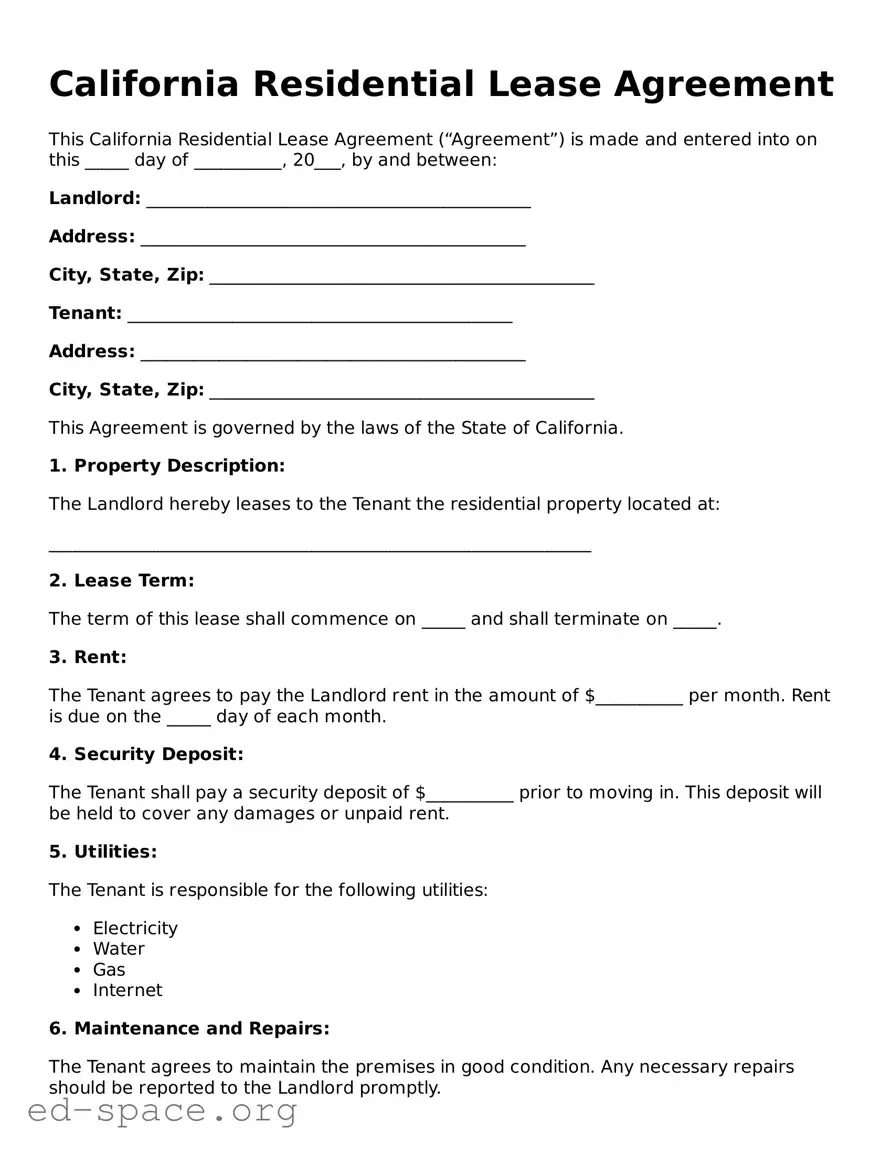
California Residential Lease Agreement
This California Residential Lease Agreement (“Agreement”) is made and entered into on this _____ day of __________, 20___, by and between:
Landlord: ____________________________________________
Address: ____________________________________________
City, State, Zip: ____________________________________________
Tenant: ____________________________________________
Address: ____________________________________________
City, State, Zip: ____________________________________________
This Agreement is governed by the laws of the State of California.
1. Property Description:
The Landlord hereby leases to the Tenant the residential property located at:
______________________________________________________________
2. Lease Term:
The term of this lease shall commence on _____ and shall terminate on _____.
3. Rent:
The Tenant agrees to pay the Landlord rent in the amount of $__________ per month. Rent is due on the _____ day of each month.
4. Security Deposit:
The Tenant shall pay a security deposit of $__________ prior to moving in. This deposit will be held to cover any damages or unpaid rent.
5. Utilities:
The Tenant is responsible for the following utilities:
6. Maintenance and Repairs:
The Tenant agrees to maintain the premises in good condition. Any necessary repairs should be reported to the Landlord promptly.
7. Termination:
Either party may terminate this Agreement by providing written notice at least _____ days in advance.
8. Governing Law:
This Agreement shall be governed by the laws of the State of California.
IN WITNESS WHEREOF, the parties hereto have executed this Agreement as of the date first above written.
Landlord Signature: ________________________________
Date: ____________________________________________
Tenant Signature: ________________________________
Date: ____________________________________________
| Fact Name | Description |
|---|---|
| Governing Law | The California Residential Lease Agreement is governed by California Civil Code Sections 1940-1954. |
| Parties Involved | This agreement is typically between a landlord and a tenant, outlining the rights and responsibilities of each party. |
| Lease Duration | The lease can be for a fixed term, such as one year, or a month-to-month agreement. |
| Security Deposit | California law limits the security deposit to two months' rent for unfurnished properties and three months' rent for furnished properties. |
| Rent Payment | The lease should specify the amount of rent due, the due date, and acceptable payment methods. |
| Maintenance Responsibilities | Landlords are generally responsible for maintaining the property, while tenants must keep the rental unit clean and report any issues. |
| Termination Notice | Notice periods for terminating the lease vary based on the lease type; typically, a 30-day notice is required for month-to-month agreements. |
| Disclosures Required | Landlords must provide certain disclosures, including information about lead-based paint and the presence of mold, if applicable. |
Filling out the California Residential Lease Agreement form is a crucial step in establishing a rental relationship. This document outlines the terms and conditions agreed upon by both the landlord and tenant, ensuring clarity and protection for both parties. Follow the steps below to complete the form accurately.
What is a California Residential Lease Agreement?
A California Residential Lease Agreement is a legal document that outlines the terms and conditions between a landlord and tenant for renting residential property in California. This agreement specifies the rights and responsibilities of both parties, including the rental amount, duration of the lease, maintenance obligations, and rules regarding the property. It serves to protect both the landlord's and tenant's interests throughout the rental period.
What should be included in a California Residential Lease Agreement?
Essential elements of a California Residential Lease Agreement include the names of the landlord and tenant, property address, rental amount, payment due dates, security deposit details, lease duration, and maintenance responsibilities. Additionally, the agreement should outline any rules regarding pets, smoking, and property alterations. It's crucial to ensure that all terms are clearly stated to avoid misunderstandings.
How long does a California Residential Lease Agreement typically last?
Residential lease agreements in California can vary in duration. Common terms include month-to-month agreements or fixed-term leases, which typically last for one year. However, the length of the lease is negotiable between the landlord and tenant. It is important to specify the lease duration in the agreement to establish clear expectations.
Can a landlord increase rent during a lease term?
Generally, a landlord cannot increase rent during a fixed-term lease unless the lease agreement explicitly allows for it. For month-to-month leases, landlords can increase rent with proper notice, which is typically 30 days for increases under 10% and 60 days for increases over 10%. Always check local rent control laws, as they may impose additional restrictions.
What happens if a tenant wants to terminate the lease early?
If a tenant wishes to terminate the lease early, they may face penalties as outlined in the lease agreement. It is common for landlords to require a notice period, often 30 days, and possibly a fee for breaking the lease. Tenants should review the lease terms carefully and communicate with the landlord to discuss options, which may include subletting or finding a replacement tenant.
Is a written lease agreement necessary?
While verbal agreements can be legally binding, having a written lease agreement is highly recommended. A written document provides clarity and serves as evidence of the agreed-upon terms. It protects both the landlord and tenant by outlining expectations and reducing the potential for disputes. In California, written agreements are especially important due to specific legal requirements that govern rental properties.
Not reading the entire lease agreement: Many individuals skip sections of the lease, assuming they understand the terms. This can lead to misunderstandings about responsibilities and obligations.
Failing to include all tenant names: It’s crucial to list all tenants who will be living in the rental unit. Omitting names can create issues with accountability and lease enforcement.
Ignoring the security deposit details: Some people overlook the specific terms related to the security deposit, including the amount and conditions for its return. This can result in disputes later.
Not specifying the lease term: Clearly stating the duration of the lease is vital. Without this, tenants and landlords may have different interpretations about how long the agreement lasts.
Overlooking maintenance responsibilities: The lease should outline who is responsible for maintenance and repairs. Failing to clarify this can lead to frustration and disputes.
Neglecting to understand the pet policy: If pets are allowed, the lease should specify any restrictions. Not addressing this can lead to conflicts between tenants and landlords.
Not checking local laws: Some individuals fill out the lease without considering local regulations. This oversight can result in illegal terms or unenforceable clauses.
When entering into a residential lease agreement in California, several other documents may be necessary to ensure a smooth rental process. These forms help clarify the terms of the lease, protect both parties, and provide necessary disclosures. Below is a list of commonly used forms alongside the California Residential Lease Agreement.
Each of these documents plays a crucial role in the rental process. They help establish clear expectations and protect the rights of both landlords and tenants. Being aware of these forms can lead to a more organized and efficient leasing experience.
The Residential Lease Agreement is a vital document for both landlords and tenants, outlining the terms and conditions of renting a property. However, it shares similarities with several other important documents in the realm of real estate and rental agreements. Here are eight documents that are similar to the Residential Lease Agreement:
Understanding these documents can empower both landlords and tenants to navigate their rental relationships more effectively. Each serves a unique purpose but shares the common goal of clarifying terms and protecting the rights of all parties involved.
When filling out the California Residential Lease Agreement form, there are several important considerations to keep in mind. Here is a list of things you should and shouldn't do:
By following these guidelines, you can help ensure a smoother leasing process and protect your rights as a tenant.
Misconceptions about the California Residential Lease Agreement form can lead to confusion for both landlords and tenants. Understanding these misconceptions is essential for effective property management and tenant rights. Below are four common misconceptions explained.
While it is highly recommended to have a written lease for clarity and legal protection, California law does allow for oral agreements in certain circumstances. However, proving the terms of an oral lease can be challenging.
Lease agreements can vary significantly based on property type, location, and specific landlord preferences. Each lease should be tailored to the individual circumstances of the rental arrangement, making it crucial to review the terms carefully.
In California, security deposits are generally refundable, provided that the tenant meets the terms of the lease. Landlords must return the deposit within 21 days after the tenant vacates the property, minus any lawful deductions.
Tenants have the right to negotiate terms of the lease agreement before signing. Common negotiable items include rent amount, duration of the lease, and maintenance responsibilities. Open communication can lead to a mutually beneficial agreement.
When filling out and using the California Residential Lease Agreement form, there are several important points to keep in mind. Here are some key takeaways:
Taking the time to carefully fill out and understand the California Residential Lease Agreement can save both landlords and tenants from potential misunderstandings and disputes in the future.