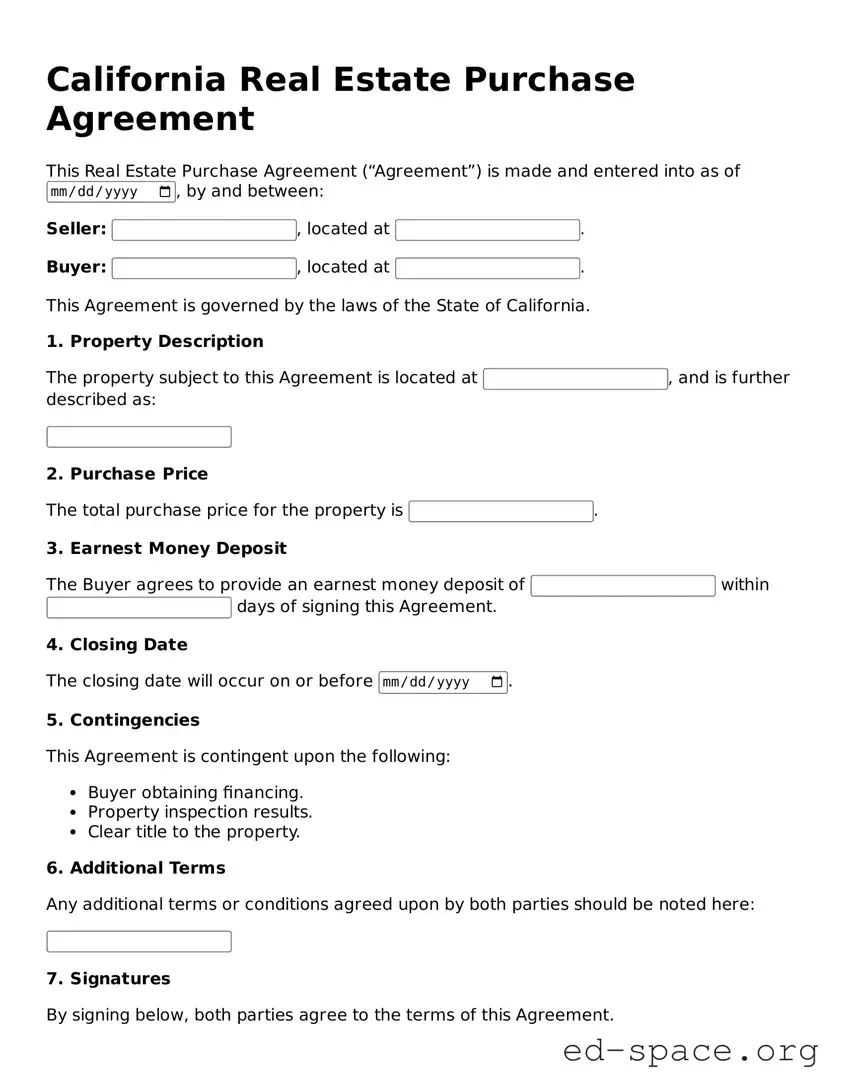
The California Real Estate Purchase Agreement form serves as a crucial document in the home buying process, outlining the terms and conditions under which a property is bought and sold. This agreement typically includes essential details such as the purchase price, the closing date, and any contingencies that must be met before the sale can proceed. It also addresses the responsibilities of both the buyer and the seller, ensuring clarity on issues like repairs, inspections, and the handling of deposits. By providing a structured framework, this form helps to protect the interests of both parties, reducing the potential for misunderstandings. Additionally, it often incorporates provisions for disclosures, allowing buyers to be informed about any known issues with the property. Understanding the key components of this agreement is vital for anyone looking to navigate the complexities of real estate transactions in California.
California Real Estate Purchase Agreement
This Real Estate Purchase Agreement (“Agreement”) is made and entered into as of , by and between:
Seller: , located at .
Buyer: , located at .
This Agreement is governed by the laws of the State of California.
1. Property Description
The property subject to this Agreement is located at , and is further described as:
2. Purchase Price
The total purchase price for the property is .
3. Earnest Money Deposit
The Buyer agrees to provide an earnest money deposit of within days of signing this Agreement.
4. Closing Date
The closing date will occur on or before .
5. Contingencies
This Agreement is contingent upon the following:
6. Additional Terms
Any additional terms or conditions agreed upon by both parties should be noted here:
7. Signatures
By signing below, both parties agree to the terms of this Agreement.
Seller's Signature: ________________________ Date:
Buyer's Signature: ________________________ Date:
This Agreement is binding upon the parties and their respective heirs, successors, and assigns.
| Fact Name | Description |
|---|---|
| Purpose | The California Real Estate Purchase Agreement form is used to outline the terms and conditions of a real estate transaction between a buyer and a seller. |
| Governing Laws | This form is governed by California state laws, particularly the California Civil Code and the California Business and Professions Code. |
| Components | The agreement typically includes details such as the purchase price, financing terms, contingencies, and closing date. |
| Signature Requirement | Both parties must sign the agreement for it to be legally binding, ensuring that all terms are accepted by the buyer and the seller. |
After gathering the necessary information, you are ready to complete the California Real Estate Purchase Agreement form. This document will guide you through the process of making an offer on a property. Carefully filling it out ensures that all parties understand the terms of the transaction.
What is a California Real Estate Purchase Agreement?
The California Real Estate Purchase Agreement is a legal document used in real estate transactions. It outlines the terms and conditions under which a buyer agrees to purchase a property from a seller. This agreement includes details such as the purchase price, financing terms, contingencies, and the closing date.
Who needs to sign the Real Estate Purchase Agreement?
Both the buyer and the seller must sign the agreement for it to be legally binding. If there are multiple buyers or sellers, all parties involved need to provide their signatures. This ensures that everyone is in agreement with the terms laid out in the document.
What are contingencies in the agreement?
Contingencies are specific conditions that must be met for the sale to proceed. Common contingencies include home inspections, financing approval, and the sale of the buyer’s current home. If these conditions are not satisfied, the buyer may have the right to withdraw from the agreement without penalties.
Can the purchase price be negotiated?
Yes, the purchase price is negotiable. Buyers and sellers can discuss and agree on a price that reflects the property’s value and market conditions. It’s common for buyers to make offers below the asking price, and negotiations may occur until both parties reach a satisfactory agreement.
What happens if either party wants to back out of the agreement?
If either party wishes to back out, they must refer to the terms outlined in the agreement. If the buyer withdraws without a valid reason, they may lose their earnest money deposit. Sellers may also face consequences if they back out without just cause, potentially leading to legal action.
How long is the Real Estate Purchase Agreement valid?
The agreement remains valid until the transaction is completed or terminated according to its terms. Typically, the document will specify a closing date, and if the transaction does not close by that date, the agreement may become void unless an extension is mutually agreed upon.
Is it necessary to have a lawyer review the agreement?
While it is not legally required to have a lawyer review the agreement, it is highly recommended. A legal professional can help ensure that your rights are protected and that the agreement complies with California laws. This step can prevent potential disputes or misunderstandings in the future.
Incorrect Names: Buyers and sellers often fail to use their full legal names. This can lead to confusion and potential legal issues.
Missing Signatures: Both parties must sign the agreement. Omitting a signature can render the contract unenforceable.
Inaccurate Property Description: A vague or incorrect description of the property can lead to disputes. It’s essential to include the correct address and any relevant details.
Improper Dates: Failing to include the correct dates for contingencies or closing can create confusion and delays in the transaction.
Ignoring Contingencies: Buyers may overlook important contingencies, such as financing or inspection. These protect the buyer's interests.
Neglecting to Disclose Information: Sellers must disclose any known issues with the property. Failure to do so can lead to legal repercussions.
Failure to Specify Purchase Price: Not clearly stating the purchase price can lead to misunderstandings and disputes later on.
Omitting Earnest Money Details: It’s important to specify the amount and terms of the earnest money deposit to avoid complications.
Not Reviewing the Entire Agreement: Some individuals skim through the document without understanding all terms and conditions, which can lead to unexpected obligations.
Using Outdated Forms: Real estate forms can change. Using an outdated version may lead to compliance issues.
When engaging in a real estate transaction in California, several important documents accompany the California Real Estate Purchase Agreement. Each of these documents plays a crucial role in ensuring that the transaction proceeds smoothly and legally. Here are some of the key forms you might encounter:
Understanding these accompanying documents is vital for anyone involved in a real estate transaction. They help protect both buyers and sellers, ensuring a fair and transparent process. Familiarity with these forms can lead to a smoother experience when navigating the complexities of real estate deals.
Lease Agreement: This document outlines the terms under which a tenant rents property from a landlord. Like a Real Estate Purchase Agreement, it specifies the parties involved, the property in question, and the obligations of each party. Both documents serve to clarify expectations and protect the interests of the involved parties.
Option to Purchase Agreement: This agreement gives a tenant the right to purchase the property they are renting at a later date. Similar to a Real Estate Purchase Agreement, it details the purchase price and terms, ensuring that both parties understand their rights and obligations regarding the potential sale.
Seller Disclosure Statement: This document requires sellers to disclose known issues with the property, such as structural problems or environmental hazards. Like the Real Estate Purchase Agreement, it aims to protect buyers by ensuring they are fully informed about the property before completing the transaction.
Real Estate Listing Agreement: This document is used between a property owner and a real estate agent to outline the terms of the agent's services in selling the property. Both agreements establish the roles and responsibilities of the parties involved, focusing on the sale of real estate and the necessary conditions for a successful transaction.
When filling out the California Real Estate Purchase Agreement form, it's essential to follow certain guidelines to ensure accuracy and compliance. Here are four things you should do and should not do:
When dealing with the California Real Estate Purchase Agreement (RPA), several misconceptions often arise. Understanding these can help buyers and sellers navigate the process more effectively.
Many believe the RPA is a one-size-fits-all document. In reality, while it provides a solid foundation, it often requires specific adjustments to fit the unique circumstances of each transaction.
Some think that the agreement is set in stone after both parties sign. However, amendments can be made if both parties agree to the changes, allowing flexibility throughout the transaction.
This misconception overlooks the balance the RPA strives to maintain. It includes provisions that safeguard the interests of both parties, ensuring fairness in the transaction.
Many assume the RPA's relevance ends once the offer is accepted. In truth, it serves as a guiding document throughout the entire process, including contingencies and closing procedures.
When filling out and using the California Real Estate Purchase Agreement form, it’s essential to understand several key points to ensure a smooth transaction. Here are some important takeaways:
By keeping these key takeaways in mind, individuals can navigate the process of filling out and using the California Real Estate Purchase Agreement form more effectively.