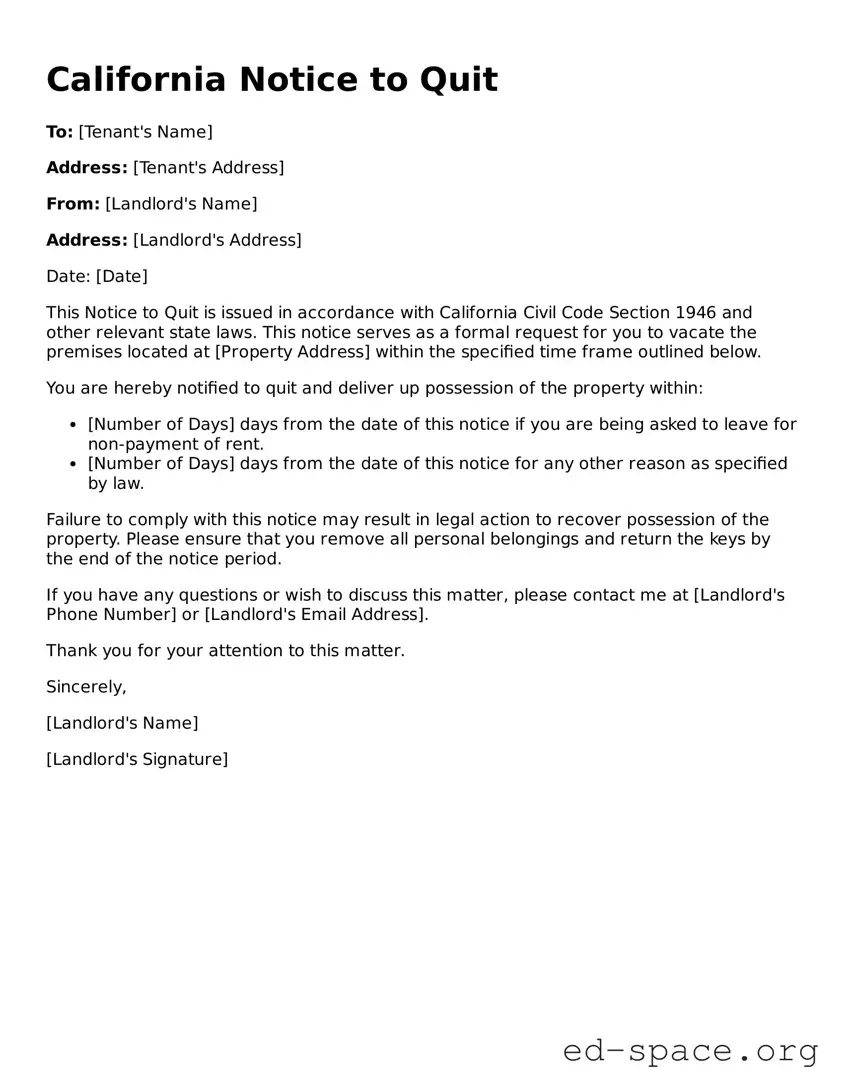
The California Notice to Quit form is a crucial document in the landlord-tenant relationship, particularly when a tenant fails to comply with the terms of their lease. This form serves as a formal notice, informing tenants that they must vacate the rental property within a specified timeframe. Typically, this notice is issued for reasons such as non-payment of rent, lease violations, or when a property is being taken off the rental market. Landlords must ensure that the notice is properly completed and delivered to avoid potential legal complications. The form outlines the reasons for eviction, the date by which the tenant must leave, and the consequences of failing to comply. Understanding the nuances of this form is essential for both landlords and tenants, as it can significantly impact the eviction process and the rights of both parties involved.
California Notice to Quit
To: [Tenant's Name]
Address: [Tenant's Address]
From: [Landlord's Name]
Address: [Landlord's Address]
Date: [Date]
This Notice to Quit is issued in accordance with California Civil Code Section 1946 and other relevant state laws. This notice serves as a formal request for you to vacate the premises located at [Property Address] within the specified time frame outlined below.
You are hereby notified to quit and deliver up possession of the property within:
Failure to comply with this notice may result in legal action to recover possession of the property. Please ensure that you remove all personal belongings and return the keys by the end of the notice period.
If you have any questions or wish to discuss this matter, please contact me at [Landlord's Phone Number] or [Landlord's Email Address].
Thank you for your attention to this matter.
Sincerely,
[Landlord's Name]
[Landlord's Signature]
| Fact Name | Details |
|---|---|
| Purpose | The California Notice to Quit form is used by landlords to inform tenants that they must vacate the rental property. |
| Governing Law | This form is governed by California Civil Code Section 1946. |
| Delivery Method | The notice can be delivered in person, via mail, or posted on the property if the tenant cannot be reached. |
| Timeframe | Tenants typically have 3, 30, or 60 days to vacate, depending on the reason for the eviction. |
| Required Information | The form must include the date, the tenant's name, the address of the rental property, and the reason for eviction. |
After completing the California Notice to Quit form, you will need to serve it to the tenant. This step is crucial, as it officially informs the tenant of the need to vacate the property. Make sure to follow the local regulations regarding service methods to ensure compliance.
What is a California Notice to Quit form?
The California Notice to Quit form is a legal document used by landlords to notify tenants that they must vacate the rental property. This notice is typically issued when a tenant has violated the terms of their lease agreement or has not paid rent. The form serves as a formal request for the tenant to leave the premises within a specified timeframe, which can vary based on the reason for the notice.
When should a landlord use a Notice to Quit?
A landlord should use a Notice to Quit when they wish to terminate a tenancy for specific reasons, such as non-payment of rent, lease violations, or the end of a lease term. For non-payment of rent, a 3-day notice is common, while other violations may require a 30-day or 60-day notice, depending on the circumstances. It is important for landlords to follow the appropriate procedures outlined in California law to ensure the notice is valid.
What information must be included in the Notice to Quit?
The Notice to Quit must include several key pieces of information. This includes the date of the notice, the address of the rental property, the reason for the eviction, and the timeframe in which the tenant must vacate. Additionally, it should contain the landlord's name and contact information. Clear and precise language is crucial to avoid misunderstandings.
How is a Notice to Quit delivered to the tenant?
A Notice to Quit can be delivered to the tenant in several ways. Common methods include personal delivery, posting the notice on the property, or sending it via certified mail. Each method has specific requirements to ensure that the tenant receives the notice. Landlords should keep a record of how and when the notice was delivered.
What happens if a tenant does not comply with the Notice to Quit?
If a tenant does not comply with the Notice to Quit, the landlord may proceed with legal action to evict the tenant. This typically involves filing an unlawful detainer lawsuit in court. The landlord must provide proof that the notice was properly served and that the tenant failed to vacate the property within the specified timeframe.
Can a tenant contest a Notice to Quit?
Yes, a tenant can contest a Notice to Quit. They may do so by responding to the unlawful detainer lawsuit in court. Tenants can present defenses, such as improper notice or disputes regarding the reasons for eviction. It is advisable for tenants to seek legal assistance to navigate the process effectively and protect their rights.
Incorrect Information About the Tenant: One common mistake is providing inaccurate details about the tenant. It’s essential to include the full name of the tenant as it appears on the lease. Omitting middle names or using nicknames can lead to confusion and may delay the eviction process.
Failure to Specify the Reason for Termination: The form requires a clear reason for the Notice to Quit. Failing to specify whether it’s due to non-payment of rent, lease violations, or other issues can result in the notice being deemed insufficient. Clarity is key.
Not Providing Proper Delivery Method: Many individuals overlook how the Notice to Quit is delivered. The law requires that it be delivered in a specific manner, such as personal delivery or posting on the property. Ignoring these requirements can invalidate the notice.
Ignoring Local Laws and Regulations: Each city in California may have its own additional requirements for eviction notices. Failing to check local laws can lead to mistakes that could prolong the eviction process. Always ensure compliance with local regulations.
The California Notice to Quit form is a crucial document in the eviction process, serving as a formal notice to a tenant to vacate a rental property. Several other forms and documents may accompany this notice, helping landlords and property managers navigate the legal landscape effectively. Below is a list of commonly used documents related to the Notice to Quit.
Understanding these documents can facilitate a smoother eviction process and help both landlords and tenants know their rights and responsibilities. Proper documentation is essential to ensure compliance with California rental laws and to protect the interests of all parties involved.
The Notice to Quit form is an important document in the landlord-tenant relationship. It serves as a formal notification that a tenant must vacate the rental property. Several other documents share similarities with the Notice to Quit form. Here are four of them:
When filling out the California Notice to Quit form, it’s important to get it right. Here’s a list of things you should and shouldn’t do.
By following these guidelines, you can ensure that your Notice to Quit is filled out properly and effectively. Clear communication is key.
Many people have misunderstandings about the California Notice to Quit form. Here are four common misconceptions:
This is not true. A Notice to Quit is a preliminary step that informs a tenant they must vacate the property. It does not mean the eviction process has begun. An actual eviction requires further legal action.
This is incorrect. In California, landlords must have a valid reason to issue a Notice to Quit, such as non-payment of rent or violation of lease terms. Personal reasons are not sufficient.
This is false. Tenants still have rights and can contest the notice. They may have options to negotiate or remedy the situation before eviction proceedings start.
This is misleading. While personal delivery is one option, landlords can also send the notice via certified mail or post it on the property, following specific legal guidelines.
Filling out and using the California Notice to Quit form is an important step for landlords seeking to terminate a tenancy. Understanding the nuances of this form can help ensure compliance with state laws and facilitate a smoother transition. Here are some key takeaways: