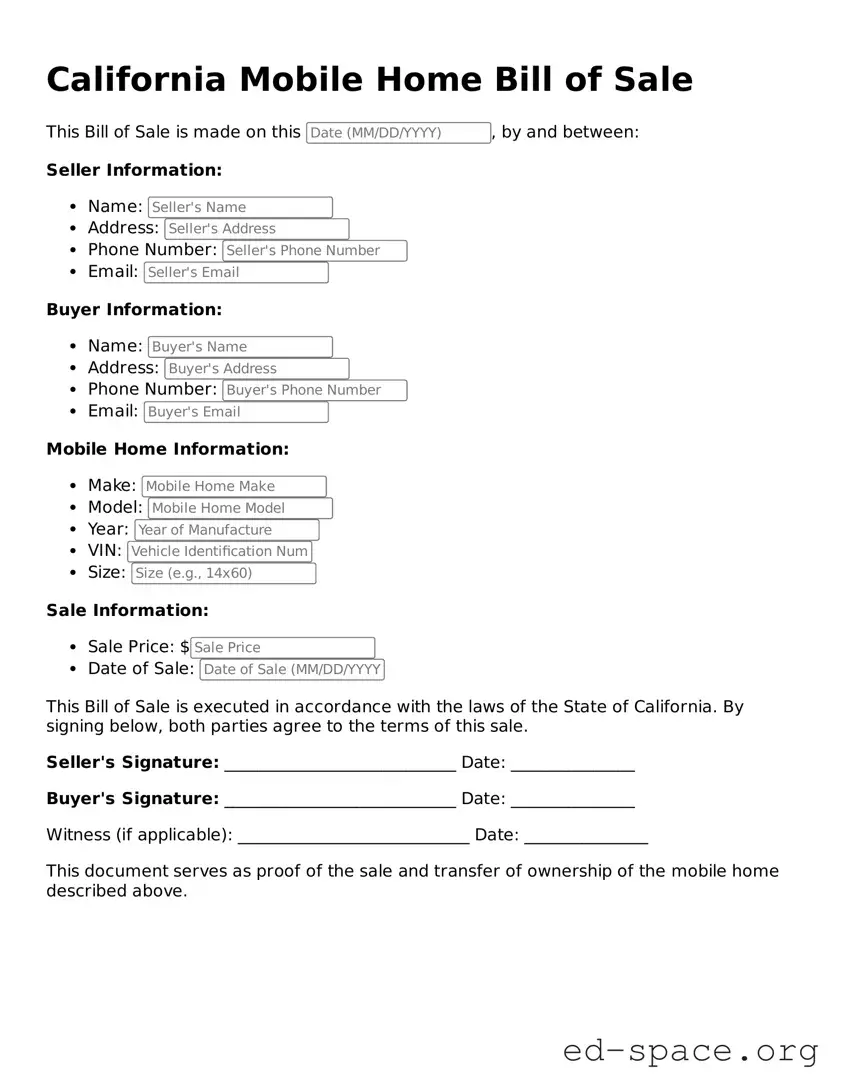
The California Mobile Home Bill of Sale form serves as a crucial document in the transfer of ownership for mobile homes within the state. This form outlines essential details such as the names and addresses of both the seller and buyer, ensuring that the transaction is transparent and traceable. It includes specific information about the mobile home itself, including its make, model, year, and Vehicle Identification Number (VIN), which helps to accurately identify the property being sold. Additionally, the form addresses the sale price and any terms of the sale, protecting both parties by clearly stating the agreed-upon conditions. To finalize the transaction, signatures from both the seller and buyer are required, affirming their consent and understanding of the terms outlined. Overall, this document not only facilitates the transfer of ownership but also serves to safeguard the rights of both parties involved in the sale.
California Mobile Home Bill of Sale
This Bill of Sale is made on this , by and between:
Seller Information:
Buyer Information:
Mobile Home Information:
Sale Information:
This Bill of Sale is executed in accordance with the laws of the State of California. By signing below, both parties agree to the terms of this sale.
Seller's Signature: ____________________________ Date: _______________
Buyer's Signature: ____________________________ Date: _______________
Witness (if applicable): ____________________________ Date: _______________
This document serves as proof of the sale and transfer of ownership of the mobile home described above.
| Fact Name | Description |
|---|---|
| Purpose | The California Mobile Home Bill of Sale form is used to transfer ownership of a mobile home from one party to another. |
| Governing Law | This form is governed by California Civil Code Section 798.1 and other relevant statutes concerning mobile home transactions. |
| Required Information | The form requires details such as the seller's and buyer's names, addresses, and the mobile home's identification number. |
| Notarization | While notarization is not always required, it is recommended to ensure the authenticity of the signatures involved in the transaction. |
Filling out the California Mobile Home Bill of Sale form is an important step in the process of transferring ownership of a mobile home. Once completed, this form will serve as a legal document that confirms the sale and outlines the details of the transaction. Here’s how to fill it out correctly.
After completing the form, keep a copy for your records. The buyer may need to present this document when registering the mobile home with the DMV. Ensure that all information is accurate to avoid any potential issues in the future.
What is a California Mobile Home Bill of Sale?
A California Mobile Home Bill of Sale is a legal document that records the sale of a mobile home. It includes important details such as the names of the buyer and seller, the purchase price, and a description of the mobile home. This document serves as proof of the transaction and can be used for title transfer and registration purposes.
Why do I need a Bill of Sale for a mobile home?
A Bill of Sale is essential for establishing ownership of the mobile home. It protects both the buyer and seller by documenting the terms of the sale. Additionally, it is often required by the Department of Motor Vehicles (DMV) to transfer the title and register the mobile home in the new owner’s name.
What information should be included in the Bill of Sale?
The Bill of Sale should include the following information: the names and addresses of both the buyer and seller, the mobile home’s make, model, year, and Vehicle Identification Number (VIN), the purchase price, the date of the sale, and any warranties or conditions agreed upon by both parties. Clear and accurate information helps prevent disputes later on.
Is the Bill of Sale required for all mobile home sales?
While a Bill of Sale is not always legally required, it is highly recommended for all mobile home sales. Having a written record of the transaction can help protect both parties and ensure a smooth transfer of ownership. In some cases, the DMV may require it for title transfer.
Can I create my own Bill of Sale, or do I need a specific form?
You can create your own Bill of Sale as long as it includes all necessary information. However, using a specific form designed for mobile home sales can simplify the process and ensure that you don’t miss any critical details. Many online resources provide templates that you can customize to fit your needs.
What should I do after completing the Bill of Sale?
After completing the Bill of Sale, both the buyer and seller should sign and date the document. Each party should keep a copy for their records. The buyer will then need to take the signed Bill of Sale to the DMV to transfer the title and register the mobile home in their name.
Are there any fees associated with the Bill of Sale?
There are typically no fees specifically for creating a Bill of Sale. However, when you go to the DMV to transfer the title and register the mobile home, there may be fees associated with those services. It’s a good idea to check with your local DMV for specific costs.
What if there are disputes after the sale?
If disputes arise after the sale, having a Bill of Sale can be very helpful. This document serves as evidence of the agreed-upon terms and can be used to resolve conflicts. If necessary, parties may seek mediation or legal advice to address any issues that come up.
Incomplete Information: One of the most common mistakes is failing to provide all required details. This includes not only the names and addresses of the buyer and seller but also the mobile home’s identification number and other essential details.
Incorrect Identification Number: It’s crucial to ensure that the mobile home’s identification number is accurate. A simple typo can lead to significant complications in the transfer process.
Missing Signatures: Both the buyer and seller must sign the form. Forgetting to include a signature can render the document invalid, delaying the sale.
Not Including the Sale Price: The sale price should be clearly stated. Omitting this information can lead to disputes or issues with taxes.
Failure to Date the Document: A date is essential for legal purposes. Without it, the timing of the transaction may be questioned, which can complicate matters down the line.
Ignoring Local Regulations: Different counties may have specific requirements for mobile home sales. Not checking local regulations can result in non-compliance and potential legal issues.
The California Mobile Home Bill of Sale form is an important document for transferring ownership of a mobile home. However, several other forms and documents are often needed to ensure a smooth transaction. Each of these documents serves a specific purpose and helps protect the interests of both the buyer and seller.
Having these documents ready can streamline the process of buying or selling a mobile home in California. It ensures that all legal requirements are met and helps both parties feel secure in their transaction.
The Mobile Home Bill of Sale form serves a specific purpose in the transfer of ownership for mobile homes. However, it shares similarities with several other documents that facilitate the sale or transfer of property. Here are seven such documents:
When filling out the California Mobile Home Bill of Sale form, it's essential to ensure accuracy and clarity. Here are some important dos and don'ts to keep in mind:
By following these guidelines, you can help ensure a smooth transaction when buying or selling a mobile home in California.
When it comes to the California Mobile Home Bill of Sale form, many people have misconceptions that can lead to confusion. Here are nine common misunderstandings:
Some believe that a Bill of Sale is optional. In reality, this document is crucial for legally transferring ownership of a mobile home.
Many think that only the seller's signature is required. However, both the buyer and seller should sign to ensure the transaction is valid.
This form serves a different purpose than a title transfer. The Bill of Sale documents the sale, while the title transfer officially changes ownership with the state.
People often assume that the process is identical for all mobile homes. However, the specifics can vary based on whether the home is on private land or in a park.
Some think the Bill of Sale is sufficient on its own. In many cases, additional documents, such as the title, are also needed to finalize the sale.
While it might seem convenient, a typed form is generally preferred to avoid any misunderstandings or misinterpretations.
Signing the Bill of Sale is just one step. The buyer must also submit the necessary paperwork to the DMV to complete the ownership transfer.
This is a common myth. New mobile home sales also require a Bill of Sale to document the transaction properly.
It’s important to retain a copy for your records. This document can serve as proof of ownership and may be needed for future transactions.
Understanding these misconceptions can help ensure that mobile home transactions in California proceed smoothly and legally.
When engaging in the sale or purchase of a mobile home in California, understanding the Mobile Home Bill of Sale form is crucial. Here are key takeaways to consider:
Understanding these key points can facilitate a smoother transaction and help both parties navigate the complexities of mobile home sales in California.