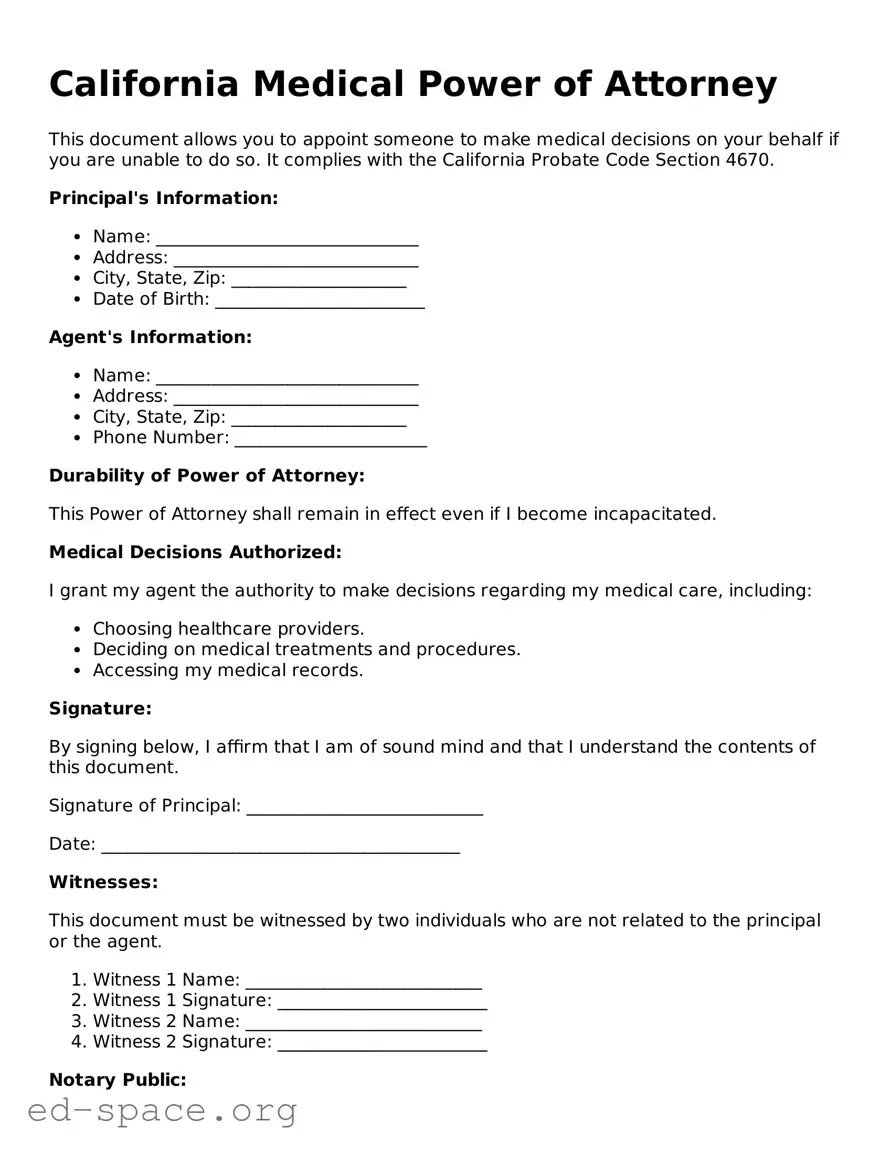
The California Medical Power of Attorney form is a crucial legal document that allows individuals to designate a trusted person to make healthcare decisions on their behalf in the event they become incapacitated. This form empowers the appointed agent to communicate with medical professionals and make choices regarding treatment options, medications, and other health-related matters. It is essential for individuals to consider their values and preferences when selecting an agent, as this person will act in their best interest during critical moments. The form also provides guidelines for the agent’s authority, ensuring that their decisions align with the principal's wishes. Additionally, the California Medical Power of Attorney can include specific instructions about end-of-life care, allowing individuals to express their desires regarding life-sustaining treatments. By completing this form, residents of California can gain peace of mind, knowing that their healthcare preferences will be honored even when they cannot voice them themselves.
California Medical Power of Attorney
This document allows you to appoint someone to make medical decisions on your behalf if you are unable to do so. It complies with the California Probate Code Section 4670.
Principal's Information:
Agent's Information:
Durability of Power of Attorney:
This Power of Attorney shall remain in effect even if I become incapacitated.
Medical Decisions Authorized:
I grant my agent the authority to make decisions regarding my medical care, including:
Signature:
By signing below, I affirm that I am of sound mind and that I understand the contents of this document.
Signature of Principal: ___________________________
Date: _________________________________________
Witnesses:
This document must be witnessed by two individuals who are not related to the principal or the agent.
Notary Public:
Optional: This document may also be notarized for additional validity.
Notary Signature: _____________________________
Date: ______________________________________
| Fact Name | Description |
|---|---|
| Purpose | The California Medical Power of Attorney form allows individuals to designate someone to make healthcare decisions on their behalf if they become unable to do so. |
| Governing Laws | This form is governed by the California Probate Code, specifically Sections 4650-4690. |
| Signing Requirements | The form must be signed by the principal (the person granting authority) in the presence of a notary public or two witnesses. |
| Revocation | Individuals can revoke the Medical Power of Attorney at any time as long as they are mentally competent, by notifying the agent or by completing a new form. |
| Durability | The authority granted in this form remains effective even if the principal becomes incapacitated, unless specified otherwise. |
Filling out the California Medical Power of Attorney form is a straightforward process that enables you to designate someone to make medical decisions on your behalf if you are unable to do so. After completing the form, you will need to ensure it is signed and witnessed properly to make it legally valid.
What is a California Medical Power of Attorney?
A California Medical Power of Attorney is a legal document that allows you to designate someone to make medical decisions on your behalf if you become unable to do so. This person, known as your agent or healthcare proxy, will have the authority to make choices about your medical treatment, including surgeries, medications, and other healthcare services, based on your wishes and best interests.
Who can be my agent in a Medical Power of Attorney?
Your agent can be anyone you trust to make healthcare decisions for you. This could be a family member, close friend, or even a trusted advisor. However, it's important to note that certain individuals, such as your healthcare provider or an employee of your healthcare provider, may not serve as your agent unless they are related to you.
How do I create a Medical Power of Attorney in California?
Creating a Medical Power of Attorney in California involves a few key steps. First, you need to fill out the appropriate form, which you can find online or through healthcare providers. Once completed, you must sign the document in the presence of a notary public or two witnesses. These witnesses cannot be your agent or related to you by blood or marriage. After signing, give copies to your agent, your healthcare provider, and keep one for your records.
Can I revoke or change my Medical Power of Attorney?
Yes, you can revoke or change your Medical Power of Attorney at any time as long as you are mentally competent. To revoke it, you should create a written statement indicating your intent to revoke the document. Inform your agent and healthcare providers of the change. If you wish to make changes, you can create a new Medical Power of Attorney form that supersedes the previous one.
What happens if I don’t have a Medical Power of Attorney?
If you do not have a Medical Power of Attorney and become unable to make your own medical decisions, your family members or loved ones may have to go through a legal process to establish guardianship or conservatorship. This can be time-consuming and may not reflect your personal wishes regarding healthcare decisions.
Is a Medical Power of Attorney the same as an Advance Healthcare Directive?
While they are related, a Medical Power of Attorney and an Advance Healthcare Directive are not the same. A Medical Power of Attorney specifically appoints someone to make decisions on your behalf, whereas an Advance Healthcare Directive outlines your preferences for medical treatment and care. You can include both in one document or keep them separate, depending on your needs.
When does my Medical Power of Attorney take effect?
Your Medical Power of Attorney typically takes effect when your physician determines that you are unable to make your own medical decisions. This could be due to a serious illness, injury, or any condition that affects your mental capacity. It’s important to communicate your wishes with your agent and ensure they understand your healthcare preferences.
Not Naming an Alternate Agent: Many individuals forget to name an alternate agent. If the primary agent cannot act, this could lead to delays in medical decisions.
Leaving Sections Blank: Some people leave sections blank, thinking they can fill them in later. This can lead to confusion and may invalidate the document.
Using Inappropriate Language: Using vague or unclear language can create misunderstandings about the intended wishes. Clear and direct language is essential.
Not Signing in Front of Witnesses: Failing to sign the document in front of the required witnesses can render it ineffective. Make sure to follow the signing requirements closely.
Not Dating the Document: Forgetting to include the date can cause issues later. A date is crucial for verifying when the document was executed.
Overlooking State-Specific Requirements: Each state has its own rules. Ignoring California's specific requirements can lead to complications.
Failing to Discuss Wishes with the Agent: Not having a conversation with the appointed agent about your wishes can lead to decisions that do not reflect your desires.
Not Updating the Document: Life changes, and so do preferences. Failing to update the document after significant life events can result in outdated decisions.
Assuming All Medical Decisions Are Covered: Some individuals think that all medical decisions are automatically included. It’s important to specify the types of decisions the agent can make.
When creating a California Medical Power of Attorney, it is often beneficial to consider other related documents that can complement this form. Each of these documents serves a unique purpose and can help ensure that your medical preferences are respected and that your wishes are clearly communicated.
By considering these additional documents, individuals can create a more comprehensive plan for their medical care. This can provide peace of mind for both you and your loved ones, ensuring that your healthcare preferences are known and respected.
The Medical Power of Attorney form shares similarities with several other legal documents. Each serves a specific purpose in managing health care decisions or personal affairs. Below are seven documents that are comparable to the Medical Power of Attorney:
When filling out the California Medical Power of Attorney form, it's essential to approach the task with care and attention. Here are some helpful tips on what you should and shouldn't do:
By following these guidelines, you can ensure that your Medical Power of Attorney accurately reflects your wishes and provides clarity during critical moments.
When it comes to the California Medical Power of Attorney (MPOA) form, there are several misconceptions that can lead to confusion. Understanding these myths can help ensure that individuals make informed decisions regarding their healthcare choices. Here are nine common misconceptions:
By addressing these misconceptions, individuals can better understand the importance of having a Medical Power of Attorney and ensure their healthcare wishes are respected.
Filling out and using the California Medical Power of Attorney form is an important step in ensuring that your healthcare preferences are respected. Here are some key takeaways to consider: