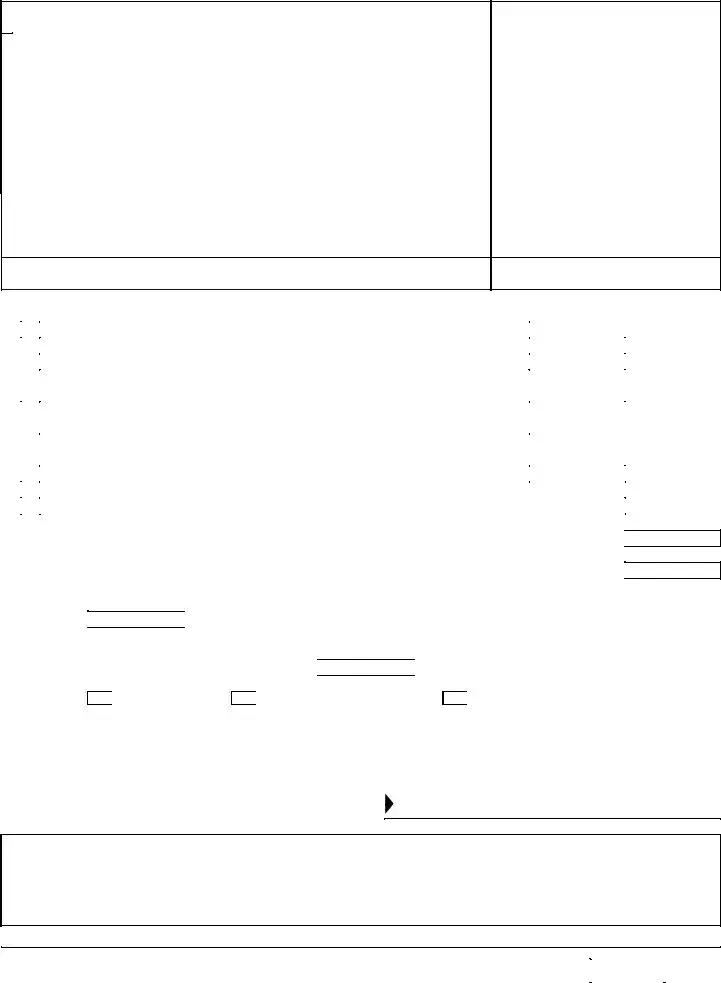
The California MC-012 form serves a crucial role in the post-judgment process, allowing creditors to formally claim costs associated with enforcing a judgment. This document is essential for those who have successfully obtained a judgment in court and now seek to recover expenses incurred during the collection process. It includes various categories of costs, such as fees for preparing and issuing abstracts of judgment, recording liens, and attorney fees. Additionally, the form provides a space for acknowledging any credits received and declaring accrued interest on the judgment amount. By submitting the MC-012, creditors can clearly outline their claims and ensure that all necessary information is presented to the court. This helps streamline the enforcement of judgments and clarifies the financial obligations of the debtor. Understanding how to accurately complete this form is vital for anyone involved in the post-judgment phase, as it lays the groundwork for recovering owed amounts effectively.
ATTORNEY OR PARTY WITHOUT ATTORNEY (Name, state bar number, and address): |
FOR COURT USE ONLY |
TELEPHONE NO.: |
FAX NO.: |
ATTORNEY FOR (Name): |
|
|
|
NAME OF COURT: |
|
STREET ADDRESS: |
|
MAILING ADDRESS: |
|
CITY AND ZIP CODE: |
|
BRANCH NAME: |
|
|
|
PLAINTIFF: |
|
DEFENDANT: |
|
MEMORANDUM OF COSTS AFTER JUDGMENT, ACKNOWLEDGMENT |
CASE NUMBER: |
OF CREDIT, AND DECLARATION OF ACCRUED INTEREST |
|
1. I claim the following costs after judgment incurred within the last two years (indicate if there |
|
|
|||
|
are multiple items in any category): |
|
Dates Incurred |
Amount |
|
|
a |
Preparing and issuing abstract of judgment |
|
|
$ |
|
b |
Recording and indexing abstract of judgment |
|
|
$ |
|
c |
Filing notice of judgment lien on personal property |
|
|
$ |
|
d |
Issuing writ of execution, to extent not satisfied by Code Civ. Proc., § 685.050 |
|
$ |
|
|
|
(specify county): |
|
|
|
|
e |
Levying officer's fees, to extent not satisfied by Code Civ. Proc., § 685.050 or wage |
|
|
|
|
|
garnishment |
|
|
$ |
|
f |
Approved fee on application for order for appearance of judgment debtor, or other |
|
$ |
|
|
|
approved costs under Code Civ. Proc., § 708.010 et seq. |
|
|
|
|
|
|
|
|
|
|
g |
Attorney fees, if allowed by Code Civ. Proc., § 685.040 |
|
|
$ |
|
h |
Other: |
(Statute authorizing cost): |
|
$ |
|
i |
Total of claimed costs for current memorandum of costs (add items |
|
$ |
|
2. All previously allowed postjudgment costs: . . . . . . . . . . . . . . . . . . . . . . . . . . . . . . . . . . . . . . . . . . . . . . . . . . . . . . . $
3. Total of all postjudgment costs (add items 1 and 2): . . . . . . . . . . . . . . . . . . . . . . . . . . . . . . . . . . . . . . . . . .TOTAL $
4. Acknowledgment of Credit. I acknowledge total credit to date (including returns on levy process and direct payments) in the amount of: $
5. Declaration of Accrued Interest. Interest on the judgment accruing at the legal rate from the date of entry on balances due after partial satisfactions and other credits in the amount of: $
6. I am the
judgment creditor
agent for the judgment creditor
attorney for the judgment creditor.
I have knowledge of the facts concerning the costs claimed above. To the best of my knowledge and belief, the costs claimed are correct, reasonable, and necessary, and have not been satisfied.
I declare under penalty of perjury under the laws of the State of California that the foregoing is true and correct.
Date:
. . . . . . . . . . . . . . . . . . . . . . . . . . . . . .
(TYPE OR PRINT NAME) |
(SIGNATURE OF DECLARANT) |
NOTICE TO THE JUDGMENT DEBTOR
If this memorandum of costs is filed at the same time as an application for a writ of execution, any statutory costs, not exceeding $100 in aggregate and not already allowed by the court, may be included in the writ of execution. The fees sought under this memorandum may be disallowed by the court upon a motion to tax filed by the debtor, notwithstanding the fees having been included in the writ of execution. (Code Civ. Proc., § 685.070(e).) A motion to tax costs claimed in this memorandum must be filed within 10 days after service of the memorandum. (Code Civ. Proc., § 685.070(c).)
(Proof of service on reverse)
Form Adopted for Mandatory Use
Judicial Council of California
MEMORANDUM OF COSTS AFTER JUDGMENT, ACKNOWLEDGMENT
OF CREDIT, AND DECLARATION OF ACCRUED INTEREST
Code of Civil Procedure,
WEST GROUP |
§ 685.070 |
OFFICIAL PUBLISHER |
|
|
|
|
|
SHORT TITLE:
CASE NUMBER:
PROOF OF SERVICE
|
Personal Service |
1.At the time of service I was at least 18 years of age and not a party to this legal action.
2.My residence or business address is (specify):
3.I mailed or personally delivered a copy of the Memorandum of Costs After Judgment, Acknowledgment of Credit, and Declaration of Accrued Interest as follows (complete either a or b):
a. |
|
Mail. I am a resident of or employed in the county where the mailing occurred. |
|||
|
|||||
|
(1) |
I enclosed a copy in an envelope AND |
|||
|
|
|
(a) |
|
deposited the sealed envelope with the United States Postal Service with the postage fully prepaid. |
|
|
|
|
|
|
|
|
|
(b) |
|
placed the envelope for collection and mailing on the date and at the place shown in items below following |
|
|
|
|
|
our ordinary business practices. I am readily familiar with this business's practice for collecting and processing |
|
|
|
|
|
correspondence for mailing. On the same day that correspondence is placed for collection and mailing, it is |
|
|
|
|
|
deposited in the ordinary course of business with the United States Postal Service in a sealed envelope with |
|
|
|
|
|
postage fully prepaid. |
|
(2) |
The envelope was addressed and mailed as follows: |
|||
|
|
|
(a) Name of person served: |
||
|
|
|
(b) |
Address on envelope: |
|
|
|
|
(c) |
Date of mailing: |
|
|
|
|
(d) |
Place of mailing (city and state): |
|
|
|
|
|||
b. |
|
Personal delivery. I personally delivered a copy as follows: |
|||
|
(1) |
Name of person served: |
|||
|
(2) |
Address where delivered: |
|||
|
(3) |
Date delivered: |
|||
|
(4) |
Time delivered: |
|||
I declare under penalty of perjury under the laws of the State of California that the foregoing is true and correct.
Date:
. . . . . . . . . . . . . . . . . . . . . . . . . . . . . .
(TYPE OR PRINT NAME) |
(SIGNATURE OF DECLARANT) |
MEMORANDUM OF COSTS AFTER JUDGMENT, ACKNOWLEDGMENT
OF CREDIT, AND DECLARATION OF ACCRUED INTEREST
WEST GROUP
OFFICIAL PUBLISHER
Page two
| Fact Name | Details |
|---|---|
| Purpose | The MC-012 form is used to claim costs incurred after a judgment has been entered, including acknowledgment of credit and declaration of accrued interest. |
| Governing Law | This form is governed by the California Code of Civil Procedure, specifically sections 685.040 and 685.070. |
| Timeframe for Claims | Costs can be claimed if they were incurred within the last two years from the date of filing the form. |
| Signature Requirement | The form must be signed by the judgment creditor, their agent, or their attorney, affirming the accuracy of the claimed costs. |
| Filing with Writ of Execution | If filed alongside a writ of execution, statutory costs not exceeding $100 may be included. |
| Motion to Tax Costs | The judgment debtor can file a motion to tax costs within 10 days after being served with the memorandum. |
| Form Revision Date | The MC-012 form was last revised on January 1, 2000, and is adopted for mandatory use by the Judicial Council of California. |
Completing the California MC-012 form is an essential step in documenting your costs after a judgment. This process involves providing specific details about the costs incurred and acknowledging any credits. Following these steps will help ensure that you fill out the form accurately and completely.
What is the California MC-012 form used for?
The California MC-012 form, known as the Memorandum of Costs After Judgment, Acknowledgment of Credit, and Declaration of Accrued Interest, is primarily used by a judgment creditor to claim costs incurred after a judgment has been issued. This form allows creditors to detail the expenses related to enforcing a judgment, including filing fees, attorney fees, and other costs. By submitting this form, creditors can formally request reimbursement for these costs from the judgment debtor.
Who should fill out the MC-012 form?
The MC-012 form should be filled out by the judgment creditor or their representative, such as an attorney. It is essential for the person completing the form to have knowledge of the costs being claimed. This ensures that the information provided is accurate and reflects the true expenses incurred in the enforcement of the judgment.
What types of costs can be included in the MC-012 form?
Several types of costs can be claimed on the MC-012 form. These include fees for preparing and issuing an abstract of judgment, recording and indexing the judgment, filing notices of judgment liens, issuing writs of execution, and attorney fees, among others. Each cost must be clearly itemized with the date incurred and the amount. Additionally, any previously allowed post-judgment costs should also be included in the total claimed.
What happens after the MC-012 form is filed?
Once the MC-012 form is filed with the court, it becomes part of the official court record. If filed alongside an application for a writ of execution, certain statutory costs may be included in the writ. However, the judgment debtor has the right to challenge these costs. They can file a motion to tax costs within 10 days of being served with the memorandum, potentially leading to a court review of the claimed expenses.
Is there a deadline for filing the MC-012 form?
While there is no specific deadline for filing the MC-012 form itself, it is important to consider the timing in relation to other legal actions, such as an application for a writ of execution. If you intend to include costs in a writ, it is advisable to file the MC-012 form simultaneously. Additionally, if the judgment debtor wishes to contest the costs, they must do so within 10 days of service, making timely filing crucial.
What should I do if I have questions about completing the MC-012 form?
If you have questions about filling out the MC-012 form, it is wise to consult with a legal professional. They can provide guidance on how to accurately report costs and ensure compliance with legal requirements. Additionally, many court clerks can offer basic assistance regarding the form, although they cannot provide legal advice. Seeking help can clarify any uncertainties and help avoid potential issues down the line.
Incomplete Information: Failing to fill out all required fields can lead to delays. Ensure that every section is completed, including names, addresses, and case numbers.
Incorrect Dates: Entering the wrong dates for incurred costs is a common mistake. Double-check that the dates correspond to when the costs were actually incurred.
Missing Signatures: Omitting the signature of the declarant can invalidate the form. Always ensure that the form is signed before submission.
Incorrect Amounts: Miscalculating the total costs can lead to issues. Carefully add up all claimed costs and verify that the total is accurate.
Neglecting to Provide Supporting Documentation: Not including necessary documentation for claimed costs can cause the court to question the validity of the claims. Attach any relevant receipts or proof of expenses.
Failure to Acknowledge Credits: Not acknowledging any credits received can misrepresent the total owed. Make sure to accurately reflect any payments or credits in the form.
Ignoring Deadlines: Submitting the form after the deadline can lead to rejection. Be aware of any time limits for filing the memorandum and adhere to them strictly.
The California MC-012 form is essential for documenting costs after a judgment has been made. However, several other forms and documents are often used in conjunction with it. Each of these plays a significant role in the legal process, ensuring that all necessary information is properly recorded and communicated.
Using these forms alongside the MC-012 helps to streamline the process of enforcing a judgment and ensures that all parties are adequately informed and represented. Understanding each document's purpose can greatly assist in navigating post-judgment procedures effectively.
The California MC-012 form is essential for documenting costs after a judgment. It has similarities with several other legal documents. Here are four documents that share common features with the MC-012 form:
When filling out the California MC-012 form, it's important to follow specific guidelines to ensure your submission is accurate and complete. Here are six things you should and shouldn't do:
Following these guidelines will help ensure that your MC-012 form is processed smoothly. Take the time to review your submission before filing to avoid potential issues.
Understanding the California MC-012 form is crucial for anyone involved in post-judgment proceedings. However, several misconceptions can lead to confusion. Here are seven common misunderstandings about this form:
Clarifying these misconceptions can help individuals navigate the post-judgment process more effectively. It is essential to approach the MC-012 form with accurate information to avoid potential pitfalls.
When filling out and using the California MC-012 form, there are several important considerations to keep in mind: