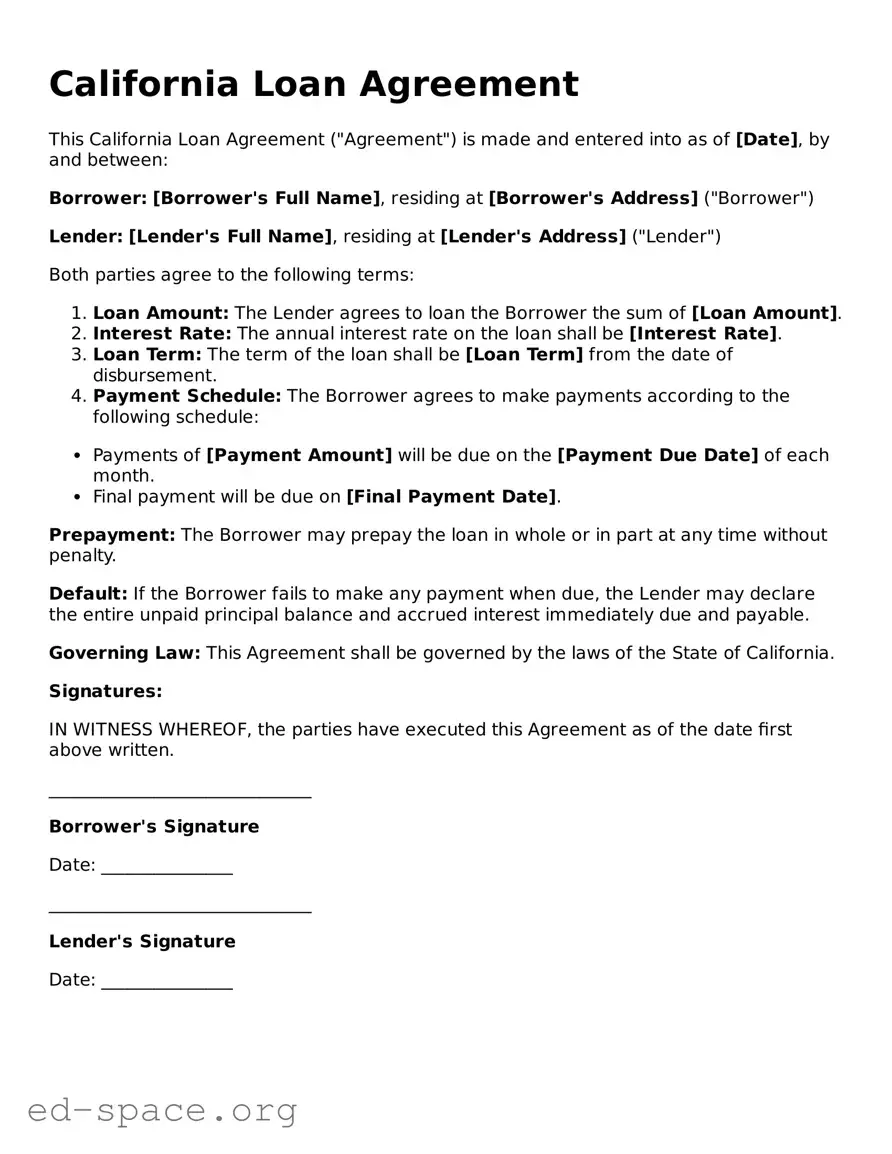
In California, a Loan Agreement form serves as a crucial document for individuals and businesses seeking to formalize a loan arrangement. This form outlines the terms and conditions under which the lender provides funds to the borrower, ensuring that both parties have a clear understanding of their responsibilities. Key components of the agreement include the loan amount, interest rate, repayment schedule, and any applicable fees. Additionally, it may detail the consequences of defaulting on the loan, providing protections for both the lender and the borrower. By addressing these elements, the Loan Agreement form helps to prevent misunderstandings and disputes, fostering a transparent relationship between the parties involved. Understanding this form is essential for anyone considering a loan in California, as it lays the groundwork for a successful financial transaction.
California Loan Agreement
This California Loan Agreement ("Agreement") is made and entered into as of [Date], by and between:
Borrower: [Borrower's Full Name], residing at [Borrower's Address] ("Borrower")
Lender: [Lender's Full Name], residing at [Lender's Address] ("Lender")
Both parties agree to the following terms:
Prepayment: The Borrower may prepay the loan in whole or in part at any time without penalty.
Default: If the Borrower fails to make any payment when due, the Lender may declare the entire unpaid principal balance and accrued interest immediately due and payable.
Governing Law: This Agreement shall be governed by the laws of the State of California.
Signatures:
IN WITNESS WHEREOF, the parties have executed this Agreement as of the date first above written.
______________________________
Borrower's Signature
Date: _______________
______________________________
Lender's Signature
Date: _______________
| Fact Name | Details |
|---|---|
| Purpose | The California Loan Agreement form outlines the terms and conditions of a loan between a lender and a borrower. |
| Governing Law | This form is governed by California state law, specifically the California Civil Code. |
| Parties Involved | The agreement includes the lender and the borrower, both of whom must provide identifying information. |
| Loan Amount | The form specifies the total amount of money being borrowed. |
| Interest Rate | The agreement details the interest rate applicable to the loan, which must comply with state regulations. |
| Repayment Terms | It outlines the repayment schedule, including due dates and methods of payment. |
| Default Consequences | The form explains the consequences if the borrower defaults on the loan, including potential legal actions. |
Filling out the California Loan Agreement form requires attention to detail and accuracy. Once completed, this form will serve as a binding contract between the parties involved, outlining the terms of the loan. It’s important to ensure that all information is correct before submitting the form.
What is a California Loan Agreement form?
The California Loan Agreement form is a legal document that outlines the terms and conditions of a loan between a lender and a borrower. It specifies the amount of money being borrowed, the interest rate, repayment schedule, and any collateral involved. This form serves to protect both parties by clearly defining their rights and responsibilities. By having a written agreement, misunderstandings can be minimized, and both parties have a reference point in case of disputes.
Who should use a California Loan Agreement form?
This form is suitable for individuals or businesses looking to formalize a loan arrangement. Whether you are lending money to a friend, family member, or a business, having a written agreement is advisable. It is particularly important for larger sums of money or when the terms of the loan are complex. By using this form, all parties involved can ensure clarity and legal protection.
What are the key components of a California Loan Agreement?
A comprehensive California Loan Agreement typically includes several essential elements. First, it identifies the parties involved, including their names and contact information. Next, it specifies the loan amount, interest rate, and repayment terms, including due dates. Additionally, the agreement may outline any fees, penalties for late payments, and the consequences of default. Lastly, it may include a section on governing law, which indicates that California law will apply to the agreement.
Is it necessary to have a lawyer review the California Loan Agreement?
Incomplete Information: Many people forget to fill in all required fields. Missing information can delay the loan process or even lead to rejection.
Incorrect Personal Details: Errors in names, addresses, or Social Security numbers can cause significant issues. Always double-check these details for accuracy.
Failure to Read Terms: Some individuals rush through the agreement without fully understanding the terms. This can lead to unexpected obligations or fees.
Not Providing Supporting Documents: Many forget to include necessary documentation, such as proof of income or employment. This can hinder the approval process.
Ignoring Interest Rates: Not paying attention to the interest rates listed can lead to financial surprises later. Ensure you understand how these rates affect your repayment.
Missing Signatures: Failing to sign the agreement or having all parties sign can invalidate the document. Every required signature is crucial for legal validity.
Not Keeping Copies: After submission, some do not retain a copy of the signed agreement. Keeping a record is essential for future reference and accountability.
Overlooking Contact Information: Providing incorrect or outdated contact information can lead to communication issues. Ensure that your phone number and email address are current.
Assuming All Loan Agreements Are the Same: Each loan agreement can differ significantly. It's important to treat each one as unique and review it carefully.
When entering into a loan agreement in California, several other forms and documents may be required to ensure clarity and legal compliance. Understanding these documents can help both lenders and borrowers navigate the process more smoothly.
Being aware of these documents can empower both parties in the loan process. Each document serves a specific purpose and contributes to a clear understanding of the agreement between the lender and borrower.
Promissory Note: This document outlines the borrower's promise to repay a specific amount of money, detailing the interest rate and repayment schedule. Like a loan agreement, it establishes the terms of the loan but is typically simpler and focuses on the borrower's commitment.
Mortgage Agreement: This document secures a loan with real property as collateral. It shares similarities with a loan agreement in that it specifies the loan amount, interest rate, and repayment terms, but it also includes details about the property being used as security.
Personal Guarantee: This document involves a third party agreeing to repay the loan if the borrower defaults. It resembles a loan agreement by outlining the obligations of the guarantor and the terms of the loan, providing additional security for the lender.
Credit Agreement: This document governs the terms of a line of credit. Similar to a loan agreement, it details the borrowing limits, interest rates, and repayment conditions, but it allows for more flexible borrowing as funds can be drawn upon as needed.
Security Agreement: This document provides a lender with a security interest in collateral. It parallels a loan agreement by detailing the loan terms and conditions, while also specifying the assets that secure the loan, offering protection to the lender in case of default.
When filling out the California Loan Agreement form, it is essential to approach the task with care and attention to detail. Here are some important guidelines to follow:
By following these guidelines, you can help ensure a smoother experience when dealing with your loan agreement. Remember, attention to detail is crucial in these matters.
Misconceptions about the California Loan Agreement form can lead to confusion for borrowers and lenders alike. Here are ten common misunderstandings:
This is incorrect. The California Loan Agreement form can be used for loans of any size, whether small personal loans or larger business loans.
Not all loan agreements require notarization. While some lenders may prefer notarized documents for added security, it is not a legal requirement for every loan agreement in California.
This misconception overlooks the fact that different types of loans may require specific terms and conditions. The California Loan Agreement form can be tailored to fit the nature of the loan being made.
While it is true that a signed agreement is binding, parties can mutually agree to modify the terms of the loan. Changes should be documented in writing to ensure clarity.
This belief is misleading. Both parties have rights and responsibilities outlined in the agreement. A well-structured loan agreement protects the interests of both the borrower and the lender.
In reality, interest rates can often be negotiated before the agreement is signed. Borrowers should feel empowered to discuss and seek favorable terms.
Loan repayment terms can vary widely. The California Loan Agreement form allows parties to establish a repayment schedule that suits their needs, which may include flexible timelines.
This is a serious misconception. Defaulting on a loan can lead to legal action, including potential lawsuits or damage to credit scores. Borrowers should understand the implications of non-payment.
While it is highly advisable to have a written agreement, verbal agreements can also be legally binding under certain circumstances. However, having a written document is recommended for clarity and enforcement.
This is not true. Borrowers can also propose terms for a loan agreement. Both parties can initiate discussions and negotiate terms that are acceptable to them.
When filling out and using the California Loan Agreement form, there are several important points to keep in mind. Here are five key takeaways: