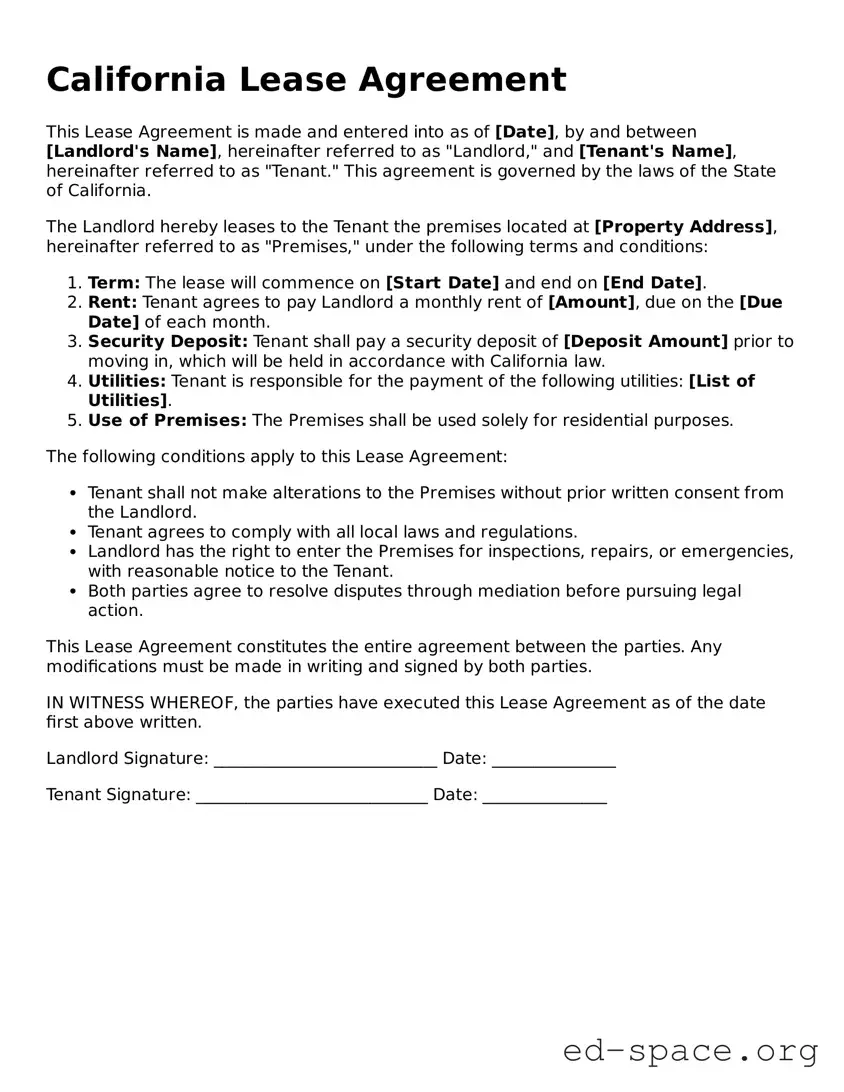
The California Lease Agreement form is a crucial document for both landlords and tenants in the rental process. It outlines the terms and conditions under which a property is leased, ensuring that both parties understand their rights and obligations. Key aspects of the form include the rental amount, payment due dates, and the duration of the lease. Additionally, it addresses security deposits, maintenance responsibilities, and rules regarding pets and alterations to the property. The agreement also specifies the process for resolving disputes and the conditions under which the lease may be terminated. By clearly defining these elements, the California Lease Agreement helps to foster a transparent and respectful landlord-tenant relationship, ultimately contributing to a more stable rental market in the state.
California Lease Agreement
This Lease Agreement is made and entered into as of [Date], by and between [Landlord's Name], hereinafter referred to as "Landlord," and [Tenant's Name], hereinafter referred to as "Tenant." This agreement is governed by the laws of the State of California.
The Landlord hereby leases to the Tenant the premises located at [Property Address], hereinafter referred to as "Premises," under the following terms and conditions:
The following conditions apply to this Lease Agreement:
This Lease Agreement constitutes the entire agreement between the parties. Any modifications must be made in writing and signed by both parties.
IN WITNESS WHEREOF, the parties have executed this Lease Agreement as of the date first above written.
Landlord Signature: ___________________________ Date: _______________
Tenant Signature: ____________________________ Date: _______________
| Fact Name | Details |
|---|---|
| Governing Law | The California Lease Agreement is governed by California Civil Code Sections 1940-1954. |
| Written Requirement | Lease agreements longer than one year must be in writing to be enforceable. |
| Security Deposit Limits | California law limits security deposits to two months' rent for unfurnished properties and three months' rent for furnished ones. |
| Disclosure Obligations | Landlords must provide specific disclosures, such as lead paint hazards for properties built before 1978. |
| Rent Control | Some cities in California have rent control laws that may affect lease agreements. |
| Tenant Rights | Tenants have the right to habitable living conditions, which landlords must maintain. |
| Termination Notice | Landlords must provide a written notice of 30 days for month-to-month leases to terminate the agreement. |
Filling out the California Lease Agreement form is a straightforward process that requires attention to detail. Each section of the form must be completed accurately to ensure clarity and legality in the rental arrangement. Below are the steps to guide you through the process.
After completing these steps, review the entire form for accuracy. It is important to keep a copy of the signed lease for both parties. This ensures that everyone is clear on the terms and conditions of the rental agreement.
What is a California Lease Agreement?
A California Lease Agreement is a legally binding contract between a landlord and a tenant that outlines the terms and conditions of renting a residential property in California. This document typically includes details such as the duration of the lease, rent amount, security deposit requirements, and rules regarding property maintenance and tenant responsibilities. It serves to protect the rights of both parties and ensures clarity in the rental relationship.
What are the key components of a California Lease Agreement?
Key components of a California Lease Agreement include the names of the landlord and tenant, the property address, the lease term (whether it’s a fixed-term lease or month-to-month), the rental amount, payment due dates, security deposit details, and maintenance responsibilities. Additionally, it may cover rules about pets, smoking, and alterations to the property. Having all these elements clearly defined helps prevent misunderstandings later on.
How long is a typical lease term in California?
In California, lease terms can vary widely. A typical fixed-term lease often lasts for one year, but it can also be shorter or longer, depending on the agreement between the landlord and tenant. Month-to-month leases are also common, allowing for greater flexibility. However, it’s important to note that the terms should be clearly stated in the lease agreement to avoid any confusion.
Can a landlord increase the rent during the lease term?
Generally, a landlord cannot increase the rent during the lease term unless the lease agreement specifically allows for it. For month-to-month agreements, California law requires landlords to provide proper notice before increasing rent, typically 30 days for increases up to 10% and 90 days for larger increases. Always check the terms of your lease and local laws to understand your rights regarding rent increases.
What happens if a tenant wants to break the lease early?
If a tenant wishes to break the lease early, they should first review the lease agreement for any specific terms regarding early termination. Many leases include a clause that outlines the process and potential penalties for breaking the lease. In California, tenants may also have legal grounds to break a lease without penalty under certain circumstances, such as unsafe living conditions or domestic violence situations. It’s advisable to communicate with the landlord and seek a mutual agreement to avoid legal complications.
Incomplete Information: Many individuals fail to provide all necessary details. This includes not filling out the names of all tenants or neglecting to include the landlord's contact information. Incomplete forms can lead to confusion and disputes later on.
Incorrect Dates: Entering the wrong start and end dates for the lease is a common error. This mistake can create misunderstandings about when the lease is valid, potentially leading to issues with occupancy or rental payments.
Missing Signatures: Both the landlord and tenants must sign the lease agreement. Forgetting to obtain all necessary signatures can render the lease unenforceable, leaving both parties without legal protection.
Ignoring Local Laws: California has specific laws regarding lease agreements. Failing to comply with these regulations can result in legal complications. For instance, the lease must include certain disclosures, such as information about lead paint in older buildings.
Not Specifying Terms Clearly: Vague terms regarding rent, security deposits, or maintenance responsibilities can lead to misunderstandings. It’s crucial to clearly outline each party's obligations to avoid disputes in the future.
Overlooking Additional Clauses: Many people neglect to include important clauses, such as pet policies or rules about subletting. These details are vital for setting clear expectations and preventing conflicts during the lease term.
When entering into a lease agreement in California, several additional documents may be necessary to ensure clarity and legal compliance. These documents serve various purposes, from outlining the responsibilities of both parties to providing essential information about the property. Below is a list of commonly used forms that accompany the California Lease Agreement.
These documents are essential for establishing a clear understanding between landlords and tenants. By utilizing them, both parties can protect their rights and responsibilities, fostering a more harmonious rental experience.
When filling out the California Lease Agreement form, it’s important to be careful and thorough. Here’s a list of things to do and avoid:
By following these tips, you can help ensure a smooth leasing process. Good luck!
When it comes to California lease agreements, there are several misconceptions that can lead to confusion for both landlords and tenants. Understanding these myths is crucial for anyone involved in the rental market. Here’s a list of common misconceptions:
By dispelling these misconceptions, landlords and tenants can navigate lease agreements more effectively, ensuring a smoother rental experience.
When filling out and using the California Lease Agreement form, it is essential to understand several key aspects to ensure clarity and compliance. Here are five important takeaways:
By keeping these points in mind, both landlords and tenants can create a clear and effective lease agreement that serves the needs of all parties involved.