The California JV-472 form plays a crucial role in the process of reentering foster care for nonminors who have previously been under juvenile court jurisdiction. This form is utilized by the Superior Court of California to document findings and orders after a hearing where a nonminor seeks to resume foster care placement. The form captures essential details, including the names of parties involved, the judicial officer presiding over the case, and the specific circumstances surrounding the nonminor's request. Key findings made by the court can include whether the nonminor is under 21 years of age, their intentions to meet certain conditions under the Welfare and Institutions Code, and whether continuing in foster care is in their best interest. Additionally, the JV-472 outlines the court's orders, which may include granting the request for reentry, establishing a new living plan, and ensuring that the necessary support systems are in place. Ultimately, this form serves as a vital document that helps facilitate a smoother transition for nonminors navigating the complexities of foster care, ensuring their needs are met while promoting their independence and well-being.
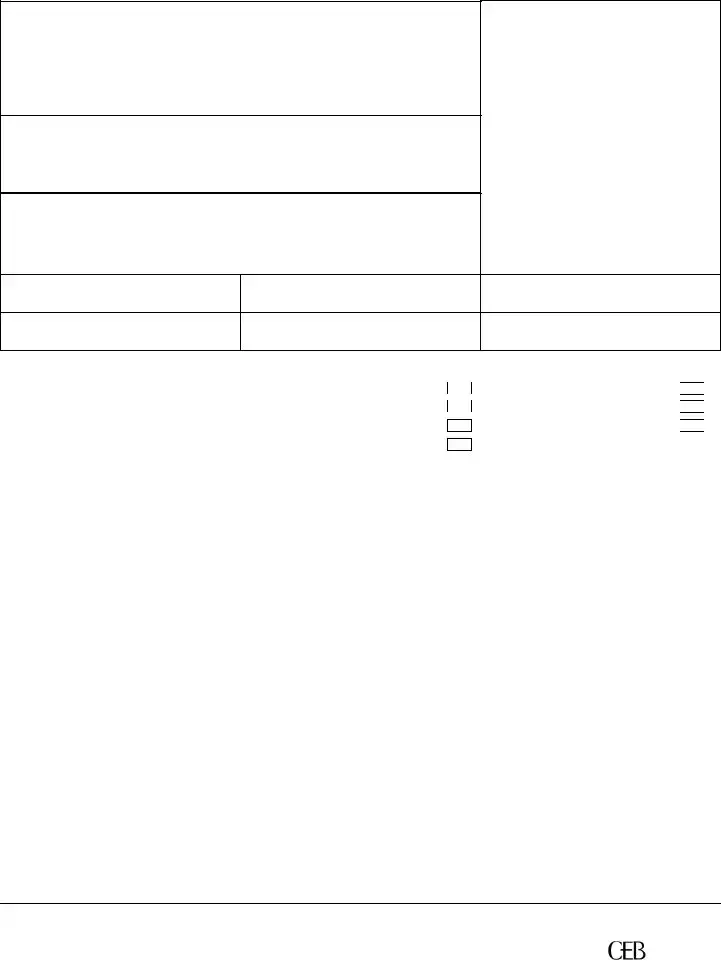
ATTORNEY OR PARTY WITHOUT ATTORNEY (Name, State Bar number, and address):
TELEPHONE NO.: |
FAX NO. (Optional): |
|
|
ATTORNEY FOR (Name): |
|
FOR COURT USE ONLY
SUPERIOR COURT OF CALIFORNIA, COUNTY OF
STREET ADDRESS:
MAILING ADDRESS:
CITY AND ZIP CODE:
BRANCH NAME:
NONMINOR'S NAME:
FINDINGS AND ORDERS AFTER HEARING TO CONSIDER |
CASE NUMBER: |
|
|
||
NONMINOR'S REQUEST TO REENTER FOSTER CARE |
|
|
Judicial Officer: |
Court Clerk: |
Court Reporter: |
Bailiff: |
Other Court Personnel: |
Interpreter: |
|
|
Language: |
1. Parties (name) |
Present |
Attorney (name): |
Present |
|
a. |
Nonminor: |
|
|
|
b. |
Probation officer: |
|
|
|
c. |
County agency social worker: |
|
|
|
d. |
Other (specify): |
|
|
|
2. Others present
a.Other (name):
b.Other (name):
c.Other (name):
3.The court has read and considered and admits into evidence
a. report of social worker dated:
b. report of probation officer dated:
c. other (specify):
d. other (specify):
e. other (specify):
Court Grants Request
4. The court makes the findings stated below:
a.Notice of the date, time, and location of the hearing was given as required by law.
b.The nonminor was previously under juvenile court jurisdiction subject to an order for foster care placement when he or she attained 18 years of age.
c.The nonminor is under 21 years of age.
d.The nonminor intends to satisfy a condition or conditions under Welfare and Institutions Code section 11403(b).
e.The condition or conditions under Welfare and Institutions Code section 11403(b) that the nonminor intends to satisfy follow (specify all that apply):
(1) Attending high school or a high school equivalency certificate (GED) program
Page 1 of 2
Form Approved for Optional Use
Judicial Council of California
FINDINGS AND ORDERS AFTER HEARING TO CONSIDER NONMINOR'S REQUEST TO REENTER FOSTER CARE
Welfare and Institutions Code, § 388(e); Cal. Rules of Court, rule 5.906 www.courts.ca.gov
|
|
|
|
NONMINOR'S NAME: |
CASE NUMBER: |
||
4. |
e. |
(2) |
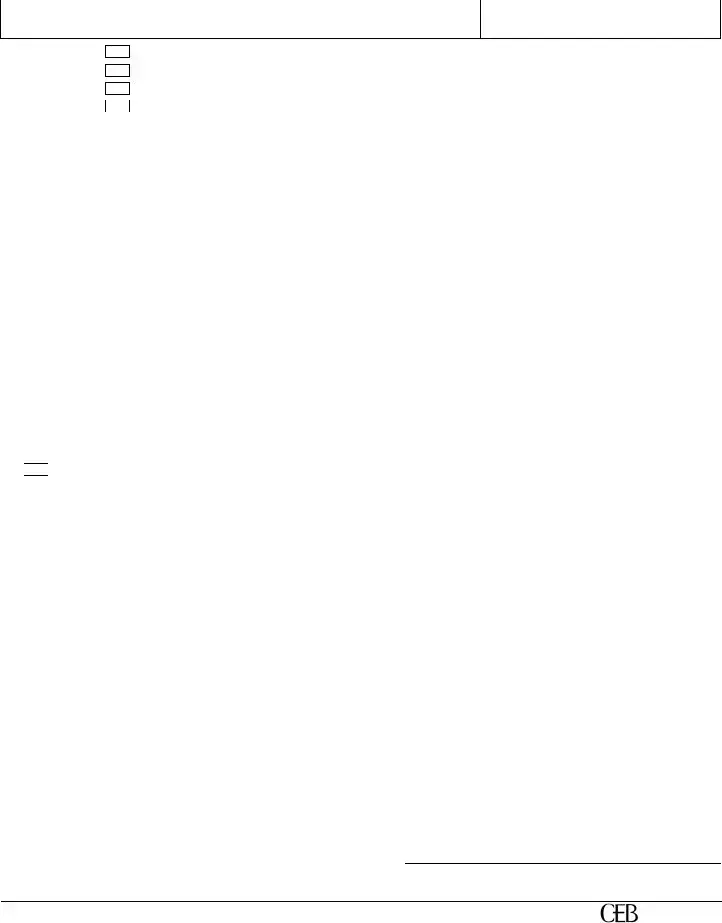
Attending a college, community college, or vocational education program |
|
|
(3) |
Attending a program or participating in an activity that will promote or help remove a barrier to employment |
|
|
(4) |
Being employed for at least 80 hours per month |
|
|
(5) |
Unable to do any of the activities in |
|
f. |
Continuing in a foster care placement is in the nonminor's best interest. |
|
|
g. |
The nonminor and the placing agency have entered into a reentry agreement for placement in a supervised setting |
|
|
|
under the placement and care responsibility of the placing agency. |
|
|
h. |
|
The nonminor, who is an Indian child, chooses to have the Indian Child Welfare Act apply to him or her as a |
|
|
|
nonminor dependent. |
5. The court makes the orders stated below:
a.The court grants the request to resume jurisdiction, and juvenile court jurisdiction shall resume over the nonminor as a nonminor dependent.
b.Placement and care are vested with the placing agency.
c.The placing agency must develop with the nonminor a new Transitional Independent Living Case Plan and file it with the court within 60 days.
d. The social worker or probation officer must consult with the tribal representative regarding a new Transitional Independent Living Case Plan.
e.A nonminor dependent review hearing under Welfare and Institutions Code section 391 and rule 5.903 of the California Rules of Court is set for (specify a date that is within six months of the date the voluntary reentry agreement was signed):
f.The prior order appointing an attorney for the nonminor is continued, and that attorney is appointed until the jurisdiction of the juvenile court is terminated.
Court Denies Request
6. a. The court finds that the nonminor is under 21 years of age, but the nonminor does not intend to satisfy at least one of the conditions under Welfare and Institutions Code section 11403(b), or the nonminor and the placing agency have not entered into a reentry agreement.
(1)The nonminor's request to return to foster care is denied. The request is denied because (specify the reasons for denial):
(2)The nonminor may file a new request when the circumstances change.
(3)The order appointing an attorney to represent the nonminor is terminated, and the attorney is relieved as of (specify date seven calendar days after the hearing):
b. The court finds that the nonminor is over 21 years of age.
(1)The request to have juvenile court jurisdiction resumed is denied; and
(2)The order appointing an attorney to represent the nonminor is terminated, and the attorney is relieved as of (specify date seven calendar days after the hearing):
Findings and Orders: Service
7.The written findings and orders must be served by the juvenile court clerk on all persons who were served with notice of the hearing.
a.Service must be by personal service or
b.Proof of service must be filed.
Date:
JUDICIAL OFFICER
FINDINGS AND ORDERS AFTER HEARING TO CONSIDER NONMINOR'S REQUEST TO REENTER FOSTER CARE
Page 2 of 2
| Fact Name | Details |
|---|---|
| Form Purpose | The JV-472 form is used to document the findings and orders after a hearing regarding a nonminor's request to reenter foster care. |
| Governing Law | This form is governed by the Welfare and Institutions Code, specifically section 388(e) and section 11403(b). |
| Eligibility Criteria | A nonminor must be under 21 years of age and previously under juvenile court jurisdiction to request reentry into foster care. |
| Conditions for Reentry | The nonminor must intend to satisfy specific conditions such as attending school or being employed for a certain number of hours each month. |
| Best Interest Determination | The court must determine that continuing in foster care is in the nonminor's best interest before granting the request. |
| Service of Orders | The juvenile court clerk is responsible for serving the written findings and orders to all parties notified of the hearing. |
| Attorney Representation | The form includes provisions for the appointment of an attorney to represent the nonminor throughout the process. |
Completing the California JV-472 form involves several important steps to ensure all necessary information is accurately provided. Once the form is filled out, it will be submitted to the court for review and consideration regarding the nonminor's request to reenter foster care.
What is the purpose of the California JV-472 form?
The JV-472 form is used in California to document the findings and orders made by the court after a hearing concerning a nonminor's request to reenter foster care. This form outlines the court's decisions and the conditions under which a nonminor can resume juvenile court jurisdiction.
Who needs to fill out the JV-472 form?
The JV-472 form must be completed by the attorney or party representing the nonminor who is requesting to reenter foster care. It is also necessary for the court personnel involved in the hearing to complete relevant sections of the form.
What information is required on the JV-472 form?
The form requires details such as the names of the parties present, the judicial officer, and the court clerk. Additionally, it includes information about the nonminor's previous foster care status, their age, and their intentions regarding the conditions outlined in the Welfare and Institutions Code.
What findings must the court make on the JV-472 form?
The court must confirm that the nonminor is under 21 years of age, previously under juvenile court jurisdiction, and intends to satisfy specific conditions related to education, employment, or medical issues. The court must also determine whether continuing foster care is in the nonminor's best interest.
What happens if the court grants the request on the JV-472 form?
If the court grants the request, it resumes juvenile court jurisdiction over the nonminor as a dependent. The court will also require the placement agency to create a new Transitional Independent Living Case Plan within 60 days.
What if the court denies the request on the JV-472 form?
If the court denies the request, it will specify the reasons for the denial. The nonminor may file a new request if their circumstances change. The order appointing an attorney for the nonminor will also be terminated if the request is denied.
How is service of the findings and orders handled?
The juvenile court clerk is responsible for serving the written findings and orders to all parties who were notified of the hearing. This must be done within three court days, either through personal service or first-class mail.
What is the timeline for filing a new Transitional Independent Living Case Plan?
The placing agency must develop and file a new Transitional Independent Living Case Plan with the court within 60 days of the court's order granting the request to resume jurisdiction.
Is there a specific date set for a follow-up hearing?
Yes, the court will set a nonminor dependent review hearing within six months of the date the voluntary reentry agreement was signed. This hearing will review the nonminor's progress and compliance with the established plan.
What should be done if the nonminor is an Indian child?
If the nonminor is identified as an Indian child, they can choose to have the Indian Child Welfare Act apply to them as a nonminor dependent. This choice must be documented in the findings and orders.
Incomplete Information: Failing to provide all required details, such as the nonminor's name or case number, can lead to delays or rejections.
Incorrect Dates: Entering wrong dates, especially for the hearing or documents, can cause confusion and may affect the outcome of the request.
Missing Signatures: Not signing the form or having the necessary parties sign can render the form invalid.
Improper Notification: Failing to provide proper notice to all parties involved can result in the court denying the request.
Neglecting Conditions: Not clearly stating which conditions under Welfare and Institutions Code section 11403(b) the nonminor intends to satisfy can lead to misunderstandings.
Ignoring Evidence Requirements: Not including necessary evidence, like reports from social workers or probation officers, may weaken the case.
Incorrect Filing: Submitting the form to the wrong court or branch can delay the process significantly.
Missing Proof of Service: Failing to file proof of service after the order can lead to complications in the case.
Overlooking Follow-Up Dates: Not keeping track of deadlines for hearings or required plans can jeopardize the nonminor's request.
The California JV-472 form is a crucial document in the process of a nonminor requesting to reenter foster care. However, it is often accompanied by several other forms and documents that help facilitate the legal process. Below is a list of related forms that may be utilized alongside the JV-472, each serving a specific purpose in ensuring the legal rights and needs of the nonminor are adequately addressed.
These documents collectively support the legal framework surrounding a nonminor's request to reenter foster care, ensuring that their needs are met while upholding their rights. Understanding each form's role is essential for navigating the complexities of the juvenile court system effectively.
The California JV-472 form is designed for use in juvenile court proceedings, specifically addressing the requests of nonminors seeking to reenter foster care. Several other documents share similarities with the JV-472 form in terms of purpose, structure, and content. Below is a list of four such documents:
When filling out the California JV-472 form, there are important steps to follow to ensure accuracy and compliance. Here are five things to do and five things to avoid:
Understanding the California JV 472 form is essential for nonminors seeking to reenter foster care. However, several misconceptions can cloud this process. Here are eight common misunderstandings:
By addressing these misconceptions, nonminors and their advocates can better navigate the complexities of the JV 472 form and the reentry process into foster care.
When filling out and using the California JV-472 form, it is essential to keep the following key takeaways in mind:
By adhering to these guidelines, individuals can navigate the process more effectively and ensure that all necessary steps are taken for the nonminor's reentry into foster care.