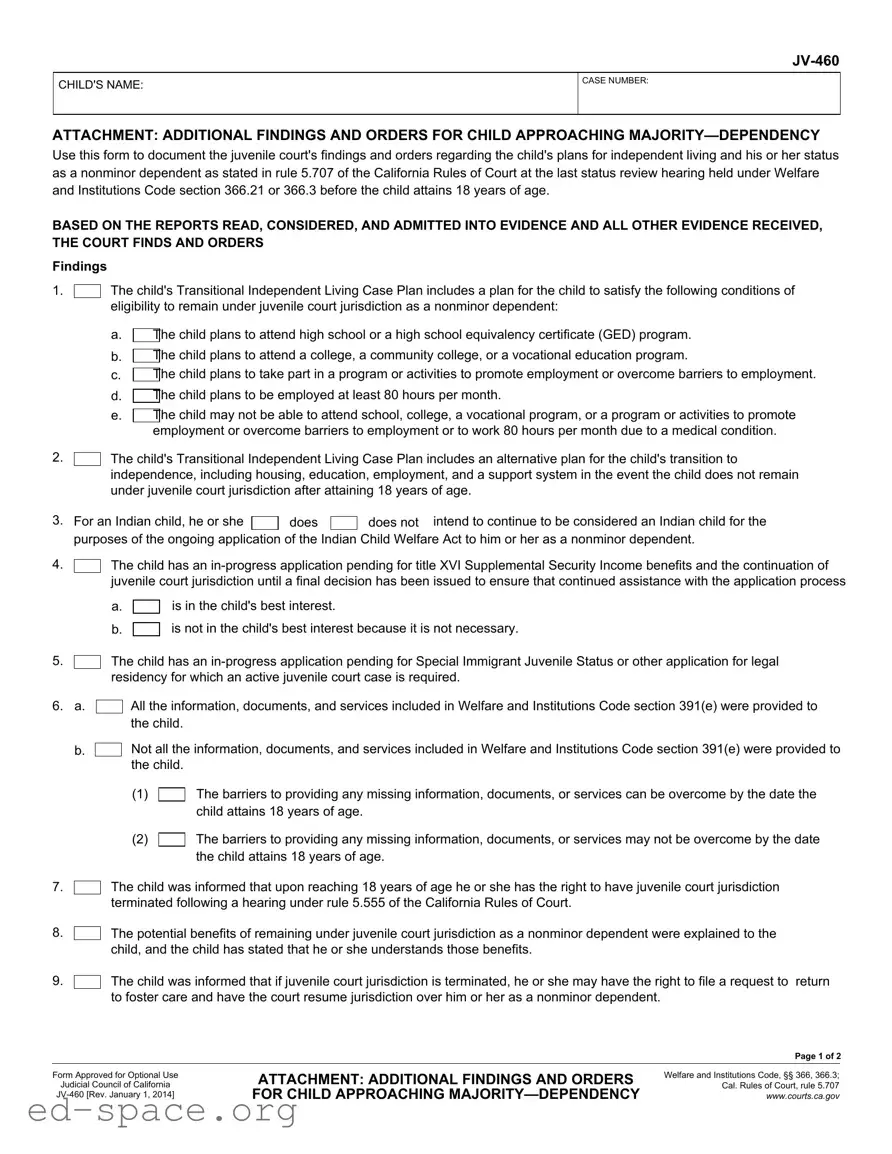
The California JV 460 form plays a crucial role in the juvenile court system, particularly for children approaching the age of majority. This form documents the court's findings and orders regarding a child's plans for independent living as they transition to adulthood. It is used during the last status review hearing before a child turns 18, as outlined in California's Welfare and Institutions Code. Key aspects of the form include the child's eligibility to remain under juvenile court jurisdiction as a nonminor dependent, which involves a comprehensive Transitional Independent Living Case Plan. This plan covers the child's educational and employment goals, including attending high school, college, or vocational programs, and working a minimum number of hours per month. Additionally, the form addresses the child's support system, housing, and alternative plans should they not remain under court jurisdiction. It also considers any pending applications for benefits or legal residency and informs the child of their rights upon turning 18. The court's findings and orders are essential to ensure that the child is prepared for the challenges of independent living, whether they choose to continue under court supervision or not.
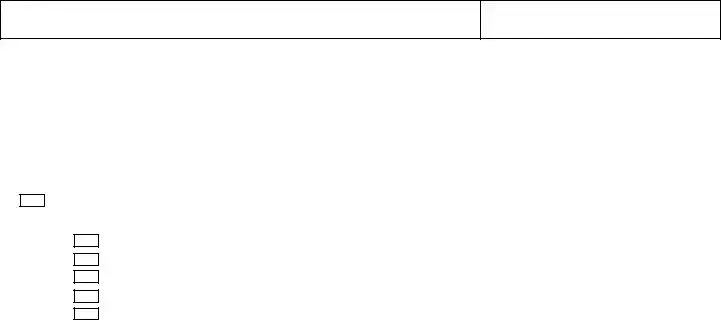
CHILD'S NAME:
CASE NUMBER:
ATTACHMENT: ADDITIONAL FINDINGS AND ORDERS FOR CHILD APPROACHING
Use this form to document the juvenile court's findings and orders regarding the child's plans for independent living and his or her status as a nonminor dependent as stated in rule 5.707 of the California Rules of Court at the last status review hearing held under Welfare and Institutions Code section 366.21 or 366.3 before the child attains 18 years of age.
BASED ON THE REPORTS READ, CONSIDERED, AND ADMITTED INTO EVIDENCE AND ALL OTHER EVIDENCE RECEIVED, THE COURT FINDS AND ORDERS
Findings
1. The child's Transitional Independent Living Case Plan includes a plan for the child to satisfy the following conditions of eligibility to remain under juvenile court jurisdiction as a nonminor dependent:
a.The child plans to attend high school or a high school equivalency certificate (GED) program.
b.The child plans to attend a college, a community college, or a vocational education program.
c.The child plans to take part in a program or activities to promote employment or overcome barriers to employment.
d.The child plans to be employed at least 80 hours per month.
e.The child may not be able to attend school, college, a vocational program, or a program or activities to promote employment or overcome barriers to employment or to work 80 hours per month due to a medical condition.
2. |
|
|
|
The child's Transitional Independent Living Case Plan includes an alternative plan for the child's transition to |
||||||||||||
|
|
|
|
independence, including housing, education, employment, and a support system in the event the child does not remain |
||||||||||||
|
|
|
|
under juvenile court jurisdiction after attaining 18 years of age. |
|
|
||||||||||
3. |
For an Indian child, he or she |
|
does |
|
|
does not intend to continue to be considered an Indian child for the |
||||||||||
|
|
|
||||||||||||||
|
purposes of the ongoing application of the Indian Child Welfare Act to him or her as a nonminor dependent. |
|||||||||||||||
4. |
|
|
|
The child has an |
||||||||||||
|
|
|
||||||||||||||
|
|
|
|
juvenile court jurisdiction until a final decision has been issued to ensure that continued assistance with the application process |
||||||||||||
|
|
|
|
a. |
|
|
|
is in the child's best interest. |
|
|
|
|||||
|
|
|
|
|
|
|
|
|
|
|||||||
|
|
|
|
b. |
|
|
|
is not in the child's best interest because it is not necessary. |
|
|
||||||
|
|
|
|
|
|
|
|
|
||||||||
5. |
|
|
|
The child has an |
||||||||||||
|
|
|
||||||||||||||
|
|
|
|
residency for which an active juvenile court case is required. |
|
|
||||||||||
|
|
|
|
|
|
|
|
|||||||||
6. |
|
a. |
|
All the information, documents, and services included in Welfare and Institutions Code section 391(e) were provided to |
||||||||||||
|
|
|
|
|
the child. |
|
|
|
|
|
|
|
|
|||
|
|
|
|
Not all the information, documents, and services included in Welfare and Institutions Code section 391(e) were provided to |
||||||||||||
|
|
b. |
|
|||||||||||||
|
|
|
|
|
the child. |
|
|
|
|
|
|
|
|
|||
|
|
|
|
|
(1) |
|
|
The barriers to providing any missing information, documents, or services can be overcome by the date the |
||||||||
|
|
|
|
|
|
|
||||||||||
|
|
|
|
|
|
|
|
|
child attains 18 years of age. |
|
|
|
||||
|
|
|
|
|
(2) |
|
|
The barriers to providing any missing information, documents, or services may not be overcome by the date |
||||||||
|
|
|
|
|
|
|
||||||||||
|
|
|
|
|
|
|
|
|
the child attains 18 years of age. |
|
|
|||||
7. |
|
|
|
The child was informed that upon reaching 18 years of age he or she has the right to have juvenile court jurisdiction |
||||||||||||
|
|
|
||||||||||||||
|
|
|
|
terminated following a hearing under rule 5.555 of the California Rules of Court. |
|
|
||||||||||
8. |
|
|
|
The potential benefits of remaining under juvenile court jurisdiction as a nonminor dependent were explained to the |
||||||||||||
|
|
|
||||||||||||||
|
|
|
|
child, and the child has stated that he or she understands those benefits. |
|
|
||||||||||
9. |
|
|
|
The child was informed that if juvenile court jurisdiction is terminated, he or she may have the right to file a request to return |
||||||||||||
|
|
|
||||||||||||||
|
|
|
|
to foster care and have the court resume jurisdiction over him or her as a nonminor dependent. |
|
|
||||||||||
|
|
|
|
|
|
|
|
|
|
|
|
|
|
|
Page 1 of 2 |
|
|
|
|
|
|
|
|
|
|
|
|
|
|
|
|
|
|
Form Approved for Optional Use |
|
ATTACHMENT: ADDITIONAL FINDINGS AND ORDERS |
Welfare and Institutions Code, §§ 366, 366.3; |
|||||||||||||
Judicial Council of California |
|
Cal. Rules of Court, rule 5.707 |
||||||||||||||
|
FOR CHILD APPROACHING |
|||||||||||||||
|
www.courts.ca.gov |
|||||||||||||||
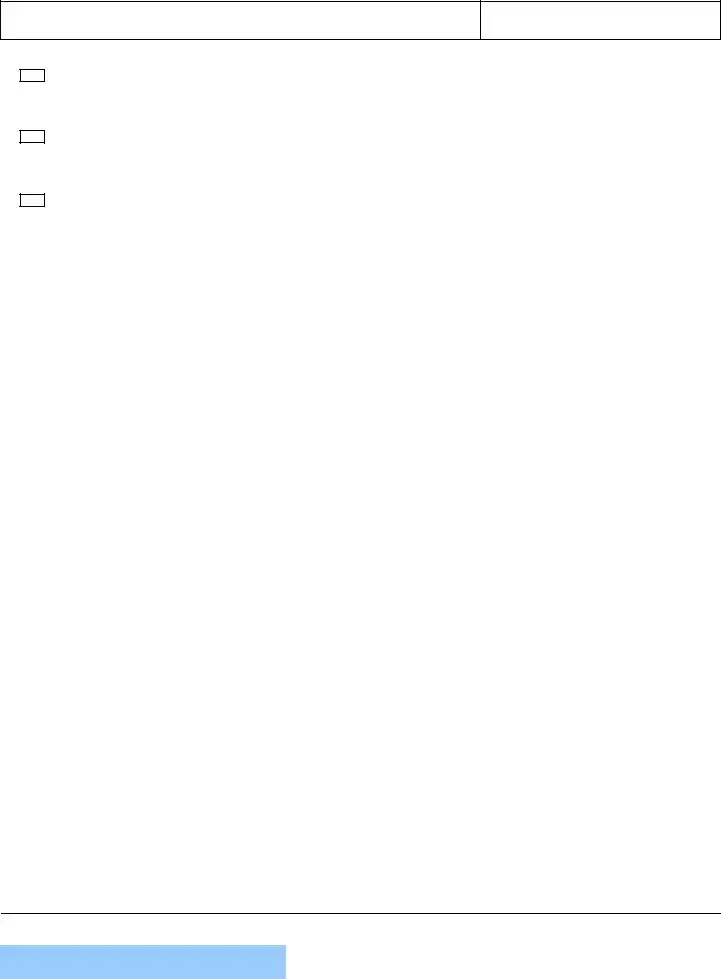
CHILD'S NAME:
CASE NUMBER:
Orders
10.
The child intends to remain under juvenile court jurisdiction as a nonminor dependent as defined in Welfare and Institutions Code section 11400(v) after attaining 18 years of age, and a hearing is ordered set under rule 5.903 of the California Rules of Court to occur within the next six months.
11.
12.
The child does not intend to remain under juvenile court jurisdiction after attaining 18 years of age as a dependent of the court or as a nonminor dependent as defined in Welfare and Institutions Code section 11400(v), and at the child's request, a hearing is ordered set under rule 5.555 of the California Rules of Court for a date within one month after the child's 18th birthday.
The child does not intend to remain under juvenile court jurisdiction as a nonminor dependent as defined in Welfare and Institutions Code section 11400(v) after attaining 18 years of age, but the child is otherwise eligible to and will remain under juvenile court jurisdiction in a foster care placement, and a hearing is ordered set under Welfare and Institutions Code section 366.21, 366.22, 366.25 or 366.3 to occur within the next six months.
ATTACHMENT: ADDITIONAL FINDINGS AND ORDERS FOR CHILD APPROACHING
Page 2 of 2
For your protection and privacy, please press the Clear
This Form button after you have printed the form.
| Fact Name | Details |
|---|---|
| Purpose | The JV-460 form is used to document findings and orders related to a child's plans for independent living as they approach the age of majority. |
| Governing Law | This form is governed by the California Rules of Court, specifically rule 5.707, and the Welfare and Institutions Code sections 366.21 and 366.3. |
| Eligibility Requirements | The form outlines conditions for a child to remain under juvenile court jurisdiction as a nonminor dependent, including education and employment plans. |
| Application for Benefits | It includes provisions for the child’s pending applications for Supplemental Security Income and Special Immigrant Juvenile Status. |
| Rights at Age 18 | The form informs the child of their rights regarding juvenile court jurisdiction termination and potential options for returning to foster care. |
Filling out the California JV-460 form is an important step in documenting a child's transition to independence as they approach adulthood. This form captures the juvenile court's findings and orders regarding the child's plans for independent living and their status as a nonminor dependent. The following steps outline how to complete the form accurately.
After completing the JV-460 form, it will be submitted to the juvenile court for review. The court will then schedule hearings as necessary to address the child's status and future plans. It is crucial to keep a copy of the completed form for your records.
What is the California JV-460 form?
The California JV-460 form is used in juvenile court to document findings and orders regarding a child who is approaching adulthood. Specifically, it outlines the child's plans for independent living and their status as a nonminor dependent. This form is relevant during the last status review hearing before the child turns 18, as per California's Welfare and Institutions Code.
Who should use the JV-460 form?
This form is intended for use by juvenile courts, social workers, and legal representatives involved in cases concerning minors transitioning to adulthood. It is particularly relevant for children in the foster care system who are approaching the age of majority and need to establish their plans for independent living.
What information is included in the JV-460 form?
The form includes various findings related to the child's transitional independent living case plan. This encompasses details about the child’s educational goals, employment plans, housing arrangements, and any medical conditions that may affect their ability to meet these goals. It also addresses the child's understanding of their rights as they approach adulthood.
What are the eligibility criteria for remaining under juvenile court jurisdiction?
To remain under juvenile court jurisdiction as a nonminor dependent, the child must have a plan that includes attending school or a vocational program, participating in employment-related activities, and working a minimum number of hours per month. If the child cannot meet these requirements due to a medical condition, this must also be documented.
What happens if a child decides not to remain under juvenile court jurisdiction?
If a child chooses not to remain under juvenile court jurisdiction after turning 18, they can request a hearing to terminate jurisdiction. The court will then determine whether to grant this request. The child must be informed of their rights and the potential benefits of remaining under court jurisdiction.
What are the benefits of remaining a nonminor dependent?
Remaining under juvenile court jurisdiction can provide several benefits, including continued access to support services, financial assistance, and guidance in transitioning to independent living. These benefits can be crucial for a child who may not have a stable support system outside of the foster care system.
How does the court determine the child's best interests?
The court evaluates the child's best interests based on various factors, including the child's current living situation, educational plans, employment opportunities, and any ongoing applications for benefits or legal residency. The goal is to ensure that the child has a solid plan for their future as they approach adulthood.
What should be done if information or services are missing from the child’s case?
If any information, documents, or services are missing, the court will assess whether these gaps can be addressed before the child turns 18. If the barriers can be overcome, the court will set a timeline for resolution. If not, the child’s case may be affected, and alternative plans will need to be discussed.
What is the process for setting a hearing related to the JV-460 form?
The court will order a hearing based on the findings documented in the JV-460 form. If the child intends to remain under juvenile court jurisdiction, a hearing will be set within the next six months. If the child does not wish to remain under jurisdiction, a hearing will be scheduled within one month after their 18th birthday to finalize the transition.
Where can I find more information about the JV-460 form?
Additional information about the JV-460 form can be found on the California Courts website. This site provides resources and guidance on juvenile dependency matters, including instructions for completing the form and understanding the juvenile court process.
Incomplete Information: Failing to provide all required details about the child, such as the child's name and case number, can lead to delays or rejections of the form.
Missing Signatures: Not signing the form can invalidate it. Ensure that all necessary parties, including the child if appropriate, have signed where required.
Incorrect or Outdated Information: Using outdated details, such as the child's age or current living situation, can mislead the court. Always verify that the information is current and accurate.
Neglecting to Attach Required Documents: Failing to include necessary attachments, such as the Transitional Independent Living Case Plan, may result in the court not having all the information needed for decision-making.
Not Understanding Eligibility Criteria: Misunderstanding the eligibility conditions for remaining under juvenile court jurisdiction can lead to incorrect assertions in the form. It is crucial to fully comprehend these criteria.
Ignoring Court Deadlines: Submitting the form after the deadline can cause complications. Always be aware of and adhere to the timelines set by the court.
The California JV-460 form is essential for documenting the juvenile court's findings and orders concerning a child's transition to independent living as they approach adulthood. This form is often used alongside several other documents that help ensure a smooth process for the child involved. Below is a list of related forms and documents that you may encounter.
Understanding these documents can help you navigate the complexities of the juvenile court system as a child approaches adulthood. Each form serves a specific purpose, ensuring that the needs and rights of the child are prioritized during this critical transition period. If you have any questions about these forms or the process, it's important to seek guidance from a knowledgeable professional.
The California JV-460 form is essential for documenting a child's transition to independent living as they approach adulthood. Several other documents serve similar purposes in supporting the child's needs and legal status. Here’s a list of those documents and how they relate to the JV-460:
When filling out the California JV-460 form, it is important to follow certain guidelines to ensure accuracy and completeness. Below is a list of things you should and shouldn't do:
The California JV-460 form is often misunderstood. Here are some common misconceptions:
The California JV-460 form is essential for documenting a child's transition to independence as they approach adulthood. Here are some key takeaways to keep in mind: