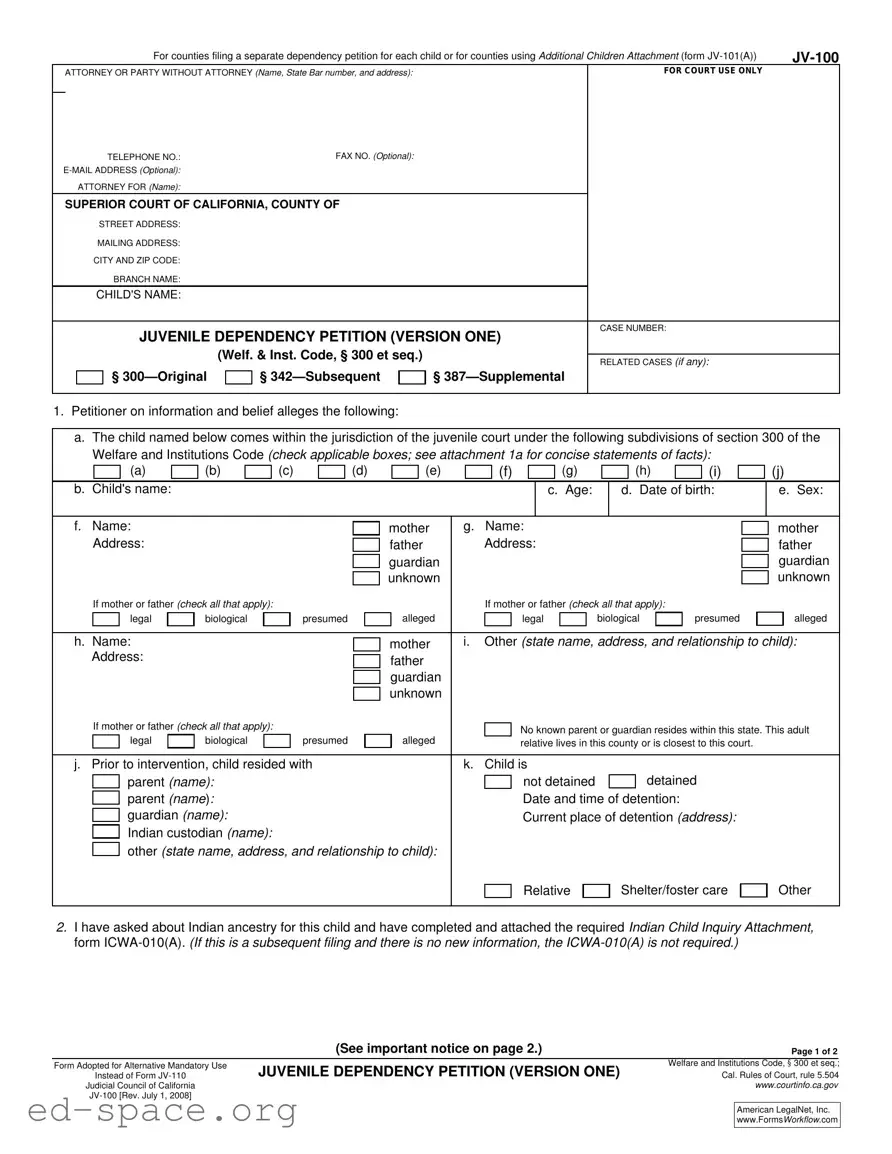
The California JV-100 form serves as a critical document in the juvenile dependency process, specifically designed for counties that file separate dependency petitions for each child or utilize the Additional Children Attachment (form JV-101(A)). This form is essential for initiating a juvenile dependency case under the Welfare and Institutions Code, particularly section 300, which outlines the circumstances under which the juvenile court may assert jurisdiction over a child. The JV-100 requires the petitioner to provide detailed information about the child, including their name, age, date of birth, and the names and addresses of parents or guardians. It also necessitates the disclosure of any related cases and the nature of the allegations against the parents or guardians. Importantly, the form includes a section for the petitioner to affirm their inquiries regarding the child's Indian ancestry, which is a requirement under the Indian Child Welfare Act. The form concludes with a declaration, wherein the petitioner asserts the truthfulness of the information provided, under penalty of perjury. Additionally, it contains critical notices for parents, alerting them to the potential termination of parental rights and their financial responsibilities concerning the child's care and legal representation.
For counties filing a separate dependency petition for each child or for counties using Additional Children Attachment (form |
||
ATTORNEY OR PARTY WITHOUT ATTORNEY (Name, State Bar number, and address): |
FOR COURT USE ONLY |
|
|
|
|
TELEPHONE NO.: |
FAX NO. (Optional): |
|
|
ATTORNEY FOR (Name): |
|
SUPERIOR COURT OF CALIFORNIA, COUNTY OF
STREET ADDRESS:
MAILING ADDRESS:
CITY AND ZIP CODE:
BRANCH NAME:
CHILD'S NAME:
CASE NUMBER:
JUVENILE DEPENDENCY PETITION (VERSION ONE)
(Welf. & Inst. Code, § 300 et seq.)
RELATED CASES (if any):
§ |
|
§ |
|
§ |
1.Petitioner on information and belief alleges the following:
a. The child named below comes within the jurisdiction of the juvenile court under the following subdivisions of section 300 of the
Welfare and Institutions Code (check applicable boxes; see attachment 1a for concise statements of facts): |
|
||||||||
(a) |
(b) |
(c) |
(d) |
(e) |
(f) |
(g) |
(h) |
(i) |
(j) |
b. Child's name:
c. Age:
d. Date of birth:
e. Sex:
f. Name: |
|
|
|
|
|
|
|
mother |
g. |
Name: |
|
|
|
|
|
|
|
|
mother |
||||||||
|
Address: |
|
|
|
|
|
|
|
father |
|
Address: |
|
|
|
|
|
|
|
|
father |
|||||||
|
|
|
|
|
|
|
|
|
|
|
|
|
|
|
|
|
|||||||||||
|
|
|
|
|
|
|
|
|
|
|
guardian |
|
|
|
|
|
|
|
|
|
|
|
|
|
guardian |
||
|
|
|
|
|
|
|
|
|
|
|
|
|
|
|
|
|
|
|
|
|
|
|
|
||||
|
|
|
|
|
|
|
|
|
|
|
unknown |
|
|
|
|
|
|
|
|
|
|
|
|
|
unknown |
||
|
|
|
|
|
|
|
|
|
|
|
|
|
|
|
|
|
|
|
|
|
|
|
|
||||
|
If mother or father (check all that apply): |
|
|
|
|
|
|
If mother or father (check all that apply): |
|
|
|||||||||||||||||
|
|
legal |
|
|
biological |
|
|
presumed |
|
|
|
alleged |
|
|
legal |
|
|
biological |
|
|
presumed |
|
|
alleged |
|||
|
|
|
|
|
|
|
|
|
|
|
|
|
|
|
|
|
|||||||||||
|
|
|
|
|
|
|
|
|
|
|
|
|
|
|
|
|
|
|
|
|
|
|
|
|
|
|
|
h. Name: |
|
|
|
|
|
|
|
mother |
i. |
Other (state name, address, and relationship to child): |
|||||||||||||||||
|
|
|
|
|
|
|
|||||||||||||||||||||
Address: |
|
|
|
|
|
|
|
father |
|
|
|
|
|
|
|
|
|
|
|
|
|
|
|
||||
|
|
|
|
|
|
|
|
|
|
|
|
|
|
|
|
|
|
|
|
|
|
||||||
|
|
|
|
|
|
|
|
|
|
|
|
|
|
|
|
|
|
|
|
|
|
|
|
|
|
||
|
|
|
|
|
|
|
|
|
|
|
guardian |
|
|
|
|
|
|
|
|
|
|
|
|
|
|
|
|
|
|
|
|
|
|
|
|
|
|
|
|
|
|
|
|
|
|
|
|
|
|
|
|
|
|
||
|
|
|
|
|
|
|
|
|
|
|
unknown |
|
|
|
|
|
|
|
|
|
|
|
|
|
|
|
|
|
|
|
|
|
|
|
|
|
|
|
|
|
|
|
|
|
|
|
|
|
|
|
|
|
|
||
|
If mother or father (check all that apply): |
|
|
|
|
|
|
|
No known parent or guardian resides within this state. This adult |
||||||||||||||||||
|
|
|
|
|
|
|
|||||||||||||||||||||
|
|
|
|
|
|
|
|
|
|
|
|
|
|
|
|||||||||||||
|
|
legal |
|
biological |
|
presumed |
|
|
|
alleged |
|
|
relative lives in this county or is closest to this court. |
|
|
||||||||||||
|
|
|
|
|
|
|
|
|
|
|
|
|
|
|
|
|
|
|
|
|
|
|
|
|
|
|
|
j. Prior to intervention, child resided with |
|
|
|
|
k. |
Child is |
|
|
|
|
|
|
|
|
|
|
|||||||||||
|
|
parent (name): |
|
|
|
|
|
|
|
not detained |
|
|
|
detained |
|
|
|||||||||||
|
|
|
|
|
|
|
|
|
|
|
|
|
|
||||||||||||||
|
|
parent (name): |
|
|
|
|
|
|
|
Date and time of detention: |
|
|
|||||||||||||||
|
|
guardian (name): |
|
|
|
|
|
|
|
Current place of detention (address): |
|
|
|||||||||||||||
|
|
|
|
|
|
|
|
|
|
|
|||||||||||||||||
|
|
|
|
|
|
|
|
|
|
|
|||||||||||||||||
|
|
Indian custodian (name): |
|
|
|
|
|
|
|
|
|
|
|
|
|
|
|
|
|
|
|
|
|||||
|
|
other (state name, address, and relationship to child): |
|
|
|
|
|
|
|
|
|
|
|
|
|
|
|
||||||||||
|
|
|
|
|
|
|
|
|
|
|
|
|
|
|
|
|
|||||||||||
Relative
Shelter/foster care
Other
2.I have asked about Indian ancestry for this child and have completed and attached the required Indian Child Inquiry Attachment, form
|
(See important notice on page 2.) |
|
Page 1 of 2 |
|
Form Adopted for Alternative Mandatory Use |
JUVENILE DEPENDENCY PETITION (VERSION ONE) |
Welfare and Institutions Code, § 300 et seq.; |
|
|
|
|
|
||
Instead of Form |
Cal. Rules of Court, rule 5.504 |
|||
Judicial Council of California |
|
|
www.courtinfo.ca.gov |
|
|
|
|
|
|
|
|
|
American LegalNet, Inc. |
|
|
|
|
www.FormsWORKFLOW.com |
|
|
|
|
|
|
CHILD'S NAME:
CASE NUMBER:
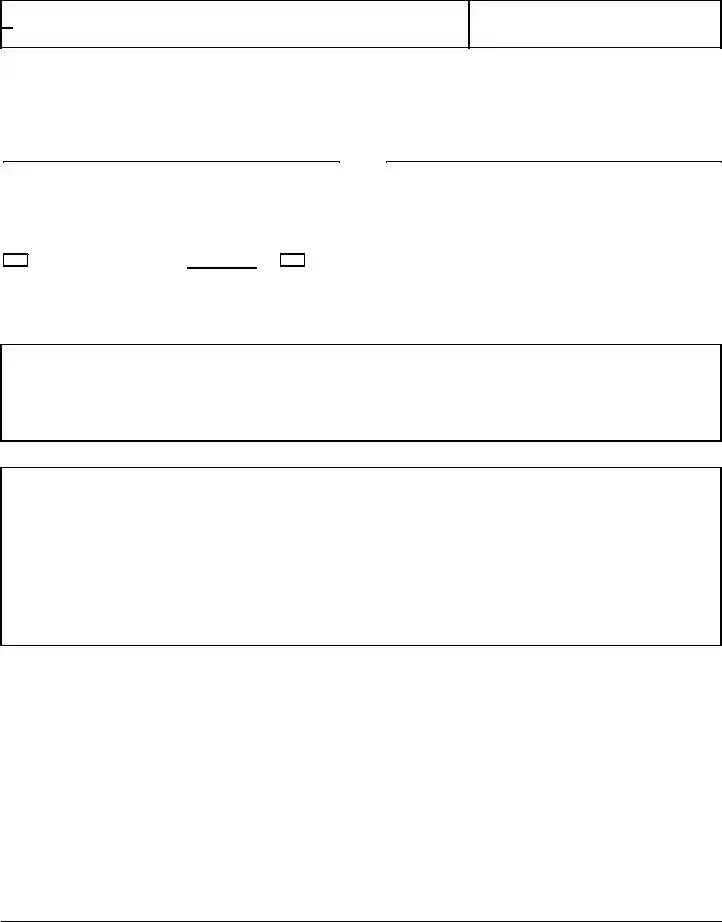
3. Petitioner requests that the court find these allegations to be true.
I declare under penalty of perjury under the laws of the State of California that the foregoing and all attachments are true and correct. Date:
’
(TYPE OR PRINT NAME) |
(SIGNATURE OF PETITIONER) |
Address and telephone number (if different person signing than listed in caption above):
Number of pages attached:
Other children are listed on Additional Children Attachment (form
— NOTICE —
TO PARENT
Your parental rights may be permanently terminated. To protect your rights, you must appear in court and answer this petition.
TO PARENTS OR OTHERS LEGALLY RESPONSIBLE
FOR THE SUPPORT OF THE CHILD
You and the estate of your child may be jointly and severally liable for the cost of the care, support, and maintenance of your child in any placement or detention facility, the cost of legal services for you or your child by a public defender or other attorney, and the cost of supervision of your child by order of the juvenile court.
JUVENILE DEPENDENCY PETITION (VERSION ONE)
Page 2 of 2
| Fact Name | Fact Description |
|---|---|
| Form Purpose | The JV-100 form is used to initiate a juvenile dependency petition in California. |
| Governing Law | This form is governed by the Welfare and Institutions Code, specifically sections 300 et seq. |
| Filing Requirements | Counties may file a separate dependency petition for each child or utilize the Additional Children Attachment (form JV-101(A)). |
| Information Required | The form requires details such as the child's name, age, date of birth, and information about parents or guardians. |
| Indian Ancestry Inquiry | Petitioners must inquire about the child's Indian ancestry and attach the Indian Child Inquiry Attachment (form ICWA-010(A)). |
| Petitioner's Declaration | The petitioner must declare under penalty of perjury that the information provided is true and correct. |
| Parental Rights Notice | The form includes a notice to parents about the potential termination of parental rights and the importance of court appearance. |
| Liability for Costs | Parents or guardians may be jointly and severally liable for costs related to the child's care and legal representation. |
Completing the California JV-100 form is an essential step in initiating a juvenile dependency petition. This form requires detailed information about the child and the circumstances surrounding the case. After filling out the form, it will be submitted to the court for consideration.
What is the purpose of the California JV-100 form?
The California JV-100 form is a Juvenile Dependency Petition. It is used to initiate a legal process concerning a child who may need protection due to issues like abuse or neglect. By filing this form, a petitioner asks the court to evaluate the child's situation and determine whether the child should remain in their current living situation or be placed in a safer environment. This form is crucial for ensuring that the child's welfare is prioritized and that appropriate legal actions can be taken.
Who can file the JV-100 form?
The JV-100 form can be filed by various parties, including parents, guardians, or other individuals who have a legal interest in the child's well-being. It is important that the person filing the form has relevant information about the child's circumstances and can provide necessary details to support the petition. In some cases, attorneys may also file the form on behalf of their clients.
What information is required when completing the JV-100 form?
When filling out the JV-100 form, several key pieces of information are required. This includes the child's name, age, and date of birth, as well as details about the parents or guardians. The petitioner must also provide information regarding any prior living arrangements for the child and whether the child is currently detained. It is essential to be thorough and accurate, as this information will help the court make informed decisions about the child's future.
What happens after the JV-100 form is filed?
Once the JV-100 form is filed, the court will review the petition and schedule a hearing. At this hearing, the petitioner must appear to present their case. The court will consider the allegations made in the petition and any evidence provided. It is crucial for all parties involved, especially parents or guardians, to attend this hearing, as failure to do so may impact their rights regarding the child. The court's primary focus will always be the best interests of the child.
Incomplete Information: Failing to provide all necessary details, such as the child's full name, date of birth, and addresses of parents or guardians, can lead to delays or rejections of the petition.
Incorrect Jurisdiction Claims: Misunderstanding which subdivisions of section 300 apply to the case may result in filing under the wrong jurisdiction, complicating the legal process.
Missing Signatures: Not signing the form or having the wrong person sign it can invalidate the petition, making it essential to ensure the correct individual completes this step.
Neglecting the Indian Child Inquiry: Failing to attach the required Indian Child Inquiry Attachment, form ICWA-010(A), when applicable, can lead to significant legal repercussions.
Omitting Related Cases: Forgetting to mention any related cases can create confusion and hinder the court's understanding of the situation.
Inaccurate Contact Information: Providing outdated or incorrect contact information for the petitioner can impede communication between the court and the involved parties.
Failure to Indicate Detention Status: Not clearly stating whether the child is detained or not can lead to misunderstandings about the urgency and nature of the case.
Ignoring Additional Children Attachment: If there are other children involved, neglecting to complete and attach form JV-101(A) can result in incomplete information being presented to the court.
Misunderstanding Legal Terms: Confusing terms like "legal" and "biological" when describing relationships can lead to inaccuracies that may affect the case.
Not Reviewing the Form: Submitting the form without a thorough review can result in overlooked errors, which could have been easily corrected before filing.
The California JV-100 form is a crucial document used in juvenile dependency cases. It initiates the legal process when there are concerns about a child's welfare. Alongside this form, several other documents may be required to provide additional information or support the petition. Below is a list of some commonly used forms that often accompany the JV-100.
These forms collectively help facilitate the juvenile dependency process, ensuring that all relevant information is presented to the court. Understanding these documents can empower families and individuals involved in such cases, allowing them to navigate the legal system with greater clarity and support.
The California JV-100 form is a key document in juvenile dependency cases. It shares similarities with several other forms used in similar legal contexts. Here’s a list of seven documents that are comparable to the JV-100 form:
Each of these forms serves a specific purpose in the juvenile court system, much like the JV-100, helping to ensure that the legal processes surrounding child welfare are clear and organized.
When filling out the California JV-100 form, it is essential to follow specific guidelines to ensure accuracy and compliance. Here are eight important do's and don'ts to keep in mind:
By adhering to these guidelines, you can help ensure that your petition is processed smoothly and effectively. Attention to detail is vital in legal matters, especially in cases involving juvenile dependency.
Understanding the California JV-100 form is crucial for anyone involved in a juvenile dependency case. However, several misconceptions can lead to confusion. Here are nine common misunderstandings:
Being informed about these misconceptions can help individuals better prepare for the process and understand their rights and responsibilities in juvenile dependency cases.
Filling out the California JV-100 form requires attention to detail and understanding of the process. Here are key takeaways to keep in mind:
Review the form carefully before submission to ensure all necessary information is included. This will help facilitate the court's understanding of the case.