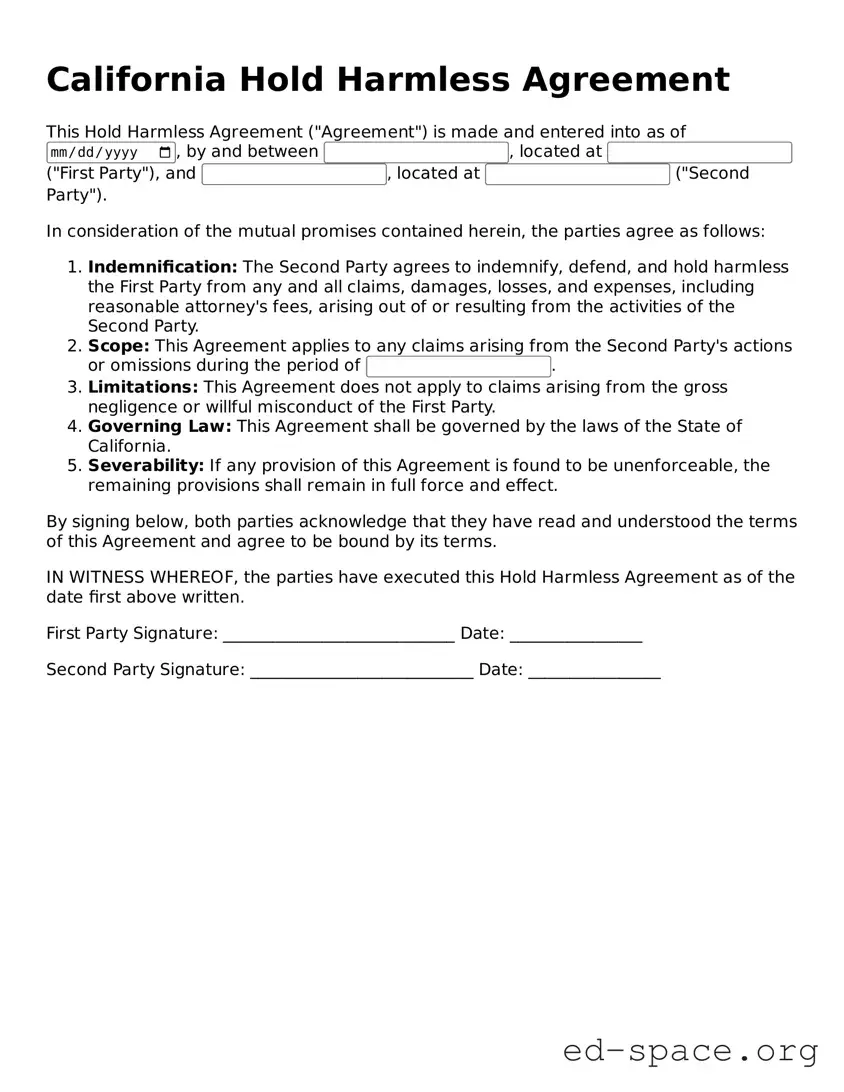
In California, the Hold Harmless Agreement form serves as a vital tool for individuals and businesses seeking to protect themselves from potential legal liabilities. This agreement typically outlines the responsibilities of the parties involved, ensuring that one party agrees to indemnify and defend the other against claims or damages that may arise during a specified activity or event. It is commonly used in various scenarios, such as rental agreements, construction projects, and recreational activities, where risks are inherent. By clearly defining the scope of liability and the obligations of each party, this form helps to establish a mutual understanding, reducing the likelihood of disputes. Understanding the nuances of this agreement is essential for anyone looking to navigate the complexities of liability in California, whether you are a property owner, contractor, or participant in an event.
California Hold Harmless Agreement
This Hold Harmless Agreement ("Agreement") is made and entered into as of , by and between , located at ("First Party"), and , located at ("Second Party").
In consideration of the mutual promises contained herein, the parties agree as follows:
By signing below, both parties acknowledge that they have read and understood the terms of this Agreement and agree to be bound by its terms.
IN WITNESS WHEREOF, the parties have executed this Hold Harmless Agreement as of the date first above written.
First Party Signature: ____________________________ Date: ________________
Second Party Signature: ___________________________ Date: ________________
| Fact Name | Description |
|---|---|
| Purpose | The California Hold Harmless Agreement is designed to protect one party from legal liability for damages or injuries caused by another party. |
| Governing Law | This agreement is governed by California state law, specifically under the California Civil Code. |
| Common Use | It is commonly used in contracts involving construction, events, and rental agreements where liability issues may arise. |
| Enforceability | For the agreement to be enforceable, it must be clear, specific, and mutually agreed upon by all parties involved. |
| Limitations | The agreement cannot protect against gross negligence or willful misconduct, as these are generally not waivable under California law. |
Filling out the California Hold Harmless Agreement form requires careful attention to detail. After completing the form, you will be ready to submit it to the relevant party or authority as per your agreement.
What is a California Hold Harmless Agreement?
A California Hold Harmless Agreement is a legal document that protects one party from liability for any injuries or damages that may occur during a specific activity or event. Essentially, it shifts the responsibility of risk from one party to another, ensuring that the party agreeing to hold harmless will not seek compensation from the other party in the event of an accident or injury.
Who typically uses a Hold Harmless Agreement?
This type of agreement is commonly used in various scenarios, including but not limited to, rental agreements, construction contracts, and events where one party may be exposed to risks associated with the activities of another. For example, property owners may require contractors to sign a Hold Harmless Agreement before beginning work on their premises.
What are the key components of a Hold Harmless Agreement?
A Hold Harmless Agreement generally includes the names of the parties involved, a description of the activities covered, and a clear statement that one party agrees to indemnify the other. Additionally, it should outline the scope of the agreement, specifying any limitations or exceptions to the hold harmless provision.
Is a Hold Harmless Agreement enforceable in California?
Yes, Hold Harmless Agreements are generally enforceable in California, provided they meet certain legal requirements. The agreement must be clear and specific, and both parties must willingly agree to its terms. However, certain limitations exist, particularly when it comes to gross negligence or intentional misconduct, which cannot be waived.
Do I need a lawyer to draft a Hold Harmless Agreement?
While it is not legally required to have a lawyer draft a Hold Harmless Agreement, it is highly advisable. A lawyer can ensure that the document is properly tailored to your specific needs and complies with California law. This can help prevent potential disputes or misunderstandings in the future.
Can a Hold Harmless Agreement be revoked?
Yes, a Hold Harmless Agreement can be revoked or modified, but this typically requires the consent of both parties. It is important to document any changes in writing to avoid confusion later. Both parties should agree to the new terms and sign the updated agreement.
What happens if one party breaches the Hold Harmless Agreement?
If one party breaches the Hold Harmless Agreement, the non-breaching party may seek legal remedies. This could involve filing a lawsuit for damages or seeking enforcement of the agreement. The specific consequences will depend on the terms outlined in the agreement and the circumstances surrounding the breach.
Are there any risks associated with signing a Hold Harmless Agreement?
Yes, there are risks involved in signing a Hold Harmless Agreement. By agreeing to hold another party harmless, you may be assuming responsibility for risks that you may not fully understand. It is crucial to read the agreement carefully and consult with a legal professional if you have any concerns about the implications of signing.
Can a Hold Harmless Agreement cover future claims?
Yes, a Hold Harmless Agreement can be drafted to cover future claims. However, it is essential to clearly specify the types of future claims that are included in the agreement. Ambiguities may lead to disputes, so clarity is key when drafting these provisions.
Failing to include all parties involved. It's crucial to list every individual or entity that will be covered under the agreement.
Not specifying the scope of the agreement. Clearly define what activities or situations the hold harmless clause applies to.
Using vague language. Avoid ambiguous terms that could lead to misinterpretation of the agreement's intent.
Neglecting to date the document. A date is necessary to establish when the agreement becomes effective.
Overlooking signatures. Ensure that all parties sign the document to validate the agreement.
Not including a witness or notary if required. Some agreements may need additional verification to be legally binding.
Forgetting to review local laws. Different jurisdictions may have specific requirements for hold harmless agreements.
Ignoring the need for clarity in indemnification clauses. Clearly outline who is indemnifying whom and under what circumstances.
Not keeping a copy of the signed agreement. Always retain a copy for your records to avoid disputes in the future.
Failing to consult with a legal professional. Seeking advice can help ensure that the agreement is properly drafted and enforceable.
A Hold Harmless Agreement is a crucial document used to protect one party from liability for certain actions or events. In California, this agreement is often accompanied by other forms and documents to ensure comprehensive coverage and clarity in legal matters. Below is a list of documents that are frequently used alongside the Hold Harmless Agreement.
These documents work together to create a comprehensive legal framework that protects all parties involved. It is essential to understand each document's purpose and ensure they are properly executed to minimize risks and liabilities.
A Hold Harmless Agreement is a crucial document in various legal and business contexts. It serves to protect one party from liability for certain actions or events. Here are six documents that share similarities with the Hold Harmless Agreement:
When filling out a California Hold Harmless Agreement form, it is essential to approach the task with care and attention to detail. This agreement serves to protect one party from legal liability for any injuries or damages that may occur during a specified activity. Here are some important dos and don'ts to consider:
By adhering to these guidelines, individuals can ensure that they are making informed decisions while protecting their interests in any activities covered by the agreement.
Misconceptions about the California Hold Harmless Agreement can lead to misunderstandings about its purpose and implications. Here are ten common misconceptions:
A Hold Harmless Agreement does not completely eliminate liability. It typically transfers certain risks from one party to another, but it does not protect against gross negligence or willful misconduct.
While often associated with construction projects, Hold Harmless Agreements can be used in various contexts, including events, leases, and other contractual agreements.
These agreements may not be enforceable in every situation. Courts may refuse to enforce them if they are deemed unconscionable or if they violate public policy.
Signing a Hold Harmless Agreement indicates acceptance of certain risks, but it does not mean you accept liability for all potential issues that may arise.
While it can provide some protection, it may not shield a party from personal injury claims if the injury results from negligence or misconduct.
These agreements can vary significantly based on the specific terms and conditions outlined. Each one should be reviewed carefully.
Notarization is not a requirement for a Hold Harmless Agreement to be valid. However, having it notarized can add an extra layer of authenticity.
The agreement may limit liability but does not absolve parties from fulfilling their contractual obligations or responsibilities.
Hold Harmless Agreements cannot be used as a blanket waiver for all actions. They should be specific about the risks being assumed.
Even low-risk activities can benefit from a Hold Harmless Agreement. It helps clarify responsibilities and expectations between parties.
Filling out and using the California Hold Harmless Agreement form can be a crucial step in protecting oneself from liability. Here are some key takeaways to consider:
By keeping these points in mind, individuals can navigate the process of using a Hold Harmless Agreement with greater confidence and clarity.