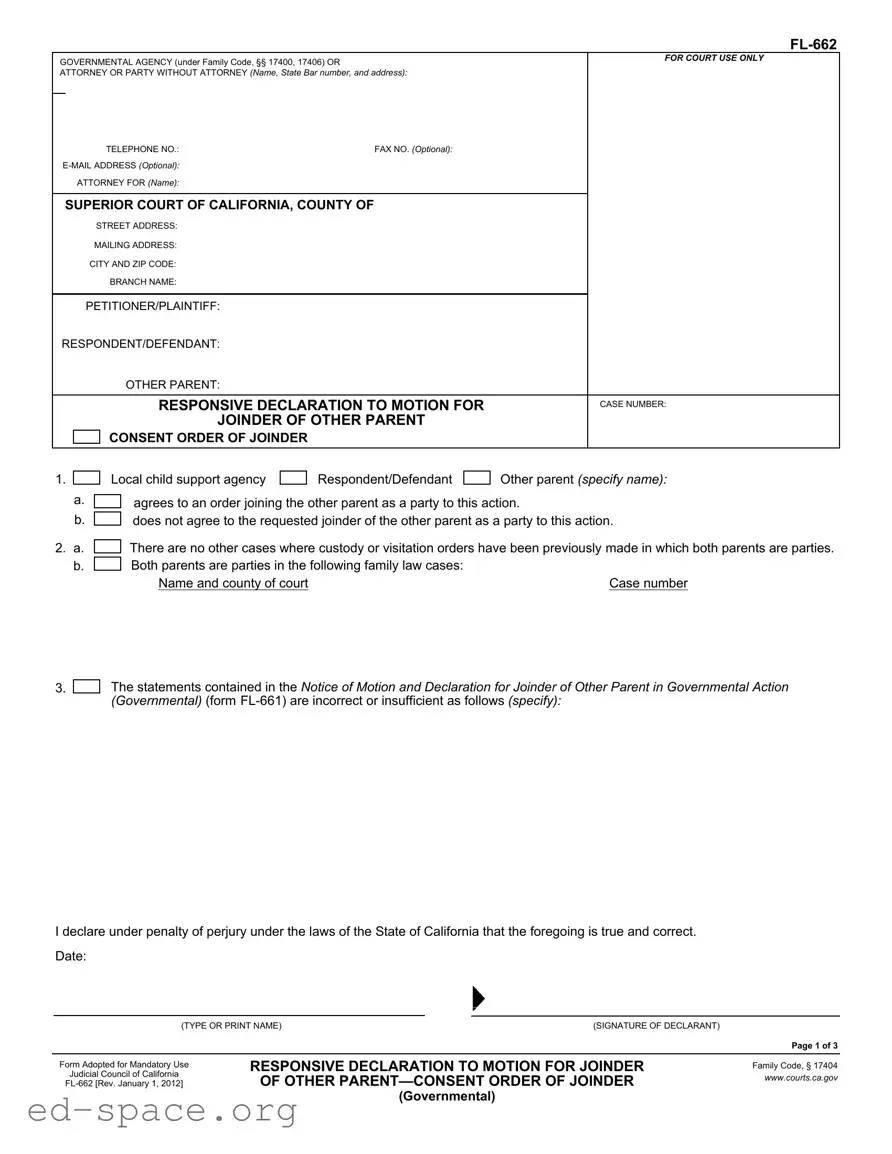
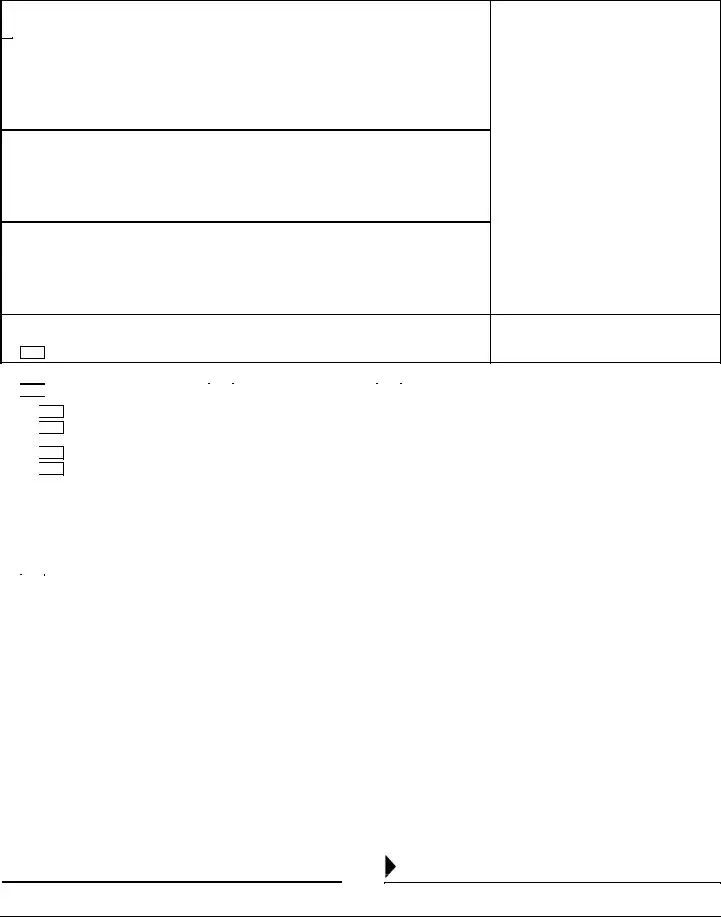
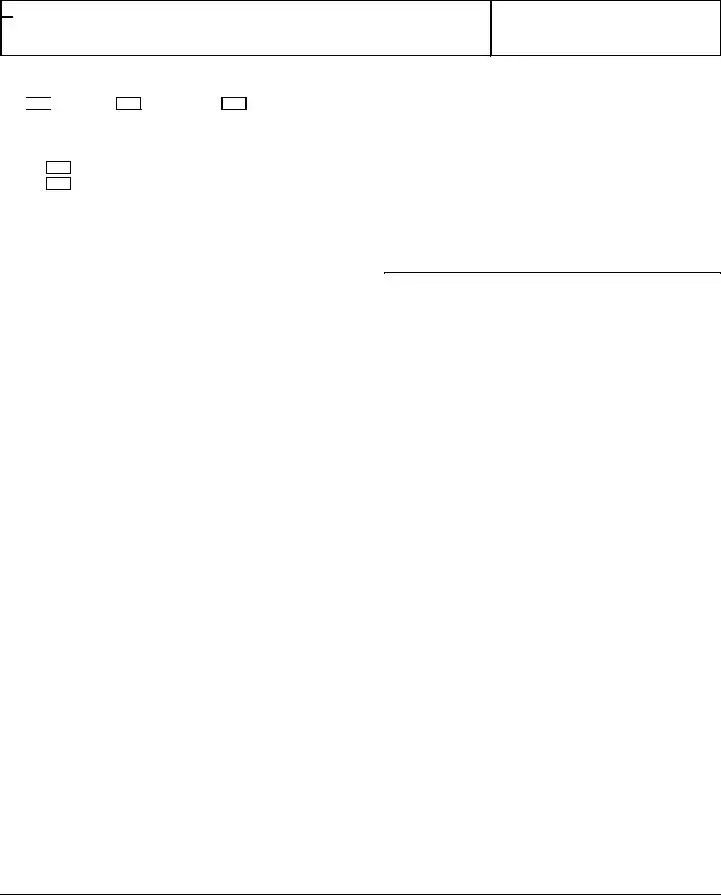
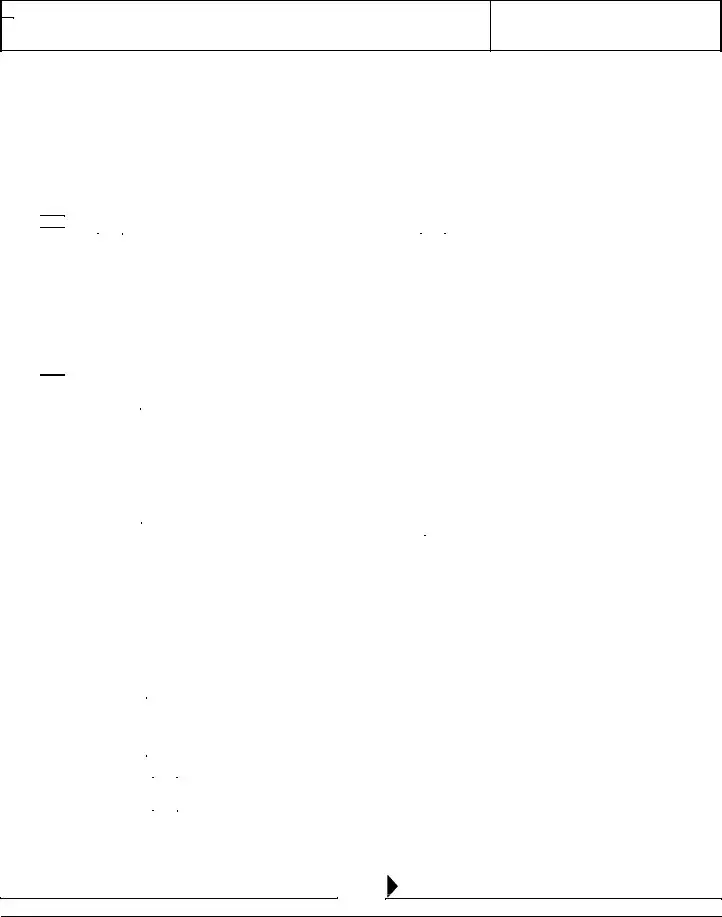
The California FL-662 form plays a crucial role in family law cases, particularly when it comes to child support and custody matters. This form is primarily used to respond to a motion for joining another parent as a party in a legal action. It allows individuals involved in family law disputes to formally express their consent or disagreement regarding the inclusion of the other parent in the case. The form requires essential information, including the names of the petitioner, respondent, and other parent, as well as the case number. It also provides space for parties to indicate if there are existing custody or visitation orders involving both parents. Furthermore, the FL-662 form includes a section for declaring any inaccuracies in previous motions related to the case. By signing the form, individuals affirm the truthfulness of their statements under penalty of perjury, ensuring that the court receives accurate and reliable information. Overall, the FL-662 is a vital document that facilitates communication and decision-making in family law proceedings, helping to clarify the roles and responsibilities of all parties involved.
GOVERNMENTAL AGENCY (under Family Code, §§ 17400, 17406) OR |
FOR COURT USE ONLY |
|
|
ATTORNEY OR PARTY WITHOUT ATTORNEY (Name, State Bar number, and address): |
|
TELEPHONE NO.: |
FAX NO. (Optional): |
|
|
ATTORNEY FOR (Name): |
|
SUPERIOR COURT OF CALIFORNIA, COUNTY OF |
|
STREET ADDRESS: |
|
MAILING ADDRESS: |
|
CITY AND ZIP CODE: |
|
BRANCH NAME: |
|
PETITIONER/PLAINTIFF: |
|
RESPONDENT/DEFENDANT: |
|
OTHER PARENT: |
|
RESPONSIVE DECLARATION TO MOTION FOR |
CASE NUMBER: |
JOINDER OF OTHER PARENT |
|
CONSENT ORDER OF JOINDER |
|
1.
a.
b.
2.a.
b.
Local child support agency |
|
Respondent/Defendant |
|
Other parent (specify name): |
agrees to an order joining the other parent as a party to this action.
does not agree to the requested joinder of the other parent as a party to this action.
There are no other cases where custody or visitation orders have been previously made in which both parents are parties. Both parents are parties in the following family law cases:
Name and county of court |
Case number |
3. |
|
The statements contained in the Notice of Motion and Declaration for Joinder of Other Parent in Governmental Action |
|
|
(Governmental) (form |
I declare under penalty of perjury under the laws of the State of California that the foregoing is true and correct.
Date:
(TYPE OR PRINT NAME) |
(SIGNATURE OF DECLARANT) |
Page 1 of 3
Form Adopted for Mandatory Use
Judicial Council of California
RESPONSIVE DECLARATION TO MOTION FOR JOINDER OF OTHER
Family Code, § 17404
www.courts.ca.gov
(Governmental)
PETITIONER/PLANTIFF:
RESPONDENT/DEFENDANT:
OTHER PARENT:
CASE NUMBER:
1. Plaintiff
Defendant
CONSENT ORDER
Other parent |
having consented and good cause appearing, |
IT IS ORDERED that
a.
b.
the other parent is joined as a party to this proceeding. |
|
the hearing on the motion for joinder set on (date): |
is taken off calendar. |
Date:
JUDICIAL OFFICER
RESPONSIVE DECLARATION TO MOTION FOR JOINDER OF OTHER
Page 2 of 3
(Governmental)
PETITIONER/PLANTIFF:
RESPONDENT/DEFENDANT: OTHER PARENT:
CASE NUMBER:
PROOF OF SERVICE
1.At the time of service I was at least 18 years of age and not a party to the legal action.
2.My residence or business address is (specify):
3.I served a copy of the foregoing Responsive Declaration as follows (check either a or b for each person served):
a. Personal delivery. I personally delivered a copy and all attachments as follows:
(1) |
|
|
Name of party or attorney served: |
(2) |
|
Name of local child support agency served: |
(a) |
Address where delivered: |
|
(a) |
Address where delivered: |
||
|
(b) |
Date delivered: |
|
(b) |
Date delivered: |
|
|
(c) |
Time delivered: |
|
(c) |
Time delivered: |
|
b. Mail. I am a resident of or employed in the county where the mailing occurred.
(1)I enclosed a copy in an envelope and
(a) |
|
|
deposited the sealed envelope with the U.S. Postal Service with the postage fully prepaid. |
||||||
(b) |
|
|
|
|
placed the envelope for collection and mailing on the date and at the place shown below following our |
||||
|
|
|
|
||||||
|
|
|
|
|
ordinary business practices. I am readily familiar with this business’s practice for collecting and |
||||
|
|
|
|
|
processing correspondence for mailing. On the same day that correspondence is placed for collection and |
||||
|
|
|
|
|
mailing, it is deposited in the ordinary course of business with the U.S. Postal Service in a sealed envelope |
||||
|
|
|
|
|
with postage fully prepaid. |
|
|
|
|
(2) The envelope was addressed and mailed as follows: |
|
|
|
|
|||||
(a) |
|
|
Name of party or attorney served: |
(b) |
|
|
Name of local child support agency served: |
||
|
|
|
|
||||||
|
|
(i) |
Address: |
(i) |
Address: |
||||
(ii) Date mailed:
(iii) Place of mailing (city and state):
(3)Address Verification (please specify):
(a) |
|
|
I served a request to modify a child custody, visitation, or child support judgment or permanent order, |
|
|
|
|
which included an address verification declaration (Declaration Regarding Address Verification— |
|
|
|
|
Postjudgment Request to Modify a Child Custody, Visitation, or Child Support Order (form |
|
|
|
|
used for this purpose). |
|
|
|
|
||
(b) |
|
|
The address for each individual identified in items 3a and 3b was |
|
|
(i) |
|
|
verified by the California Child Support Enforcement System (CSE) as the current primary mailing |
|
|
|
||
|
|
|
|
address on file. |
|
(ii) |
|
|
other (specify): |
|
|
|
||
I declare under penalty of perjury under the laws of the State of California that the foregoing is true and correct. Date:
(TYPE OR PRINT NAME) |
(SIGNATURE OF PERSON WHO SERVED MOTION) |
RESPONSIVE DECLARATION TO MOTION FOR JOINDER
OF OTHER
(Governmental)
Page 3 of 3
| Fact Name | Description |
|---|---|
| Governing Law | The FL-662 form is governed by California Family Code sections 17400 and 17406. |
| Purpose | This form is used to respond to a motion for the joinder of another parent in a child support case. |
| Parties Involved | The form includes sections for the petitioner/plaintiff, respondent/defendant, and the other parent. |
| Consent Requirement | The form requires a declaration of whether the other parent agrees to be joined as a party. |
| Previous Orders | It asks if there are existing custody or visitation orders involving both parents. |
| Proof of Service | The form includes a section for proof of service to ensure all parties are notified. |
| Signature Requirement | The declarant must sign the form under penalty of perjury, affirming the truth of the information provided. |
| Mandatory Use | The FL-662 form is adopted for mandatory use by the Judicial Council of California. |
| Revision Date | The current version of the FL-662 form was revised on January 1, 2012. |
| Website Reference | Additional information and resources can be found at www.courts.ca.gov. |
Filling out the California FL-662 form is a critical step in your legal process. This form is essential for joining another parent as a party in a family law case. Completing it accurately ensures that all parties are properly notified and that the court has the necessary information to proceed.
After filling out the form, ensure that you keep a copy for your records. You will need to file the completed FL-662 with the court and serve copies to all parties involved in the case. Proper service is crucial, as it ensures that everyone is informed and can participate in the proceedings.
What is the California FL-662 form used for?
The California FL-662 form is a legal document that is used in family law cases. Specifically, it is a responsive declaration to a motion for joinder of another parent in a child support action. This form allows one parent to respond to a request for the other parent to be joined as a party in the case. It can be used to indicate whether the other parent agrees or disagrees with the motion for joinder.
Who needs to fill out the FL-662 form?
The FL-662 form is typically filled out by a petitioner or respondent in a family law case involving child support. If one parent has filed a motion to join the other parent in the action, the other parent will need to complete this form to respond appropriately. Additionally, it may be necessary for the local child support agency to be involved in the process.
What information is required on the FL-662 form?
The form requires several pieces of information. This includes the names of the petitioner, respondent, and other parent involved in the case. It also asks for details about the case number and the court where the case is being heard. Furthermore, individuals must provide a declaration stating whether they agree or disagree with the joinder of the other parent and any relevant information about previous custody or visitation orders.
What does it mean to agree or disagree with the joinder of the other parent?
When filling out the FL-662 form, one parent must indicate whether they agree or disagree with the request to join the other parent in the legal action. Agreeing means that the parent consents to having the other parent included in the case, while disagreeing means they do not want the other parent to be involved. This decision can impact the proceedings related to child support and custody arrangements.
How is the FL-662 form submitted?
The completed FL-662 form must be filed with the court where the family law case is being heard. It is important to ensure that the form is submitted by the deadline set by the court. Additionally, a copy of the form should be served to all parties involved in the case, including the local child support agency if applicable. Proper service can be done either through personal delivery or by mail.
What happens after the FL-662 form is submitted?
Once the FL-662 form is submitted and served, the court will review the responses provided. If the other parent is agreed to be joined, the court may issue an order to officially include them in the case. If there are disputes or additional motions, the court may schedule a hearing to address these issues. It is essential for both parents to be aware of any scheduled court dates following the submission of the form.
Is there a penalty for providing false information on the FL-662 form?
Yes, the FL-662 form includes a declaration stating that the information provided is true and correct. If a person knowingly provides false information, they may face legal consequences, including penalties for perjury. It is crucial to be honest and accurate when filling out this form to avoid any potential legal issues.
Where can I find more information about the FL-662 form?
Additional information about the FL-662 form can be found on the official California courts website. This resource provides access to the form itself, along with instructions on how to complete and file it. For specific questions or legal advice, individuals may also consider consulting with a legal professional who specializes in family law.
Omitting Required Information: Many individuals fail to provide all necessary details, such as the names of all parties involved, including the petitioner, respondent, and other parent. This can lead to delays in processing.
Incorrect Case Number: Entering an incorrect case number is a common mistake. Ensure that the case number matches the one assigned by the court to avoid confusion.
Not Signing the Form: A signature is mandatory. Some forget to sign the declaration, rendering the form invalid and requiring resubmission.
Failure to Provide Accurate Dates: Dates must be filled out accurately, including the date of the hearing and the date of service. Inaccurate dates can lead to procedural issues.
Improper Service of Documents: Not following the correct procedure for serving documents can invalidate the process. It's essential to ensure that all parties receive copies as specified.
Ignoring Local Child Support Agency Requirements: Some individuals neglect to check if they need to involve the local child support agency, which can complicate the joinder process.
Inadequate Justification for Joinder: Providing insufficient details regarding why the other parent should be joined in the action can lead to rejection of the request. Clear and compelling reasons are necessary.
The California FL-662 form is often used in family law cases involving child support and custody matters. When completing this form, several other documents may be needed to ensure a smooth legal process. Here are some commonly used forms and documents that complement the FL-662.
Understanding these related forms can help streamline the legal process and ensure that all necessary documentation is in order. Always consider consulting with a legal professional to navigate these forms effectively.
The California FL-662 form is used in family law cases, specifically for joining another parent as a party in a child support action. Several other documents serve similar purposes in family law proceedings. Here are nine documents that are comparable to the FL-662 form:
When filling out the California FL-662 form, it’s essential to follow certain guidelines to ensure accuracy and compliance. Here’s a list of things you should and shouldn’t do:
Understanding the California FL-662 form is essential for anyone involved in family law cases, particularly those related to child support. However, several misconceptions often arise regarding this form. Here are seven common misunderstandings explained:
Clarifying these misconceptions can help parents navigate the complexities of child support cases more effectively. Understanding the purpose and requirements of the FL-662 form is a crucial step in ensuring that all parties are properly represented and that the best interests of the child are prioritized.
Filling out the California FL-662 form requires careful attention to detail. Here are key takeaways to ensure compliance and effectiveness:
Timely and accurate completion of the FL-662 form can significantly impact the outcome of your case. Ensure that all steps are followed carefully to avoid delays.