In California, the Employee Handbook serves as a crucial document that outlines the rights, responsibilities, and expectations for both employers and employees within the workplace. This comprehensive guide typically includes key policies related to employment practices, workplace conduct, and employee benefits. It addresses essential topics such as anti-discrimination policies, harassment prevention, and procedures for reporting grievances. Additionally, the handbook often details workplace safety protocols, attendance requirements, and disciplinary measures, ensuring that employees understand the standards to which they are held. Furthermore, it may provide information on leave policies, including family and medical leave, as well as guidelines for benefits like health insurance and retirement plans. By clearly articulating these aspects, the Employee Handbook not only serves as a reference for employees but also helps employers comply with state and federal regulations, thereby fostering a positive and informed workplace culture.
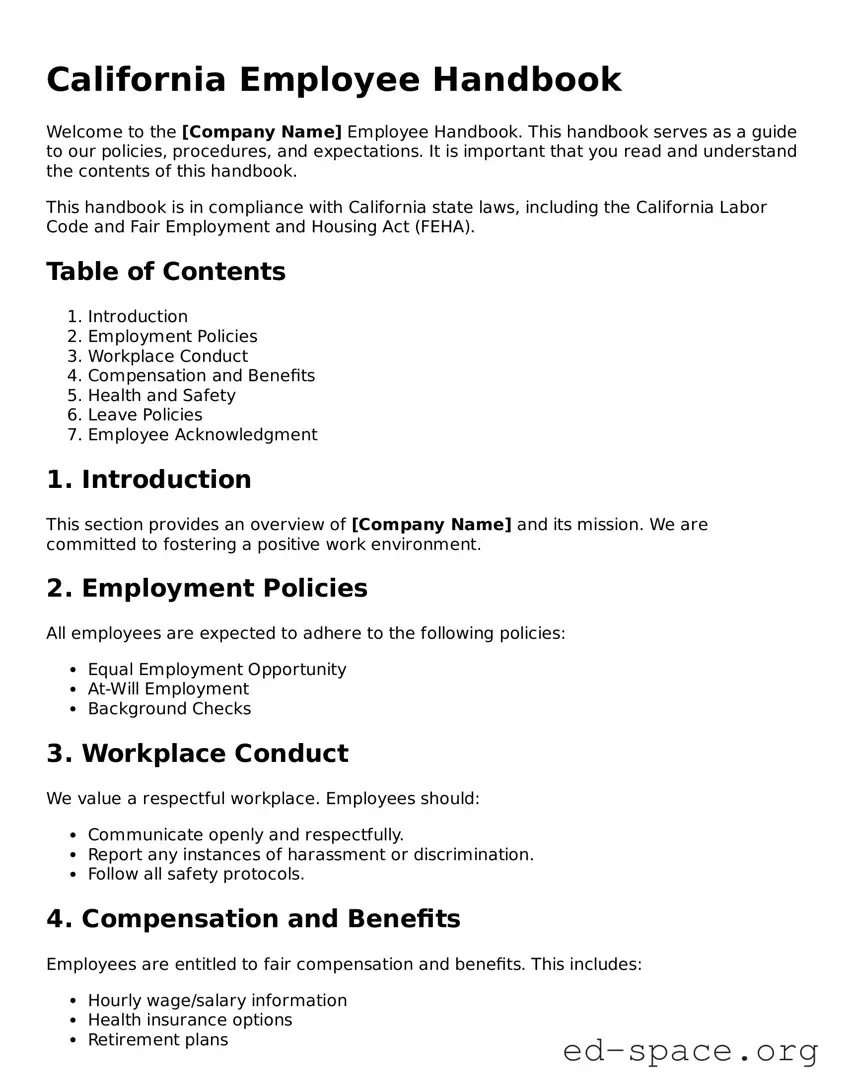
California Employee Handbook
Welcome to the [Company Name] Employee Handbook. This handbook serves as a guide to our policies, procedures, and expectations. It is important that you read and understand the contents of this handbook.
This handbook is in compliance with California state laws, including the California Labor Code and Fair Employment and Housing Act (FEHA).
Table of Contents
1. Introduction
This section provides an overview of [Company Name] and its mission. We are committed to fostering a positive work environment.
2. Employment Policies
All employees are expected to adhere to the following policies:
3. Workplace Conduct
We value a respectful workplace. Employees should:
4. Compensation and Benefits
Employees are entitled to fair compensation and benefits. This includes:
5. Health and Safety
Your safety is our priority. We comply with California's Occupational Safety and Health Administration (Cal/OSHA) standards. Employees must:
6. Leave Policies
Employees are eligible for various types of leave, including:
7. Employee Acknowledgment
Please sign below to acknowledge that you have received and read this handbook:
Employee Name: [Employee Name]
Signature: [Signature]
Date: [Date]
Thank you for being a part of [Company Name]. We look forward to a successful partnership.
| Fact Name | Description |
|---|---|
| Purpose | The California Employee Handbook serves as a guide for employees regarding company policies and procedures. |
| Legal Requirement | While not legally required, it is highly recommended for California employers to provide an employee handbook. |
| Governing Laws | California labor laws, including the California Labor Code and Fair Employment and Housing Act (FEHA), govern employee handbooks. |
| Content Guidelines | Handbooks should include policies on harassment, discrimination, leave, and workplace safety. |
| At-Will Employment | California law supports at-will employment, which should be clearly stated in the handbook. |
| Updates | Employers should regularly update the handbook to reflect changes in laws and company policies. |
| Employee Acknowledgment | It is advisable to include an acknowledgment form for employees to sign, confirming they received and understood the handbook. |
| Non-Disclosure Agreements | Handbooks can include policies regarding confidentiality and non-disclosure of company information. |
| Disciplinary Procedures | Clear disciplinary procedures should be outlined to ensure fair treatment of employees. |
| Legal Protection | A well-drafted handbook can help protect employers from legal claims by setting clear expectations. |
Completing the California Employee Handbook form is an important step for both employees and employers. This process ensures that all necessary information is accurately recorded, fostering a clear understanding of workplace policies and expectations. Follow these steps to complete the form effectively.
What is a California Employee Handbook?
A California Employee Handbook is a document that outlines a company's policies, procedures, and expectations for its employees. It serves as a guide for employees to understand their rights and responsibilities within the workplace. This handbook is crucial for promoting a positive work environment and ensuring compliance with state and federal laws.
Why is an Employee Handbook important?
An Employee Handbook is important because it helps establish clear communication between the employer and employees. It sets the tone for workplace culture and provides a reference for policies on issues like harassment, discrimination, and workplace safety. Furthermore, it can protect the employer from potential legal disputes by demonstrating that employees have been informed of company policies.
What should be included in a California Employee Handbook?
Key elements of a California Employee Handbook typically include an introduction to the company, employment policies, employee benefits, code of conduct, anti-discrimination policies, and procedures for addressing grievances. Additionally, it should cover topics such as attendance, leave policies, and disciplinary actions. Ensuring that all necessary topics are addressed can help prevent misunderstandings in the workplace.
Is it required by law to have an Employee Handbook in California?
While California law does not mandate that all employers have an Employee Handbook, it is highly recommended. Having a handbook can help ensure compliance with various labor laws and can serve as a protective measure in case of disputes. Employers with five or more employees are required to provide certain notices and policies, which can be effectively organized in a handbook.
How often should the Employee Handbook be updated?
It is advisable to review and update the Employee Handbook at least once a year or whenever there are significant changes to company policies or applicable laws. Regular updates ensure that the handbook remains relevant and compliant with current regulations, which can protect both the employer and employees.
Can employees suggest changes to the Employee Handbook?
Yes, employees can and should be encouraged to provide feedback on the Employee Handbook. Their input can be invaluable in identifying areas that may need clarification or improvement. Establishing an open line of communication fosters a collaborative work environment and can lead to a more effective handbook.
How should the Employee Handbook be distributed?
The Employee Handbook should be distributed to all employees, ideally during their onboarding process. Providing both digital and hard copies can ensure accessibility. Additionally, employers should require employees to sign an acknowledgment form confirming that they have received and understood the handbook.
What happens if an employee violates a policy in the Employee Handbook?
If an employee violates a policy outlined in the Employee Handbook, the employer should follow the disciplinary procedures specified in the handbook. This may include verbal warnings, written warnings, or even termination, depending on the severity of the violation. Consistency in enforcing policies is essential to maintain fairness and integrity in the workplace.
Can an Employee Handbook be used in legal disputes?
Yes, an Employee Handbook can serve as a critical document in legal disputes. It can demonstrate that the employer has communicated policies and expectations clearly to employees. If disputes arise, having a well-documented handbook can help support the employer's position and show that they acted in accordance with established policies.
What should I do if I have more questions about the Employee Handbook?
If you have more questions about the Employee Handbook, consider reaching out to a human resources professional or a legal expert who specializes in employment law. They can provide guidance tailored to your specific situation and help ensure that your handbook meets all necessary legal requirements.
Failing to read the entire handbook thoroughly. It is essential to understand all policies and procedures before signing.
Not providing accurate personal information. Ensure that your name, address, and contact details are correct to avoid any communication issues.
Ignoring the acknowledgment section. This part confirms that you have received and understood the handbook, which is crucial for compliance.
Overlooking the importance of signatures. Both employee and employer signatures are necessary to validate the document.
Neglecting to ask questions. If any part of the handbook is unclear, seek clarification before submitting the form.
Submitting the form late. Timely submission is often required to ensure adherence to company policies.
Forgetting to keep a copy. Retaining a copy of the signed handbook can be vital for future reference.
Assuming all policies are the same as previous handbooks. Policies can change, so it is important to review the current handbook carefully.
The California Employee Handbook is a vital document for any business operating in the state. It outlines company policies, procedures, and employee rights. However, several other forms and documents complement the handbook to ensure compliance with state and federal regulations. Below is a list of commonly used documents that often accompany the Employee Handbook.
These documents collectively contribute to a well-organized and compliant workplace. They help establish clear expectations and protect both the employer and employees by ensuring everyone understands their rights and responsibilities.
When filling out the California Employee Handbook form, it’s important to follow certain guidelines to ensure accuracy and compliance. Here’s a list of things you should and shouldn’t do:
By following these guidelines, you can help ensure that your submission is both complete and compliant with company policies.
When it comes to the California Employee Handbook, several misconceptions can lead to confusion among employers and employees alike. Here are ten common myths debunked to clarify the importance and function of this essential document.
This is not true. While it is beneficial for many businesses to have one, there is no legal requirement mandating that all employers must create an employee handbook.
While it’s important to be thorough, it’s impossible to anticipate every situation. A good handbook should cover key policies and procedures but can be flexible to adapt to specific circumstances.
Policies, laws, and workplace dynamics change. Regular updates are essential to ensure that the handbook remains relevant and compliant with current regulations.
Small businesses benefit just as much from having a handbook. It helps establish clear expectations and can protect the business from potential legal issues.
While handbooks can outline policies and expectations, they are generally not considered legal contracts unless explicitly stated otherwise. Employers often include disclaimers to clarify this point.
Many employees may not read the entire handbook. Therefore, it’s crucial to highlight key sections and provide training on important policies to ensure understanding.
A handbook does not prevent employers from terminating employees. However, it does provide guidelines to ensure that terminations are conducted fairly and legally.
Every business is unique, and handbooks should reflect the specific culture, values, and needs of the organization. Customization is key.
In addition to workplace policies, handbooks can also cover topics like company culture, values, and employee benefits, creating a comprehensive resource for employees.
Distribution is just the beginning. Employers should encourage feedback and questions about the handbook to ensure ongoing relevance and understanding.
Filling out and utilizing the California Employee Handbook form is an essential process for employers and employees alike. Here are some key takeaways to consider:
By following these guidelines, employers can create a comprehensive employee handbook that serves as a valuable resource for their workforce.