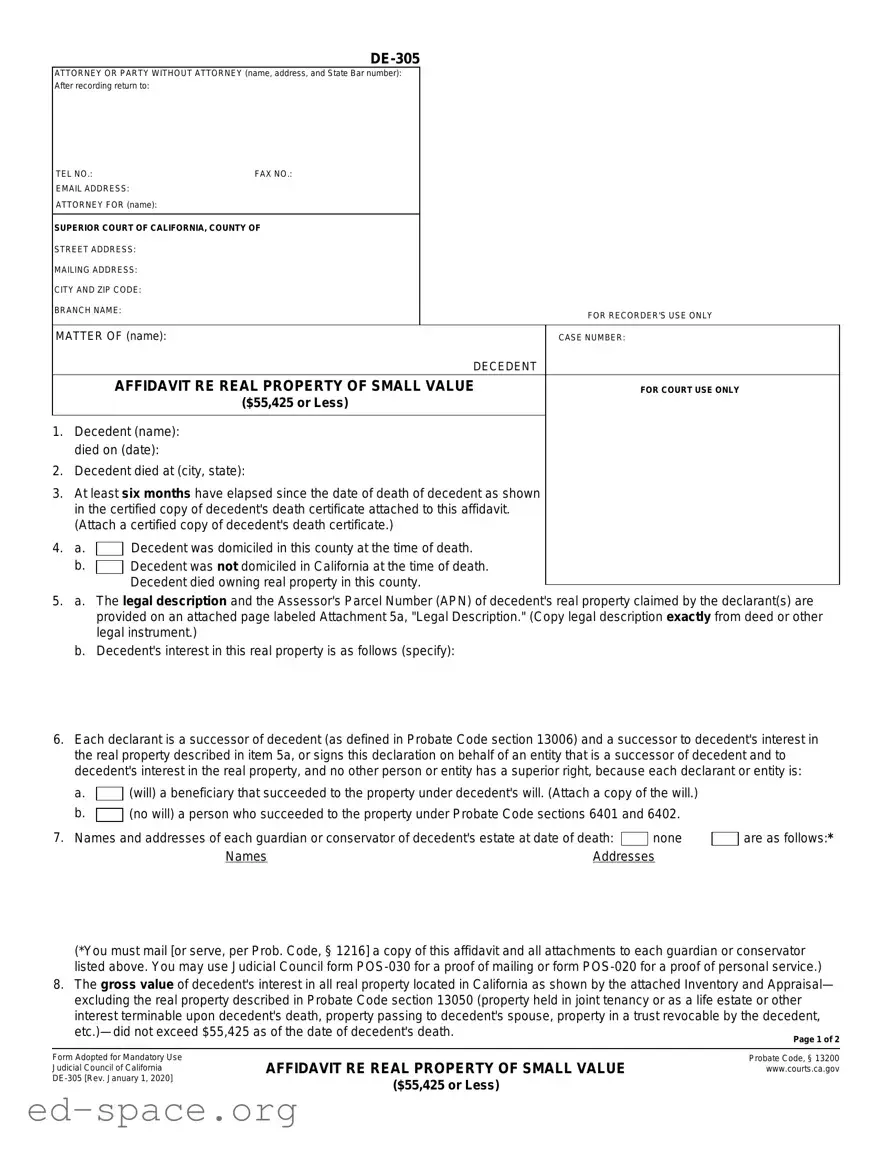
The California DE-305 form serves as an important legal document for individuals dealing with the estate of a deceased person, particularly when the estate includes real property valued at $55,425 or less. This affidavit allows successors of the decedent to claim ownership of the real property without going through the lengthy probate process. Key elements of the form include the decedent's details, the legal description of the property, and the declaration that no other individual has a superior claim to the property. Additionally, the form requires that at least six months have passed since the decedent's death and that all known debts and expenses related to the estate have been settled. It is also necessary to attach a certified copy of the death certificate and an inventory and appraisal of the property, which must be completed by an appointed probate referee. By completing the DE-305 form, individuals can facilitate the transfer of property ownership while adhering to California's probate laws.

ATTORNEY OR PARTY WITHOUT ATTORNEY (name, address, and State Bar number):
After recording return to:
TEL NO.: |
FAX NO.: |
|
|
EMAIL ADDRESS: |
|
|
|
ATTORNEY FOR (name): |
|
|
|
|
|
|
|
SUPERIOR COURT OF CALIFORNIA, COUNTY OF |
|
||
STREET ADDRESS: |
|
|
|
MAILING ADDRESS: |
|
|
|
CITY AND ZIP CODE: |
|
|
|
BRANCH NAME: |
|
|
FOR RECORDER'S USE ONLY |
|
|
|
|
|
|
|
|
MATTER OF (name): |
|
|
CASE NUMBER: |
|
|
DECEDENT |
|
AFFIDAVIT RE REAL PROPERTY OF SMALL VALUE |
FOR COURT USE ONLY |
||
|
($55,425 or Less) |
|
|
1.Decedent (name): died on (date):
2.Decedent died at (city, state):
3.At least six months have elapsed since the date of death of decedent as shown in the certified copy of decedent's death certificate attached to this affidavit. (Attach a certified copy of decedent's death certificate.)
4.a. Decedent was domiciled in this county at the time of death.
b. Decedent was not domiciled in California at the time of death. Decedent died owning real property in this county.
5.a. The legal description and the Assessor's Parcel Number (APN) of decedent's real property claimed by the declarant(s) are provided on an attached page labeled Attachment 5a, "Legal Description." (Copy legal description exactly from deed or other legal instrument.)
b.Decedent's interest in this real property is as follows (specify):
6.Each declarant is a successor of decedent (as defined in Probate Code section 13006) and a successor to decedent's interest in the real property described in item 5a, or signs this declaration on behalf of an entity that is a successor of decedent and to decedent's interest in the real property, and no other person or entity has a superior right, because each declarant or entity is:
a. (will) a beneficiary that succeeded to the property under decedent's will. (Attach a copy of the will.)
b. (no will) a person who succeeded to the property under Probate Code sections 6401 and 6402.
7. Names and addresses of each guardian or conservator of decedent's estate at date of death: |
|
none |
|
are as follows:* |
|
|
|
||||
Names |
Addresses |
|
|
||
(*You must mail [or serve, per Prob. Code, § 1216] a copy of this affidavit and all attachments to each guardian or conservator listed above. You may use Judicial Council form
8.The gross value of decedent's interest in all real property located in California as shown by the attached Inventory and Appraisal— excluding the real property described in Probate Code section 13050 (property held in joint tenancy or as a life estate or other interest terminable upon decedent's death, property passing to decedent's spouse, property in a trust revocable by the decedent,
Form Adopted for Mandatory Use Judicial Council of California
AFFIDAVIT RE REAL PROPERTY OF SMALL VALUE
($55,425 or Less)
MATTER OF (Name):
DECEDENT
CASE NUMBER:
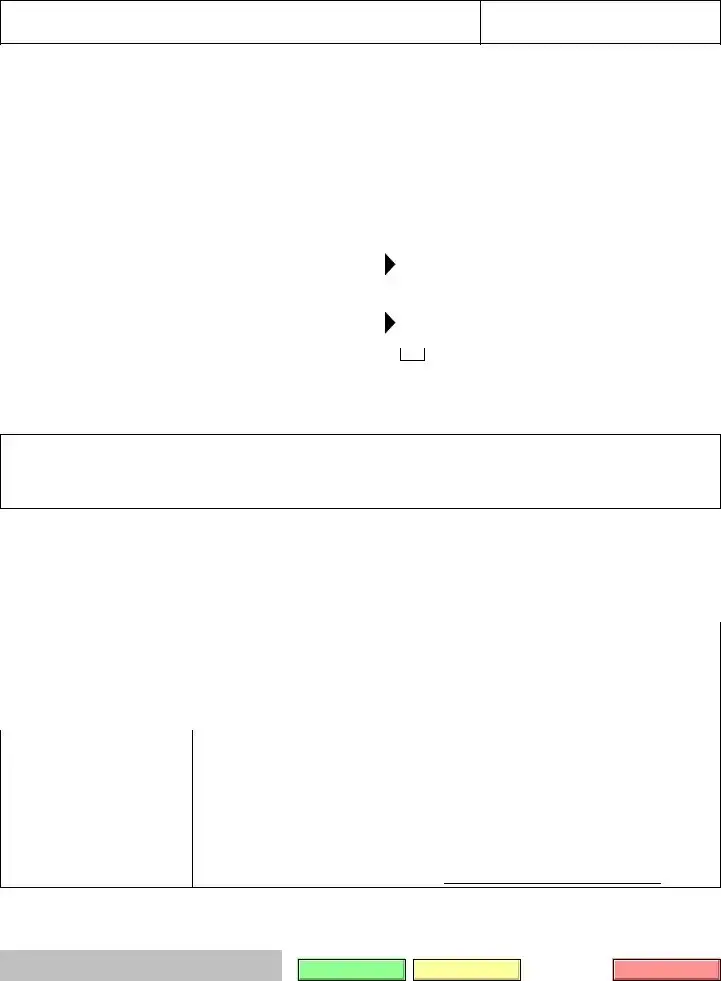
9.An Inventory and Appraisal of all of decedent's interests in real property in California is attached. The appraisal was made by a probate referee appointed for the county in which the property is located. (You must prepare the Inventory on Judicial Council forms
10.No proceeding is now being or has been conducted in California for administration of decedent's estate.
11.Funeral expenses, expenses of last illness, and all known unsecured debts of the decedent have been paid. (NOTE: You may be personally liable for decedent's unsecured debts up to the fair market value of the real property and any income you receive from it.)
I declare under penalty of perjury under the laws of the State of California that the foregoing is true and correct. Date:
(TYPE OR PRINT NAME)* |
|
|
|
|
(SIGNATURE OF DECLARANT) |
Date: |
|
|
|
||
|
|
|
|
|
|
(TYPE OR PRINT NAME)* |
|
|
(SIGNATURE OF DECLARANT) |
||
|
|
|
|
|
SIGNATURE OF ADDITIONAL DECLARANTS ATTACHED |
*A declarant claiming on behalf of a trust or other entity should also state the name of the entity that is a beneficiary under the decedent's will, and declarant's capacity to sign on behalf of the entity (e.g., trustee, Chief Executive Officer, etc.).
NOTARY ACKNOWLEDGMENT |
(NOTE: No notary acknowledgment may be affixed as a rider (small strip) to this page. If addi- |
|
tional notary acknowledgments are required, they must be attached as |
||
|
||
|
|
A notary public or other officer completing this certificate verifies only the identity of the individual who signed the document to which this certificate is attached, and not the truthfulness, accuracy, or validity of that document.
STATE OF CALIFORNIA, COUNTY OF (specify):
On (date): |
, before me (name and title): |
personally appeared (name(s)): |
|
who proved to me on the basis of satisfactory evidence to be the person(s) whose name(s) is/are subscribed to the within instrument and acknowledged to me that he/she/they executed the instrument in his/her/their authorized capacity(ies), and that by his/her/their signature(s) on the instrument the person(s), or the entity upon behalf of which the person(s) acted, executed the instrument.
I certify under PENALTY OF PERJURY under the laws of the |
|
(NOTARY SEAL) |
||
State of California that the foregoing paragraph is true and correct. |
|
|
||
WITNESS my hand and official seal. |
|
|
||
|
|
|
|
|
(SIGNATURE OF NOTARY PUBLIC) |
|
|
||
|
|
|
|
|
(SEAL) |
|
|
||
|
|
|
|
CLERK'S CERTIFICATE |
I certify that the foregoing, including any attached notary acknowledgments and any attached legal description of the property (but excluding other attachments), is a true and correct copy of the original affidavit on file in my office. (Certified copies of this affidavit do not include the
(1) death certificate, (2) will, or (3) inventory and appraisal. See Probate Code section 13202.)
Date: |
Clerk, by |
, Deputy |
|
AFFIDAVIT RE REAL PROPERTY OF SMALL VALUE
($55,425 or Less)
Page 2 of 2
For your protection and privacy, please press the Clear This Form button after you have printed the form.
Print this form
Save this form
Clear this form
| Fact Name | Details |
|---|---|
| Purpose of DE-305 | This form is used to declare the small value of real property owned by a decedent, specifically when the total value does not exceed $55,425. |
| Governing Law | The DE-305 form is governed by the California Probate Code, particularly sections 13200 and 13050. |
| Eligibility Criteria | To use this form, at least six months must have passed since the decedent's death, and the decedent must have owned real property in California. |
| Property Value Limit | The total gross value of the decedent's interest in all real property must not exceed $55,425 as of the date of death. |
| Successor Definition | A successor is defined under Probate Code section 13006 as someone who inherits the decedent's property, either through a will or by law. |
| Required Attachments | Attach a certified copy of the decedent's death certificate and an Inventory and Appraisal of the property, prepared using Judicial Council forms DE-160 and DE-161. |
| Affidavit Declaration | The declarant must declare under penalty of perjury that the information provided in the form is true and correct. |
| Notification Requirement | If there are guardians or conservators, a copy of the affidavit must be mailed or served to them as per Probate Code section 1216. |
| Notary Acknowledgment | While a notary acknowledgment is required, it cannot be affixed as a small strip. It must be attached on a full 8.5-by-11-inch page. |
Completing the California DE 305 form requires careful attention to detail. This affidavit is essential for claiming real property of small value belonging to a decedent. Follow the steps below to ensure that you fill out the form correctly.
Once the form is completed and notarized, you can submit it to the appropriate court. Make sure to keep copies of all documents for your records. Following these steps carefully will help ensure that your submission is accurate and complete.
What is the purpose of the California DE-305 form?
The California DE-305 form is used to claim real property of small value, specifically when the total value does not exceed $55,425. This affidavit allows successors to transfer ownership of the decedent's property without going through a lengthy probate process. It simplifies the process for those who need to settle the estate quickly and efficiently.
Who can file the DE-305 form?
The DE-305 form can be filed by individuals who are successors to the decedent's estate. This includes beneficiaries named in a will or those who inherit under California law if there is no will. Each person filing must have a legitimate claim to the property and should ensure that no one else has a superior right to the property.
What information is required on the DE-305 form?
When filling out the DE-305 form, you will need to provide details about the decedent, including their name, date of death, and the location of death. You must also attach a certified copy of the death certificate. Additionally, you will need to include the legal description of the property, the Assessor's Parcel Number (APN), and information about any debts or expenses related to the decedent's estate.
Is there a deadline for filing the DE-305 form?
There is no specific deadline for filing the DE-305 form, but it is advisable to do so as soon as possible after the decedent's death. At least six months must pass from the date of death before filing. This waiting period allows for any potential claims against the estate to be resolved before transferring the property.
What happens after I submit the DE-305 form?
Once you submit the DE-305 form, the court will review it. If everything is in order, the court will accept the affidavit, allowing you to proceed with the transfer of the property. It is important to keep copies of all documents submitted and received for your records. You may also need to notify any guardians or conservators of the decedent's estate, if applicable.
Can I get help with filling out the DE-305 form?
Yes, assistance is available. You can consult with an attorney or a legal consultant who specializes in probate matters. They can guide you through the process, ensuring that you complete the form accurately and meet all necessary requirements. Additionally, resources are available through local court websites and legal aid organizations.
Missing Information: One common mistake is leaving out required details, such as the decedent's name or the date of death. Ensure all fields are filled out completely.
Incorrect Legal Description: Providing an inaccurate legal description of the property can lead to complications. Always copy the legal description directly from the deed or other legal documents.
Failure to Attach Required Documents: Not including necessary attachments, like the certified copy of the death certificate or the will, is a frequent error. These documents are essential for the affidavit to be valid.
Incorrect Value Assessment: Underestimating or overestimating the gross value of the decedent's real property can result in legal issues. Ensure that the value does not exceed $55,425 and is accurately assessed.
Not Notarizing the Document: Failing to have the affidavit notarized is a critical oversight. The document must be signed in front of a notary public to be legally binding.
Improper Mailing or Service: Not mailing or serving a copy of the affidavit to each guardian or conservator listed can lead to disputes. Follow the instructions for proper service to avoid complications.
Ignoring Deadline Requirements: Delaying the filing of the affidavit beyond the required time frame can jeopardize the process. Be aware of any deadlines associated with the filing.
Not Consulting a Professional: Attempting to complete the form without guidance can lead to mistakes. Consulting an attorney or a knowledgeable professional can help ensure accuracy and compliance.
The California DE-305 form, known as the Affidavit Regarding Real Property of Small Value, is often accompanied by several other documents to ensure a smooth probate process. Each of these forms serves a specific purpose in the administration of a decedent's estate. Below is a list of commonly used documents that accompany the DE-305 form.
These documents collectively help establish the legal framework necessary for the efficient handling of the decedent's estate. Ensuring all forms are completed accurately and submitted together can prevent delays and complications in the probate process.
When filling out the California DE-305 form, it is essential to follow specific guidelines to ensure the process runs smoothly. Below is a list of things you should and shouldn't do.
Understanding the California DE-305 form can be tricky. Here are some common misconceptions that people have about this form:
Clearing up these misconceptions can help ensure the process goes smoothly. Proper understanding of the DE-305 form can save time and reduce stress during an already challenging period.
When filling out and using the California DE-305 form, keep these key takeaways in mind: